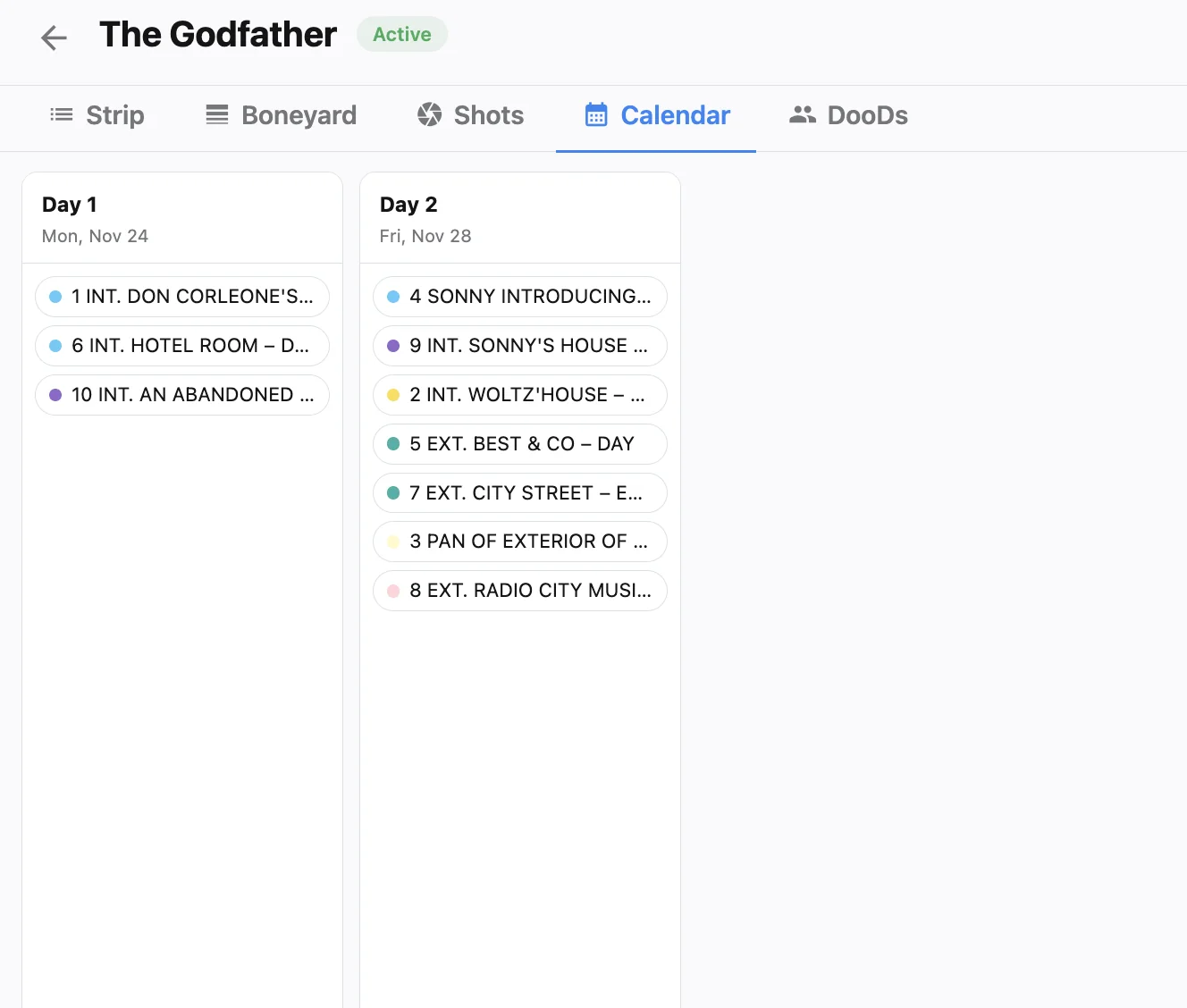
Rain, wind, and soft light do not wait for your stripboard. Weather holds are inevitable; losing scene data when you reshuffle is optional. Contingency daybreaks—with a working boneyard and live collaboration—let ADs protect INT cover sets and restore EXT scenes without rebuilding the schedule from scratch.
Related video: Studiovity movie scheduling: plan your shoot like a pro
What breaks when weather hits
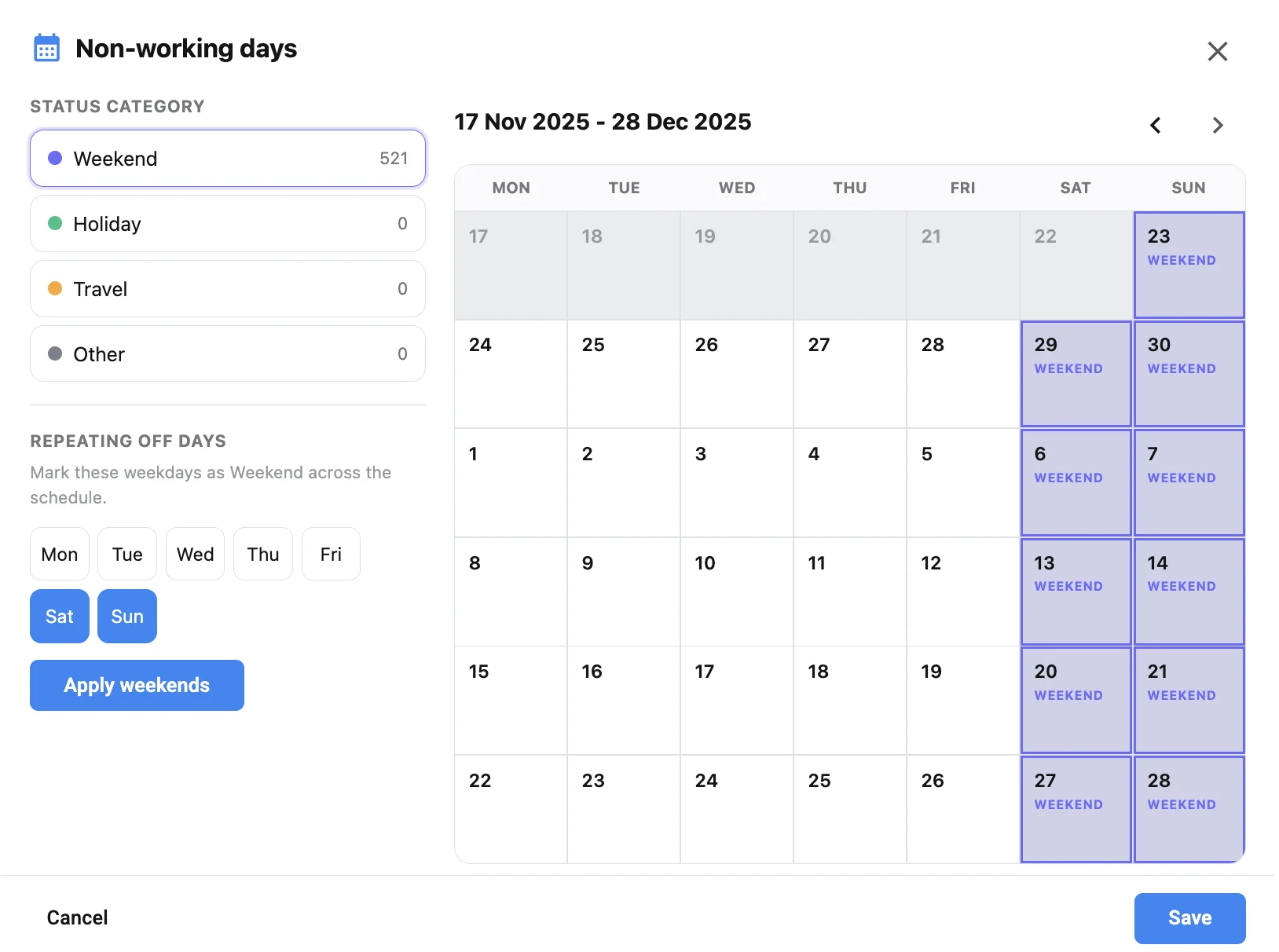
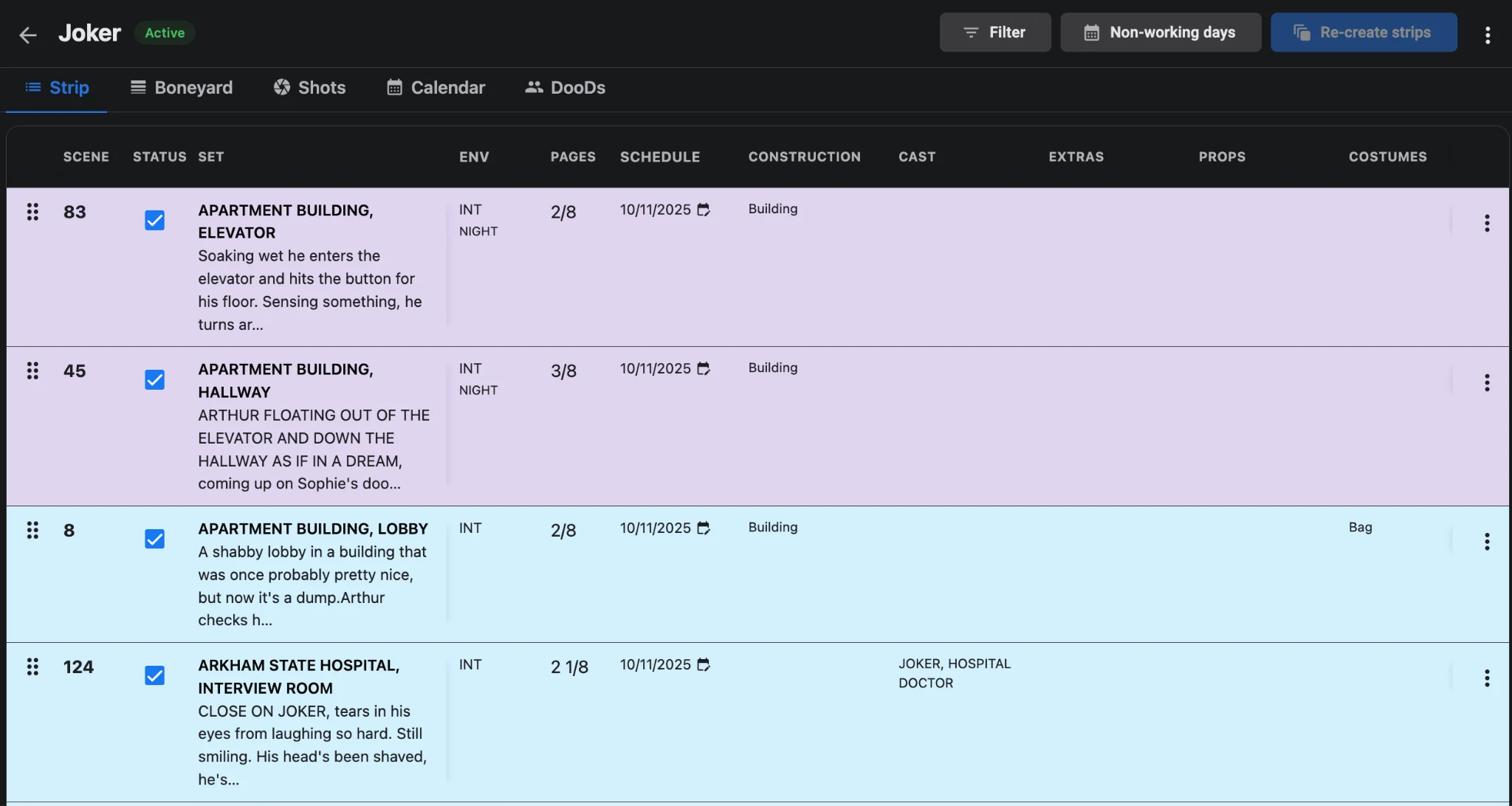
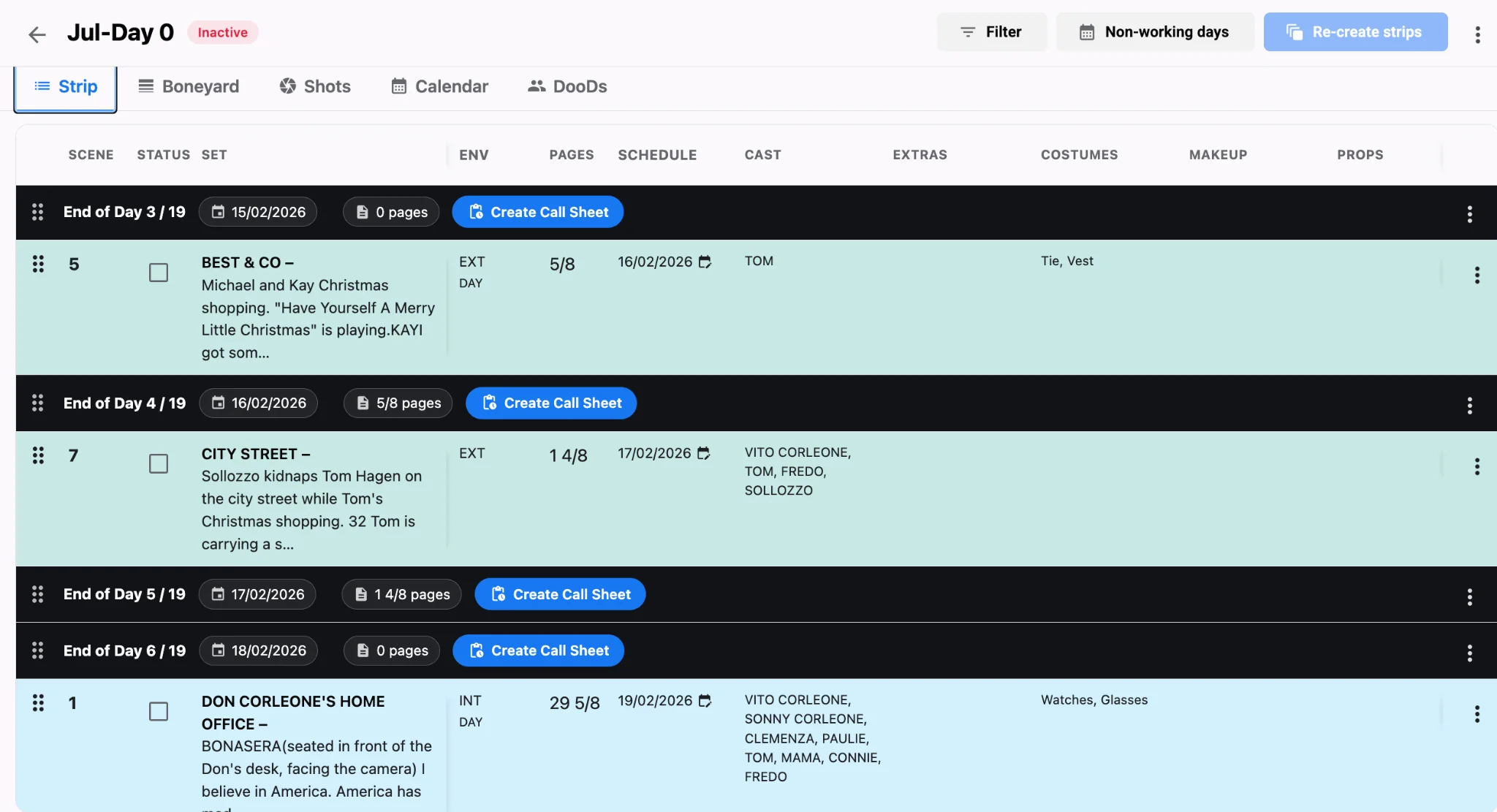
Productions that delete strips “just for today” often lose tags, shot links, and cast notes. When the sun returns, the team reconstructs from memory and stale PDFs. A dedicated boneyard stores unused or pending scenes safely so you can drag them back as conditions improve. Scene cards keep element tags, so call sheets and reports stay coherent after the reshuffle. In Studiovity’s film scheduling software, AI Film Scheduling helps rebuild an alternate order fast: cluster remaining INT work, protect cast turnaround, and re-check travel logic between locations. Instant call sheets from the new daybreaks pull the updated scene list so crew is not chasing yesterday’s weather plan. Mark weekends, holidays, and travel in the non-working days panel so a contingency daybreak never lands on a date the unit cannot work.
Building contingency into the board early
Smart ADs pre-flag cover sets and weather-flexible scenes during prep. Mark potential hold candidates, keep page counts balanced across primary and backup daybreaks, and align department heads on which INT work can absorb a lost EXT day. Real-time sync means the office sees the contingency board the moment the AD commits the swap on set. Park at-risk EXT work in a living boneyard rather than deleting it, and stage cover interiors the way cover sets for weather describes—ready assets, not last-minute hunts.
A field checklist for weather days
Confirm weather windows with locations and casting. Move at-risk EXT scenes to the boneyard rather than deleting them. Promote cover-set daybreaks, regenerate call sheets with call sheet software, and export updated one-liners for department heads. Re-run DOOD if workdays shift. When the hold lifts, restore scenes and re-optimize with AD judgment on top of AI drafts. Share the updated board with department heads before trucks roll again so wardrobe, art, and camera are not staging for a canceled EXT. Weather will always rewrite parts of a shoot; your software should not force a rewrite of your data.
Dry-run the swap before storm season
Run a dry-run once in prep: park a fake weather hold, promote a cover daybreak, regenerate the call sheet, and restore the original order. Timing each step shows who needs advance notice—locations for access windows, casting for hold releases, and transport for truck turns. Assign a weather owner for each block—usually the 1st AD plus locations—so the swap decision and the boneyard restore are one conversation. Publish the contingency daybreak label in the same channel as the call sheet so nobody stages the canceled EXT by habit. Practice that pattern on AI film scheduling, keep the shooting schedule as the only master, and protect scene data the way modern boards beat paper in traditional stripboards vs Studiovity. A calm contingency process is as valuable as a perfect first draft.