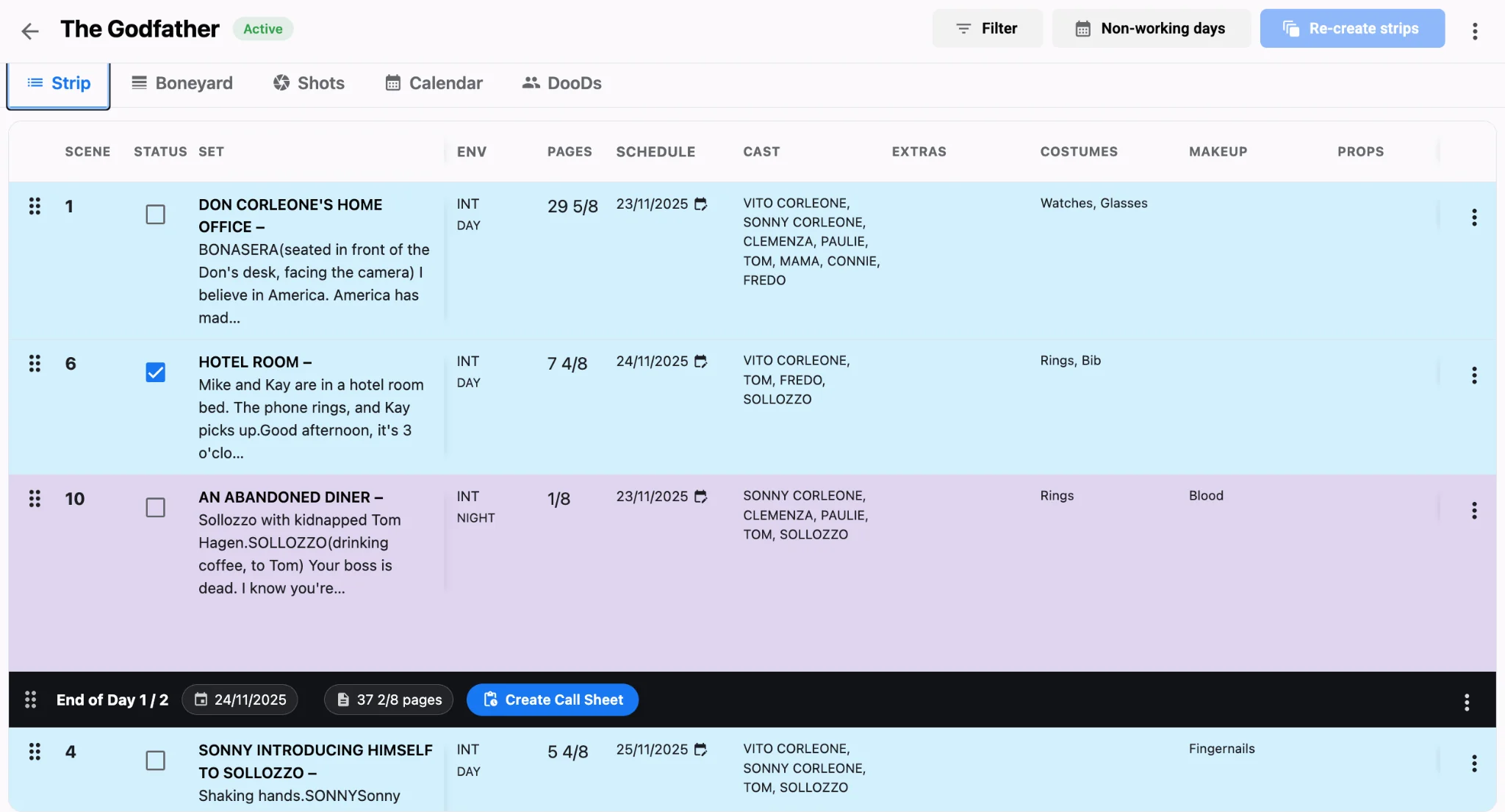
A great shooting schedule starts before the first strip is placed. Script breakdown tags cast, locations, props, wardrobe, and equipment; film scheduling then sequences those elements into efficient daybreaks. When breakdown and stripboard live in one platform, producers and ADs stop retyping data and start optimizing order.
Related video: Learn Film Pre-production, Script breakdown, scene breakdown, scheduling in 30 min
Breakdown is the schedule’s foundation
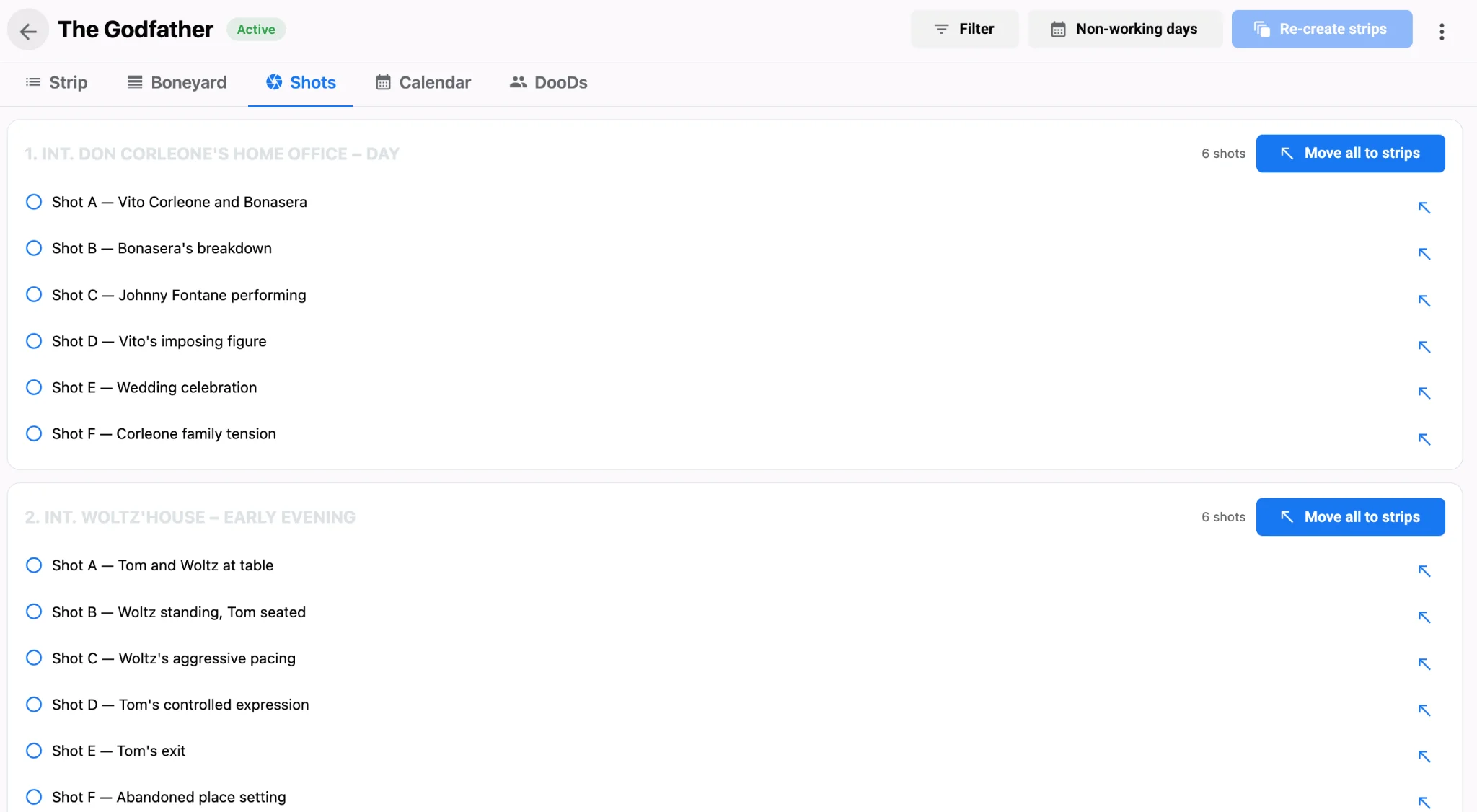
Manual tagging across disconnected tools creates silent errors: a missing prop tag that balloons a company move, or a character missed until DOOD reports contradict the daybreak. AI script breakdown accelerates tagging of props, wardrobe, locations, and gear so the stripboard inherits accurate scene cards instead of incomplete notes. Once elements are tagged, Studiovity’s film scheduling software can propose location clusters and cast-aware order. The AD still applies judgment—night vs day, turnaround, and unit splits—but the first draft is grounded in the same breakdown the departments already trust. Shot List Sync then links duration estimates so page count alone does not hide heavy setup days.
A clean path from pages to daybreaks
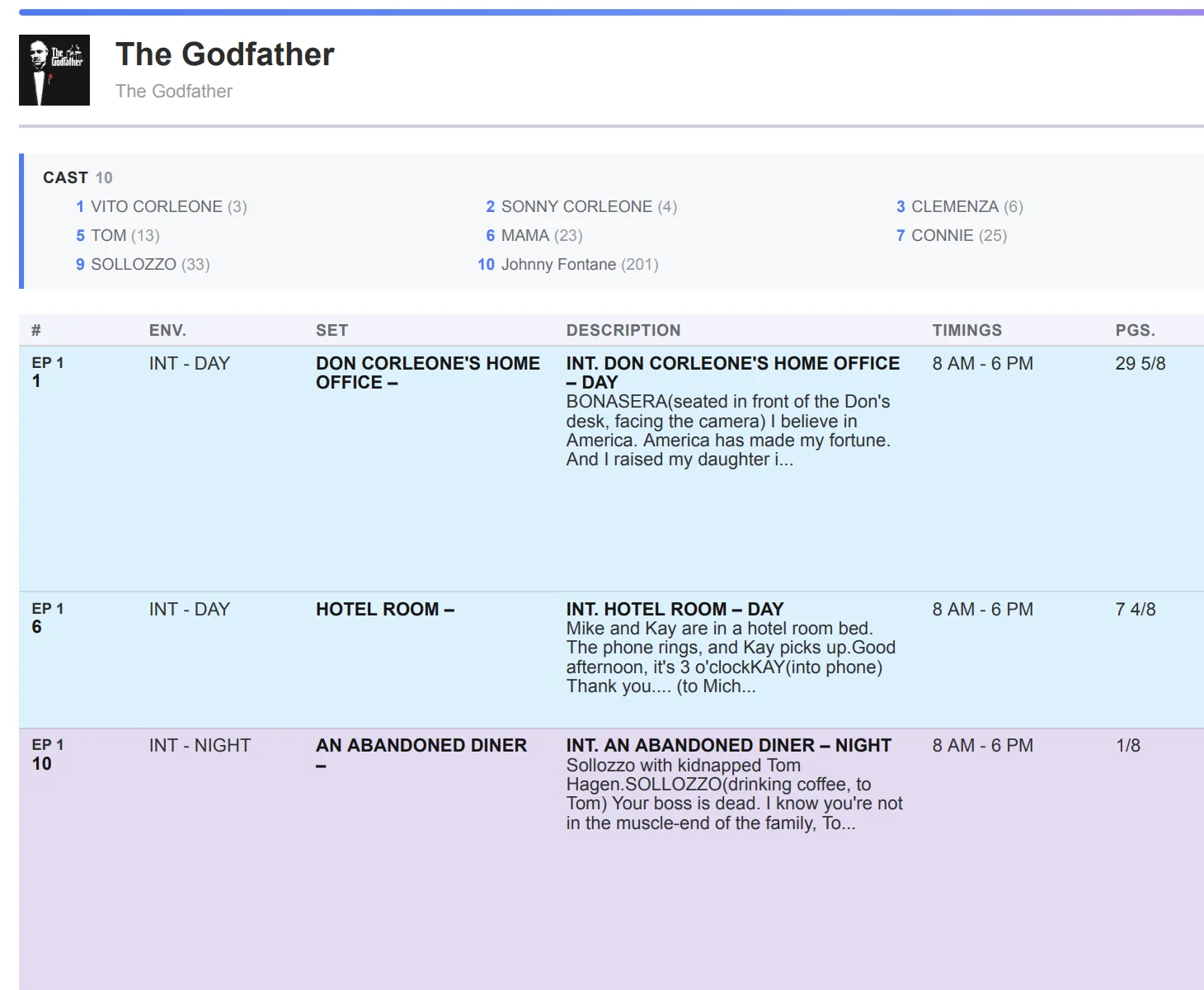
Import or write the script, run breakdown, review tags with department heads, then push scenes onto the stripboard. Park uncertain scenes in the boneyard without losing data. Build daybreaks by location and cast availability; generate one-liners and DOOD reports to validate workdays. When a day locks, create the call sheet in one click from that daybreak so tagged assets travel with the plan. PDF and Excel outputs keep distribution familiar for production offices that still need paper trails. Walk the board with how to read a stripboard so every department sees the same scene cards the AD just ordered.
Why unified pre-production saves money
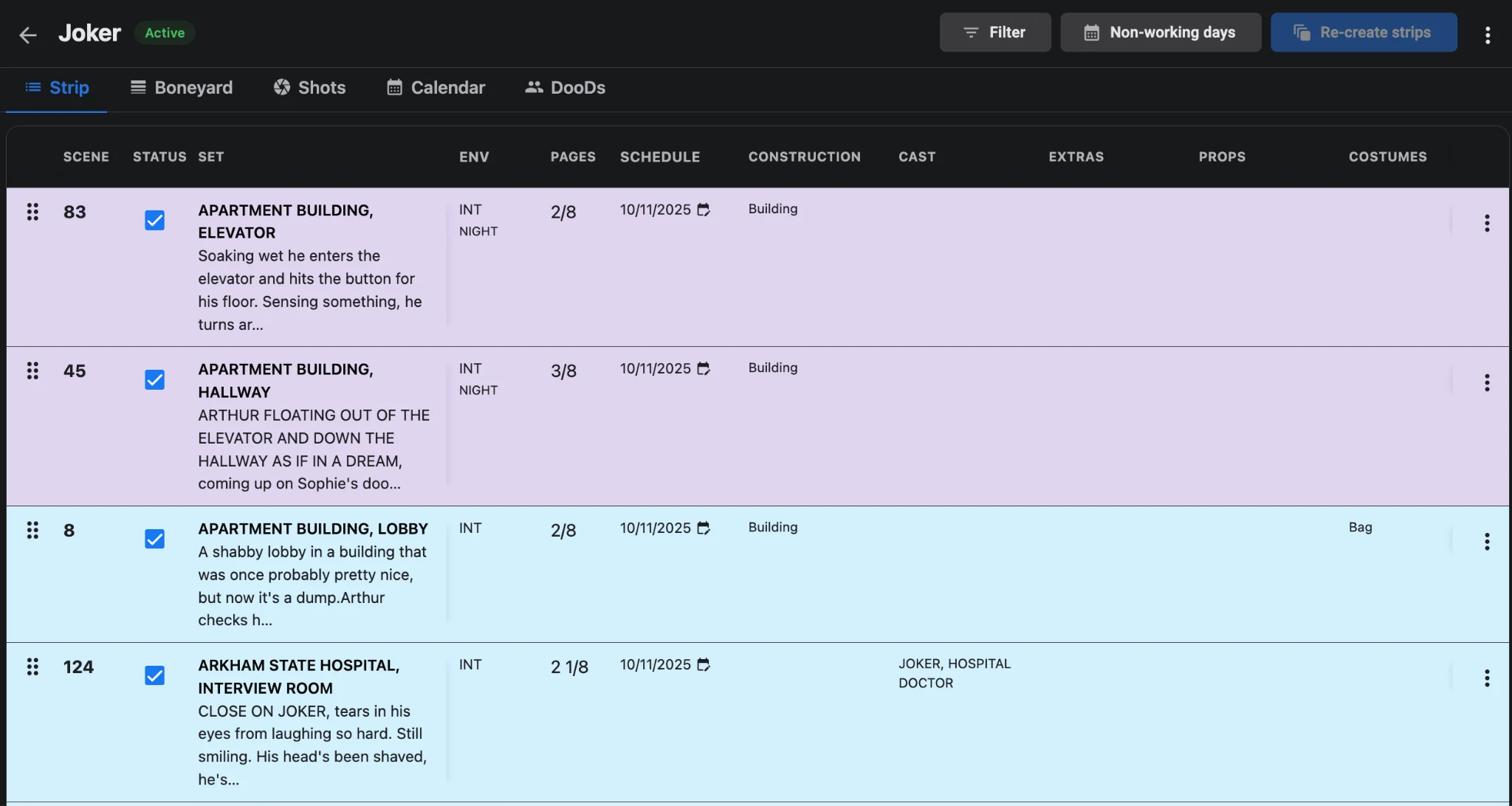
Re-keying breakdown into a separate scheduler wastes hours and invites drift. An all-in-one stack—screenwriting, breakdown, scheduling, shot lists, and call sheets—keeps every move auditable. Real-time collaboration lets the AD refine order while the UPM watches resource signals update. Budget links matter too: when schedule days shift, producers want cost signals without rebuilding a separate sheet. If your current process still exports CSV between tools before anyone builds a board, close that gap inside video TV film scheduling software. Accurate tags make smarter schedules—and fewer on-set surprises.
Audit tags before you lock the week
Before you lock a week, walk department heads through the tagged elements on the heaviest daybreaks. Props and wardrobe should confirm that scene cards still match their prep lists, and locations should flag any site that cannot absorb a cluster. Keep a short element audit after every major page pass: new props, vehicles, and dual-use locations should appear on scene cards before those strips enter a daybreak. When departments trust the tags, they stop maintaining private lists that drift from the stripboard. After each lock, rebuild with call sheet software so the sheet carries the same elements as the board. For how modern boards beat paper when prep moves this fast, see traditional stripboards vs Studiovity and keep the shooting schedule tied to one element list.