
Traditional stripboards earned their place: color-coded scene strips, magnetic boards, and later desktop apps taught generations of ADs how to order a shoot. The limitation is not craft—it is scale. Manual sorting, copy-paste call sheets, multiple files for episodic shows, and hand-built Day Out of Days reports slow teams that already juggle locations, cast windows, and VFX. Modern productions need the same stripboard clarity with AI optimization, one workspace, and instant handoffs.
Where traditional workflows create friction
Manual sorting means hours dragging strips until the board “feels” right, without systematic travel logic or cast conflict checks. Episodic series often live in separate files, so asset tracking fractures across episodes—the problem multi-script stripboards for episodic TV are designed to solve. Call sheets are rebuilt by copying daybreak details into templates, work that dedicated call sheet software now handles in a click. DOOD reports require spreadsheet math, even though auto-generated DOOD reports and one-liners can keep crews aligned without it. Unused scenes get deleted or lost instead of parked. Each gap is small; together they cost production days.
Studiovity’s comparison against traditional tools is straightforward: AI Film Scheduling optimization versus manual sorting; multi-script episodic scheduling in one unified stripboard versus multiple files; one-click call sheets from daybreaks versus copy-paste; auto-generated DOOD reports versus manual calculation; boneyard management versus deletion.
What a modern scheduling workspace adds
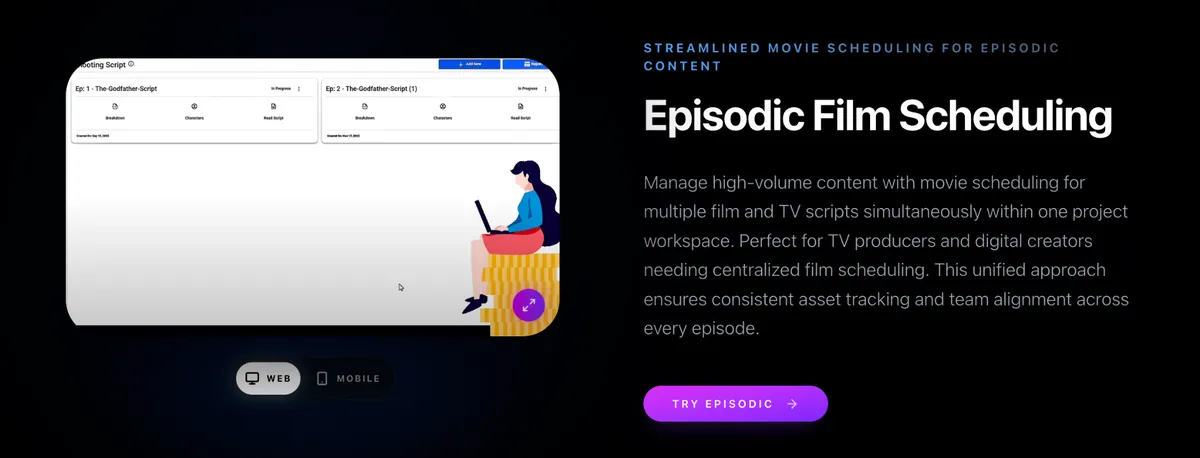
AI Film Scheduling analyzes scenes, locations, cast availability, and resources to propose smarter shooting orders that reduce company moves. Episodic movie scheduling keeps high-volume TV and digital series in one project workspace. Shot List Sync links storyboards, camera angles, and duration estimates to the master schedule. Instant call sheets pull tagged assets from scheduled daybreaks. Shooting schedule reports—full boards, one-liners, and DOOD—export to PDF and Excel for distribution.
Producers weighing a switch can review Studiovity film scheduling software for how these pieces sit together. Mobile and web access, offline work, and real-time collaboration keep the AD on set and the office on the same board. Teams operating in ecosystems familiar across Netflix, Disney+, and peer platforms expect that continuity.
Making the transition without losing AD craft
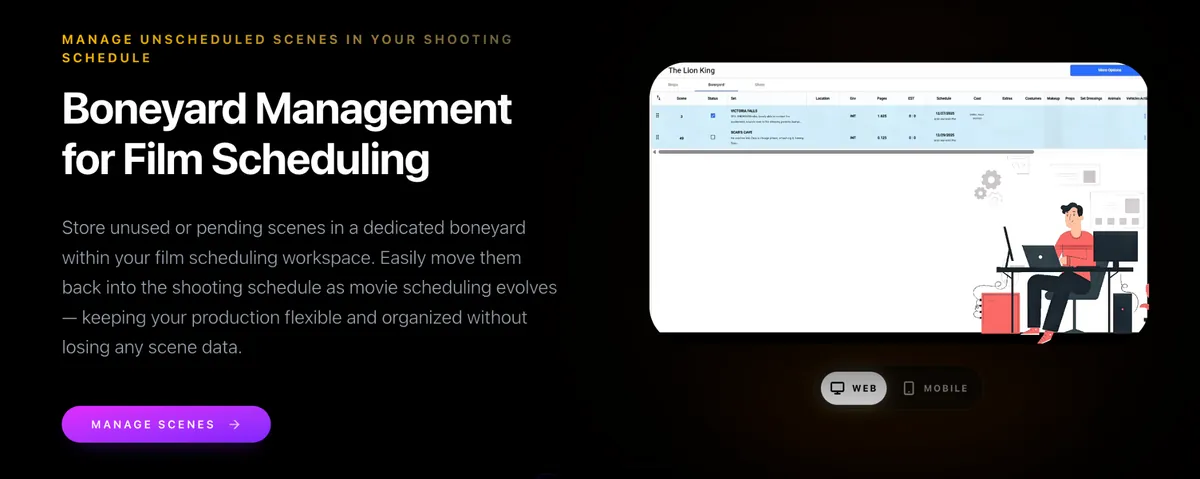
Moving off a traditional board does not remove judgment—it upgrades the first draft. Start with a script breakdown, let AI propose location- and cast-aware order, then refine. Use the boneyard for scenes you are not ready to schedule. Generate call sheets and reports from the locked daybreak instead of rebuilding documents. Keep PDF/Excel exports in your existing distribution habits while the living board stays in software.
The craft of the stripboard remains: protect actors’ turnaround, respect company moves, and leave room for weather. Software should absorb the repetitive sorting and reporting so ADs spend time on decisions that need human eyes.
If your production still maintains parallel paper boards and disconnected spreadsheets, compare the workload honestly. Explore the video TV film scheduling software page, or see the full modern stack on Studiovity’s scheduling platform.