
Watching the wealthy Park family glide through their stunning modern mansion in Parasite, you might assume the crew simply rented a beautiful house. In reality, the filmmakers built the entire environment from scratch. According to production industry data, nearly 90% of interior spaces in modern movies are custom-built environments created on empty soundstages. A Set Designer in Film transforms blank spaces into believable cinematic worlds that support visual storytelling.
Acting as a cinematic architect, the Set Designer in Film bridges the gap between a director’s imagination and physical reality. Much like a traditional architect drafts blueprints for a construction crew, these specialists create exact plans that film carpenters follow during production. Throughout cinema history, scenic design has focused on building spaces that support cameras, lights, and microphones. As a result, every set must balance storytelling with technical function.
Great film set design succeeds when audiences never question what they see. Every hallway width, paint color, and window placement serves a purpose. Moreover, each detail strengthens narrative immersion before actors even speak. Through this invisible art, designers make fictional worlds feel authentic and emotionally convincing.
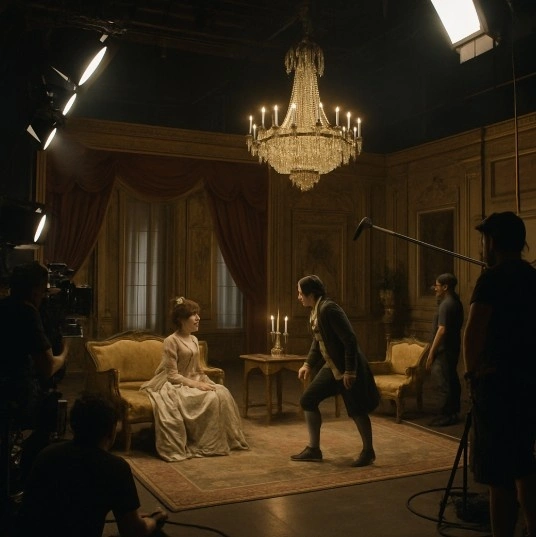
Meet the Cinematic Architect: How the Set Designer Translates Vision into Blueprints
When you watch a fantasy epic or an intimate drama, the immersive world on screen does not appear by accident. Instead, a structured creative pipeline turns rough concepts into physical environments. This process connects visual storytelling with structural planning.
To understand the production design vs art direction pipeline, think of the Art Department as a construction company building a custom home:
- Production Designer (The CEO): Develops the overall visual vision for the film.
- Art Director (The Manager): Oversees budgets, schedules, and department coordination.
- Movie Set Designer (The Specialist): Produces the detailed blueprints that guide construction crews.
Because they handle critical design instructions, set designers must master architectural drafting. In addition, they must understand how to create safe and practical filming environments. A Set Designer in Film transforms creative ideas into physical spaces that support production demands.
From Script to Scale: The Magic of Technical Drawings and 3D Models
Turning a simple script line into a filming location starts with careful analysis. The set designer studies each scene for spatial needs, lighting access, and camera movement. Furthermore, they determine how much room actors and crew members require during filming.
After mapping these requirements, the designer moves into the drafting stage. Creating technical drawings for movie sets depends heavily on CAD (Computer-Aided Design) software. These tools help teams test camera angles and equipment placement before construction begins. For example, a director may request a sweeping crane shot. The CAD model quickly reveals whether the camera rig can fit inside the designed space.
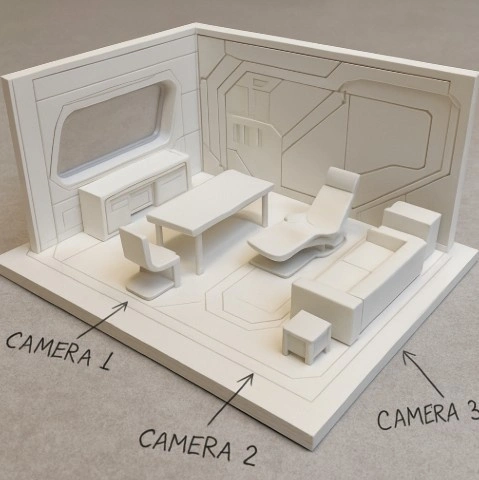
Even with digital precision, physical miniatures still play an important role. Designers often build small architectural models that resemble dollhouses. Consequently, directors can preview framing choices before construction starts. A skilled Set Designer in Film combines digital planning with physical modeling to improve efficiency and creativity.
Engineering for the Lens: Why Sets Use 'Wild Walls' and False Ceilings
When you watch a scene inside a cozy apartment, the room may appear realistic on screen. However, the actual set often includes extra space for cameras and crew members. Effective film set design requires environments built specifically for filmmaking needs.
Close collaboration between the set designer and cinematographer supports dramatic camerawork. Together, they incorporate structural tricks that improve filming flexibility:
- Wild Walls: Removable wall panels that allow cameras to move freely through the set.
- False Ceilings: Elevated ceiling grids that hide lighting equipment above the frame.
- Forced Perspective: Angled walls and slanted floors that create visual depth on camera.
These techniques allow directors to shoot scenes without physical limitations. Additionally, they help cinematographers capture more dynamic shots. A talented Set Designer in Film understands how structural design directly affects storytelling.
The Devil in the Details: Sourcing Authenticity and Managing the Build
Even the best-designed set feels empty without realistic details. Therefore, transforming plywood walls into believable environments requires artistic precision. Designers use creative techniques to make modern materials appear aged, textured, and authentic.
To create believable spaces, the art department focuses on three major elements:
- Texture and Aging: Scenic painters use specialized techniques to imitate rust, wood grain, and worn wallpaper.
- Historical Authenticity: Designers source accurate furniture, props, and fabrics for each time period.
- Functional Lighting: Practical lamps and wall fixtures create natural lighting inside scenes.
At the same time, production teams must carefully manage budgets. Every prop, painted wall, and decorative element affects overall costs. Because of this, a Set Designer in Film balances artistic creativity with financial planning.
The Digital Shift: How Virtual Production is Changing Physical Set Building
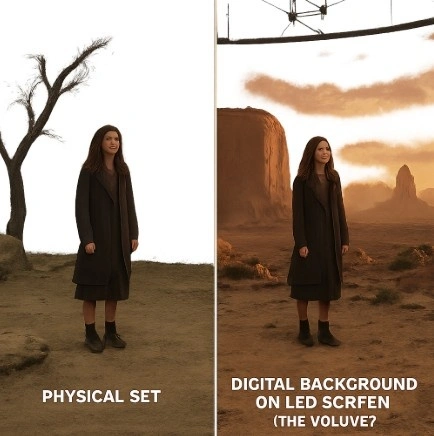
Traditional green screen stages are becoming less common in modern filmmaking. Today, many productions use massive LED walls known as “The Volume.” These curved screens display real-time digital environments that surround actors during filming.
Despite these technological advances, physical set construction remains essential. Actors still need real surfaces to touch and interact with during scenes. Therefore, filmmakers combine practical builds with digital backgrounds. The art department may construct a spaceship console or dirt pathway while digital landscapes extend beyond the stage.
This hybrid approach has transformed the responsibilities of the modern Set Designer in Film. Designers now collaborate with digital artists while continuing to oversee physical construction. As technology evolves, successful designers must understand both traditional craftsmanship and virtual production workflows.
Breaking Into the Art Department: Your Action Plan for a Design Career
Building a career in film set design starts with a strong foundation. Many professionals enter the industry with backgrounds in architecture, interior design, or visual arts. These fields teach valuable skills related to structure, space, and drafting.
Most beginners start with entry-level art department positions. For example, many aspiring designers work as Art Production Assistants (Art PAs). In these roles, they organize visual references, distribute plans, and support senior team members.
As your career develops, portfolio quality becomes increasingly important. To meet professional standards, aspiring designers should include:
- 2D Drafts
- 3D Renderings
- Photos of Physical Models
- Script Breakdowns
These materials demonstrate technical ability and creative thinking. Additionally, they show how effectively you can translate concepts into buildable environments. A successful Set Designer in Film combines artistic vision with strong communication and problem-solving skills.
The Invisible Art: Why Great Set Design Never Looks Like a Set
You no longer just see actors standing inside a room. Instead, you can recognize how every wall, texture, and light source shapes the emotional tone of a scene. Consider the famous rotating hallway sequence in Inception. The production team built an entire spinning corridor to create the gravity-defying fight scene practically.
Ironically, the greatest achievements in film set design often remain invisible to audiences. If viewers fully believe the world on screen, the illusion succeeds. The set feels natural rather than artificial.
During your next movie night, pay attention to the physical environment surrounding the actors. Notice how a cramped kitchen increases tension or how a bright office suggests power and control. These subtle details reveal the essential work of the Set Designer in Film.
Studiovity: Simplifying Creative Film Production Workflows
Modern productions rely on strong collaboration between creative and technical departments. Studiovity helps filmmakers organize screenplay development, script breakdowns, shot lists, scheduling, storyboarding, and production planning within one connected workflow. As a result, production teams can streamline communication and manage complex creative tasks more efficiently.