
Picture your favorite movie scene—perhaps the dark, gritty shadows of a Batman alleyway or the bright symmetry of a Wes Anderson film. Audiences commonly assume the director single-handedly creates these memorable images. However, understanding What Does a Cinematographer Do reveals the artist responsible for translating emotion into visuals.
In reality, while the director guides the actors, another artist stands right beside them. Asking What Does a Cinematographer Do reveals the true engine behind visual storytelling. As the ultimate “visual translator,” the Director of Photography (DOP/DP) bridges the gap between the page and the screen, turning an emotional script into practical instructions for light and glass.
Mastering the cinematographer role involves building every shot upon three essential pillars: shaping lighting to set a mood, composing frames to guide your eye, and moving the camera to pull you into the story.
DP vs. Videographer: Understanding the Gap Between Filming and Visual Storytelling
Scrolling through movie credits, you might wonder who actually controls the camera. In Hollywood, distinguishing a cinematographer vs. director of photography is a trick question—they are the exact same role, acting as the chief visual architects of a film.
To understand the daily duties behind What Does a Cinematographer Do, picture a construction site. They design the emotional mood but don’t always swing the hammer, managing a clear crew hierarchy instead:
- Director of Photography: Chooses the lighting, lenses, and shadows.
- Camera Operator: Physically looks through the viewfinder and steers the gear.
- Videographer: A different career path entirely, where one solo person shoots, lights, and records sound.
Managing dozens of crew members doesn’t happen spontaneously on set. To capture the perfect feeling, they must first translate the script into a technical map, planning the look long before the cameras roll.
The Blueprint Stage: How the DOP Plans the Look Before the Cameras Roll
Before actors arrive, the director of photography’s pre-production tasks begin by mapping the movie’s visual blueprint. This phase guarantees visual consistency so a romance never accidentally looks like a gritty thriller.
Finding physical spaces, known as location scouting, requires strict attention to the sun. The DP analyzes exactly how afternoon light hits a window to ensure the environment naturally supports the scene’s emotional mood.
Mastering gear, particularly choosing lenses for a cinematic look, turns those environments into feelings. By adjusting focal length—how “zoomed in” the camera is—they can use wide angles to emphasize lonely isolation or tight close-ups to magnify panic.
Understanding What Does a Cinematographer Do also means recognizing how much preparation happens before filming even begins.
With the plan finalized, visual storytelling and framing techniques move from theory into reality, establishing the core elements that dictate a scene’s mood.
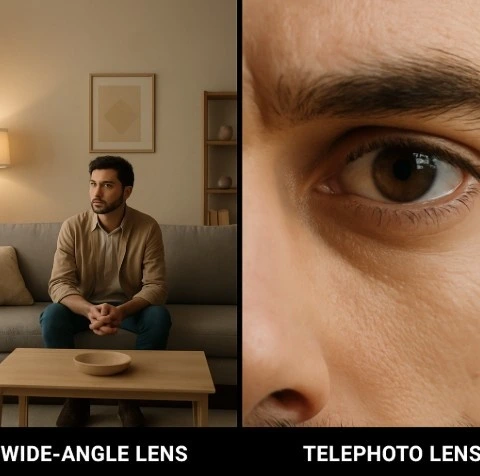
The Three Pillars of the Look: Why Lighting, Framing, and Movement Dictate Your Mood
Every time you enter a dark room, your mood shifts instinctively. DPs recreate this biological reaction by mastering chiaroscuro—a technique using high-contrast lighting to cast deep, dramatic shadows. Combined with color theory in film lighting, like splashing a sickly, unnatural green over those heavy shadows, this approach creates instant, visceral suspense.
How elements are arranged within those shadows dictates your focus. DPs frequently use the Rule of Thirds, mentally dividing the screen into a tic-tac-toe board. Placing a character slightly off-center on one of these intersecting lines directly taps into viewer psychology, making the image feel naturally dynamic rather than rigidly staged.
Motion then brings that carefully framed shot to life. By applying specific cinematography techniques, DPs harness camera movement for emotional impact to mirror a character’s internal feelings:
- Pan: Turning the camera side-to-side to slowly reveal a hidden threat.
- Tilt: Pointing up or down to subtly establish dominance or vulnerability.
- Dolly Shot: Rolling the entire camera forward smoothly to pull you deep into a character’s sudden realization.
Learning What Does a Cinematographer Do becomes easier when you notice how these techniques influence your emotions during a scene.
Pulling off these visual tricks requires significantly more hands than just the cinematographer’s. Designing the mood is merely the first step; executing it physically requires dedicated specialists to sculpt the light.
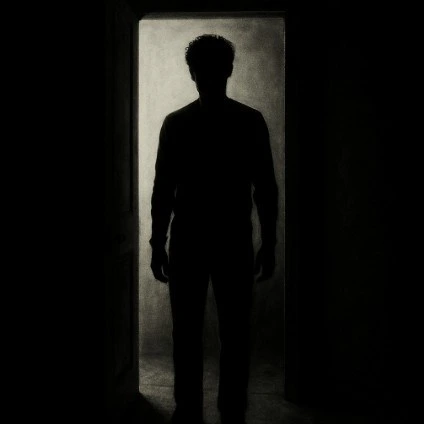
The Invisible Team: How the DOP Directs the Gaffer and Grip to Sculpt Light
While the Director of Photography acts as the visual architect, they rarely build the house alone. Collaborating with gaffer and grip crews is essential to execute this vision physically. The Gaffer serves as the chief lighting technician, placing heavy lamps to mimic a glowing sunset, while Grips handle mechanical rigging, securely pushing moving cameras and shaping shadows.
Brilliant lighting means little if the physical room feels unconvincing. Consequently, collaborating with the production designer is crucial before filming even begins. Together, they choose specific wall paint, fabrics, and background props, ensuring a gritty detective’s office absorbs that moody light perfectly instead of reflecting a cheerful glare.
Juggling these shifting elements requires immense focus on maintaining visual consistency on set so every angle matches seamlessly. Understanding What Does a Cinematographer Do also involves appreciating how they coordinate multiple departments to achieve one visual style.
Yet, capturing the raw image alongside this invisible army is only the first half of the journey. The final atmosphere is cemented in post-production.
The Final Polish: Why Color Grading is the Cinematographer’s Secret Weapon
If you research essential cinematography equipment for beginners, you might be shocked to learn professional cameras capture gray, washed-out images called RAW footage. This intentionally flat canvas preserves detail, acting like digital clay.
Shaping that clay happens during the post-production color grading workflow. Here, the DP works alongside an editor to paint emotion back into the frame, using cold blue tints to make thrillers feel isolating or golden hues for inviting romances.
Even after mastering cinematic camera settings on set, cinematographers rely on this final polish to finalize the film’s atmosphere. This stage perfectly answers the question, What Does a Cinematographer Do, because color grading directly impacts how audiences emotionally connect with a film.
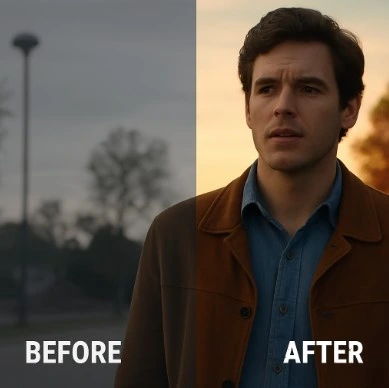
Watch Like an Expert: 3 Hidden Visual Cues to Spot in Your Next Movie
Understanding the true cinematographer’s role transforms how you experience visual storytelling. Instead of just passively watching a film, you can actively recognize the deliberate choices happening behind the lens.
If you still wonder What Does a Cinematographer Do, try applying this perspective during your next movie night:
- Trace the shadows: Where is the light actually coming from, and what does it highlight?
- Watch the movement: Why is the camera moving in this exact moment, and how does it make you feel?
- Feel the frame: How does the lens choice change the emotional weight of the scene?
By observing these elements, you gain a deeper appreciation for the meticulous craft that brings cinematic stories to life. Ultimately, What Does a Cinematographer Do comes down to one essential mission: shaping emotion through visuals and guiding audiences deeper into the story.
Create Better Visual Stories with Studiovity
Understanding What Does a Cinematographer Do becomes even more valuable when you have the right tools to plan and execute your visual ideas efficiently. Studiovity helps filmmakers, cinematographers, and production teams streamline every stage of pre-production with AI-powered screenplay writing, shot listing, storyboarding, scheduling, call sheets, and script breakdown tools. Whether you are planning lighting setups, organizing camera shots, or collaborating with your crew, Studiovity gives creative professionals a centralized platform to turn cinematic vision into reality faster and more efficiently.