
Narrative Elements: Definition, Types & Examples for Better Storytelling

Every memorable story shares one thing in common: strong narrative elements. Whether you write a screenplay, novel, short film, or TV series, these building blocks shape your story. Therefore, they keep audiences engaged. Without them, even the most exciting idea can feel confusing or incomplete.


Consequently, understanding these storytelling tools helps writers create deeply emotional and memorable stories. Next, let’s explore their definitions, main types, and practical examples.

What Are Narrative Elements?

Essentially, these components work together to tell a cohesive story. They successfully establish the characters, define the setting, introduce conflict, and guide the audience. Thus, they lead viewers from the beginning to the conclusion.


Every narrative uses these building blocks differently. However, successful stories balance them carefully to create tension, emotion, and satisfying resolutions. Whether you’re writing a feature film, documentary, commercial, or web series, these features provide a firm foundation.

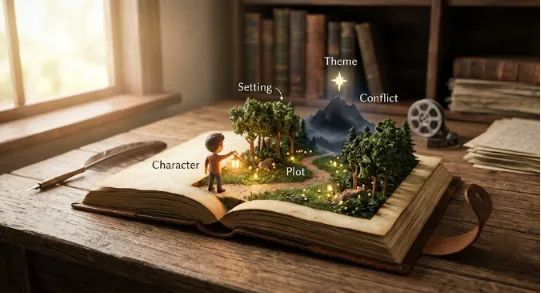
A 3D miniature world emerging from an open antique book on a wooden desk, displaying a small character with a lantern on a path, surrounded by trees, mountains, a shining star, and text labels for Character, Setting, Plot, Conflict, and Theme.

Why Narrative Elements Matter

Clearly, strong storytelling tools make stories easier to understand. Furthermore, they make projects more enjoyable to watch or read. Moreover, they help audiences relate to characters, follow the plot, and stay emotionally invested.


For filmmakers and screenwriters, clear concepts also simplify pre-production. Once the story structure becomes clear, creating script breakdowns, shot lists, and schedules becomes much easier.

The Main Types of Narrative Elements

1. Characters

Characters drive every story forward. Specifically, they make decisions, overcome obstacles, and experience change throughout the narrative.


Most stories include:


  • The protagonist, who leads the story.

  • The antagonist, who creates conflict.

  • Supporting characters, who influence the journey.


For example, Simba serves as the protagonist in The Lion King, while Scar creates the central conflict.

2. Setting

The setting describes where and when the story takes place. Indeed, it establishes the atmosphere and often influences the characters’ actions.


For instance, a horror story inside an abandoned hospital creates a spooky mood. In contrast, a sunny beach creates a completely different feeling. Likewise, a futuristic city changes the possibilities available to the characters.

3. Plot

The plot is the sequence of events that moves the story forward. Therefore, every major event should connect logically to the next.


A traditional plot often follows this structure:


  • Introduction

  • Rising action

  • Climax

  • Falling action

  • Resolution


Because each stage builds on the previous one, audiences remain engaged from beginning to end.

4. Conflict

Conflict creates the tension that keeps viewers interested. Without conflict, characters have no reason to grow or make difficult decisions.


Common types include:


  • Character vs. Character

  • Character vs. Self

  • Character vs. Society

  • Character vs. Nature

  • Character vs. Technology


For example, a detective solving a murder faces external conflict. Meanwhile, struggling with guilt creates intense internal conflict.

5. Theme

The theme represents the central message or idea behind the story. Instead of stating it directly, writers reveal the theme through character choices. Popular themes include love, revenge, identity, sacrifice, friendship, justice, and redemption.


For instance, many coming-of-age films explore self-discovery and personal growth.

6. Point of View

Point of view determines whose perspective tells the story. Consequently, it influences what information audiences receive and how they interpret events.


Screenplays usually present scenes objectively through visual action. However, films often reveal perspective through camera placement, dialogue, narration, or editing.

Examples of Narrative Elements in Popular Films

Many successful films combine these core components effectively.


In Finding Nemo, Marlin becomes the determined protagonist searching for his son. Meanwhile, the vast ocean serves as the setting, while countless underwater dangers create conflict. The plot follows Marlin’s journey across the ocean. Ultimately, the story explores themes of trust, family, and letting go.


Similarly, The Dark Knight centers on Batman’s struggle against the Joker. Gotham City shapes the story’s atmosphere. At the same time, moral dilemmas deepen both the conflict and the film’s central theme of justice versus chaos. Clearly, these examples show how story pieces work together instead of existing independently.

Using Narrative Elements During Screenwriting

These core features do more than improve storytelling. In addition, they simplify the entire production process.


Once your screenplay clearly defines characters, locations, conflicts, and plot points, organizing production becomes much easier. Production teams can easily identify cast requirements, locations, props, costumes, and visual effects during the script breakdown stage.


Today, modern pre-production platforms such as Studiovity help filmmakers analyze scripts. For example, they generate AI-powered script breakdowns, create storyboards, organize shot lists, schedule shoots, and manage production. As a result, writers and production teams can move from script to screen more efficiently.

Final Thoughts

Consequently, narrative elements form the backbone of every great story. Characters create emotional connections, settings build atmosphere, plots provide structure, conflicts generate suspense, themes add meaning, and point of view shapes the audience’s experience.


Whether you’re writing your first screenplay or preparing a major film production, mastering these elements will strengthen your storytelling. More importantly, they’ll help you create stories that audiences remember long after the credits roll.

Advanced Screenwriting Software and
Film pre-production tool

Studiovity is a new standard for Screenwriting, Storyboard, Ai breakdown and Scheduling. 

More to explore​

Subscribe To Our Newsletter

Get updates and learn from the best

Story Writing Competition Registration

Get important information like submission link, registration and submission details and more on WhatsApp!