
Every great film or television show begins with a vision. However, turning that vision into reality requires more than a talented director or writer. For this reason, a project is led from the first idea to the final release by a producer. Therefore, if you have ever wondered, what does a film producer do? The answer is that they organize people, manage budgets, solve problems, and keep production moving on schedule. Whether you dream of becoming a filmmaker or simply want to understand how movies get made, learning about the different types of producers helps you appreciate the teamwork behind every successful production.
What Does a Producer Do?
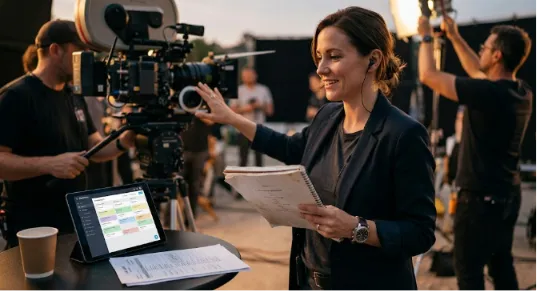
To understand the industry, one must ask: what does a film producer do during the initial stages? A producer oversees every single stage of filmmaking. For instance, they often discover scripts, secure financing, hire key crew members, coordinate schedules, and monitor the project’s progress. Most importantly, they make sure the production stays on budget and reaches completion.
Although each production differs, producers usually handle business decisions while supporting the creative process. As a result, directors and writers can focus on storytelling while producers manage the logistics. Consequently, when people ask, what does a film producer do to protect the art? The answer lies in their ability to shield the creatives from administrative stress.
Today, many producers also rely on digital production management platforms like Studiovity to organize scripts. These platforms offer AI-powered script breakdowns, shooting schedules, call sheets, budgets, and team collaboration within one workspace.
Why Are Producers Important?
Every production faces unexpected challenges. For example, locations may change, weather can delay shooting, or budgets may shift. Therefore, producers constantly solve problems before they become larger issues.
Furthermore, they communicate between investors, studios, directors, department heads, and crew members. Consequently, everyone stays aligned throughout production. Without strong producers, even an excellent screenplay can struggle to reach the screen. If you ask a studio executive, what does a film producer do that makes them so invaluable? They will tell you that producers are the glue holding the project together.
Various Types of Producers in Film & TV
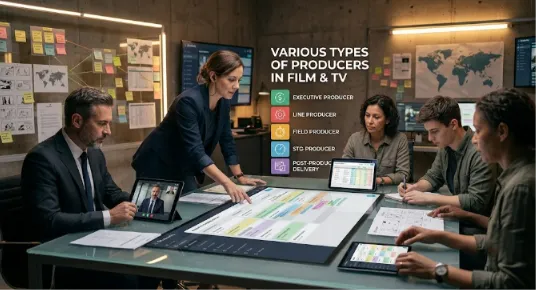
Film and television productions often include several producers. Each one handles different responsibilities to answer the broader question of what does a film producer do on a daily basis.
Executive Producer
The Executive Producer focuses primarily on financing and high-level business decisions. For instance, they secure funding, approve major budgets, negotiate important deals, and help guide the overall direction of the project. In television, executive producers often supervise the entire series and oversee long-term creative decisions.
Producer
The Producer manages the production from beginning to end. Specifically, they coordinate departments, hire key personnel, approve schedules, monitor spending, and ensure the project continues smoothly. Because they remain involved throughout every stage, they become the central decision-maker for the production. Therefore, if you look at the day-to-day operations, what does a film producer do in this role? They act as the primary anchor for the entire team.
Line Producer
The Line Producer handles daily operations during production. Chiefly, they prepare budgets, create production schedules, supervise logistics, and monitor expenses every day. Additionally, they work closely with assistant directors and department heads to keep filming on track.
Associate Producer
Associate Producers support the lead producer with specific production tasks. Naturally, their responsibilities vary depending on the project. Some coordinate locations, while others manage research, contracts, or communication between departments. As productions grow larger, associate producers often become essential members of the management team.
Co-Producer
A Co-Producer shares production responsibilities with another producer. For example, they may oversee certain departments, manage part of the budget, or supervise specific production phases. Their role depends on the project’s size and complexity.
Supervising Producer
In television, Supervising Producers help maintain creative consistency across episodes. Therefore, they often work with writers, directors, editors, and production teams to ensure each episode follows the show’s vision. Consequently, they play an important role in long-running series.
Segment Producer
News programs, documentaries, and talk shows frequently use Segment Producers. In this context, they research stories, arrange interviews, coordinate filming, and deliver individual program segments. Because every segment has unique requirements, organization becomes especially important.
Field Producer
Field Producers manage production outside the studio. Specifically, they supervise location shoots, coordinate local crews, solve on-site problems, and communicate with the main production office. As a result, location filming stays efficient even under changing conditions.
Post Producer
Once filming ends, the Post Producer oversees editing, sound design, visual effects, color grading, and final delivery. Thus, they coordinate multiple post-production teams while ensuring deadlines remain achievable.
Skills Every Successful Producer Needs
Successful producers combine creative thinking with strong leadership. To do this, they must communicate clearly, make fast decisions, manage budgets responsibly, and solve problems under pressure.
Additionally, organization has become more important than ever. Modern productions involve hundreds of documents, schedules, revisions, and crew members. Therefore, many producers use production management software like Studiovity to centralize every stage of pre-production and production. So, what does a film producer do to stay organized today? They master these digital workflows.
How Technology Has Changed the Producer's Role
Technology continues to simplify production management. Instead of juggling spreadsheets, emails, and paper documents, producers now work from centralized platforms.
For example, AI-powered tools can generate script breakdowns, organize shooting schedules, create call sheets, build budgets, and manage storyboards much faster than traditional methods. Consequently, producers spend less time on repetitive administrative work and more time making creative decisions. Cloud collaboration also allows directors, crew members, and producers to access updated production information from anywhere.
Final Thoughts
Producing a film or television show requires far more than managing money. Ultimately, producers guide projects through development, pre-production, production, and post-production while balancing creative goals with practical realities.
Although every producer specializes in different responsibilities, they all share one objective: delivering a successful production on time and within budget. When looking at the big picture, what does a film producer do? They turn an abstract artistic dream into a tangible reality.
As productions become more complex, digital solutions like Studiovity help producers organize scripts, AI-powered breakdowns, shot lists, schedules, call sheets, budgets, and collaboration in one streamlined platform. Ultimately, the right tools allow producers to focus on what matters most—bringing great stories to life.