
The first time a character appears on the page, the reader forms an opinion in a sentence or two. That opinion shapes how they read every scene that follows. A flat introduction such as “JOHN, 30s, enters” wastes the moment. A strong one tells the reader who this person is before they say a word.
This guide shows how to introduce a character in a screenplay: the format rules, what to include, how long it should be, and how to handle large casts and minor roles.
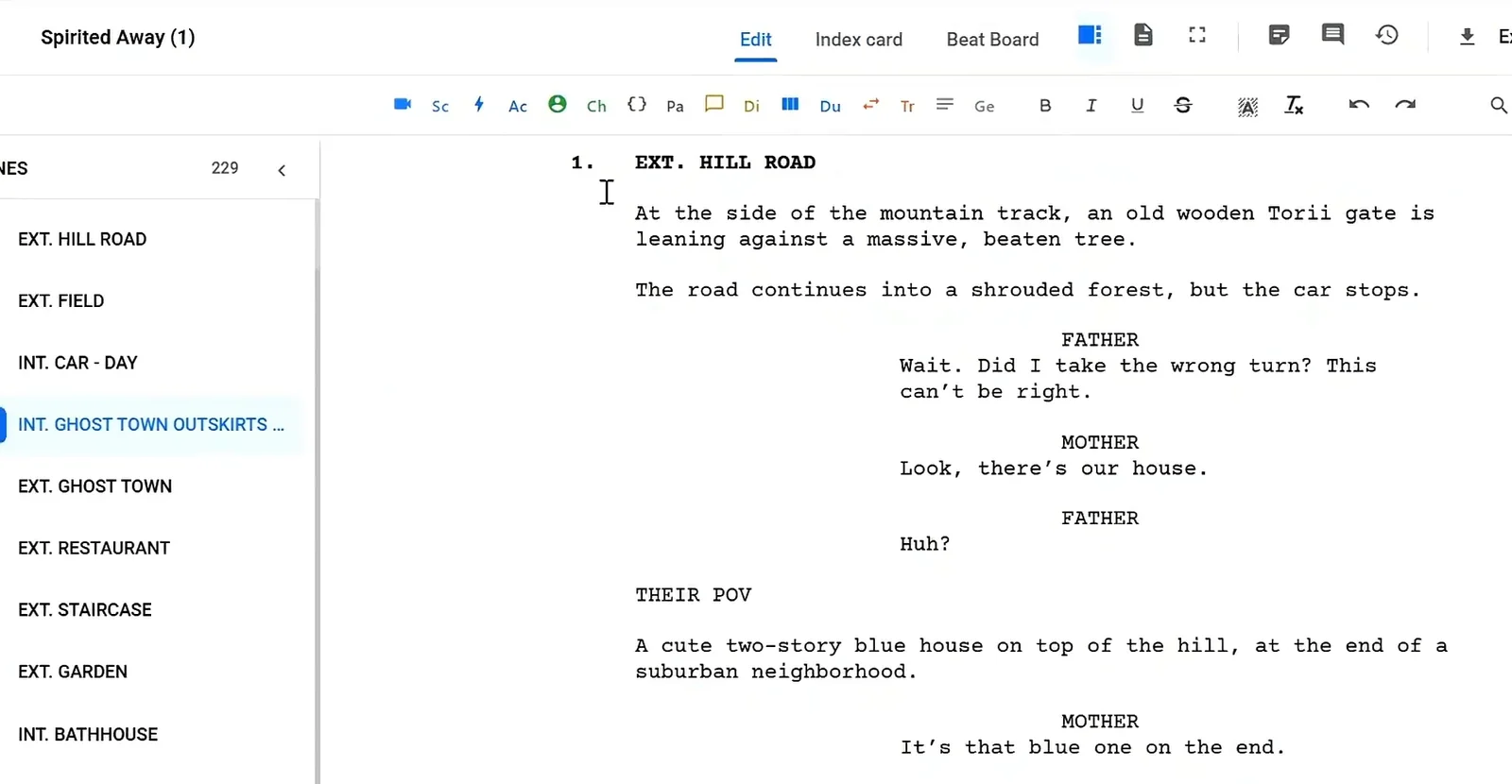
Here is a short Studiovity video that explains AI screenwriting and the editor you can use to draft your scenes:
The Format Rules for Character Introductions
The technical part is simple and widely agreed:
- Write the character’s name in CAPITALS the first time they appear in an action line. After that, use normal capitalization in action lines.
- Add an age or age range right after the name, often in brackets or after a comma, for example MAYA (late 20s) or MAYA, late 20s.
- Follow with a short description in the same action line or the next one.
- Introduce the character when they first appear on screen, not when they are first mentioned in dialogue.
EXT. BUS DEPOT - DAWN

MAYA (late 20s), in a borrowed blazer two sizes too big,
rehearses a job interview under her breath. She has
clearly rehearsed it all night.
The capitals help casting, scheduling and the reader all spot each new speaking role quickly. For the wider layout of action lines and dialogue, see our guide on how to format a screenplay.
What to Put in a Character Introduction
A good introduction gives the reader a feeling, not a police description. Aim for one or two of these:
- A defining detail. The borrowed blazer says more about Maya than her height or hair colour.
- An attitude. How does this person face the world? Nervous, cocky, tired, hopeful?
- A contrast. A gentle giant, a polite threat, a child who talks like a lawyer.
- A hint of the arc. Show the flaw or want that the story will test.
What to leave out
Avoid long physical lists unless a feature matters to the plot. Eye colour, exact height and brand names lock the role to a narrow casting choice and rarely help the story. Avoid backstory the camera cannot show, such as “she has never forgiven her father”. Show it through behaviour instead.
How Long Should It Be?
For main characters, one to three lines is the sweet spot. Readers skim long description blocks, so a tight, vivid sentence lands better than a paragraph.
Supporting roles can get a single phrase. Very minor roles often need only a function and an age: “A TICKET CLERK (60s)”. Matching the length of the introduction to the importance of the character also tells the reader who to follow.
Show Character Through Action
The strongest introductions do not just describe. They show the character doing something that reveals who they are.
- A doctor who checks the patient’s chart before looking at the patient.
- A thief who returns a dropped wallet, then lifts a watch from the same man.
- A mother who answers a work call while tying her son’s shoelaces with one hand.
Give your main character an entrance action that reflects their core trait. The first action is often remembered longer than the first line of dialogue.
Try It in Your Own Draft
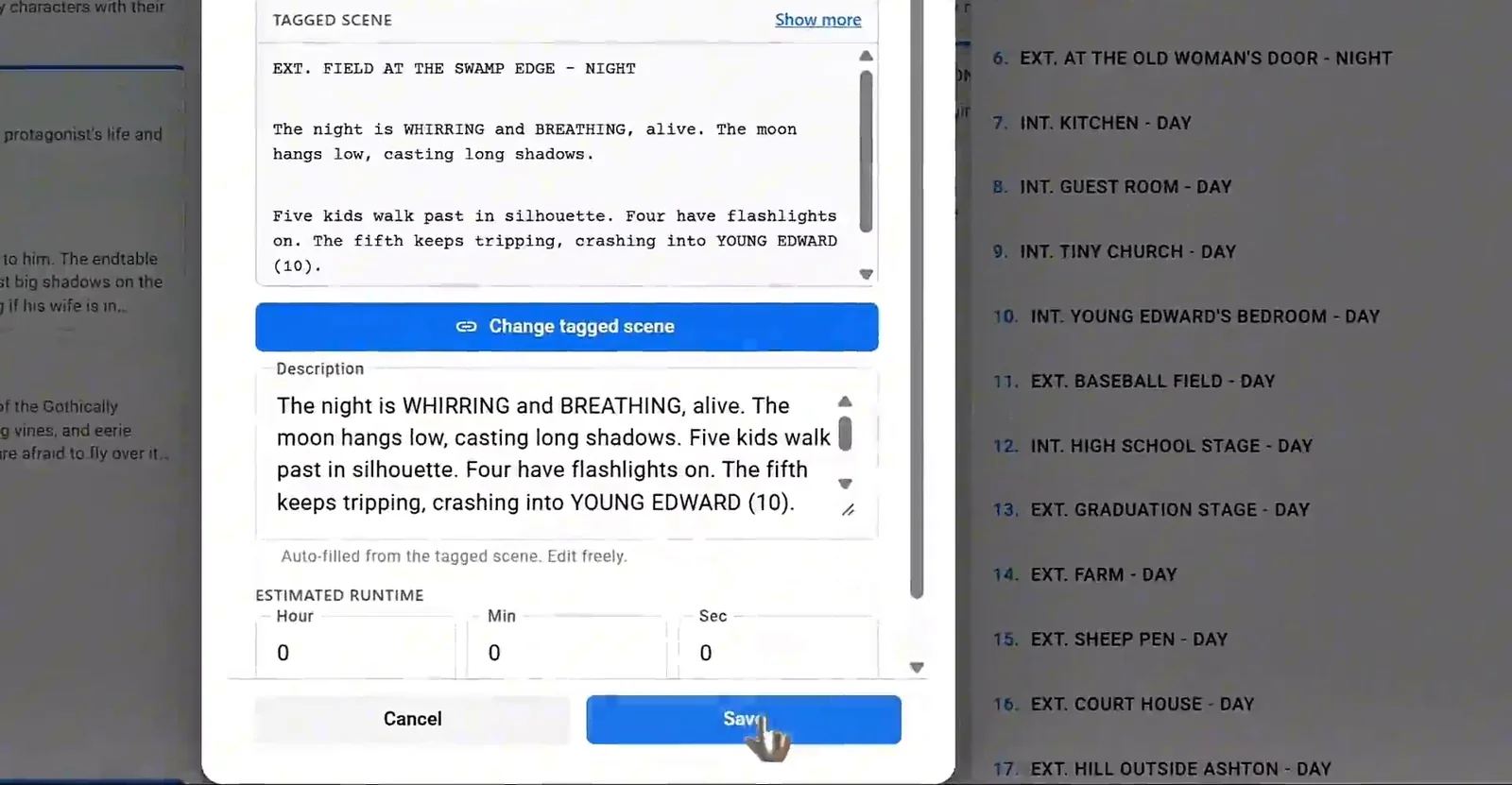
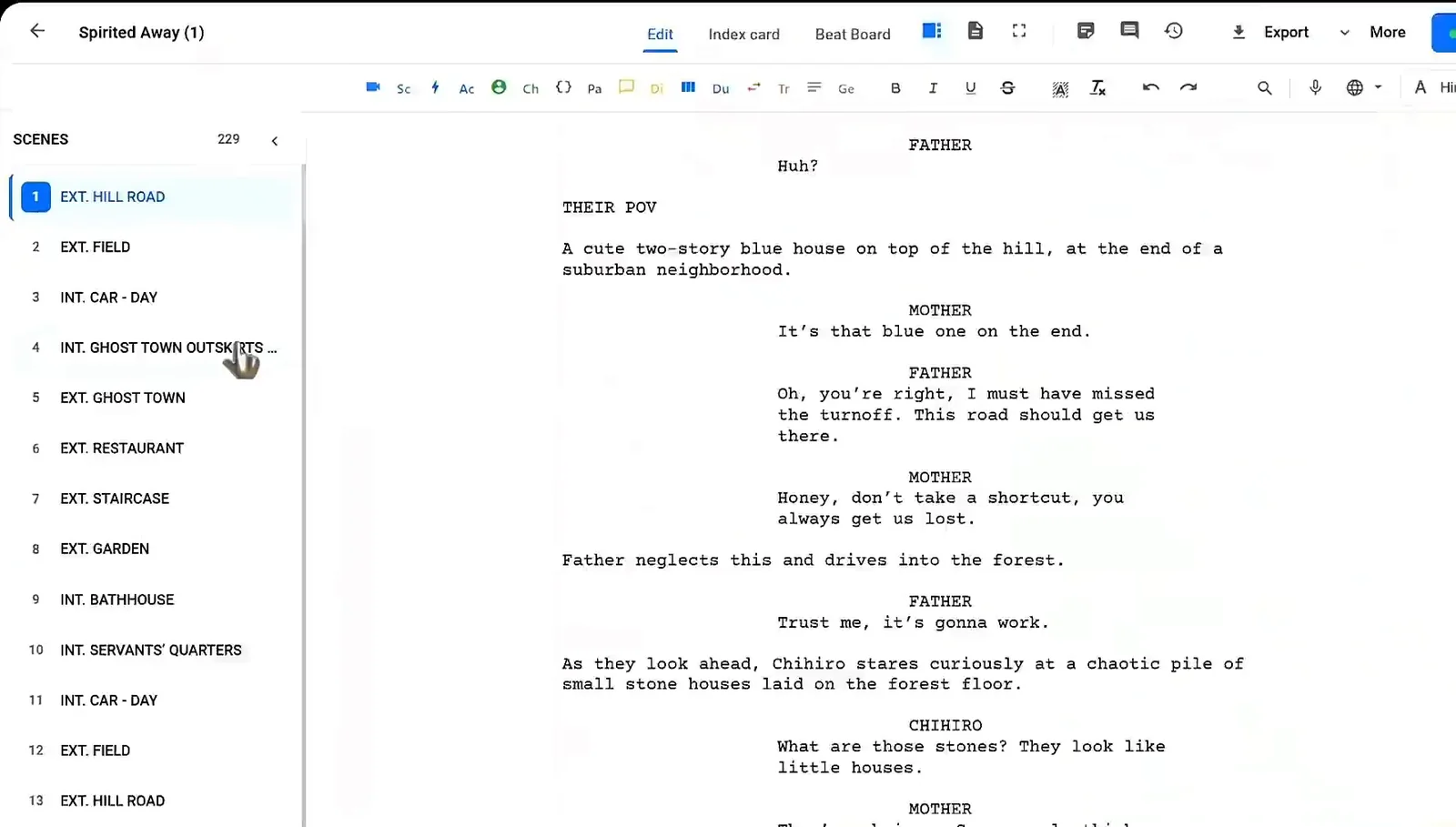
It helps to see all your introductions together. In the Studiovity screenwriting software you write in industry format and move between scenes from the scene list, so you can jump to each character’s first appearance and compare how they are introduced.
Introducing Groups and Large Casts
Ensemble scripts can overwhelm a reader with new names. A few ways to manage it:
- Stagger entrances. Do not introduce six people on page one if you can spread them over the first ten pages.
- Introduce in clusters. A group with a shared trait can be introduced together, then singled out as each one speaks.
- Use clear, distinct names. Avoid names that start with the same letter or sound alike.
- Only capitalize speaking or important roles. Background extras such as “commuters” do not need capitals.
Characters who return after a gap
If a character appears once early and returns much later, a brief reminder in the action line helps, such as “Maya, the job hopeful from the depot”. Do not re-capitalize the name.
Common Character Introduction Mistakes
- Using only age and looks. “SAM, 35, handsome” tells the reader almost nothing.
- Introducing a character in dialogue first. The capitals belong to their first appearance on screen.
- Writing a biography. Long backstory blocks slow the page and cannot be filmed.
- Forgetting the capitals. It makes the script harder to read and harder to break down for production.
- Same voice for everyone. If every introduction sounds alike, the characters will feel alike too.
For more first-draft habits, our article on screenwriting tips for your first screenplay is a useful companion.
Character Introduction Checklist
- Name in capitals on first appearance only
- Age or age range right after the name
- One to three lines for main roles, shorter for minor ones
- One vivid detail, attitude or contrast instead of a physical list
- An entrance action that reveals who they are
- Introductions staggered in ensemble scenes
Test a few versions of an introduction in the Studiovity screenwriting editor and use the AI options to sharpen the action line until it feels like the character.
FAQ
Do I capitalize a character’s name every time?
No. Capitalize it in an action line only the first time the character appears. Character cues above dialogue are always in capitals.
Should I include the actor I imagine for the role?
No. Naming a real actor in the script distracts the reader and limits casting. Describe the qualities instead.
How do I introduce a character who is unnamed?
Give them a clear functional label such as THE STRANGER or YOUNG NURSE, and keep it consistent until you reveal a name, if you ever do.
Can I introduce a character through voice only?
Yes. If we hear them before we see them, introduce them on the cue with an O.S. or V.O. extension, then capitalize their name in the action line when they first appear on screen.
Make Every Entrance Count with Studiovity
A good character introduction is short, specific and visual. Studiovity keeps your scenes, action lines and dialogue in one editor so you can review every first appearance quickly. Start your next script in Studiovity and give each character an entrance worth remembering.