
Most writers spend hours on how a scene begins and very little time on how it ends. Yet the last moment of a scene decides whether the reader turns the page eagerly or starts to skim. A scene that ends too late drains momentum. A scene that ends on the right beat pulls the story forward.
This guide covers how to end a scene in a screenplay: when to cut out, the main types of scene endings, how they connect to the next scene, and a simple way to test every ending in your draft.
Here is a short Studiovity video on screenwriting software for filmmakers and the tools you can use to shape your scenes:
Why Scene Endings Matter
Every scene should change something. A character learns, loses, decides or is exposed. The ending is where that change lands. If the scene keeps running after the change, the energy leaks away and the reader feels the drag.
Good scene endings also do a second job: they create a question that the next scene answers, or a feeling that the next scene contrasts. That chain of questions and answers is what makes a script feel fast.
Late In, Early Out
The most useful rule for scene endings is simple: enter the scene as late as possible and leave as early as possible.
To leave early, find the moment the scene’s purpose is achieved and cut there. Common places to trim:
- Goodbyes, thank-yous and small talk after the key line.
- Characters walking out of the room or getting into cars.
- A second line that repeats what the first line already made clear.
- Reaction shots that explain what the audience already feels.
BEFORE:
NISHA hangs up. She stares at the phone. She sits down.
She stands up. She grabs her keys and leaves.

AFTER:
NISHA hangs up. Grabs her keys.
Types of Scene Endings
The decision
A character chooses something that commits the story to a new direction. End on the choice, not on the explanation of it.
The reveal
New information flips the meaning of the scene. Cut right after the reveal, before anyone talks it through.
The button
A button is a short final line or image that caps the scene, often with humour or irony. It works best when it is brief and comes from character, not from the writer showing off.
The question
The scene ends with something unresolved: a knock at the door, a message that is not opened, a threat that is not answered. This is common in a cold open or before a break. Our guide on how to write a cold open for a TV pilot shows how this works at the start of an episode.
The quiet ending
Not every scene needs a bang. After a big emotional moment, a still image or a small gesture can let the audience breathe. Use it on purpose, not by default.
Try It in Your Own Draft
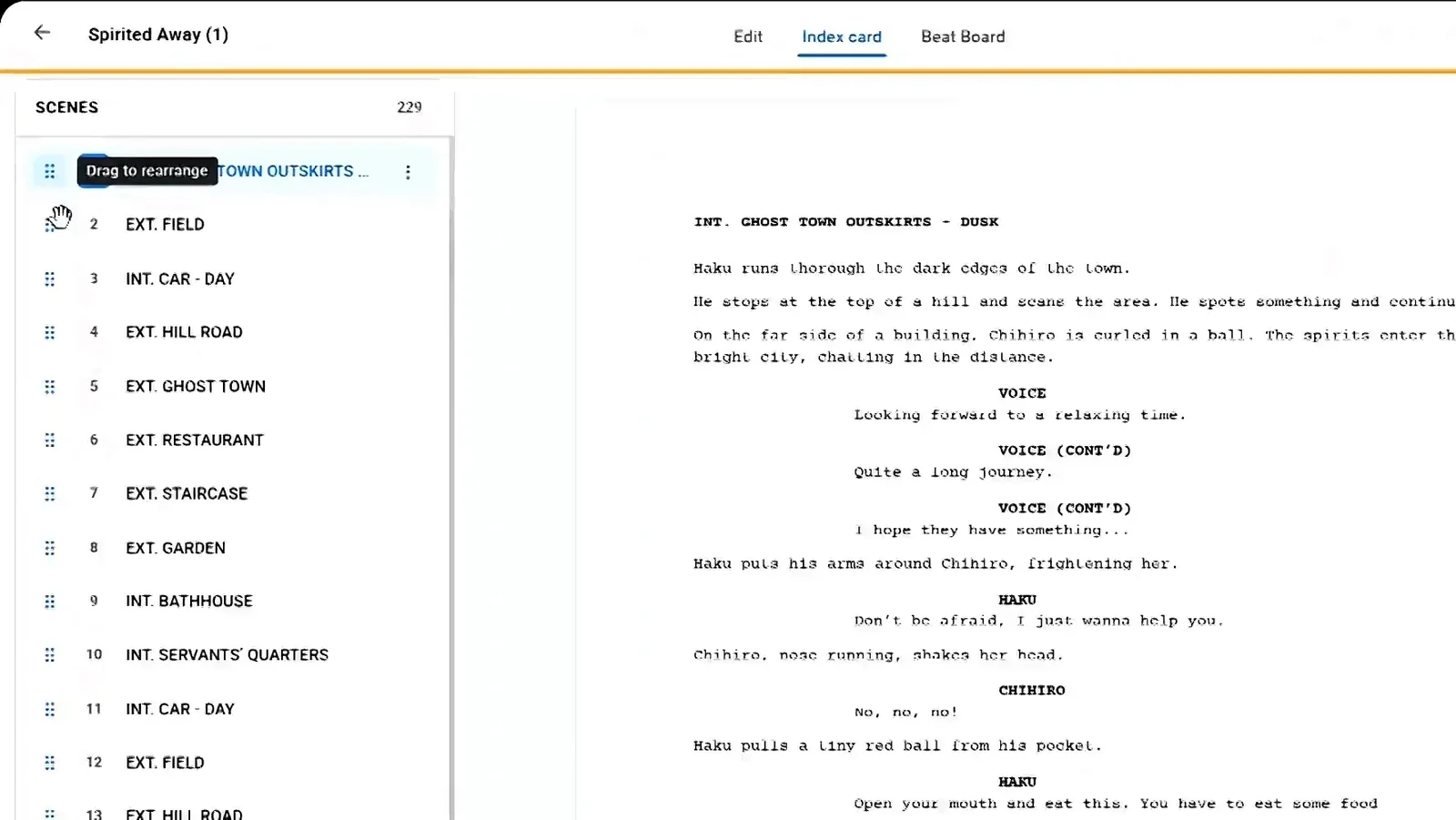
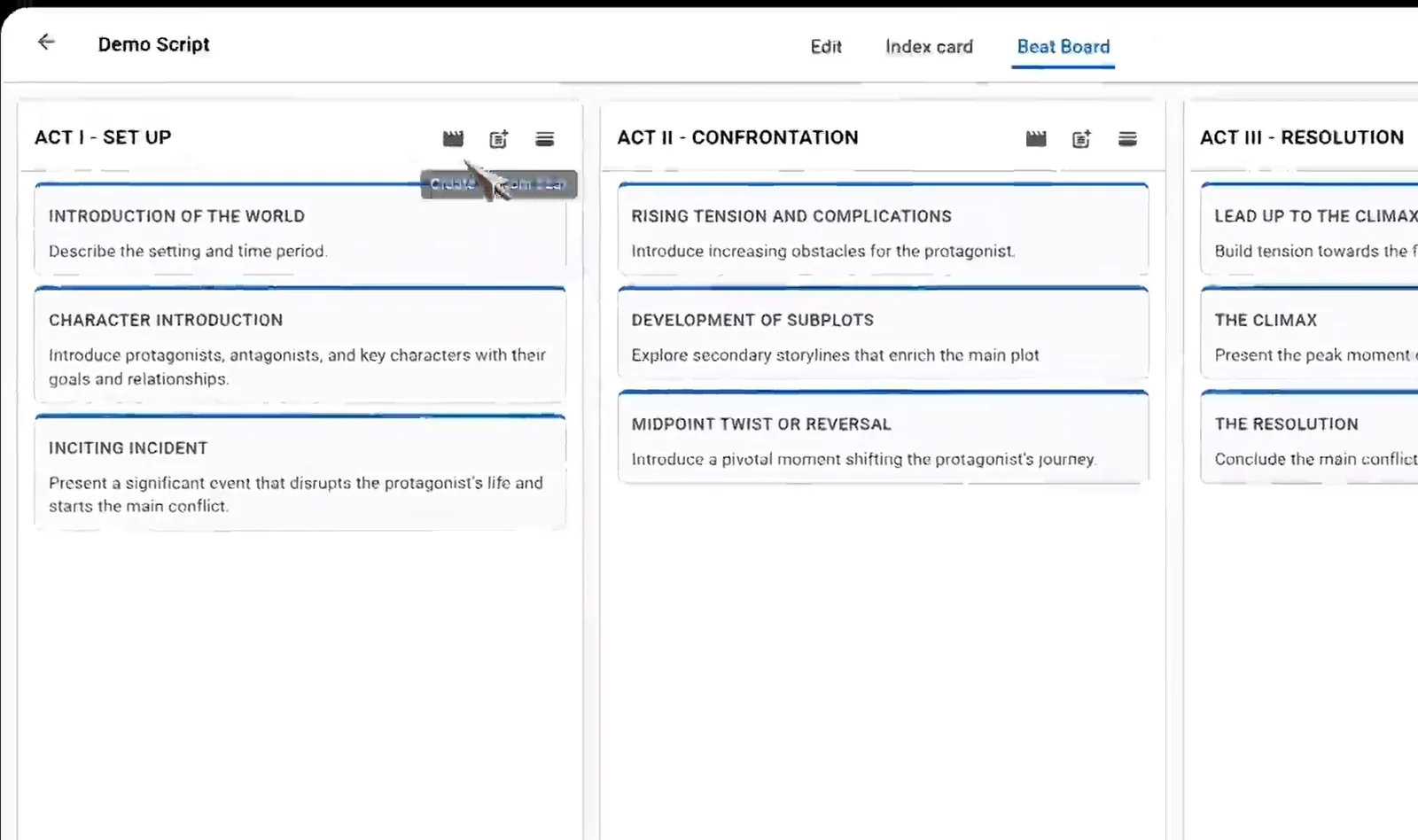
Scene endings are easier to judge when you can see the order of your scenes. The Studiovity screenwriting software includes index cards and a beat board, so you can lay out scenes, read the last beat of each one and move them around if two endings feel too similar.
Connecting One Scene to the Next
How a scene ends shapes how the next one should begin. A few techniques:
- Question and answer. End on a question, open the next scene on the answer, or on something that makes the question worse.
- Contrast. Follow a loud ending with a quiet opening, or a sad ending with an unexpectedly bright one.
- Visual or verbal link. Repeat a word, an object or a sound across the cut. This can be done without writing a transition at all.
If you do want to signal a specific cut, keep it rare and purposeful. Our guide to screenplay transitions explains when CUT TO or SMASH CUT is worth writing on the page.
How to Test Your Scene Endings
Run this pass after your first draft:
- Read only the last three lines of every scene in order.
- Mark any ending that does not change something or raise a question.
- Look for patterns, such as every scene ending on a line of dialogue or on someone leaving.
- Trim each scene back to its strongest final beat.
- Read the script straight through to feel the new pace.
Common Scene Ending Mistakes
- Ending on an exit. “She leaves” is rarely the strongest beat.
- Explaining the moment. A line that tells the audience what just happened weakens it.
- Same ending every time. A string of jokes or cliffhangers becomes predictable.
- Ending before the change. Cutting too early can leave a scene with no point. Find the beat, then cut.
- Over-written buttons. A clever closing line that does not suit the character breaks the spell.
Scene Ending Checklist
- The scene ends right after its key change
- No goodbyes, exits or repeated lines after the beat
- The ending raises a question or sets up a contrast
- A mix of decisions, reveals, buttons and quiet endings
- The next scene begins with a clear link or contrast
- Transitions written only when they add meaning
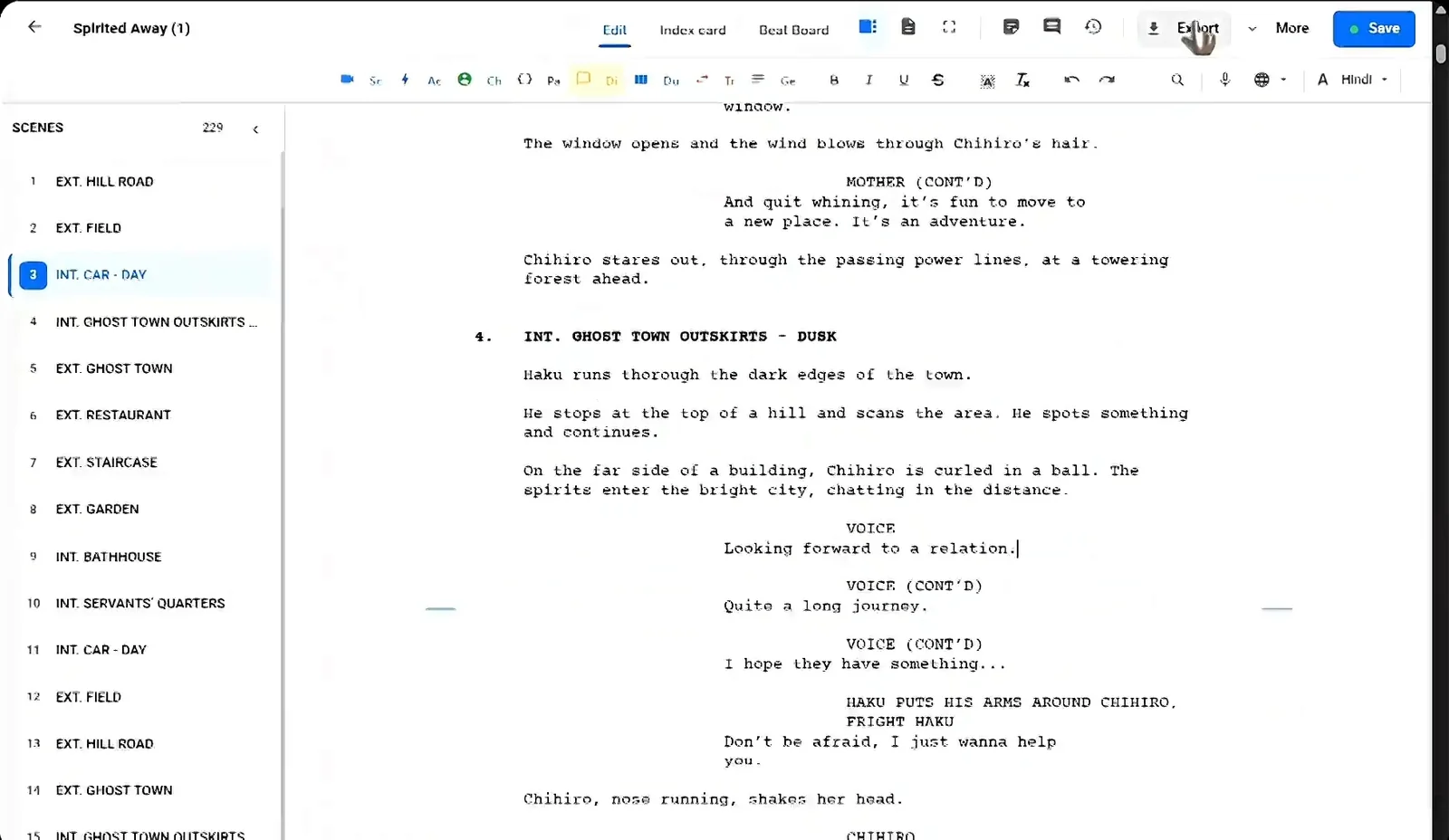
When you rework a scene, use the scene list in the Studiovity screenwriting editor to jump straight to it and tighten its last lines.
FAQ
Should every scene end on a cliffhanger?
No. Constant cliffhangers tire the reader. Save them for act breaks and key turns, and use quieter endings in between.
Is it wrong to end a scene with dialogue?
Not at all. Many great scenes end on a line. Just make sure it is the strongest line, not a goodbye or a summary.
How long should a scene be?
It depends on the story, but most scenes are one to three pages. If a scene runs long, check whether it ends after its purpose is achieved.
Do I need to write CUT TO at the end of each scene?
No. A new scene heading already implies a cut. Write a transition only when it tells the reader something specific.
Shape Stronger Scenes in Studiovity
A strong scene ending is short, purposeful and points to what comes next. Studiovity keeps your scene list, index cards and beat board next to the script, so every ending is easy to find and fix. Write your next draft in Studiovity and make every scene leave at the right moment.