
You have a world-class movie idea in your head, but the gap between a brilliant concept and a finished film is shaped by the digital toolkit you use to organize the chaos. The Best Film Pre-Production Software in 2026 helps bridge that gap efficiently. Building a movie using a generic word processor is like constructing a house from a napkin sketch—it quickly becomes a fragile house of cards. Therefore, pre-production software acts as your official blueprint and permit office, safely anchoring your artistic vision to reality.
Industry data reveals a fundamental shift in modern film project management. Moreover, according to recent workflow surveys, 80% of independent creators now rely on AI-integrated systems to predict scheduling conflicts and generate instant visual references. Finding the Best Film Pre-Production Software in 2026 (free vs paid) means leaving behind manual guesswork for smart assistants that catch costly mistakes before a single camera ever rolls.
Navigating this digital ecosystem requires mastering three critical pillars: Creative planning (writing the script), Visual planning (storyboarding the shots), and Logistical planning (organizing the schedule). As a result, mastering these distinct foundations makes streamlining creative workflows feel less like a daunting technical hurdle and more like an accessible roadmap.
Mastering the Blueprint: Why Smart Scriptwriting Software Beats Standard Word Processors
You already know every great film starts with a script, but using a basic word processor is a quick way to frustrate yourself. Screenplays rely on “Movie Grammar”—a highly specific layout of margins and spacing that dictates pacing. Therefore, specialized scriptwriting software acts as a smart blueprint editor, automatically formatting your text so you can focus 100% on storytelling instead of constantly hitting the tab key.
In addition, automating this layout ensures your project matches the industry standard scriptwriting software formatting that investors expect. In 2026, these tools also act as virtual writers’ rooms. Furthermore, cloud-based features enable seamless feedback loops, allowing remote collaborators to leave notes or edit scenes in real time without creating messy email chains.
Choosing your toolkit depends entirely on how you prefer to work. For instance, when evaluating Final Draft vs WriterDuet 2026, the biggest differences revolve around workflow preferences:
- WriterDuet (Free tier): Excellent for beginners, offering cloud-native collaboration and core formatting, though it requires constant internet access.
- Final Draft 13 (Pro tier): The traditional heavyweight, providing robust offline modes and color-coded version tracking so you never lose older drafts during heavy rewrites.
Ultimately, exporting a professional-grade PDF proves you have a solid foundation, but words on a page eventually need to become physical shots.
Seeing the Movie Before the Shoot: How AI Storyboarding Ends Visual Confusion
Standing on a film set with actors waiting while you figure out where to place the camera is a guaranteed way to burn through your daily budget. However, you already know your script requires visual planning. Translating those formatted pages into actual frames traditionally meant either possessing incredible drawing skills or hiring a dedicated concept artist. For modern creators, relying entirely on stick figures or pure imagination is no longer the ceiling for communicating a cinematic idea.
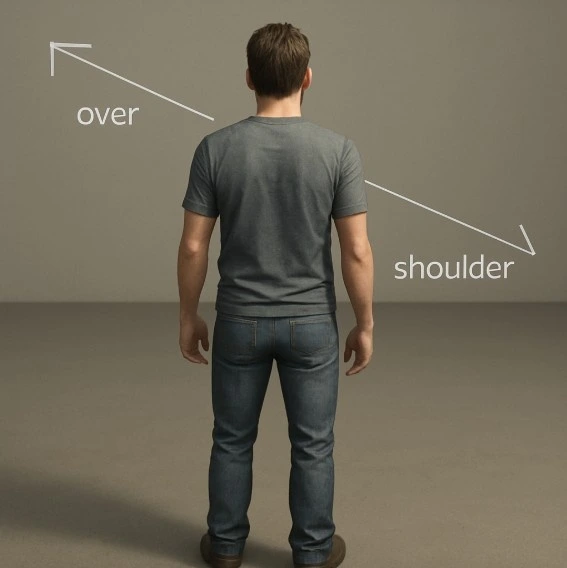
Today’s software eliminates that artistic barrier through a process known as pre-visualization, or “previs,” which allows you to digitally build your scenes before anyone arrives on set. For example, tools like Previs Pro serve as your personal digital sketch artist, reading your script and generating a foundational 3D storyboarding environment. Instead of sketching out a two-person dialogue scene by hand, you simply type your vision, and the software drops realistic digital stand-ins into a customizable virtual room.
As a result, this leap in virtual production planning practically hands you a professional-grade presentation overnight. By converting written descriptions into manipulatable scenes without requiring any drawing skills, you can effortlessly export high-fidelity lookbooks—collections of reference images that vividly prove your vision to potential investors and actors. Furthermore, pairing these visuals with AI-driven shot lists reduces on-set “figuring it out” time by 30%, keeping your shoot moving swiftly.
Having a crystal-clear visual blueprint is incredibly empowering. However, cameras cannot roll until you organize the real-world logistics to match those digital frames. Therefore, translating your beautiful storyboards into an actionable daily calendar is the next critical hurdle. Fortunately, the exact same technology can efficiently organize your logistical chaos.
Solving the Scheduling Domino Effect: How Automated Breakdowns Save 40+ Hours of Planning
Because films are famously shot out of order, moving a single scene creates a massive scheduling domino effect. For instance, if your lead actor gets a flat tire, your entire shoot calendar must immediately adapt. Today’s production scheduling software manages this chaos through a digital “Script Breakdown“—the vital process of scanning your text to identify every prop, actor, and location required before anyone arrives on set.
Modern AI-integrated script breakdown tools read your screenplay instantly, turning a tedious planning task into an automated four-step workflow:
- Tagging props: Flagging specific items to ensure nothing is ever missing on set.
- Assigning cast: Linking character names to your actors’ real-world availability.
- Grouping locations: Bunching scenes at the same address to maximize shooting time.
- Generating the stripboard: Creating a movable, visual puzzle piece for each scene.
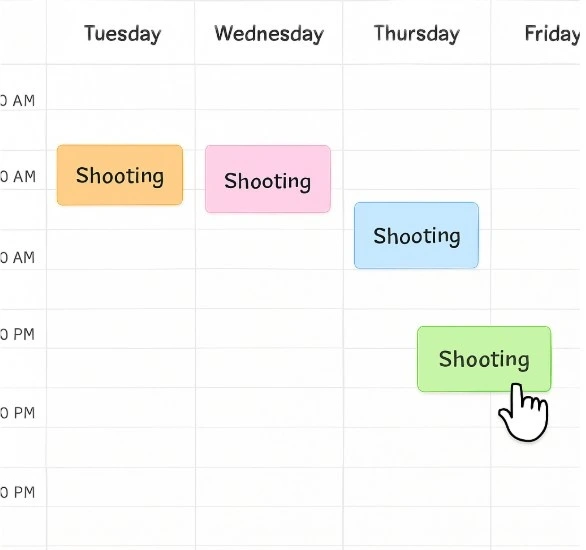
Consequently, visualizing this “Stripboard” allows you to effortlessly drag and drop these colored blocks to optimize daily schedules and minimize travel costs. Once your puzzle is perfectly arranged, the system instantly produces automated call sheets—the official daily itinerary telling your crew exactly where and when to show up. Whether you rely on premium platforms or free StudioBinder alternatives, generating these professional schedules now takes seconds instead of hours, giving your indie project a studio-level polish.
With your cast scheduled and logistics locked, your physical blueprint is completely secure. However, every color-coded day on that digital calendar translates directly to dollars leaving your pocket.
Budgeting Without the Math Headache: Real-Time Tracking for Indie Filmmakers
Every day on your shooting calendar carries a price tag, permanently linking your schedule to your wallet. Therefore, modern budgeting software prevents mid-shoot bankruptcy by allowing you to track every dollar in real-time rather than discovering you are out of money after the fact. In addition, these platforms even feature intuitive “What-If” modes, letting you safely test how adding an expensive night shoot or extra camera changes your bottom line before you ever commit a single dime.
Protecting those dollars requires keeping your legal paperwork strictly organized in the cloud. Instead of chasing actors with physical clipboards, today’s tools let you manage talent contracts digitally well before production begins. Moreover, this secure portal also houses your COI—a Certificate of Insurance, which is the mandatory proof of coverage required before a city will let you film on their streets or a vendor will hand over their camera gear.
Financial dashboards in 2026 do more than just play defense; they actively stretch your funding further. For example, by utilizing real-time tax incentive tracking, the system automatically calculates local government rebates your indie project might qualify for. As a result, it essentially finds extra money based simply on your shooting locations. With your logistics and ledgers now fully secured, the final hurdle is choosing the appropriate software tier for your operation.
The $0 Toolkit vs. The Pro Suite: When to Upgrade Your Production Pipeline
You don’t need a Hollywood budget to plan a professional shoot. In fact, the 2026 “freemium production stack” lets you build a comprehensive workflow for zero dollars. For solo creators, free software provides everything required to instantly format scripts and organize simple daily schedules.
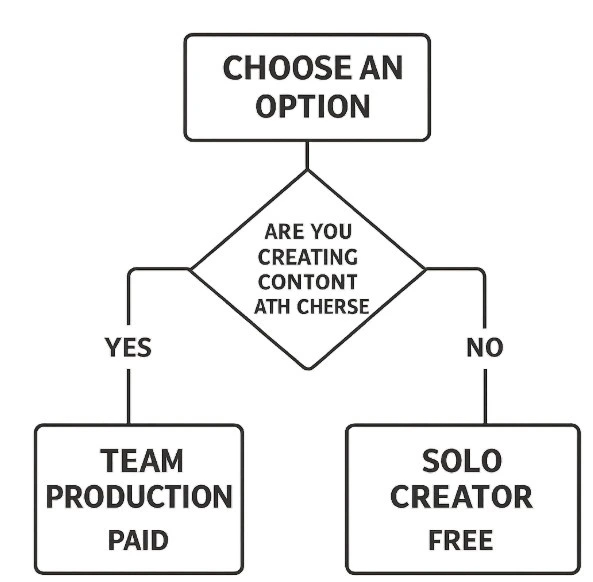
Eventually, every film hits a “Break Point”—the exact moment coordinating multiple crew members makes free tools feel restrictive. When evaluating paid vs free pre-production software 2026, consider how these tiers match your needs. This is where choosing the Best Film Pre-Production Software in 2026 becomes critical:
- Scripting: Trelby (Free) offers basic writing functions, while a Celtx vs Final Draft comparison reveals the paid giants excel at tracking live revisions across multiple co-writers.
- Logistics: The best free alternatives to StudioBinder handle simple task boards, but premium subscriptions automatically update complex, shifting calendars if an actor gets sick.
Ultimately, deciding when to open your wallet comes down to headcounts. If you are shooting a short weekend project with friends, stick with the $0 toolkit to maximize your savings. Conversely, if you are hiring external camera vendors and managing shared cast documents, the communication time saved by a pro suite easily justifies the monthly cost.
Your 2026 Production Roadmap: Three Steps to Move from Script to Set
You no longer have to rely on willpower alone to organize a movie idea. Instead, mastering this digital blueprinting process bridges the gap between being a creative thinker and an effective producer. This clarity forms your pre-production roadmap, ensuring your vision survives the jump from imagination to reality.
To build your minimum viable toolkit today, first pick a free scriptwriting software to format your story automatically. Next, use AI-assisted storyboard features to create your visual framework and the essential tools for a film pitch deck. Finally, import that script into a scheduling app to let the software effortlessly manage your logistical domino effect.
The technical side of production is no longer a barrier; it is your greatest asset. Therefore, when you utilize these modern automated systems to handle the heavy lifting, you secure the freedom and confidence to focus purely on the magic of storytelling. That is exactly why choosing the Best Film Pre-Production Software in 2026 can define the success of your entire filmmaking journey.
Why Studiovity Is the Best Film Pre-Production Software in 2026
When it comes to choosing the Best Film Pre-Production Software in 2026, having everything in one place is no longer a luxury—it’s a necessity. Studiovity brings together scriptwriting, AI-powered storyboarding, script breakdown, scheduling, shot listing, and call sheet generation into a single seamless workflow. Instead of jumping between multiple tools, filmmakers can move from script to screen within one unified ecosystem.
Moreover, Studiovity is built for modern creators who demand speed, collaboration, and automation. Its AI-driven features eliminate repetitive manual work, while real-time collaboration ensures your entire crew stays aligned from pre-production to shoot day. Whether you’re an indie filmmaker managing a tight budget or a production team handling complex logistics, Studiovity scales effortlessly to match your needs.
If you’re serious about streamlining your filmmaking process and reducing costly errors, Studiovity stands out as a smart, all-in-one solution designed to turn creative vision into production-ready reality.