
Rain on an exterior daybreak is not a creative crisis until the board has nowhere else to go. Cover sets—ready interior scenes parked for exactly that moment—are how ADs and UPMs keep a shoot day alive when the forecast flips. The trick is treating cover as a scheduled asset, not a last-minute scramble.
Related video: Studiovity movie scheduling: plan your shoot like a pro
Park cover where the crew can reach it
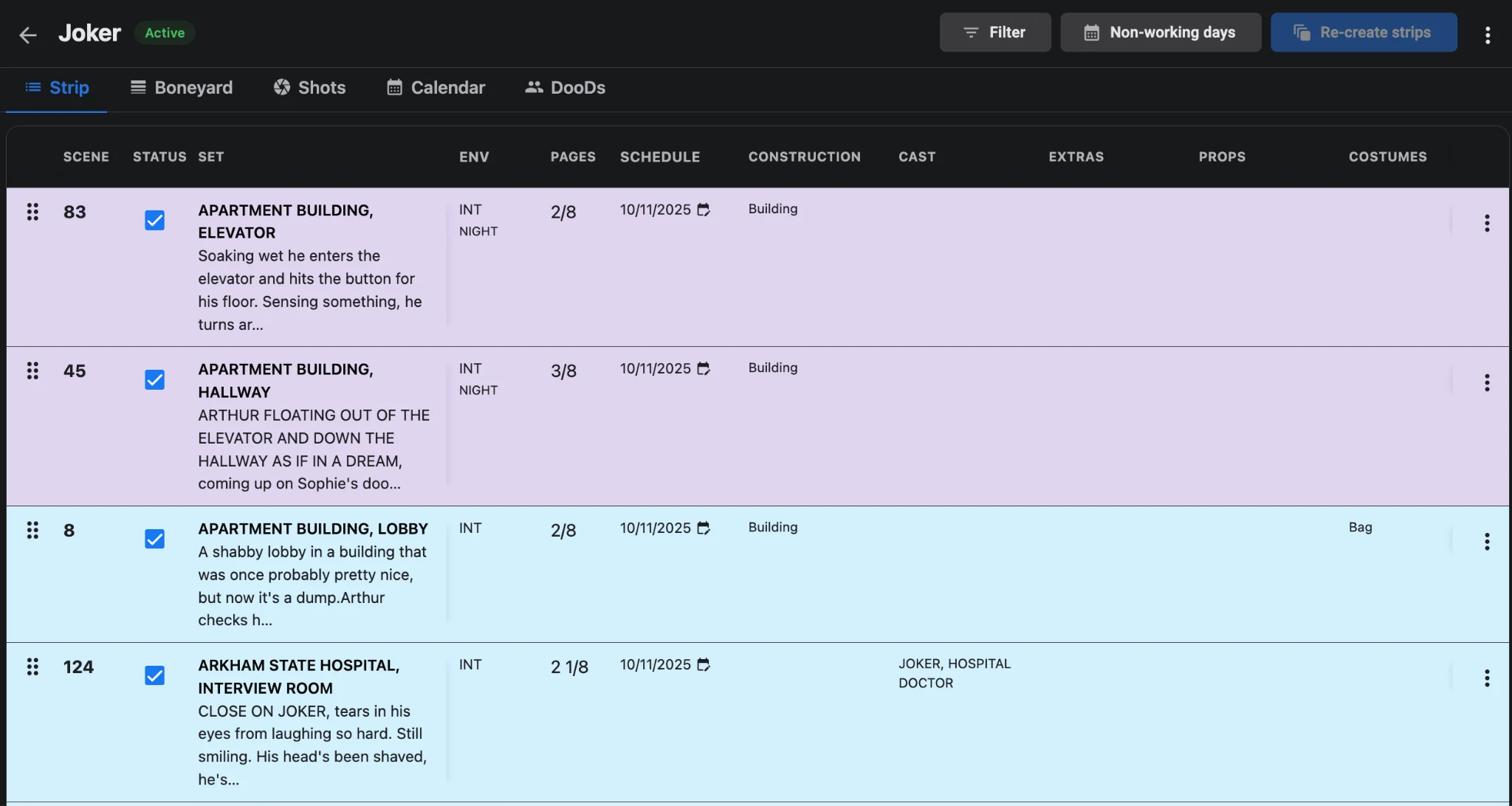
A cover set only helps if the company can move into it without burning half the day. Choose interiors near your primary exterior, keep the same cast block when you can, and confirm the space stays available on the weather-risk days. In Studiovity’s film scheduling software, those backup scenes sit on the stripboard with full scene data—set, INT/EXT, day/night, pages in eighths, cast, costumes, and set dressings—so swapping them in does not mean rebuilding the day from memory.
Use the boneyard as your weather shelf
Scenes you are not ready to lock into a daybreak still need a home. Park candidate cover interiors in the boneyard so they stay out of the published board but never leave the project. When radar turns against you, pull one back onto the day, reorder the strips, and keep page counts honest. Our guide to DOOD reports, one-liners and the boneyard shows how parked scenes stay visible to the whole team.
Pair cover with real calendar off days
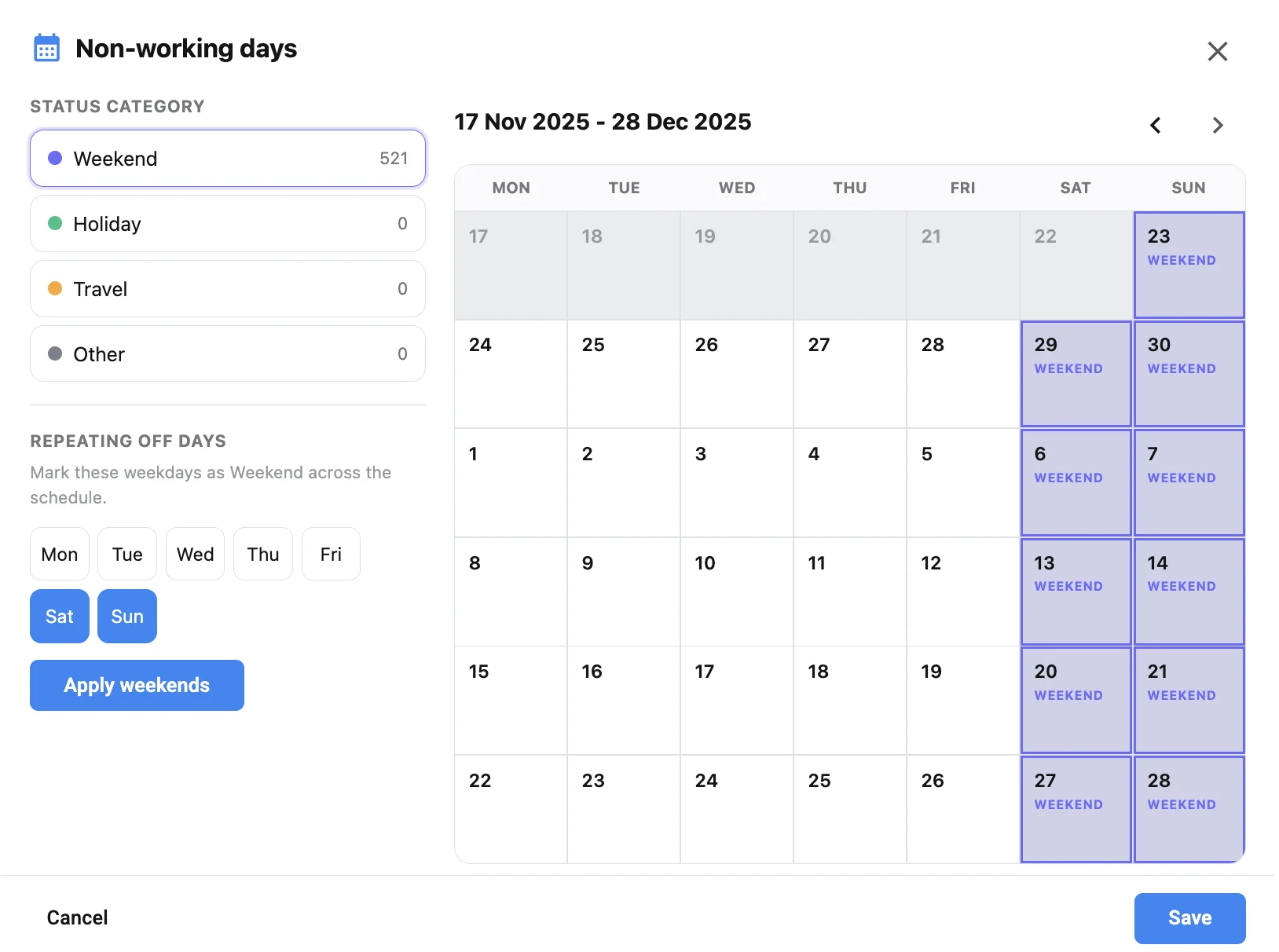
Cover planning fails when the only open interior lands on a travel day or a public holiday. Mark weekends, holidays and travel in the non-working days panel before you promise a weather swap. That way every cover option falls on a date the unit can actually work, and the shooting schedule stays aligned with reality rather than wishful pages. Pair that setup with non-working days on a real shoot calendar so cover never pretends a festival Monday is available.
Keep call sheets in sync when you swap
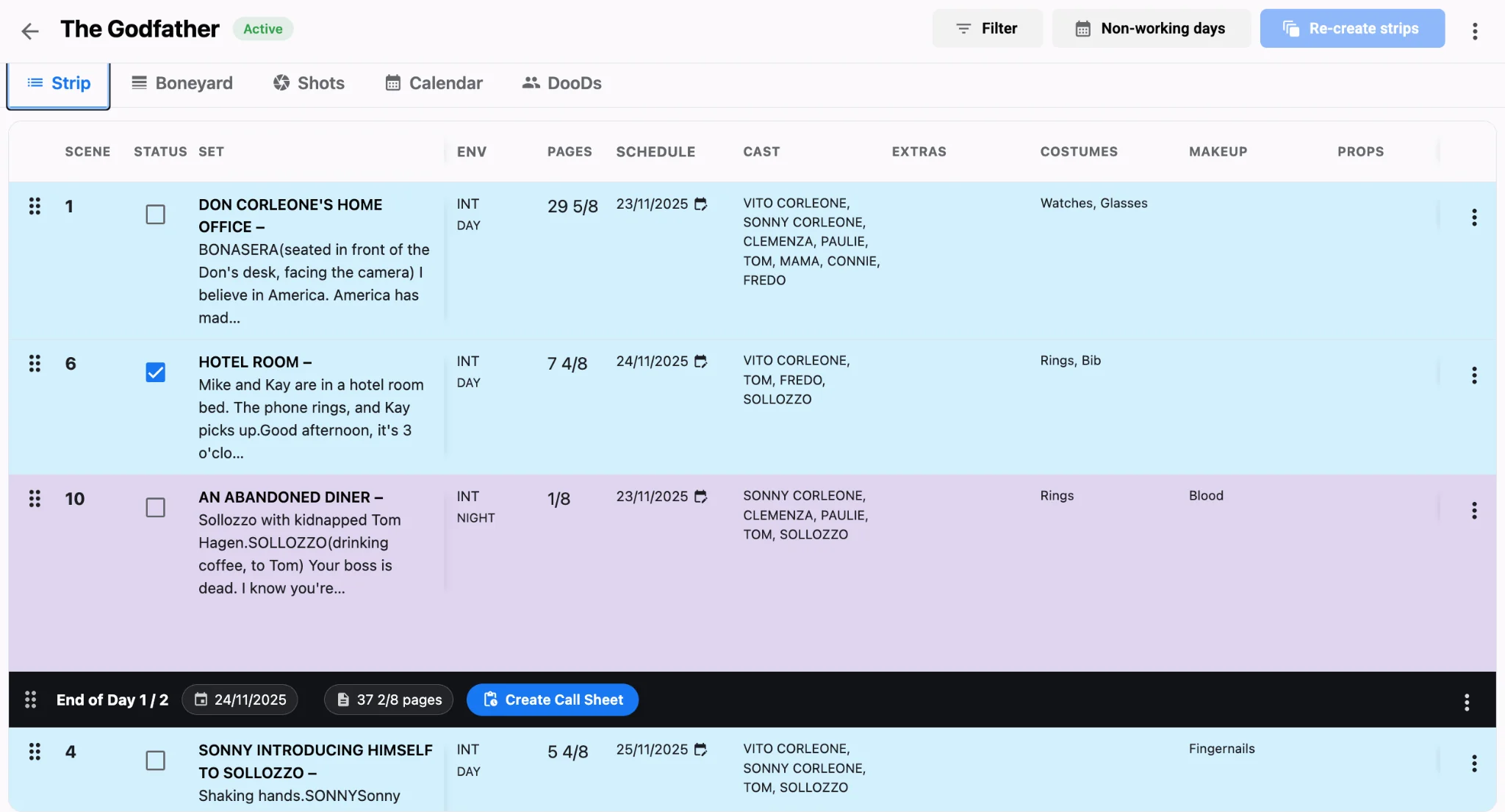
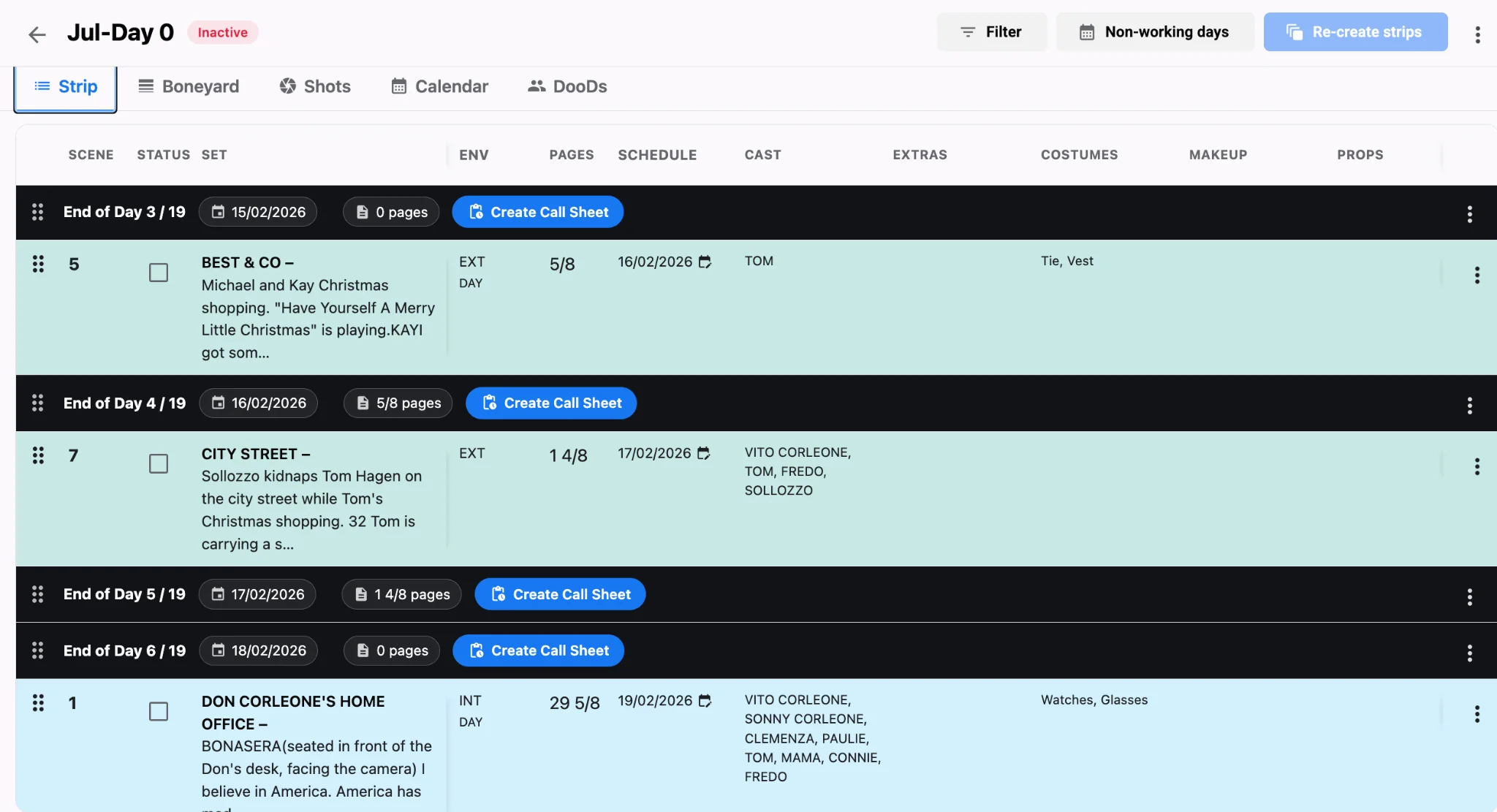
Once the board changes, the call sheet has to change with it. Rebuild from the updated daybreak with call sheet software so individual call times, locations and scene lists match the cover day you are actually shooting. Departments should not learn about the swap from a hallway rumor. Keep cover interiors dressed to a shootable minimum during weather weeks, and prefer cover that reuses the same truck pack and cast already on the call whenever geography allows.
A short cover-set checklist
- Identify two interiors per high-risk exterior block, not one.
- Prefer cover that shares cast already on the day to avoid new holds.
- Confirm location access and construction status the night before.
- Re-export the shooting schedule and push a fresh call sheet after a swap.
- Walk wardrobe and art through the cover day the night before so sets and costumes are staged, not guessed.
Weather will still win some mornings. Stage cover sets with the same cast already on the day whenever you can, and confirm construction and access the night before so the swap is a board move—not a location hunt. A board that already holds cover interiors—planned with AI film scheduling and backed by clear reports—means the company still finishes the day with usable pages instead of a weather kill. For more on reducing wasted travel when plans shift, see how AI scheduling cuts company moves and what modern stripboards gain over traditional boards.