
We admire a thrilling explosion on screen, but we never see the four hundred checkboxes required to film it safely. Organizing a film set is like hosting a complex dinner party where the guests are demanding actors and specialized technicians with only six hours to finish the meal. In practice, the professional filmmaking process relies on ninety percent organization and ten percent inspiration. Therefore, a shot list is meticulously prepared beforehand to guide the entire crew.
Transforming a raw script—”The Dream”—into a finished movie requires an integrated workflow that connects every moving part. Think of Studiovity as the central brain of your production. Rather than shuffling scattered paperwork, this platform automatically links your creative vision to your daily schedule. By uniting the entire filmmaking workflow, it ensures the final result on screen perfectly matches your original imagination.
Turning Words into an Inventory: How Script Breakdowns Prevent Costly On-Set Surprises
Plunging into production without a detailed plan creates chaos. Once a script is written, filmmakers perform a “Script Breakdown,” which acts as highlighting the ingredients for a recipe. You read through the scene to find every actor, costume, and prop needed.
Traditionally, this meant attacking paper pages with assorted colored markers. Today, modern filmmaking techniques use production element tagging instead. Studiovity functions as a smart assistant, turning a tedious manual chore into an integrated script breakdown. Tagging a “coffee cup” in the digital text automatically adds it to a master inventory.
Because the system tracks every detail, nobody forgets crucial props on filming day. Preventing costly surprises allows the crew to focus entirely on creativity. With the physical ingredients securely logged, the team can begin sketching the vision: creating a shot list that translates scripts into visual language.
Sketching the Vision: Creating Shot Lists that Translate Scripts into Visual Language
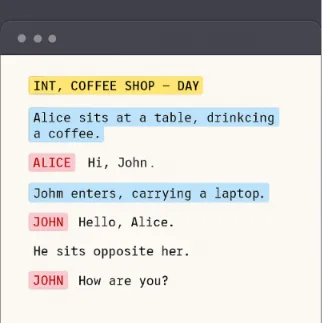
Watch a simple coffee shop conversation, and you will notice the camera jumping between two actors. In a script, that entire conversation is one single “scene.” However, filming it requires multiple distinct “shots”—individual camera setups capturing specific angles of the action. To keep track of this visual shopping list, directors rely on a detailed shot list.
Translating text into action often begins with digital storyboarding and precise documentation. Using modern scene planning tools, filmmakers construct these blueprints using four essential elements:
Shot type: How close the camera is, like a wide shot or an emotional close-up.
Angle: The camera’s specific perspective, such as looking down from above.
Subject: Exactly who or what is the primary focus of the frame.
Equipment: The physical gear required, like a basic tripod or a moving track.
Studiovity acts as a hub for your filmmaking workflow, automatically connecting these visual plans to your script breakdown. If a close-up requires a specific prop, the system links the shot list directly to your inventory. With the creative vision mapped out, it is time for solving the logistics puzzle: schedule optimization.
Solving the Logistics Puzzle: How Digital Scheduling Saves Days of Production
Watching a finished movie feels like a straight timeline, but the reality of filming is a massive jigsaw puzzle. If a story starts at a diner, moves outdoors, and ends back at the diner, relocating the whole crew twice wastes precious hours. Instead, filmmakers master production scheduling by shooting completely out of order. They film all diner scenes in one go, drastically reducing expensive travel time.
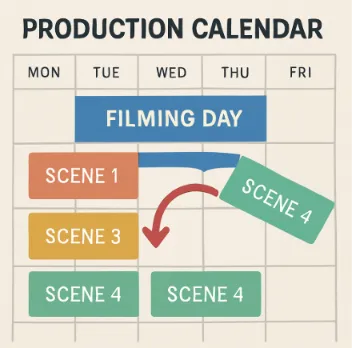
To manage this juggling act, directors rely on a stripboard—historically a giant physical board with colored cardboard strips representing scenes. Today, production management apps turn this into a flexible digital dashboard. You can drag and drop scenes like magnetic tiles for instant scenario planning. If it suddenly rains, you just slide an indoor scene into today’s slot to keep everyone working.
This seamless resource tracking prevents lost days and wasted money. Consequently, by logically grouping scenes by location, the logistics puzzle solves itself.
Once this master schedule is perfectly organized, the next challenge is distributing that plan to a busy team: streamlining real-time communication.
One Digital Brain for the Whole Crew: Streamlining Real-Time Communication and Call Sheets
Coordinating a group trip where the plan suddenly changes, but half the group misses the text, is a nightmare. On a movie set, that miscommunication costs thousands of dollars. Once the schedule is set, the crew needs daily marching orders known as a “call sheet“—a detailed itinerary telling everyone when and where to be. Furthermore, a comprehensive shot list is attached to this document to ensure everyone knows the day’s goals. Through cloud-based collaboration, this combined document acts as a single source of truth.
Generating these guides manually takes hours. Today, automated call sheets pull data directly from your master schedule to keep remote teams perfectly aligned. A professional call sheet includes crucial details to keep everyone safe and prepared:
The Weather: To know whether to pack sunscreen or heavy rain gear.
Nearest Hospital: Essential safety information in case of on-set emergencies.
Individual Call Times: Specific arrival slots so actors aren’t waiting for hours.
When unexpected delays strike, the old method meant printing and passing out new papers. With mobile-friendly film apps like Studiovity, schedule updates instantly sync to everyone’s pocket. Therefore, this real-time communication ensures nobody arrives at the wrong location.
From Final Script to Finished Frame: Your Action Plan for Digital Production Management
Managing independent film production usually means wrestling with chaotic paperwork, but a centralized workflow replaces that mess with absolute clarity.
Turn your script into a production-ready plan by completing your digital breakdown in three clear steps. First, upload a short script to let the software highlight your essential elements. Next, arrange those elements on a digital stripboard to organize your schedule and inform your shot list. Finally, generate a comprehensive shot list to direct your camera setups. Armed with these tools, you can step onto a set confident your story will be captured efficiently. Accordingly, your finalized shot list becomes the ultimate blueprint for success.
https://blog.studiovity.com/studiovity-the-top-filmmaking-tool-from-script-to-screen/