
Everyone has a brilliant movie idea, but most concepts die in a messy pile of scattered notebooks. Industry surveys reveal that “production fragmentation”—splitting your creative process across dozens of different apps—is the primary reason aspiring directors abandon their projects. Therefore, the entire creative process from Script to Screen is streamlined by an all-in-one workspace.
Building a cinematic story works exactly like building a house. Your script acts as the architectural blueprint, but learning how to organize a film production workflow often triggers immense creative anxiety for beginners.
Replacing overwhelming toolchains with an all-in-one filmmaking platform like Studiovity transforms this chaos. This centralized project manager seamlessly bridges the gap between a good idea and a finished movie, managing everything from Script to Screen.
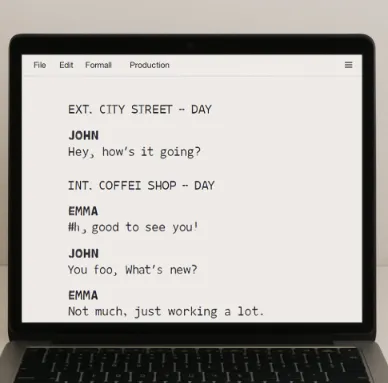
Writing for the Camera: Why Studiovity’s Screenwriting Tool Beats Generic Document Apps
Typing a movie into a basic word processor usually creates a frustrating formatting nightmare. Instead of wrestling with margins just to make your text look professional, modern alternatives to traditional screenwriting apps take the busywork entirely out of your creative flow.
Transforming that blank page into a production-ready blueprint requires a smart system. Consequently, as the best collaborative screenwriting software for teams, Studiovity equips creators with three crucial tools to advance your project from Script to Screen:
Industry-standard formatting: Instantly formats raw ideas into perfectly spaced scene headings and action lines.
Character management: Automatically tags who is speaking, quietly building a foundational cast list in the background.
Real-time script editing and version control: Tracks every rewrite safely, so you never lose a brilliant line of dialogue.
Once your final draft is polished, the next phase of filmmaking begins. Because your workspace smartly tracked your characters from page one, organizing a weekend shoot becomes surprisingly simple.
The 'Shopping List' Secret: Using Script Breakdowns to Identify Every Prop and Actor Instantly
Finishing your script feels incredible, but a screenplay is really just a blueprint for a larger project. Before anyone yells “action,” professionals perform a script breakdown—essentially making a master shopping list of every actor and prop needed to film the scene.
Traditionally, this meant attacking printed pages with colored highlighters before typing everything into scattered spreadsheets. Now, Studiovity for filmmakers acts like a smart assistant, using AI to quickly scan your text and automatically extract those crucial production assets.
Relying on integrated script breakdown and scheduling tools means spotting logistical nightmares long before cameras roll. If a scene requires a specific vintage car or a customized costume, this cloud-based film pre-production management system flags it instantly, ensuring you never arrive on set missing a vital piece of the puzzle.
Saving hours of manual data entry gives you the freedom to focus purely on your creative choices. With your inventory fully organized and logistics seamlessly secured, it is time to visualize exactly how those physical elements will look on screen. Thus, the software keeps you moving from Script to Screen.
Seeing Your Story Before Shooting: Why Integrated Storyboarding is a Director’s Best Friend
Reading a script is easy; knowing exactly where to put the camera is the real challenge. This visual translation bridges the gap between text on a page and your final movie. By using integrated video production software, you can convert written scenes into visual frames with ease rather than sketching on easily lost napkins.
Keeping everything connected is the ultimate hack for streamlining the transition from Script to Screen. Using digital storyboarding tools for visual storytelling communicates your exact visual intent to the cast and crew before anyone arrives on set. Linking a basic wide shot or an emotional close-up directly to your script provides crucial benefits:
Visual clarity: Everyone understands the framing immediately.
Lighting prep: Knowing the angle reveals where shadows must fall.
Lens choice: Deciding early on the right camera perspective.
Crew alignment: Eliminating expensive on-set guesswork entirely.
Plotting complex camera movements in advance removes the stress of making snap decisions while the clock ticks.

The Production Engine: Creating Pro-Level Schedules and Call Sheets Without the Headache
Turning visual ideas into reality is like assembling a massive jigsaw puzzle against a ticking clock. Even beautifully storyboarded projects will quickly derail if your lead actors show up at the wrong address.
Instead of relying on messy group chats, automating film production scheduling fixes this logistical nightmare. Modern software uses a “stripboard“—a digital timeline where you drag and drop scenes like building blocks. Because this master schedule updates in real-time, you can easily adapt if a sudden rainstorm strikes. Furthermore, this tool helps you track progress from Script to Screen.
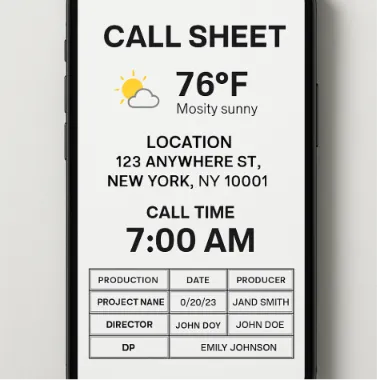
Once days are organized, managing film cast and crew communication becomes crucial. You achieve total alignment by creating professional call sheets and production reports—daily memos outlining precise arrival times, weather forecasts, and parking instructions. Sending these guides straight to smartphones drastically reduces the risk of location or timing mix-ups.
Distributing these industry-standard documents transforms a chaotic weekend gathering into a smooth, respected operation.
Your First Professional Wrap: 3 Steps to Launching Your Project with Confidence
You no longer have to let movie ideas gather dust. By centralizing filmmaking assets in a single workspace, you completely skip spreadsheet nightmares. The true benefits of using an integrated film production suite lie in transforming your mindset from a casual hobbyist into a confident professional, guiding you from Script to Screen.
Build that confidence today with this simple workflow:
Import your script to establish a professional creative blueprint.
Tag your assets to automatically build a reliable props checklist.
Generate a schedule to visually map out your shoot day.
You now understand production well enough to bring your vision to life. Studiovity handles the heavy logistics, serving your creativity so you can focus entirely on your story. It provides everything you need from Script to Screen. Time to call action!
https://blog.studiovity.com/studiovity-best-software-for-screenwriting-and-pre-production-tool/