
Have you ever wondered why the first time you see the T-Rex in Steven Spielberg’s Jurassic Park feels so terrifying? It is not just the groundbreaking special effects that make your heart race. It is also the clever use of Camera Angles and Movements. Every visual choice guides your emotions. Professional directors know that lens placement matters as much as the giant dinosaur standing in front of it.
We all understand visual storytelling instinctively, even if we do not know the technical terms. The art of capturing these images is called cinematography. It separates cinematic masterpieces from chaotic home videos. A smartphone may simply record an event. However, professional filmmaking techniques make audiences truly feel the story. Directors control perspective carefully. As a result, they speak directly to our subconscious minds without revealing the mechanics.
Learning how this invisible emotional language works will completely change your viewing experience. Once you start spotting these calculated techniques, you will understand how filmmakers guide emotions so effectively.
Making Heroes and Villains: Why Camera Height is the Ultimate Power Tool
We naturally connect with characters during conversations. When filmmakers explore Camera Angles and Movements, they often begin with the Eye Level shot. Placing the lens at the actor’s eye line creates a neutral experience. The audience feels present in the room without visual manipulation deciding who holds the power.
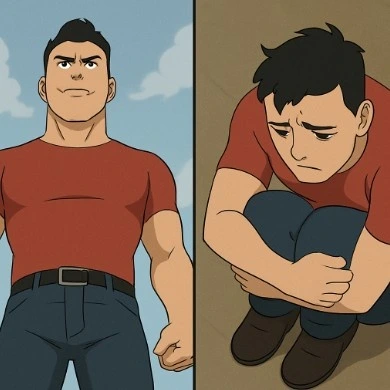
Moving the camera higher or lower changes the emotional balance immediately. Consider the low angle shot meaning in blockbuster films. Directors place the camera near the floor and point it upward. This simple trick forces viewers to look up at the subject. Consequently, the character appears heroic, intimidating, or dangerous. Batman standing above Gotham streets is a perfect example.
A high angle shot creates the opposite reaction. The camera looks down from above. Therefore, the character seems weak, isolated, or overwhelmed by the environment. To understand these emotional shifts clearly, compare the two styles directly:
- Low Angle: Amplifies dominance and threat.
- High Angle: Highlights vulnerability and isolation.
Mastering these vertical perspectives helps directors control emotional power in every scene. Yet, filmmakers do not only use height to shape emotion. Sometimes they want viewers to feel uncomfortable and unstable.
The 'Dizzy' Effect: Using the Dutch Angle to Build Instant Tension
What happens when a filmmaker tilts the camera sideways? Suddenly, the horizon line appears slanted. This technique is called a Dutch Angle or canted frame. It is one of the most recognizable Camera Angles and Movements used to create tension instantly.
Unlike accidental shaky phone footage, the Dutch Angle is intentional. Humans rely on straight horizons for balance. Therefore, a tilted frame triggers subtle discomfort. Directors use this effect to create panic, confusion, or psychological instability.
The next time you watch a suspenseful thriller or a tense Harry Potter sequence, pay attention to the background lines. If walls or floors appear tilted, the director is manipulating your nerves deliberately. Still, while distorted angles create anxiety, many cinematic moments depend on natural movement instead.
Mimicking the Human Eye: Why Panning and Tilting Feel So Natural
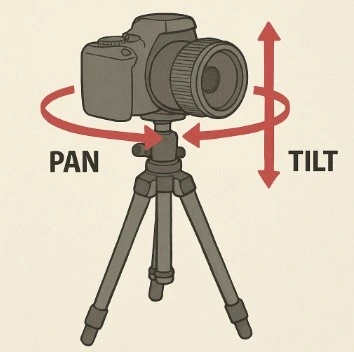
How do people naturally observe a room? We stay still and turn our heads. Basic Camera Angles and Movements often mimic this behavior. The camera remains fixed on a tripod while rotating horizontally or vertically. Consequently, viewers feel like active observers standing beside the characters.
To understand these movements, think about simple neck motions:
- The Pan: A horizontal movement similar to shaking your head “no.” Directors use it to follow action or reveal environments.
- The Tilt: A vertical movement like nodding “yes.” Filmmakers often use it to reveal towering objects or dramatic character entrances.
These movements feel natural because they reflect human observation. In contrast, tracking shots physically move the entire camera through space. That difference changes the audience experience completely.
Dolly vs. Zoom: The Subtle Shift That Separates Home Movies from Hollywood
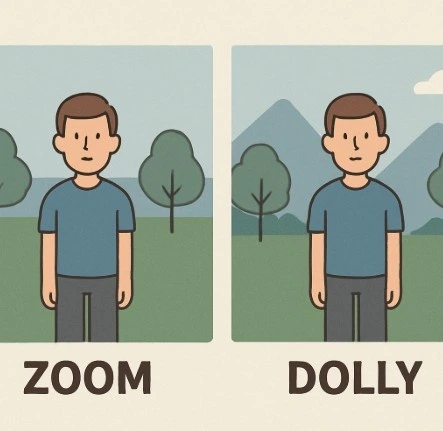
Pinching a smartphone screen creates a flat-looking image. Understanding the difference between zooms and dolly shots is essential when studying Camera Angles and Movements.
During a zoom, the camera stays still while the lens magnifies the image. The background relationship remains unchanged. As a result, the world appears compressed and less immersive.
A dolly shot works differently. The camera physically moves through space on tracks or wheels. This movement creates parallax. Nearby objects move quickly while distant objects shift slowly. Because humans experience this effect naturally in everyday life, dolly shots feel more cinematic and immersive.
Combining both techniques creates the legendary “Dolly Zoom.” In this shot, the actor remains the same size while the background stretches dramatically. Steven Spielberg famously used this effect in Jaws to create sudden panic.
Chasing the Action: How Tracking Shots Keep You Glued to the Screen
Tracking shots move continuously alongside the action. They are among the most powerful Camera Angles and Movements for emotional storytelling because they pull viewers directly into the scene.
Filmmakers commonly use tracking shots in several ways:
- The Walk-and-Talk: Characters move through hallways while the camera glides backward.
- The Hero Entrance: The camera follows closely behind a character entering a dramatic location.
- The Parallel Sprint: The lens moves beside speeding cars or running actors.
Matching a character’s speed keeps audiences emotionally connected. Consequently, viewers feel like participants instead of passive observers.
Choosing Your Energy: Why Shaky Handheld Beats Smooth Motion in Action
Intense battle scenes often use handheld cinematography. The operator physically carries the camera, allowing natural shakes and vibrations. These imperfections create raw energy. As a result, audiences feel present inside the chaos.
Smooth stabilization creates a very different emotion. Modern gimbals and Steadicams absorb physical bumps. Therefore, movement appears calm, controlled, and dreamlike. Harry Potter frequently uses this style to create magical atmosphere.
Choosing between handheld and stabilized motion is one of the most important creative decisions in Camera Angles and Movements. A shaky romance scene could feel distracting. Meanwhile, an overly smooth horror chase might lose suspense completely.
Your Hollywood Homework: How to Spot These Tricks in Your Next Movie Night
By understanding Camera Angles and Movements, you can recognize exactly how filmmakers guide emotions. The psychology behind these techniques stays consistent whether you are shooting with Hollywood cameras or a smartphone.
Try this challenge during your next movie night:
- Spot one Low Angle shot and notice how dominant the character appears.
- Identify a Dolly shot and observe how it pulls you deeper into the scene.
- Record your own short video using one intentional camera move to change the viewer’s mood.
The more you practice observing cinematic language, the more you will appreciate the hidden craftsmanship behind every unforgettable scene.
Master Camera Angles and Movements with Studiovity
Understanding Camera Angles and Movements is only the first step toward creating cinematic stories. Filmmakers also need the right tools to plan shots, organize scenes, and collaborate efficiently during production. Studiovity helps directors, cinematographers, and production teams streamline the entire filmmaking process with screenplay writing, AI-powered script breakdowns, shot lists, storyboards, scheduling, call sheets, and production management tools in one platform. Whether you are planning dramatic tracking shots, building visual storyboards, or organizing complex camera setups, Studiovity helps turn creative vision into a production-ready workflow.