
Film pre-production is where a movie becomes possible. Before cameras roll, the creative vision, logistics, budget, schedule, crew, cast, locations, and legal details must be aligned. By utilizing a comprehensive film pre-production guide, a clear plan for handling surprises is given to the production team, although not every problem can be removed.
For filmmakers, pre-production is more than paperwork. It is the phase where story decisions become practical decisions. A scene written as “a quiet dinner at sunset” suddenly requires a location, permits, lighting plan, props, wardrobe, food styling, sound control, transportation, and a schedule that actually lands at sunset. Therefore, the better those details are solved before production, the more freedom the director and crew have on set.
Consequently, this complete film pre-production guide walks through the essential stages, from script preparation to the final pre-shoot review, with a practical pre-production checklist you can adapt for short films, documentaries, commercials, features, and independent projects.
What Is Film Pre-Production?
Film pre-production is the planning stage between development and production. Development focuses on the idea, script, financing, and overall package. Production is the actual filming. Pre-production connects the two by turning the creative concept into an executable plan.
During this phase, filmmakers answer critical questions:
What exactly are we shooting?
Who needs to be involved?
Where will each scene take place?
How much will the project cost?
What can be done safely within the available time and resources?
What legal, technical, and creative approvals are required?
What is the backup plan if something changes?
Every project has different needs, but the goal is always the same: reduce uncertainty before the shoot begins.
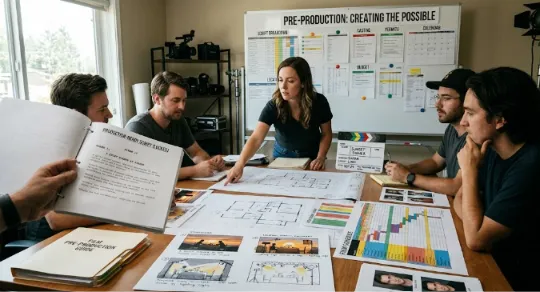
Why Pre-Production Matters
Rushing into production without a plan can lead to wasted shoot days, budget overruns, creative compromises, crew confusion, and avoidable safety issues. Even small productions benefit from organized pre-production because time on set is expensive, limited, and often stressful.
A thoughtful process helps filmmakers:
Protect the creative vision by making key decisions early
Use the budget efficiently
Schedule scenes in a practical order
Confirm that cast & crew, locations, and equipment are available
Identify risks before they become emergencies
Communicate expectations clearly across departments
Make faster decisions during production
Pre-production is not about making the film rigid. It is about building a strong foundation so the team can adapt intelligently when real-world conditions change. As a result, referencing a film pre-production guide ensures that no critical steps are missed during this chaotic phase.
Start With a Locked or Production-Ready Script
The script is the blueprint for film pre-production. Before breaking down scenes or budgeting in detail, the team should have a script that is as close to final as possible. Changes can still happen, but constant rewrites during planning can create confusion across departments.
A production-ready script should include:
Clear scene headings
Consistent character names
Specific locations
Action that can be interpreted visually
Dialogue formatted clearly
Any essential props, wardrobe, vehicles, stunts, visual effects, animals, or special elements
Once the script is ready, the producer, director, assistant director, and key department heads can begin the script breakdown.
Create a Script Breakdown
A script breakdown identifies everything needed to shoot each scene. This is one of the most important steps in any complete film pre-production guide because it transforms the screenplay into a production plan.
Common breakdown elements include:
Cast members
Background performers
Locations
Props
Wardrobe
Makeup and hair requirements
Set dressing
Vehicles
Animals
Stunts
Weapons or special safety concerns
Visual effects
Special effects
Sound requirements
Practical lights or screen inserts
Music or playback needs
The breakdown helps every department understand what the script demands. It also informs the budget, schedule, equipment list, staffing needs, and risk assessment.
Build the Budget
The budget determines what is possible. It should reflect the creative goals of the film while staying honest about available resources. A budget that looks good on paper but ignores real costs can create major problems later.
Typical film budget categories include:
Cast fees
Crew wages
Producer and director fees
Locations and permits
Equipment rental
Production design
Wardrobe, makeup, and hair
Transportation
Meals and craft services
Insurance
Legal and accounting costs
Post-production
Music and licensing
Marketing and festival submissions
Contingency funds
Even if the project is low-budget, assign realistic values to donated locations, borrowed gear, and unpaid labor. This helps you understand the true scale of the production and plan more professionally.
Furthermore, a contingency is especially important. Weather, overtime, damaged props, parking issues, location changes, and last-minute equipment needs can all add costs. Building a cushion into the budget gives the production room to respond without derailing the project. Thus, a proper film pre-production guide always emphasizes financial buffers.
Hire Key Crew
Once the budget and production scope are clear, begin hiring key crew. The order may vary depending on the project, but most productions need department leads early enough to contribute to planning.
Important pre-production hires may include:
Producer
Line producer or production manager
Director of photography
First assistant director
Production designer
Location manager
Casting director
Costume designer
Sound mixer
Gaffer
Key grip
Makeup and hair department head
Script supervisor
Post-production supervisor
On smaller films, one person may handle multiple responsibilities. However, be careful not to overload essential roles. A small, well-organized team is better than a larger team with unclear responsibilities.
Cast the Film
Casting affects tone, schedule, budget, and audience connection. For narrative projects, begin casting as early as possible so actors have time for auditions, callbacks, rehearsals, wardrobe fittings, and contract review.
A clear casting process may include:
Character breakdowns
Audition sides
Casting notices
Self-tape submissions
Live or virtual auditions
Callbacks
Chemistry reads
Availability checks
Deal memos or contracts
When casting, consider more than performance quality. Availability, professionalism, collaboration style, and comfort with the material all matter. If the role requires intimacy, stunts, animals, special makeup, or emotionally intense scenes, discuss those requirements transparently before finalizing the cast.
Scout and Secure Locations
Locations are one of the biggest variables in film pre-production. A beautiful location is not always a practical shooting location. Before committing, evaluate both creative and logistical needs.
Consider the following during location scouting:
Does the location match the story world?
Is there enough space for camera, lighting, sound, and crew?
Is the location quiet enough for dialogue?
What is the available power supply?
Is parking accessible?
Are restrooms available?
Where will cast and crew hold between setups?
Are there restrictions on hours, noise, lighting, or equipment?
Are permits, insurance certificates, or location agreements required?
What is the backup plan for weather or access issues?
Take photos, videos, measurements, and sound notes during scouts. If possible, bring the director, cinematographer, production designer, assistant director, and sound mixer to technical scouts so potential problems are identified early. An effective film pre-production guide relies heavily on thorough location scouting.
Develop the Visual Plan
Pre-production is where the director and cinematographer define the visual language of the film. This may include references, mood boards, shot lists, storyboards, lens choices, lighting concepts, aspect ratio, color palette, and camera movement.
A visual plan does not need to dictate every frame, but it should clarify the style and priorities. For example, a handheld naturalistic drama requires different equipment, scheduling, and lighting choices than a highly controlled studio-style thriller.
Useful visual planning tools include:
Lookbooks
Mood boards
Shot lists
Storyboards
Overhead diagrams
Camera tests
Lighting tests
Color references
Production design references
The goal is shared understanding. When the director, cinematographer, production designer, costume designer, and editor are aligned, the film feels more cohesive. Therefore, integrating these tools into your film pre-production guide workflow keeps everyone on the same page.
Create the Shooting Schedule
The shooting schedule is usually built by the assistant director or producer based on the script breakdown, locations, cast availability, company moves, daylight needs, night shoots, child actor restrictions, stunt requirements, and budget.
Scenes are rarely shot in script order. Instead, they are grouped for efficiency. For example, all scenes at the same location may be filmed together, even if they appear throughout the story.
When building the schedule, consider:
Location availability
Cast availability
Daylight and nighttime requirements
Travel time between locations
Meal breaks
Setup complexity
Company moves
Turnaround time between shoot days
Weather-sensitive scenes
Emotional or physical demands on actors
Stunts, effects, or special equipment
Avoid overloading every day. A schedule with no breathing room can quickly collapse if one scene runs long. Build realistic days that account for setup time, resets, rehearsals, sound issues, and unexpected delays.
Plan Production Design, Props, and Wardrobe
Production design shapes the world of the film. Even minimal films need intentional choices around color, texture, props, wardrobe, and set dressing.
The production design team should review the script breakdown and identify all required visual elements. This includes hero props, background dressing, signage, furniture, practical lights, artwork, documents, phones, food, and any items actors interact with on camera.
Wardrobe planning should consider:
Character identity and arc
Continuity between scenes
Stunt or movement requirements
Weather and comfort
Duplicates for blood, dirt, water, or damage
Brand or logo concerns
Color interaction with locations and lighting
Props and wardrobe should be photographed and tracked for continuity, especially if scenes are shot out of order.
Prepare Sound, Music, and Technical Needs
Sound is often underestimated in pre-production, but it is essential to the final quality of the film. Bring the sound department into planning early, especially for dialogue-heavy scenes, noisy locations, music playback, or special audio requirements.
Pre-production sound planning may include:
Identifying noisy locations
Planning lavalier and boom coverage
Checking for generators, traffic, refrigerators, HVAC systems, or crowds
Coordinating playback for music or choreography
Preparing wild lines or room tone needs
Discussing sound effects that may be captured on set
Technical planning should also cover camera format, data workflow, backups, monitor needs, power distribution, lighting package, grip equipment, and post-production handoff. A clear workflow protects the footage and prevents costly mistakes. Thus, an industry-standard film pre-production guide always highlights technical coordination.
Handle Legal, Safety, and Insurance Requirements
Legal and safety planning protects the production, the crew, and the final film. Requirements vary by project, location, and jurisdiction, so filmmakers should seek professional advice when needed rather than relying on assumptions.
Common documents and approvals include:
Cast agreements
Crew deal memos
Location agreements
Appearance releases
Music licenses
Artwork clearances
Permit approvals
Insurance certificates
Equipment rental agreements
Minor performer documentation when applicable
Stunt or special effects safety plans
Safety should be discussed before the shoot, not improvised on set. If a scene involves weapons, vehicles, heights, water, fire, animals, intimacy, crowds, or intense physical action, bring in qualified professionals and create a clear plan.
Rehearse and Refine
Rehearsals help actors explore character relationships, clarify blocking, and identify script issues before production begins. Rehearsal needs vary widely. Some directors prefer extensive rehearsal, while others use it mainly for key scenes.
Rehearsal can help with:
Dialogue rhythm
Emotional transitions
Blocking and movement
Chemistry between actors
Stunt or choreography preparation
Intimacy coordination
Timing for complex scenes
Rehearsals can also reveal practical problems. A scene that reads simply on the page may require more time, space, props, or coverage than expected. Finding that out before the shoot is a major advantage. Consequently, utilizing a film pre-production guide allows you to schedule adequate rehearsal time.
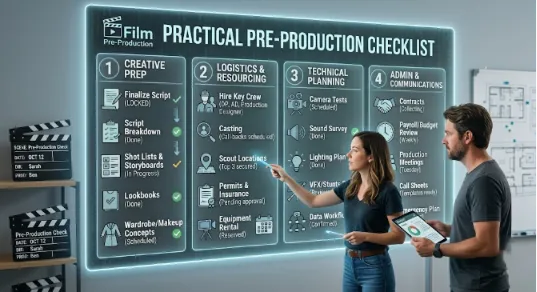
Build a Practical Pre-Production Checklist
A pre-production checklist keeps the team organized and accountable. Every production should customize its checklist, but the following items provide a strong starting point.
Creative Preparation
Finalize the script or treatment
Complete script breakdown
Define visual style and tone
Create shot lists or storyboards for key scenes
Build mood boards or lookbooks
Confirm production design direction
Plan wardrobe, makeup, and hair concepts
Schedule rehearsals if needed
Production Planning
Create the budget
Build the shooting schedule
Hire key crew
Confirm cast availability
Secure locations
Arrange permits and insurance
Book equipment
Plan transportation and parking
Organize meals and craft services
Prepare call sheet templates
Legal and Administrative Tasks
Prepare cast and crew agreements
Collect releases
Confirm location agreements
Review music and artwork clearance needs
Organize payroll or payment processes
Create emergency contact lists
Store production documents in a shared system
Technical Preparation
Confirm camera package
Confirm lighting and grip package
Plan sound equipment
Test camera, lenses, and workflow
Establish media backup process
Coordinate post-production specs
Prepare batteries, chargers, storage, and expendables
Final Pre-Shoot Checks
Send final schedules
Confirm call times
Check weather and location access
Review safety concerns
Confirm props and wardrobe continuity
Charge and label equipment
Print or distribute scripts, sides, and call sheets
Hold a final production meeting
Common Pre-Production Mistakes to Avoid
Even experienced filmmakers can run into trouble when planning is incomplete. Watch for these common mistakes:
Starting production before the script is ready
Underestimating setup time
Ignoring sound issues at locations
Failing to secure written agreements
Scheduling too many pages per day
Forgetting company moves and parking logistics
Leaving props or wardrobe decisions until the last minute
Not budgeting for meals, insurance, or contingency
Assuming verbal permission is enough
Skipping safety planning for complex scenes
Most pre-production mistakes come from optimism. Filmmakers naturally want to believe everything will work out. Alternatively, a stronger approach is to hope for the best while planning for the most likely obstacles. Following a reliable film pre-production guide can prevent these major pitfalls.
Best Practices for a Smoother Shoot
Strong pre-production is both creative and operational. To keep the process moving, use a system that makes information easy to find and update.
Helpful best practices include:
Keep all production documents organized in shared folders
Assign one owner to each major task
Hold regular production meetings
Update the schedule whenever major variables change
Communicate changes clearly and quickly
Confirm details in writing
Create backup plans for locations, weather, and key equipment
Prioritize safety over speed
Protect time for rehearsals and technical tests
Make sure every department understands the creative goal
The best film sets feel focused because the hardest questions were answered before the first shot. By establishing a standard film pre-production guide for your production company, long-term efficiency is drastically improved.
Final Thoughts
Film pre-production is the bridge between imagination and execution. It gives filmmakers the structure they need to protect the story, manage resources, and create a safer, more efficient set. Whether you are preparing a short film with a small crew or a feature with multiple departments, the same principle applies: every decision made in advance saves time and stress during production.
Use this complete film pre-production guide as a foundation, then adapt the process to your project’s scale, budget, genre, and creative needs. A clear plan will not make filmmaking easy, but it will make the work more intentional, collaborative, and achievable.