
A TV call sheet is the daily operating plan for a television shoot day. It tells cast, crew, producers, department heads, drivers and locations where to be, when to arrive, which scenes or segments are scheduled and what practical details can change the day. Because TV schedules move fast and several departments work in parallel, a clear call sheet keeps the whole production aligned before anyone reaches set.
It is both a communication tool and a risk-reduction tool: timing, contacts, scene details, logistics, safety notes and approvals live in one document, so nobody relies on scattered messages or assumptions. If you need the fundamentals first, start with our guide to what a call sheet is.
What makes a TV call sheet different
Television call sheets are built for repetition, speed and coordination across changing shoot days. A feature may run on one long calendar; a series juggles episodes, blocks, recurring sets, rotating directors, multiple units and fast revisions. Every call sheet should feel familiar enough that the crew can scan it in seconds, even when the day itself is complex.
The format also shifts with the type of show:
- Scripted drama: cast calls, set builds, background, company moves, stunt notes and meal timing.
- Reality series: field teams, story producers, releases, travel notes and flexible shooting windows.
- Studio or live shows: rehearsal blocks, talent arrivals, audience timing, control room details and broadcast or record times.
The best TV call sheets do not just list information; they prioritize what people must act on. The director needs scene order and company move timing, a camera assistant needs parking and first-shot details, and a talent coordinator needs staggered calls and holding locations. One document has to serve all of them without becoming confusing.
What every TV call sheet should include
Production and episode details
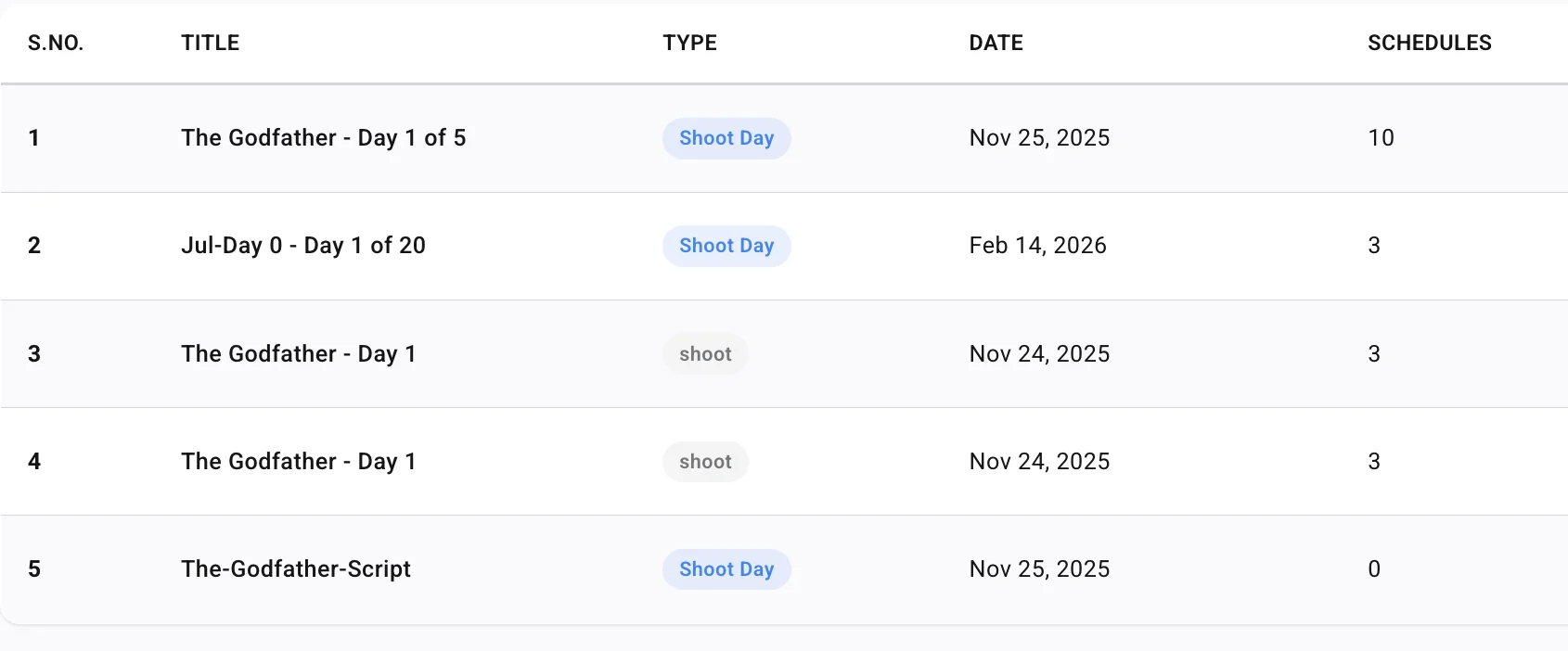
Show name, episode number and title, production company, shoot day number and date, plus the unit name if more than one unit is working. When episodes shoot out of order across blocks, nobody should have to guess whether they are holding the right version for the right day.
General call and department calls
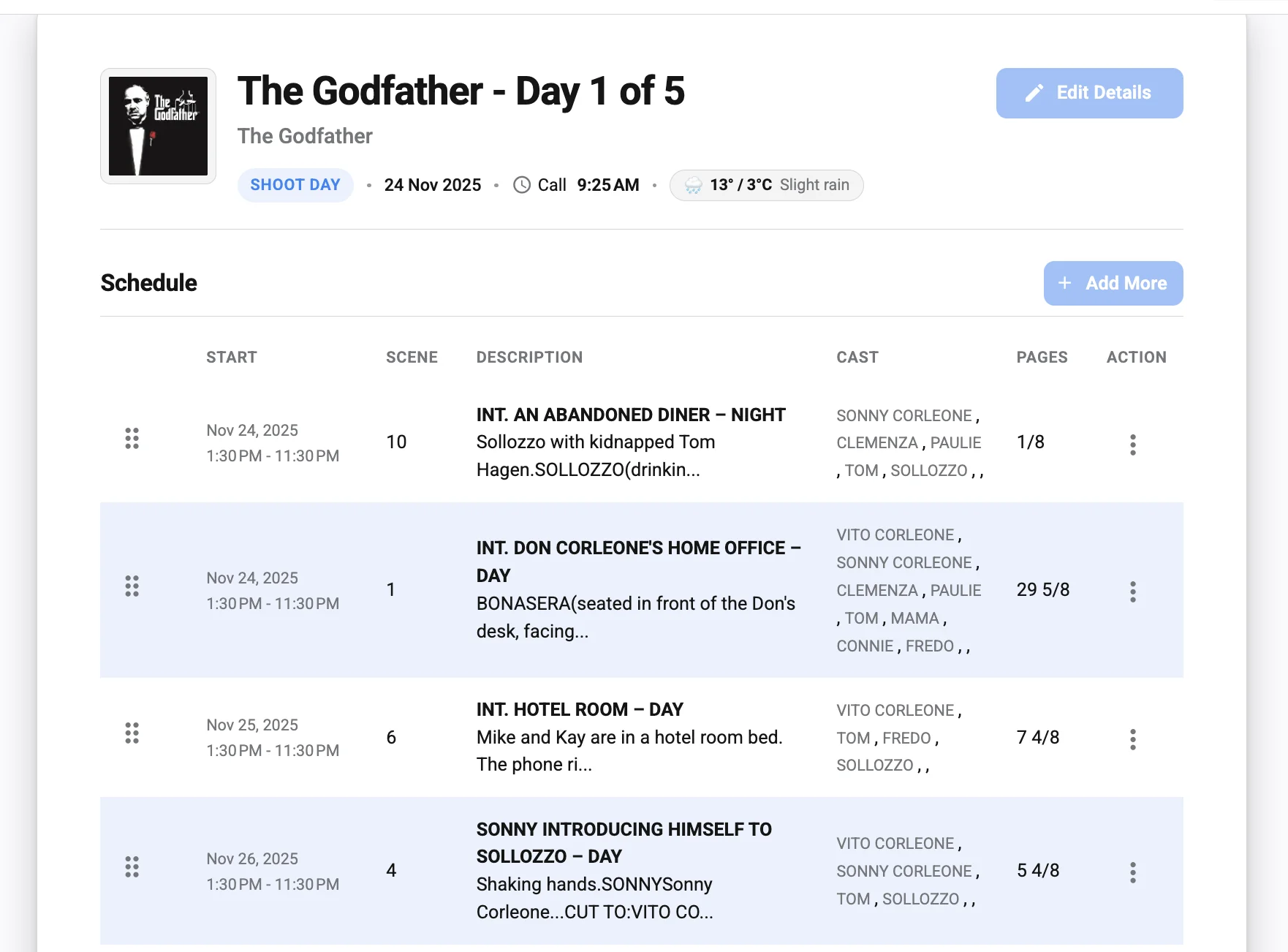
The general crew call is the headline, but TV usually staggers department calls to avoid crowding and downtime. Grip, electric, art, hair and makeup, wardrobe, cast, background and transport may all report at different times. Mark pre-calls clearly so no one mistakes them for the general call.
Locations and movement notes
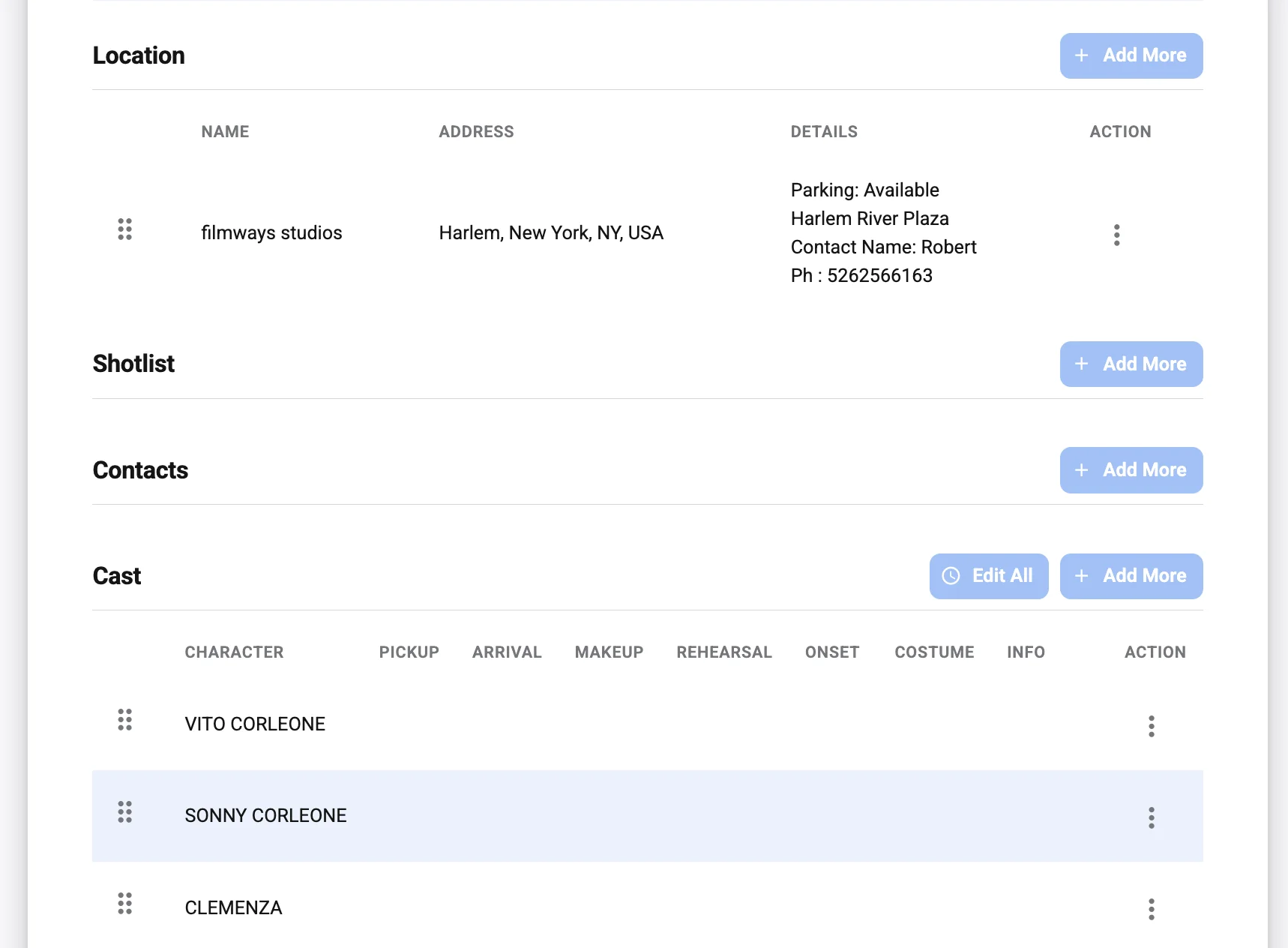
Give the reporting address, parking, access points, holding, base camp and any special arrival instructions. If there is a company move, say when and where it happens and whether departments wrap, hold, travel or reset.
Schedule, scenes and segments
For scripted TV: scene numbers, set names, day or night, INT or EXT, page counts, cast IDs and a one-line description. For unscripted shows: segment blocks, interview setups, field scenes, travel windows or story beats. Show only what matters for that day, not the full production schedule.
Cast, talent and background
Recurring cast, guest actors, presenters, contestants, experts and background performers often have different handling. List who works, when and where they report, plus pickup, wardrobe and makeup notes, because talent timing drives almost every department.
Key contacts, weather and safety
List the production office, ADs, producers, locations, transport, medic and department heads, not everyone on the show. Pair the forecast with what the crew should do about it, and make safety notes specific: rain cover, heat, night work, water, animals, vehicles, crowds, effects or sensitive locations.
TV call sheets vs film call sheets
Both share the same building blocks. The difference is rhythm: television needs a repeatable system that still works on day 20, episode 6 or a second unit on another location.
| Area | Film call sheets | TV call sheets |
|---|---|---|
| Schedule context | One feature calendar | Episodes, blocks, recurring sets, multiple units |
| Format | Heavily customized for one production | Consistent across many shoot days |
| Cast | Stable core cast and day players | Recurring, guest, background, presenters, contestants |
| Revisions | Important | Very frequent when episodes overlap |
| Coordination | Essential | Essential, with faster turnaround |
How to build a TV call sheet, step by step
- Start from the latest schedule: the current one-liner, stripboard or daily plan (see episodic TV scheduling with multi-script stripboards).
- Confirm location logistics: addresses, parking, base camp, holding, restrooms, loading and move timing.
- Verify cast and talent: calls, pickups, makeup and wardrobe timing, availability limits.
- Gather department notes: only what the wider team must see.
- Add weather and safety: practical instructions, not generic warnings.
- Check contacts: phone numbers, radio channels and emergency details.
- Send for approval: AD team, production manager or producer.
- Distribute with version control: label final or revised and never send conflicting copies.
The most common TV problem is outdated information travelling faster than the correction. A repeatable template plus a single distribution channel solves most of it. With Studiovity you can reuse one call sheet layout across every episode and update it instead of rebuilding it each day.
Common mistakes that make TV call sheets harder to use
- Clutter that makes every note look equally important.
- Revisions that are not clearly labeled.
- An address with no parking, entry or unloading details.
- Generic safety notes such as “be careful on set”.
- Department changes buried in small text.
- A layout that changes from day to day.
- Fast distribution without confirmation.
Final pre-send checklist
- Show, episode, shoot day and date are correct.
- General and department calls are accurate.
- Cast, talent and background calls are verified.
- Location, parking, access and holding are clear.
- Scenes or segments match the latest schedule.
- Company moves and travel windows are included.
- Weather and safety notes reflect the actual day.
- Contacts and emergency info are current.
- The sheet is labeled final or revised, and the approved version is the one going out.
Final takeaway
A TV call sheet turns a complex, fast-moving plan into something every person can follow from first arrival to wrap. Keep the format consistent, prioritize what people act on, and control revisions. When you are ready to stop retyping the same details every episode, build and send your next TV call sheet with Studiovity.