
A night shoot call sheet does more than tell people when to arrive. It keeps cast and crew safe, alert and on schedule while the production works outside normal daytime conditions, often away from services and against a hard sunrise deadline. Here is how to prepare one, section by section, with a template structure and a pre-send checklist.
What makes a night shoot call sheet different
A night call sheet still carries the usual essentials (see what is a call sheet for the basics), but each section needs more precision because mistakes are harder to fix at 2 a.m. A late arrival can cost usable darkness, break a location agreement or push the crew into unsafe hours.
It is also read differently: on phones in parking lots, vans and dim base camps. Layout has to be simple and the critical details easy to scan. Make these unmistakable:
- Both calendar dates: call Monday 6:00 p.m., wrap Tuesday 5:00 a.m.
- Sunset, sunrise and usable darkness.
- Parking and transport for low-light, remote or residential areas.
- Safety notes: uneven ground, water, traffic, generators, cables, exposure.
- Meals and rest for an overnight body clock.
- Noise and location rules, often stricter at night.
Start from the shooting schedule
Separate scenes that truly need exterior darkness from those that only read as night in the script and could be shot day-for-night, on stage or in a blacked-out interior. Then order the night around location moves, lighting setups, cast availability, vehicles, stunts, effects, minors, animals and noise limits. If a difficult exterior must finish before a permit cutoff, the call sheet should make that priority obvious.
- Which scenes need full darkness?
- Which can shoot at dusk, dawn or under controlled light?
- When must pre-light begin?
- When must production leave the location?
- Which departments need earlier calls?
- What is the overnight meal plan?
What to include, section by section
Header and dates
Production title, shoot day, call sheet number and the full overnight date range, such as “Monday, May 12 into Tuesday, May 13”. Vague wording like “Monday night” confuses transport, payroll and equipment returns.
Key contacts
Producer, director, first AD, production manager or coordinator, location manager, medic or safety lead, transport captain and an emergency contact. Prioritize the people someone needs if they are lost, late, injured or locked out.
Location, parking and base camp
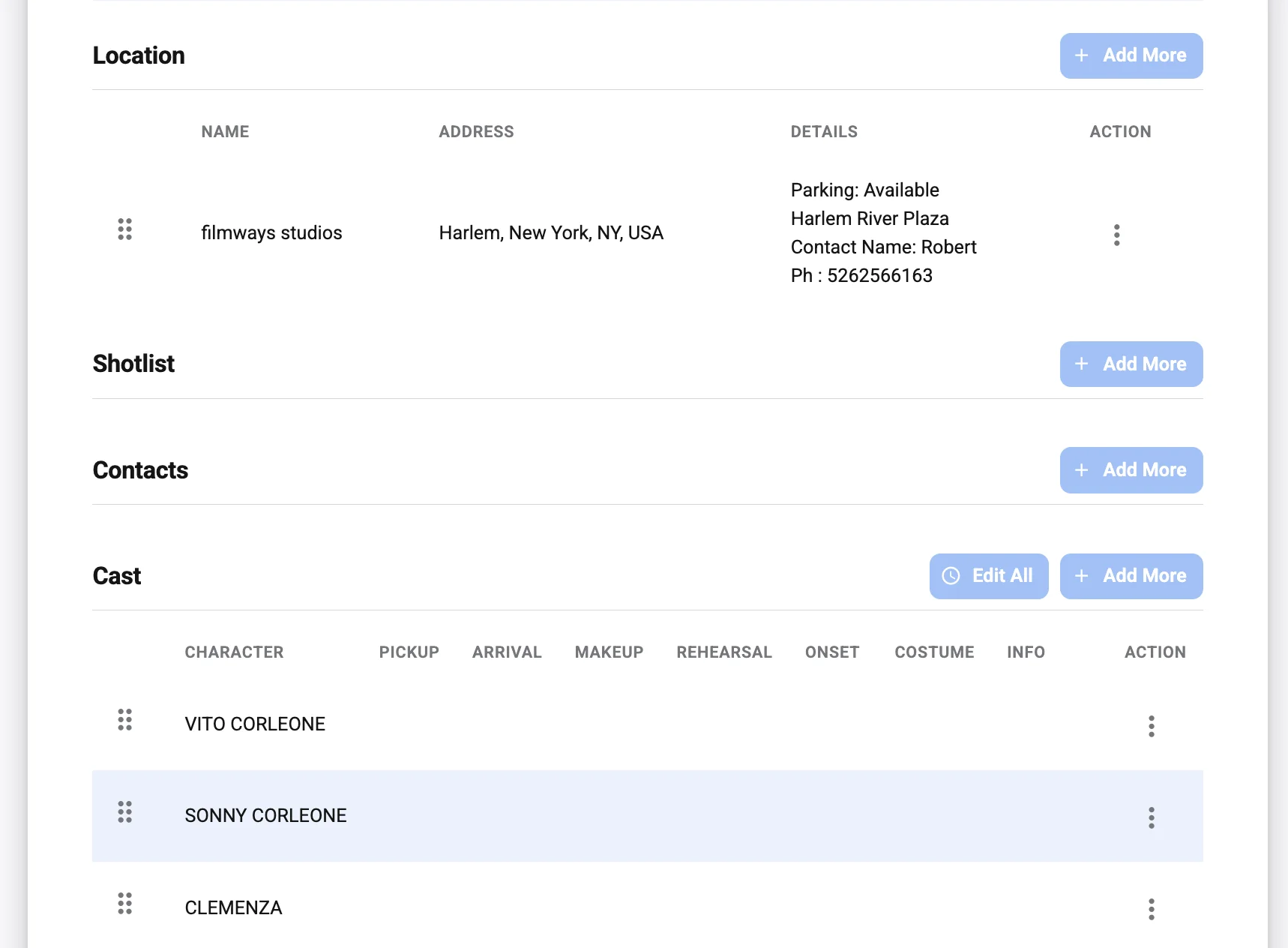
Set address, cross streets, parking address if different, base camp, crew entrance, loading zone and the access or security procedure. If there are several gates, doors or elevators, say which one. Add map pins where your workflow supports them.
Weather, sunset and sunrise
Low temperature, rain chance, wind and fog, plus wardrobe or equipment notes. Put sunset, sunrise and twilight where they cannot be missed; sunrise is the hard natural limit for exterior night scenes.
Scene schedule
Scene numbers, short descriptions, location, cast, page count and estimated timing. Flag rain towers, picture vehicles, practical fire, weapons, stunts or haze clearly.
Cast and crew calls
Stagger calls: grip and electric early for rigging, cast later for makeup, wardrobe and blocking. State whether each call is at parking, base camp, set, makeup or wardrobe.
Meals, breaks and wrap
Meal time and place, coffee and snacks, and a realistic estimated wrap so people can plan transport and rest. For the rules behind overnight rest, see our guide to night shoots and turnaround.
A night shoot call sheet template structure
| Section | What to include | Why it matters at night |
|---|---|---|
| Header | Production, shoot day, date range, call sheet number | Avoids confusion across midnight |
| General call | Crew call, pre-calls, estimated wrap | Keeps the night aligned |
| Location | Set, parking, base camp, access notes | Reduces lost arrivals |
| Weather and light | Forecast, low temp, sunset, sunrise | Plans wardrobe, gear and darkness |
| Schedule | Scenes, timing, cast, page count | Turns the schedule into a nightly plan |
| Cast | Individual calls, pickup, makeup, wardrobe | Prevents waiting and missed readiness |
| Crew | Department calls and instructions | Supports staggered setup |
| Safety | Hazards, medic, emergency procedure | Keeps the set alert and accountable |
| Notes | Permits, noise, transport, catering, security | Captures details that derail nights |
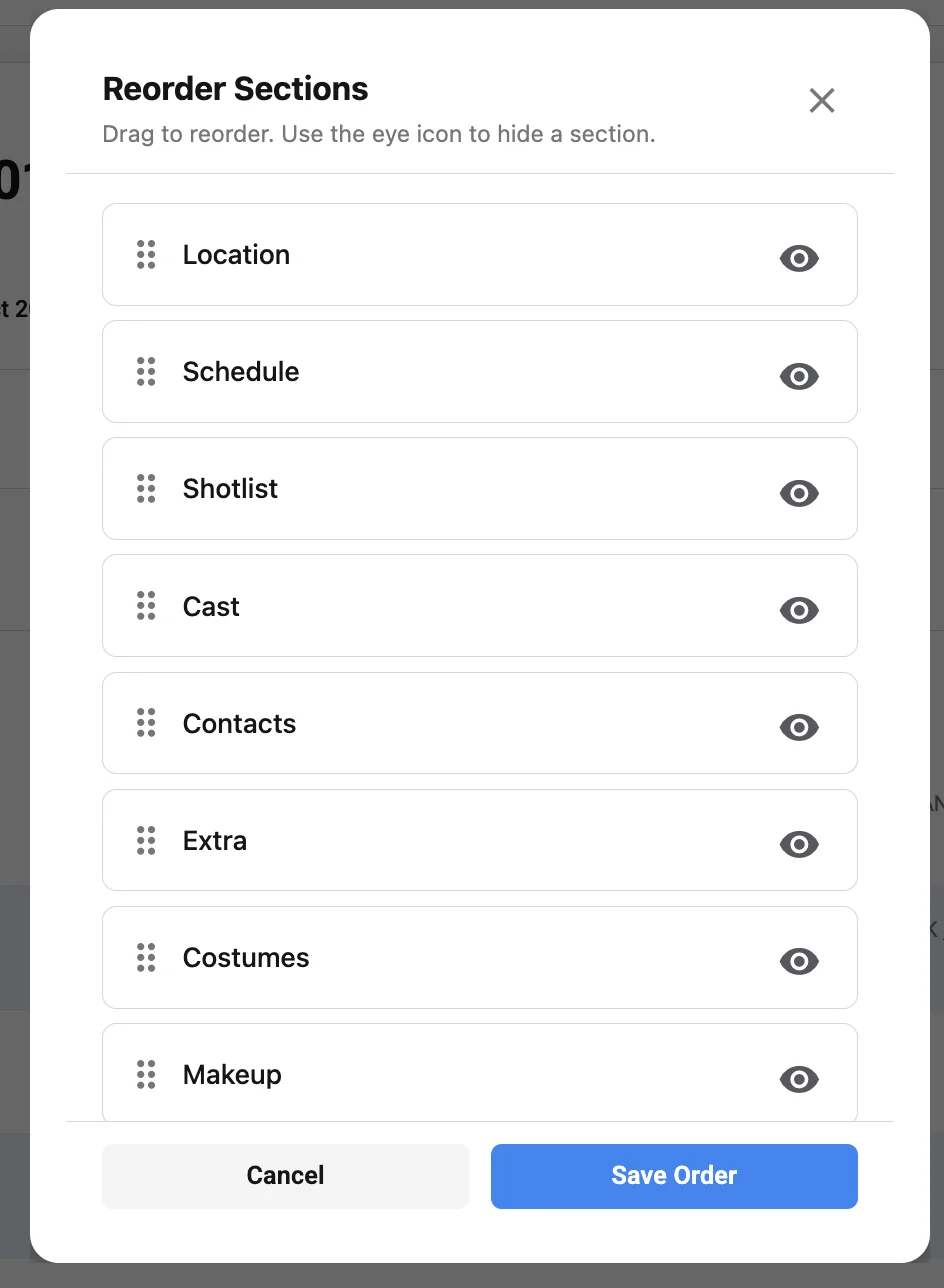
If your current layout has no room for these blocks, fix it before the shoot day; you can add and reorder night-specific sections in Studiovity so the top of the sheet shows what matters most after dark.
Watch: building a call sheet
Night timing needs extra clarity
Crew call is not camera-ready time, cast call is not on-set time and pre-light is not shooting time. If these blur, the night looks fine on paper and fails in practice. Work backward from the first shot and list each milestone:
- Pre-call and general crew call
- Cast call and makeup or wardrobe call
- Rehearsal or blocking
- Camera-ready time
- Meal break
- Company move, if any
- Estimated wrap
- Sunrise
Protecting safety when filming at night
Identify risks before the crew arrives and put them on the call sheet, not in word of mouth. Fatigue slows reactions late in the night, and low visibility turns cables, curbs and stairs into hazards.
- Medic location and contact.
- Exact emergency address for emergency services.
- Low-light hazards: terrain, stairs, water, traffic, cables.
- Weather precautions: cold, rain, wind, slippery surfaces.
- Transport notes: shuttles, rideshare points, driver fatigue.
- Security and quiet zones for residential areas.
- PPE and clothing: reflective gear, warm layers, sturdy footwear.
Pre-send checklist
- Confirm the schedule with the director and first AD.
- Verify cast availability and individual calls.
- Confirm access times, parking, base camp, permits and noise limits.
- Check sunset, sunrise and weather for the right location.
- Review lighting and power with grip and electric.
- Confirm transport for cast, crew, equipment and late wrap.
- Review safety notes with the medic or safety lead.
- Confirm catering and meal timing.
- Proofread every date and time across midnight.
- Send early enough for questions.
Common night shoot call sheet mistakes
- Unclear overnight dates.
- Missing sunrise time.
- Filming address and parking treated as the same place.
- No visible safety notes.
- Optimistic timing for lighting, moves and fatigue.
- Unconfirmed gate, elevator or dock access.
- No meal plan.
- Calling everyone at once.
- Revisions that hide what changed.
Format for phones: bold the key times, use one time format consistently, keep scene descriptions short, and number every revision.
Final takeaway
Preparing a call sheet for a night shoot means translating the schedule into a plan people can follow in the dark, tired and under time pressure. Lock the night window, stagger calls, spell out parking and safety, and proofread every date across midnight. When you want fewer manual rebuilds, create and share night call sheets online and keep every update in one place.