
Think about the last time you watched a horror movie. Before the monster appeared, you likely felt deeply uneasy. Was it the aggressively peeling wallpaper? Alternatively, was it the way the hallway seemed slightly too long? Consequently, that creeping dread did not happen by accident. Instead, Set Design in Filmmaking was carefully utilized to build that specific feeling.
Look around your living room right now. According to environmental psychologists, the objects you display instantly broadcast your personality. Therefore, this perfectly demonstrates visual storytelling through environment design. Filmmakers rely on this exact psychological tool. As a result, they transform empty sets into silent, breathing characters.
Cinema experts call this visual language mise-en-scène. This term simply means the arrangement of everything in the frame. Casual fans often ask: how does production design impact a film’s narrative? Ultimately, every scuffed floorboard and placed coffee cup deliberately tells a specific story. Therefore, Set Design in Filmmaking shapes our entire cinematic experience.
Imagine the Harry Potter films without the cozy, cluttered warmth of the Gryffindor common room. Without this purposeful identity, beloved heroes become virtually homeless. Thus, in modern cinema, movie environments are never just decoration. On the contrary, they are carefully constructed ecosystems that bring stories to life.
The Architect of Dreams vs. The Master of Hammers: Decoding the Art Department
Knowing that a movie’s world is constructed from scratch is one thing. However, figuring out who actually manages that massive undertaking is another. When you look at the sprawling Great Hall in Harry Potter, you aren’t just seeing a magical room. Rather, you are looking at the combined effort of a miniature corporation known as the Art Department.
At the top of this creative food chain sits the Production Designer. If you are wondering exactly what the difference is between an art director and a production designer, it helps to think of them as a CEO and a Project Manager. Specifically, the Production Designer dreams up the overarching visual identity of the movie. Meanwhile, the Art Director is the logistical mastermind making sure the hammers are actually swinging.
Moving a magical dining room from a rough sketch to a fully functional soundstage requires strict steps in the film art department workflow. Thus, Set Design in Filmmaking requires immense collaboration. The roles divide clearly during this process:
Vision vs. Reality: The Designer imagines floating candles. Conversely, the Art Director figures out how to rig the wires safely from the ceiling.
Dreams vs. Budgets: The Designer wants hand-carved stone walls. In contrast, the Art Director sources realistic foam substitutes that fit the studio’s budget.
Delegation: The Designer pitches the mood to the director. Meanwhile, the Art Director hires the carpenters and sculptors.
Beautiful art direction in film ultimately relies on this seamless partnership between grand imagination and practical construction. Furthermore, successful Set Design in Filmmaking depends on this exact balance. Once the physical walls are finally standing, the team turns to the subtler, emotional layers of the design. Consequently, they manipulate color, texture, and light to play with your psychology.
Color, Texture, and Light: The Designer’s Secret Psychological Toolbox
Think about how the world inside The Matrix looks sickly and green. That subconscious unease is certainly no accident. Indeed, the role of color theory in movie sets is to speak directly to your emotions. Therefore, designers establish a distinct color palette before anyone even speaks. By washing scenes in a toxic digital hue, designers instantly communicate that this reality is artificial.
Surfaces carry just as much narrative weight as the paint. Whether it is a battered spaceship or a gleaming countertop, you are seeing the importance of texture and lighting in scenic design. For this reason, art departments use “distressing.” This means artificially aging props with sandpaper or dirt to prove a space is authentically lived-in. Consequently, a deep scratch on a kitchen table isn’t just damage. Instead, it operates as a visual metaphor for a family’s long-term struggles. Therefore, Set Design in Filmmaking relies heavily on these microscopic details.
Playing with a room’s physical shape further manipulates our reactions. In Parasite, the wealthy family’s home is expansive and flooded with sunshine. In comparison, the poor family’s basement is cramped and shadowed. These harsh physical boundaries highlight the psychological effects of set architecture on audiences. Thus, viewers physically feel the crushing weight of class inequality simply through the ceiling’s height. Clearly, Set Design in Filmmaking alters our emotional perception.
Once this foundational atmosphere is established, the focus narrows to the personal objects filling those spaces. Every book on a shelf or discarded coffee cup provides vital clues. As a result, this guides us seamlessly into building character depth through interior decoration.
Reading a Room: Building Character Depth Through Interior Decoration
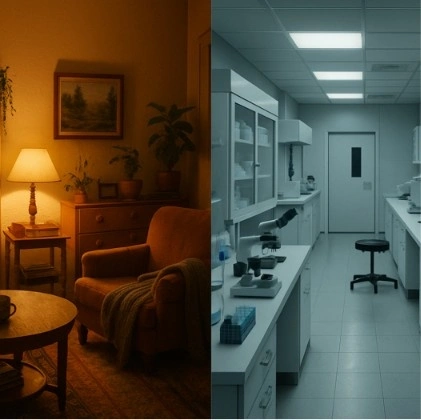
Consider a typical personal space. The walls dictate the physical dimensions. However, the half-read book on the coffee table and the framed photos are what actually tell a story. In film set design, this distinction is crucial. The Art Department builds the room, but decorators bring it to life through set dressing. This involves the strategic placement of furniture, rugs, and personal objects.
This labor requires “layering.” This is a process where designers meticulously stack everyday items to forge visual reality. By deliberately planting character clues in the background, decorators actively create character depth. Therefore, Set Design in Filmmaking serves as an unspoken biography. You can spot these hidden narratives yourself by watching for details like:
Dead houseplants signaling a protagonist’s struggle with basic self-care.
A color-coded bookshelf reflecting a highly rigid, controlling personality.
Unopened mail piled by the front door hinting at financial avoidance.
Faded wallpaper behind a recently removed picture frame revealing a painful breakup.
Consider the 1960 classic The Apartment. The protagonist’s bachelor pad isn’t merely decorated. Instead, it is heavily layered with overflowing ashtrays and mismatched furniture. Thus, it illustrates his chaotic, lonely life. This microscopic attention to detail ensures every prop justifies its presence. Once artisans master these intimate domestic spaces, they scale those principles outward. Consequently, they move seamlessly from muddy history to sleek futures.
From Muddy History to Sleek Futures: The Art of World Building
Stepping beyond a single room, designers must often construct entirely new realities. Therefore, Set Design in Filmmaking expands into full world-building. Mastering world building for period dramas and sci-fi films demands obsessive research. Because of this, the impossible feels completely normal to audiences.
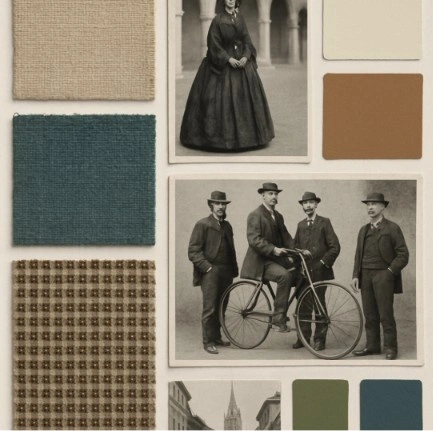
Before construction begins, this massive scale of design starts as a visual roadmap. Building a professional mood board for film means picturing a wall covered in fabric textures, architectural sketches, and authentic photographs. This vital collage drives historical accuracy in cinematic production design. Consequently, it ensures a 1920s street corner actually feels damp and lived-in rather than like a pristine, fake theme park.
That exact “lived-in” principle directly applies to inventing tomorrow. Consider Star Wars and its revolutionary “Used Future” aesthetic. This is the ingenious concept that even advanced spaceships get rusty, dented, and leak oil. By deliberately scuffing up the Millennium Falcon, the art department bypassed sterile science fiction clichés. Thus, they proved a believable universe shouldn’t look fresh out of the factory.
Bringing these expansive visions to the screen eventually requires transforming location scouting into finished film sets. Designers achieve this by mapping that meticulous research onto real-world geography. Of course, adapting sweeping deserts or historic manors typically demands massive financial backing. Yet, achieving this transportive cinematic magic doesn’t always mandate Hollywood millions. Therefore, excellent Set Design in Filmmaking can still thrive on a limited budget. This reality pushes artists toward brilliant practical illusions when funds are notably tight.
Scenics on a Shoestring: Practical Solutions for Low-Budget Films
Why do scrappy indie films often feel more authentic than massive CGI blockbusters? It comes down to the psychological weight of practical movie sets vs digital environments. When actors interact with real, physical objects, their performances instantly ground the scene. Thus, it provides a tactile connection that floating green screens rarely achieve. For this reason, Set Design in Filmmaking remains superior to pure digital effects.
Creating this reality cheaply demands clever set design solutions for low budget films. This process starts with scenic painting. Instead of buying real marble, an artist uses specific brushwork to transform cheap plywood into heavy stone or weathered iron. Therefore, this faux-finishing instantly tricks the camera. As a result, it makes highly affordable materials look wildly expensive.
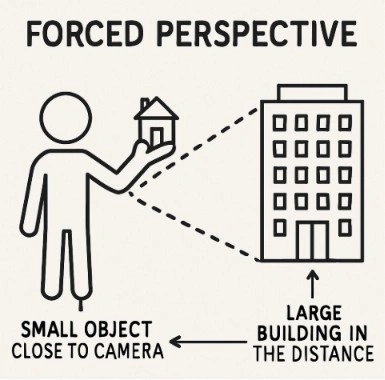
Optical tricks like forced perspective offer another way to scale up a movie world without computers. By placing a detailed miniature close to the lens while actors stand much further back, filmmakers trick your brain into seeing one giant structure. The Lord of the Rings famously used this exact visual geometry to turn normal-sized actors into towering wizards.
These physical methods provide some of the most iconic examples of expressive Set Design in Filmmaking. Ultimately, this proves that clever craftsmanship beats a blank check.
Watch Like a Pro: How to Spot the Genius in Your Next Movie Night
Movie backgrounds are far more than mere decoration. Rather, they are fundamental storytelling devices. Every prop and painted wall is a deliberate psychological tool. Therefore, Set Design in Filmmaking directly influences how you view a character. Next time you host a movie night, impress your friends with this dinner party fact: the contrasting homes in Parasite didn’t just represent rich and poor. Instead, the designers used literal verticality and descending staircases to physically map out a rigid class hierarchy.
To begin spotting iconic examples of expressive design yourself, apply this simple three-point watchlist to your next viewing:
Color: Does the room’s palette reflect the character’s current emotional state?
Texture: Are the surfaces wealthy and sleek, or aggressively weathered and lived-in?
Scale: Does the architecture make the hero look powerful, or entirely trapped?
Applying this professional eye turns passive viewing into an active treasure hunt. The next time you sit down for a film, don’t just wait for the actors to speak. Instead, look deep into the background. Afterward, discover exactly what the room is secretly telling you about the character’s journey.
Bring Your World to Life with Studiovity
Ultimately, mastering Set Design in Filmmaking requires turning complex visual dreams into structured reality. Whether you are mapping out a script’s layout or managing the Art Department’s fast-moving workflow, clear organization is vital. Studiovity provides the ultimate production management tools to seamlessly bridge the gap between a designer’s mood board and the physical soundstage. Ready to elevate your visual storytelling? Streamline your next creative project and bring your cinematic worlds to life by starting your journey with Studiovity today.