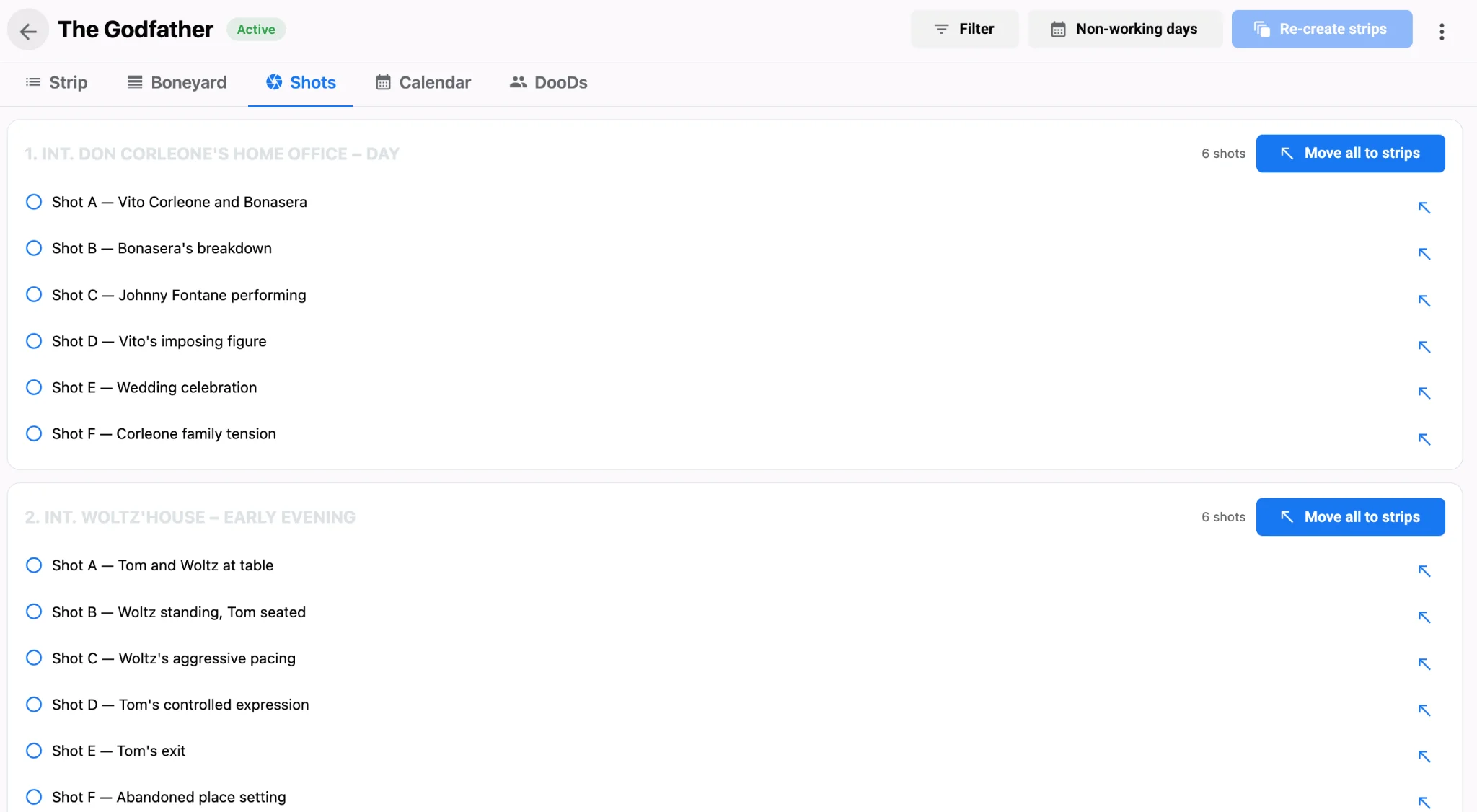
Second unit exists to protect the main unit, not to compete with it. When both boards live in separate spreadsheets, you double-book cast, steal a grip truck, or discover a shared location clash at 6 AM. Multi-unit scheduling only works when the main stripboard stays the source of truth and satellite units inherit clear constraints. The goal is parallel progress without parallel chaos.
Related video: Studiovity mobile scheduling
Keep one master board, then carve the units
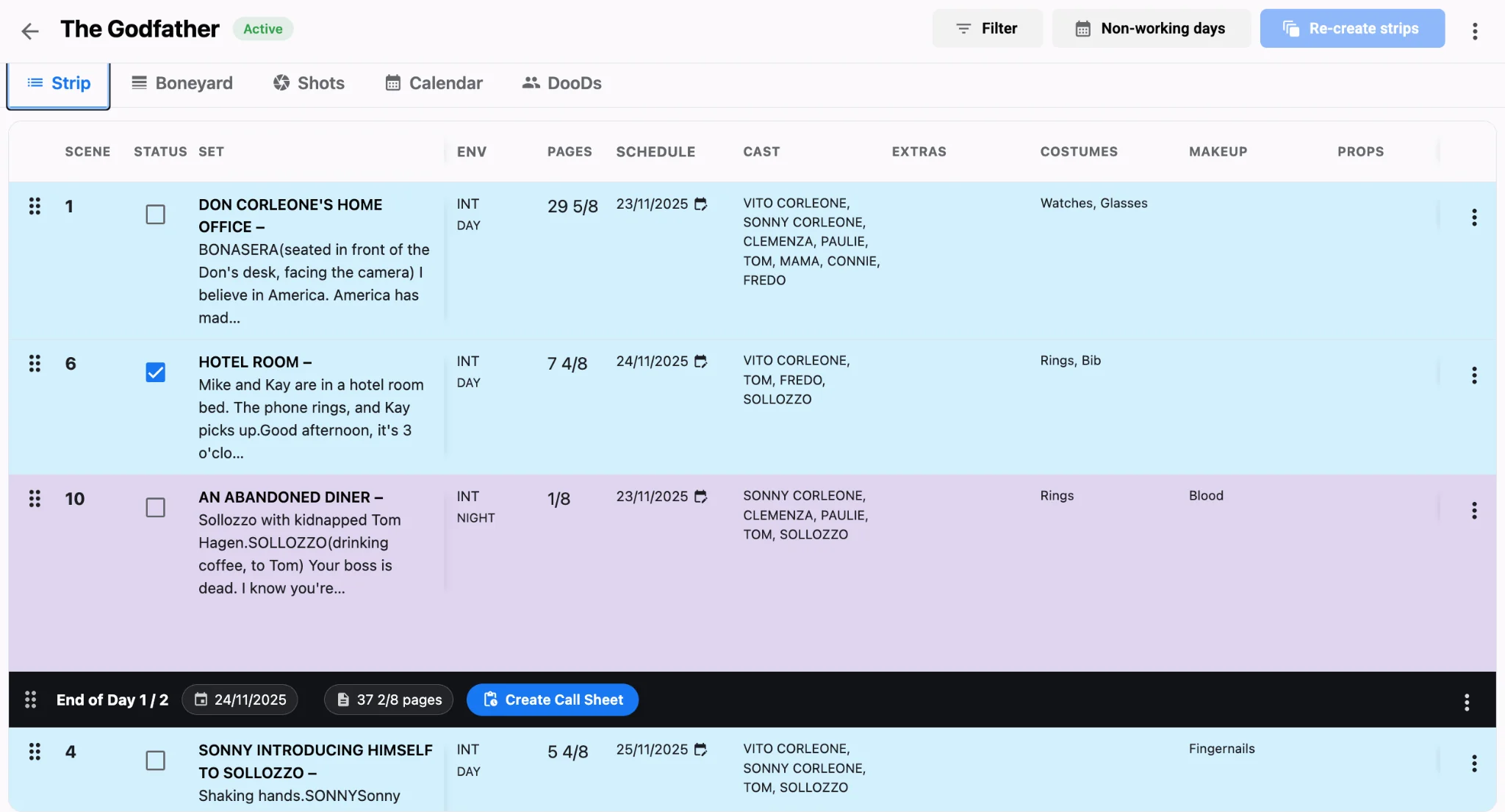
Start by locking the main unit daybreaks: hero cast, heavy sets, and director-driven coverage. Only then peel insert days, stunt plates, and plate photography onto a second-unit path. Studiovity’s film scheduling software lets you manage scenes in one workspace—including episodic multi-script projects—so shared locations and cast tags stay visible instead of hiding in email. That beats the old habit of duplicating boards until nobody knows which version is current, a gap traditional stripboards never solved cleanly. When the director wants a pickup, it should appear as a tagged strip on the master board first, then get assigned to a unit with capacity.
Share resources without sharing chaos
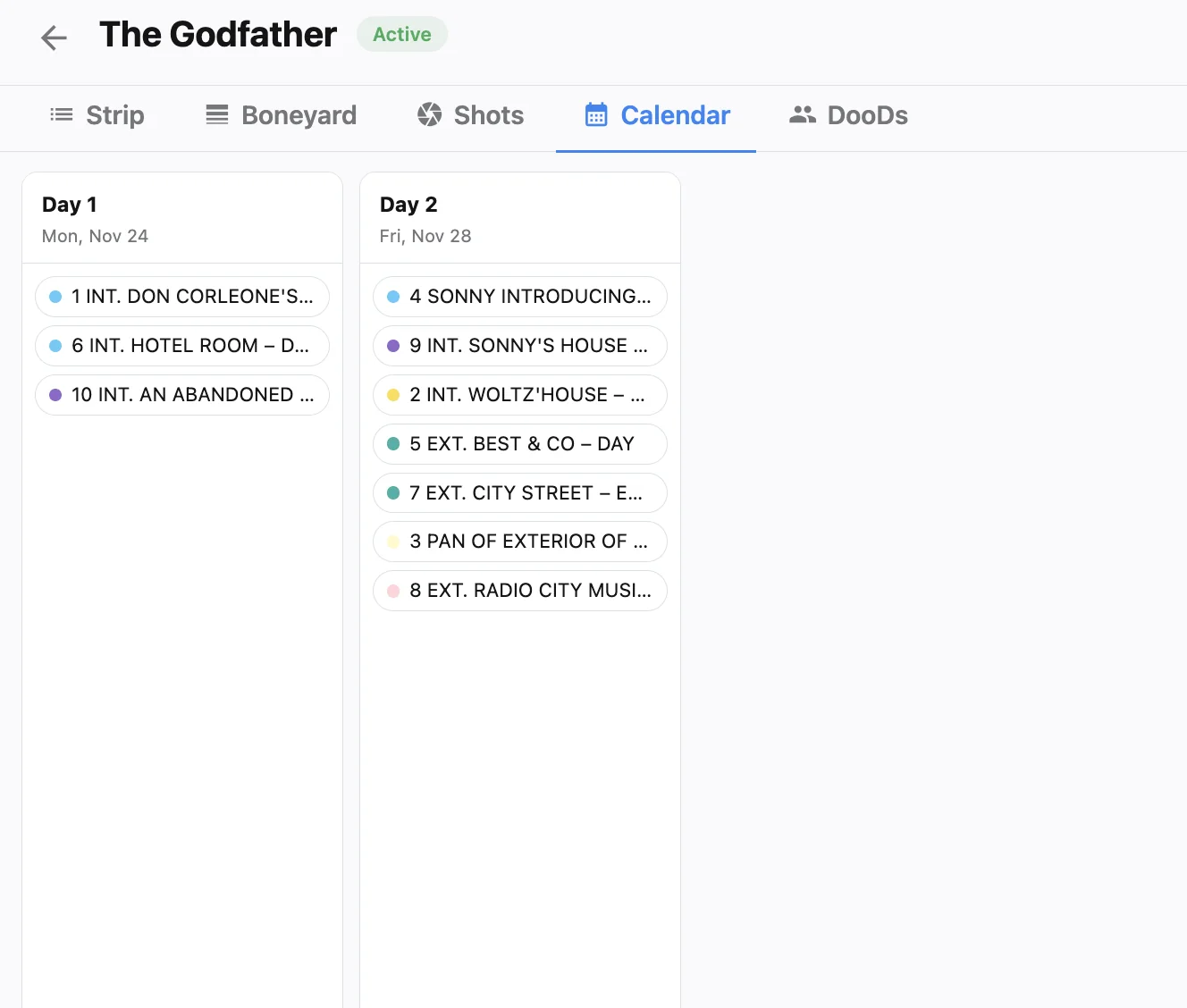
Second unit needs clarity on what it may borrow. Tag scenes that require the main camera package versus a lighter kit. Park contested scenes in the boneyard until a unit window opens. When the main unit releases a location, drag those inserts back onto a free day instead of inventing a parallel calendar. Offline and mobile stripboards help the 2nd unit AD on a rooftop stay aligned with the office—see film scheduling offline and on mobile for how live boards survive weak Wi-Fi. UPMs should review both unit daybreaks in one pass before trucks roll.
Guardrails that keep units from colliding:
- Never schedule the same named cast on two units the same morning without a hard handoff time.
- Publish separate call sheets per unit from the same schedule data.
- Re-check shared basecamp and parking whenever either unit shifts.
- Freeze shared cast handoff windows on the master board before either unit publishes a call sheet.
Call sheets per unit, one schedule underneath
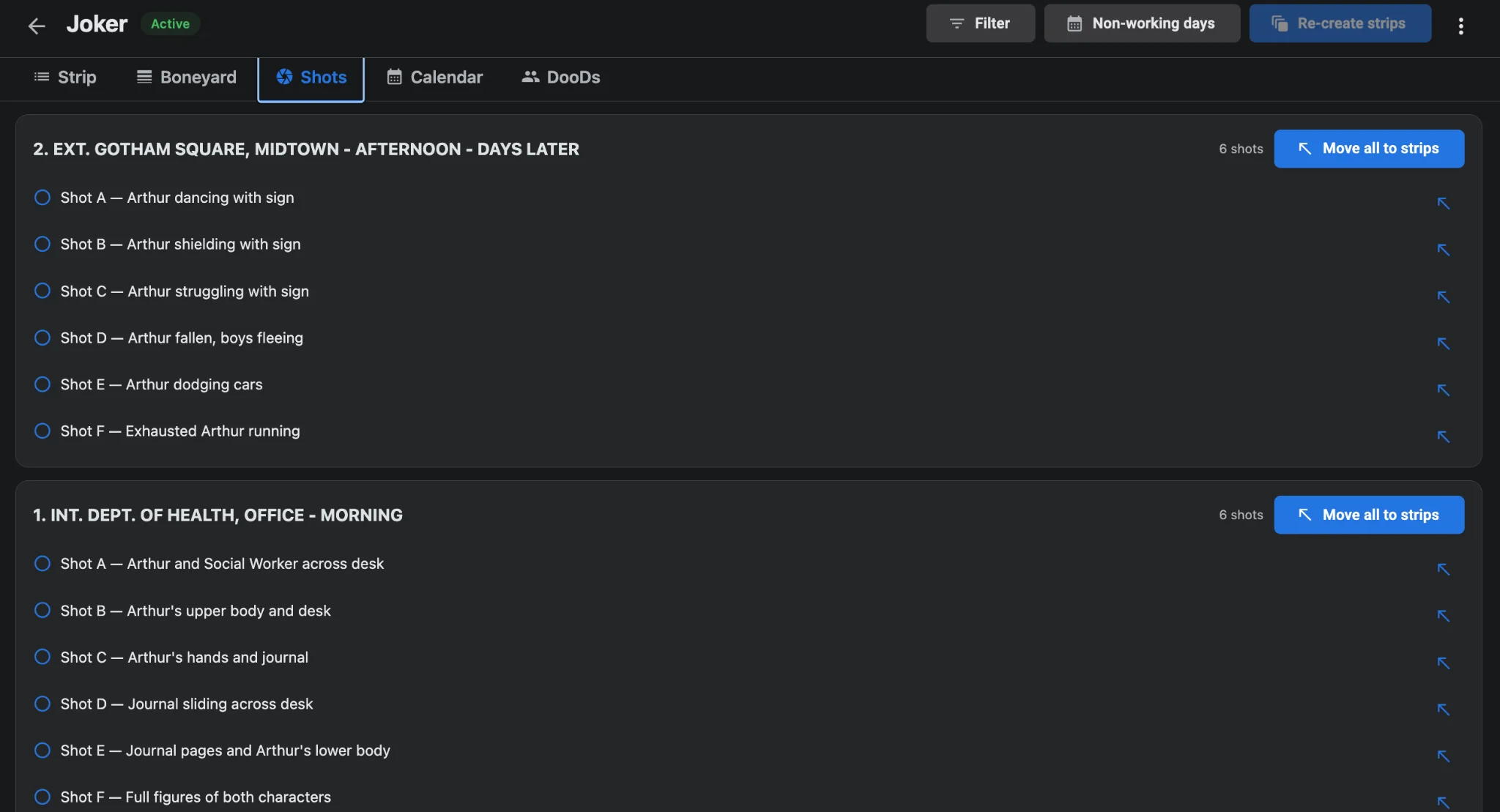
Each unit still needs its own morning document. Use Studiovity’s call sheet software to generate from the relevant daybreak so cast times, maps, and scenes match that unit’s order. If main unit runs long and steals the afternoon location, update the shooting schedule and regenerate both sheets—do not let second unit work off a stale PDF. Shot list sync on shared scenes also keeps camera expectations honest across units so inserts do not under-estimate setup time.
Give second unit a written borrow list for camera, grip, and locations stamped with return times on the master board. Parallel progress collapses the moment shared kit is assumed instead of scheduled. When a unit’s day changes overnight, follow the same routine as last-minute call sheet changes.
The payoff
Second unit should buy you days, not create a second set of conflicts. Give each unit a clear kit list and location window on the master board so borrowed gear and shared sites are negotiated once, not discovered at call. When main unit runs long, the first action is updating the shared strip—not texting second unit a vague delay. Anchor everything to one live board in Studiovity’s scheduling workspace, carve unit work from clear constraints, and distribute unit call sheets from the same source.