
Sets are not offices. Wi-Fi drops in basements, location vans lose signal between takes, and the first AD still needs a live stripboard. Film scheduling that only works in a browser tab fails the moment production leaves production office. Studiovity is built for that reality: sync scripts, schedules, and call sheets across devices, work offline, and collaborate in real time when connectivity returns.
Why mobile and offline matter for assistant directors
An AD’s day is continuous decision-making—scene order tweaks, weather holds, cast call shifts. If the board lives only on a desktop, those decisions wait for someone back at base. Mobile access puts the shooting schedule in pocket form; offline support means the daybreak remains usable when the network does not. When the signal returns, real-time collaboration merges updates so the unit and the office stay aligned.
This is not a nice-to-have for indie shoots alone. Large crews still lose minutes every time someone retypes a change from a paper stripboard photo into software. A single live plan on phone and web cuts that waste.
What stays connected in one workspace
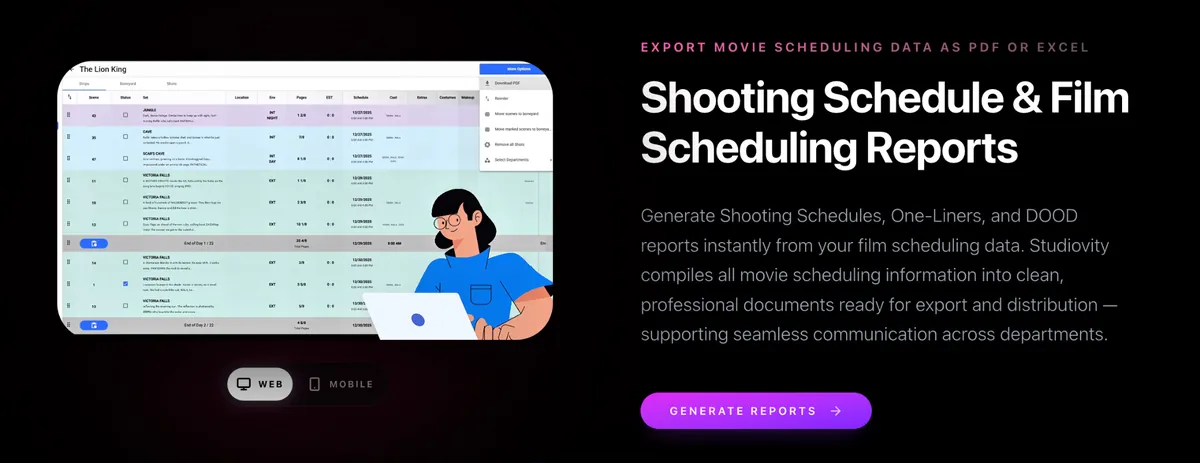
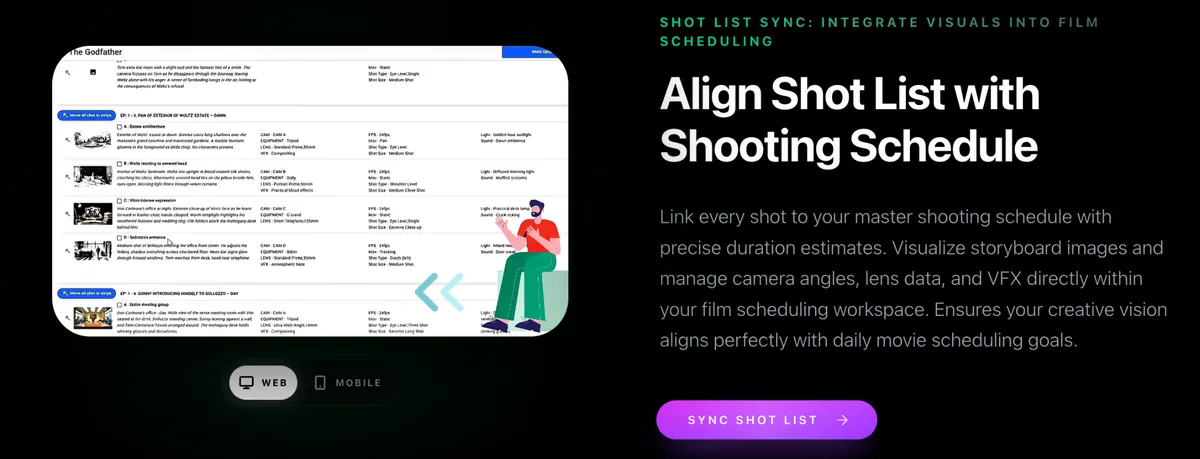
Beyond the board itself, ADs need call sheets from daybreaks, shot list context, and reports without opening three apps. Studiovity’s film scheduling workspace pairs AI Film Scheduling, episodic multi-script stripboards, Shot List Sync, boneyard management, and shooting schedule reports—one-liners and Day Out of Days (DOOD)—with PDF and Excel export. Instant call sheets pull tagged assets from the scheduled day so crew notifications match the board in hand; one-click call sheets from your shooting schedule explains how that handoff works.
Teams evaluating options can open Studiovity film scheduling software to see how mobile, web, and offline fit the same product. Industry logos familiar across Netflix, Disney+, and peer platforms set the expectation: tools should travel with the crew, not stay locked to an office desk.
A set-ready daily rhythm
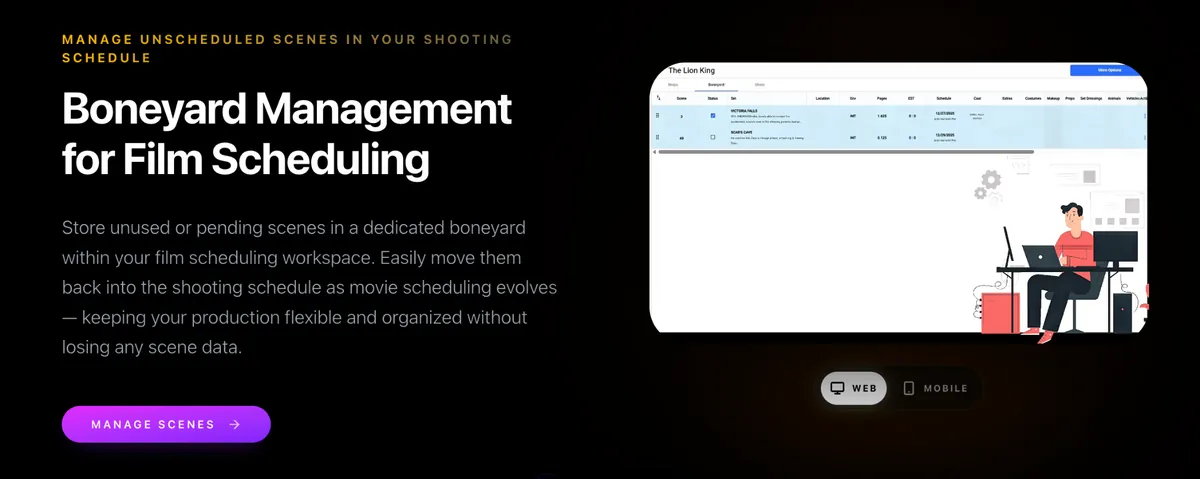
Morning: confirm the locked daybreak on mobile, generate or refresh the call sheet with call sheet software that reads straight from the board, and share. Midday: adjust an unscheduled scene into the boneyard or restore one when weather clears—without losing scene data. Evening: export the one-liner or DOOD for tomorrow’s meetings (more on that in DOOD reports, one-liners, and boneyard). AI optimization can still propose smarter location and cast clustering overnight; the AD reviews and locks before the next call.
Real-time collaboration means the UPM updating cast availability and the AD reordering strips are not fighting two versions of the truth. Offline edits queue safely; sync restores a single board.
If your current stripboard dies the moment the Wi-Fi does, switch to a schedule that stays with the AD. Read the video TV film scheduling software overview, or explore mobile-ready planning on Studiovity’s scheduling platform.