
The title page is the first thing a producer, contest reader or actor sees when they open your script, and it is also the page writers spend the least time on. A cluttered or unusual title page tells the reader you may not know the rules. A clean one says you do, and it gets out of the way so the story can start.
This guide explains what goes on a screenplay title page, where each element sits, what to leave off, and how the page changes between a spec script and a production draft. You will also see a simple layout you can copy.
Here is a short Studiovity video on getting a script industry ready, from the writing page to the exported draft:
What a Screenplay Title Page Is For
A screenplay title page has one job: to tell the reader what the script is, who wrote it and how to reach the writer. It is not a poster, a pitch or a place for a logline. Readers expect the same plain layout on every script, so anything that breaks the pattern draws attention to the page instead of the story.
The page is not numbered and it does not count as page one. Your first page of script, the one that starts with FADE IN or your first scene heading, is page one.
What to Include on a Screenplay Title Page
The title
Write the title in capitals, centered horizontally, about a third of the way down the page. Keep the same 12-point Courier style as the rest of the script and skip decorative fonts.
The writing credit
Two lines below the title, centered, write “Written by” and then your name on the next line. If two writers worked as a team, join the names with an ampersand, for example Asha Rao & Dev Mehta. The word “and” means the writers worked separately, so use it only when that is true.
Source material
If the script is adapted, add a line under the credit such as Based on the novel by Meera Shah. If it is based on a true story or an article, say so in the same short way.
Contact details
In the lower left or lower right corner, list how to reach you: name, email and phone number. Add a mailing address only if you want it there. If you have a manager or agent, their details usually replace yours.
Draft or date line (optional)
Some writers add a draft line or date in the opposite lower corner. Many spec writers leave it off so the script never looks old.
A Simple Screenplay Title Page Layout
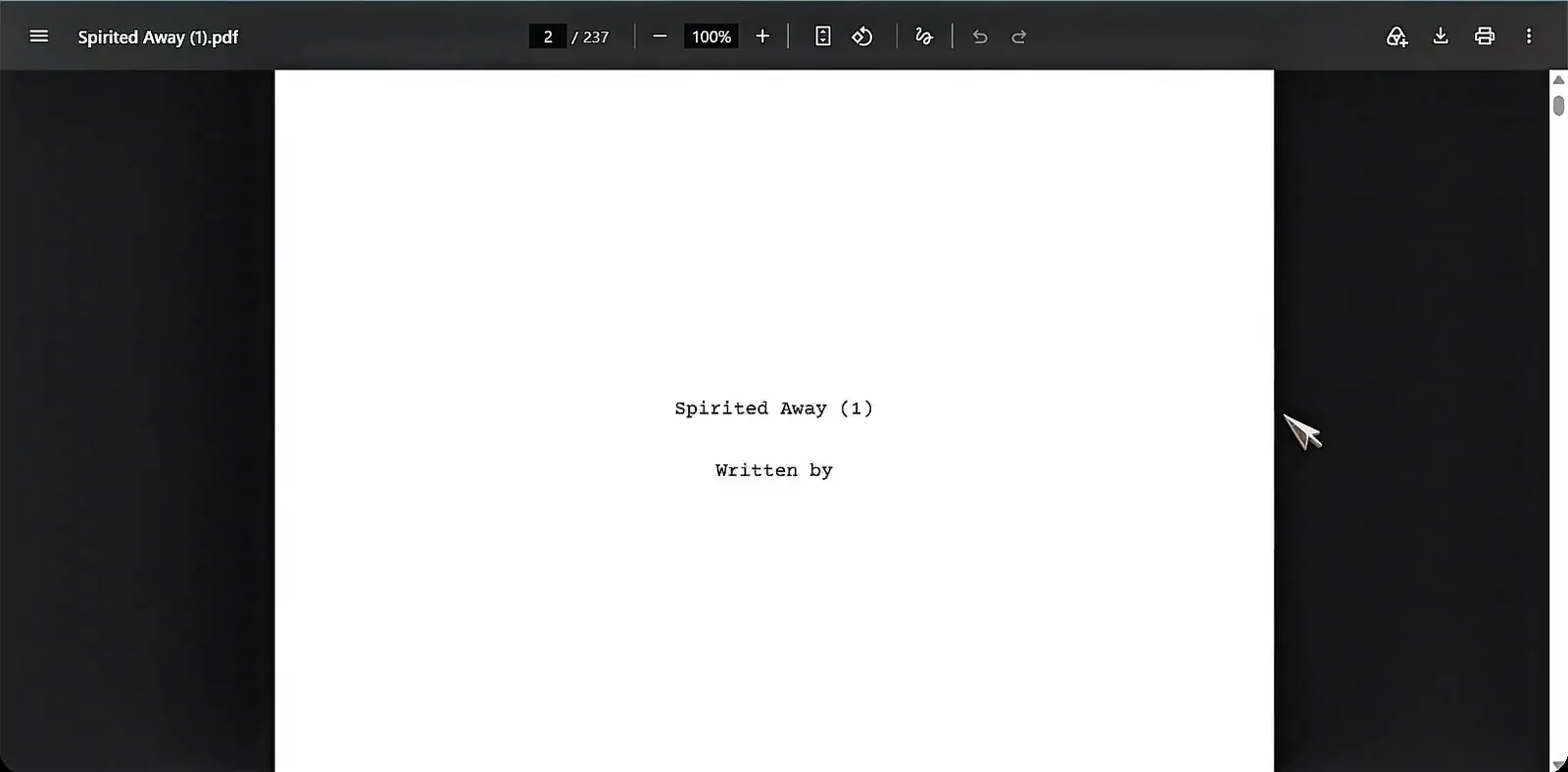
Here is the layout in plain text. On the real page the title block sits roughly a third of the way down and the contact block sits near the bottom margin.
                         THE LAST MONSOON

                            Written by

                            Asha Rao

                  Based on the novel by Meera Shah


Asha Rao
asha@example.com
+91 98765 43210
Notice how much white space there is. That is intentional.
What to Leave Off the Title Page
Most title page mistakes come from adding things that belong somewhere else. Leave these off a spec script:
- Images, logos, artwork or colored backgrounds.
- A logline, synopsis or tagline. Those go in your query or pitch materials.
- Copyright symbols and registration numbers. Your work is protected by copyright law, and printing a notice can look nervous.
- Draft numbers like “Draft 7”, which tell the reader the script has been rewritten many times.
- Character lists, page counts or genre labels.
- Quotes or epigraphs. If you need one, put it on the first page of the script as a title card.
If you are writing in an editor that builds the page for you, such as the Studiovity screenwriting software, fill in the fields once and the layout stays consistent every time you export.
Spec Script vs Production Title Page
A spec script title page is minimal because its only goal is to get read. Once a project goes into production, the title page starts to do more work. A shooting script may add the production company, a revision date and the color of the current revision so departments know they have the latest pages. Some productions also add a confidentiality notice.
If you are preparing a script to sell, keep it simple. For more on what readers expect from a spec, see our guide on how to write a spec script.
Cover Pages Are Not Title Pages
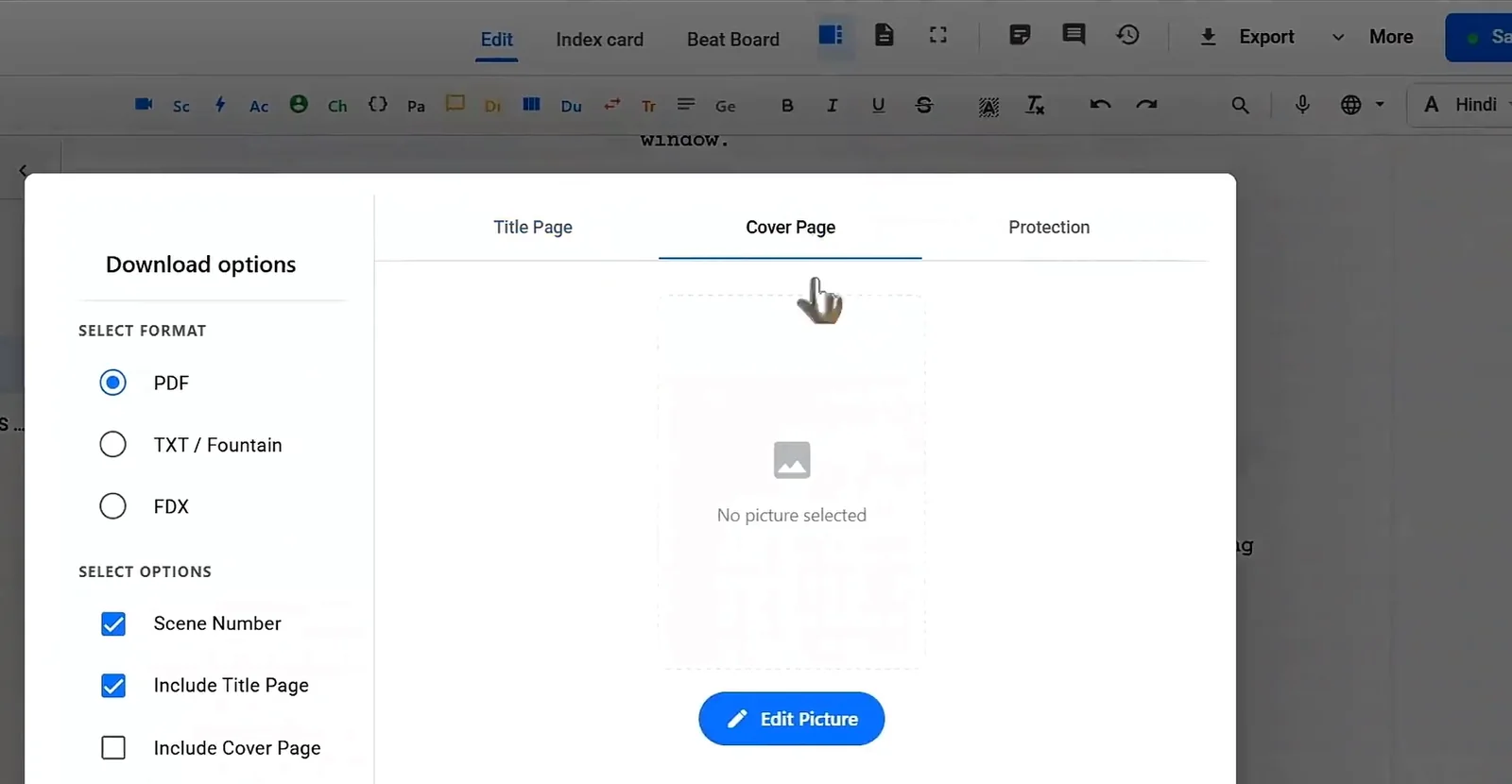
Some writers confuse a title page with a cover page. A cover page is an optional designed front sheet with artwork, often used for pitch decks or a printed copy for a meeting. It is not part of a standard submission. If a contest, festival or producer asks for a plain PDF, send the title page only and keep any artwork for your pitch materials.
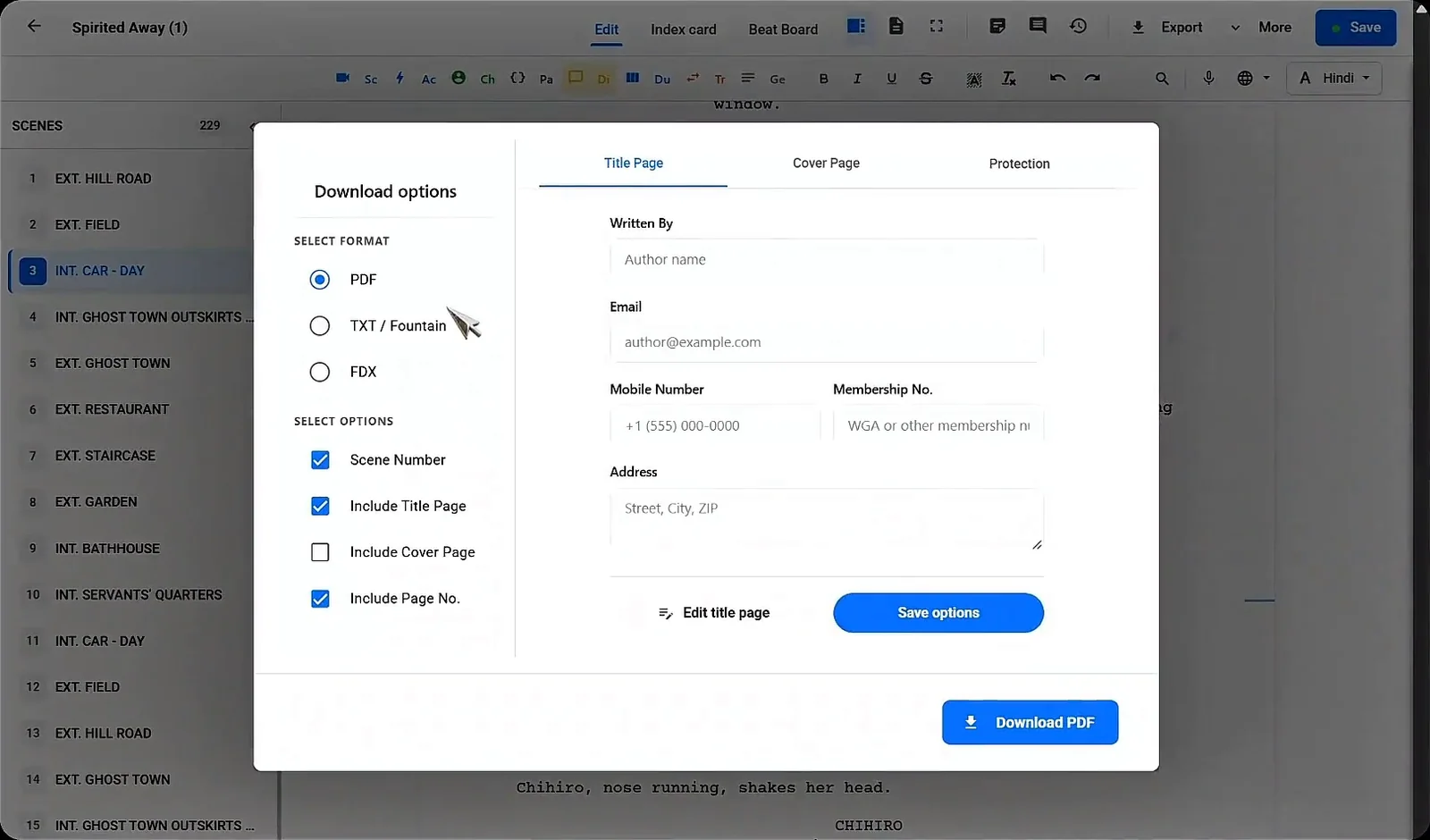
Want to see how this works in practice? Try the title page and export options in Studiovity and download a test PDF with the title page switched on.
Screenplay Title Page Checklist
- Title in capitals, centered, about a third of the way down.
- “Written by” and your name centered below the title.
- Source material line only if the script is adapted.
- Contact details in a lower corner.
- No images, logline, copyright notice or draft number on a spec.
- Same Courier font as the script, with no page number on the title page.
- Export to PDF and check the page looks right before you send it.
For the formatting rules that apply on every page after this one, read the complete screenplay formatting guide.
FAQ
Should the title page be numbered?
No. The title page is not numbered and does not count as page one.
Can I put my WGA registration number on the title page?
It is not necessary on a spec script, and most readers prefer it left off. Keep the number in your records in case you need it.
Do I need a title page for a short film or contest entry?
Yes, unless the contest asks for a blind submission. In that case follow their rules and remove your name.
Build a Clean Title Page in Studiovity
A good title page takes five minutes and saves you from a bad first impression. Studiovity lets you enter your writing credit and contact details in the title page fields, choose whether to include the title page, and export to PDF, Fountain or FDX in standard format. Start your next script in Studiovity and send every draft with a title page that looks professional.