
Watching a great movie is exciting. However, understanding why it works takes a different skill. That is where learning how to write a film analysis comes in. Instead of simply sharing opinions, a film analysis explains how different filmmaking elements create meaning and emotion.
Whether you are a film student, aspiring filmmaker, critic, or content creator, learning how to analyze a movie can sharpen your storytelling skills. Moreover, it helps you recognize creative decisions that often go unnoticed. In this guide, you will learn how to write a film analysis in five simple steps, along with practical examples.

What Is a Film Analysis?
What is a film analysis? It is a detailed examination of a movie’s storytelling techniques, visual style, characters, themes, and technical choices. Rather than saying a film is “good” or “bad,” you explain how the team achieves specific effects. This includes the director, writers, actors, editors, and cinematographers.
For example, instead of writing, “The ending was emotional,” you could explain the technical choices. Specifically, show how the music, camera angles, lighting, and character development built emotional tension throughout the story. As a result, your analysis becomes more insightful and persuasive.
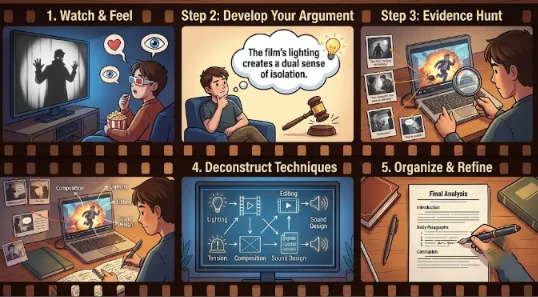
Step 1: Watch the Film Carefully
First, to understand how to write a film analysis, watch the movie without taking notes. Focus completely on the overall experience and emotional impact. Then, watch it again with a critical eye.
During your second viewing, pay attention to specific details:
Story structure
Character development
Camera shots
Lighting
Editing
Sound and music
Themes and symbols
For example, look at The Dark Knight. You might notice how the Joker constantly challenges Batman’s moral code instead of simply acting as a villain. Therefore, multiple viewings often reveal important details.
Step 2: Develop a Clear Thesis
Next, discover how to write a film analysis by deciding what your analysis will argue. Your thesis should present one central idea instead of covering every aspect of the film.
For example, consider these options:
Weak thesis: The movie has great acting and good visuals.
Strong thesis: The Dark Knight explores the fragile nature of justice by placing its hero in impossible moral situations.
A focused thesis gives your analysis direction. Consequently, every paragraph should support that main argument.
Step 3: Gather Evidence from the Film
Now, advance your knowledge of how to write a film analysis by supporting your thesis with specific examples. Use scenes, dialogue, cinematography, editing, or sound design as evidence.
Imagine you are analyzing Parasite. Instead of writing that wealth inequality appears throughout the film, describe how the family’s different homes visually represent social class. Explain how the staircase shots repeatedly separate the rich from the less fortunate.
Similarly, if you analyze Whiplash, discuss how rapid editing and intense close-ups increase pressure during rehearsal scenes. Specific evidence always strengthens your analysis.
Step 4: Analyze Film Techniques
Furthermore, you can master how to write a film analysis by analyzing film techniques directly. Many beginners summarize the plot instead of analyzing filmmaking choices. Instead, explain how technical elements support the story.
Consider discussing:
Cinematography
Lighting
Editing
Sound design
Costume design
Production design
Color palette
For instance, in Mad Max: Fury Road, fast-paced editing combines with dynamic camera movement to create relentless energy. Meanwhile, the vibrant orange desert contrasts with the cold blue night scenes, reinforcing the film’s dramatic tone. As a result, readers understand how visual decisions influence emotions.
Step 5: Organize and Revise Your Analysis
Finally, organize your paper into a logical structure. Start with an introduction that introduces the film and your thesis. Then, continue with body paragraphs that each examine one supporting point. End with a conclusion that reinforces your main argument instead of repeating every detail.
After writing, revise carefully. Remove unnecessary plot summaries, improve transitions, and ensure every paragraph supports your thesis. Good editing often transforms an average analysis into an excellent one.
Film Analysis Example
Suppose your thesis states that The Social Network portrays ambition as both inspiring and isolating. Your analysis could explain how quick dialogue reflects the fast-moving technology industry. Then, discuss how cold lighting and distant framing emphasize the growing emotional gap between characters.
Finally, connect these filmmaking choices to the larger theme of success without meaningful relationships. Rather than summarizing the story, every observation supports your central argument.
Common Mistakes to Avoid
Many writers repeat the plot instead of offering analysis. Others include personal opinions without supporting evidence. Some also jump between unrelated ideas.
Instead, stay focused on your thesis. Use examples from the film. Explain why each creative choice matters. Most importantly, connect every observation back to your main argument. Clear organization and thoughtful analysis always produce stronger results.
Final Thoughts
Learning how to write a film analysis takes practice, but the process becomes easier with every project. Start by watching the film carefully. Then, create a focused thesis, gather meaningful evidence, analyze filmmaking techniques, and revise your work with clarity.
Whether you are studying cinema, reviewing movies, or developing your filmmaking skills, strong analysis helps. It allows you to understand storytelling on a much deeper level. The more films you analyze, the more you will recognize the creative decisions. These structural choices turn ordinary scenes into unforgettable cinematic moments.