
Imagine you’ve finally gathered your cast and crew, only to realize your lead actor is double-booked on the exact same day you rented the expensive camera crane. This nightmare often destroys production momentum and drains limited budgets. Fortunately, Film Schedule Planning with AI helps filmmakers avoid these costly scheduling conflicts before production even begins.
Scheduling a movie often feels like playing 4D Tetris where actors get sick, traffic delays equipment, and weather suddenly changes. For decades, filmmakers relied on paper strips and giant boards to manage schedules. However, modern technology has transformed this process completely.
According to recent production software surveys, AI optimization tools can reduce a week of planning into only fifteen minutes of automated processing. Instead of relying on guesswork, filmmakers can now test thousands of scheduling possibilities instantly. Film Schedule Planning with AI allows productions to identify the safest and most cost-effective workflow for every project.
Mastering production scheduling ultimately means maximizing creative time while eliminating logistical waste. With Film Schedule Planning with AI, filmmakers can build a predictable workflow before stepping on set. As a result, productions become more organized, less stressful, and far more efficient.

The High Price of Human Error: Identifying the Logistical Bottlenecks That Kill Budgets
Staring at a massive board of color-coded index cards to organize a ten-day shoot immediately creates logistical bottlenecks. Manual scheduling often ignores the domino effect of small delays, which quietly destroy budgets before filming even starts. Fortunately, Film Schedule Planning with AI helps independent productions eliminate these invisible financial leaks.
One of the biggest budget killers is the dreaded “Company Move.” This happens when the entire crew packs equipment, props, and catering to relocate during the same day. Instead of filming scenes, everyone spends paid hours sitting in traffic. Therefore, smart scheduling always groups nearby scenes together to reduce wasted production time.
Another major challenge involves turnaround rules. For example, if a night shoot runs late and the lead actor must return early the next morning, the production risks violating mandatory rest-hour regulations. These rules protect cast and crew members while creating another complex scheduling challenge. Missing a required turnaround period can force an expensive production delay.
Human planners struggle to manage dozens of changing variables at once. Consequently, manual schedules often miss 10 to 15 percent of possible efficiency improvements. Film Schedule Planning with AI changes this process by testing thousands of scheduling combinations instantly while respecting every production constraint. Before fixing these costly issues, the technology first analyzes the screenplay to identify locations and cast requirements.
From Paper to Data: How AI Script Breakdown Instantly Identifies Cast and Locations
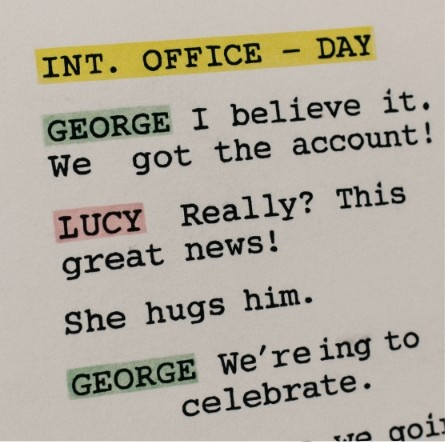
Before scheduling begins, someone must carefully read the script and identify every production requirement. Traditionally, this process required days of manual highlighting with colored markers. Today, modern AI tools complete the same task within seconds.
Uploading a standard PDF screenplay starts a process often described as “Digital Highlighting.” Instead of displaying plain text, AI script breakdown software recognizes scene structures exactly like an experienced production coordinator. The system scans the screenplay and automatically categorizes important production details into a searchable database.
This automation removes the risk of human oversight during pre-production. Additionally, automated scheduling software can reduce nearly 80% of the time normally spent on script breakdown tasks. Within moments, the software extracts essential production elements such as:
- Characters
- Locations
- Props
- Time of Day
- Cast Size
These details create the foundation of the entire production timeline. Once the system organizes the screenplay data, optimization tools can solve actor availability issues and location restrictions with remarkable speed.
Solving the 'Talent Puzzle': How Optimization Smart-Tools Handle Actor Constraints and Location Limits
Even with a properly organized script, scheduling conflicts can still create chaos. A lead actor may only work on Mondays, while a key filming location may remain closed during weekdays. Trying to manually coordinate every restriction often creates impossible scheduling situations.
This is where Film Schedule Planning with AI becomes extremely valuable. Filmmakers simply enter non-negotiable rules such as actor blackout dates, mandatory turnaround times, or location limitations. Then, the software automatically locks those restrictions into the scheduling system.
Locations also require careful planning. For example, if a production needs to film a late-night diner scene, the scheduling software checks the location’s operating hours automatically. The system cross-references those hours with the script breakdown data to ensure the schedule remains realistic.
Combining all these moving parts is where optimization tools perform best. Imagine needing two specific actors at the same diner location for a major dialogue sequence. The software rapidly tests thousands of possible schedule combinations and identifies the best available shooting date within seconds.
By optimizing talent availability and location access, productions can create reliable and conflict-free schedules. Furthermore, predictive scheduling tools reduce expensive mid-day relocations and lower transportation costs significantly.
Reducing Costs by 20%: Using Predictive Analytics to Minimize Expensive 'Company Moves'
Every minute spent relocating cameras, crew, and lighting equipment costs valuable production money. Traditional scheduling methods often accept these relocations as unavoidable problems. However, predictive analytics now treats transportation planning like a solvable mathematical puzzle.
Instead of guessing the most efficient route, productions can use predictive analytics to test thousands of scheduling possibilities instantly. The algorithm reorganizes scenes repeatedly to identify the sequence that keeps the crew in one location for the longest possible time.
Film Schedule Planning with AI creates measurable savings by grouping scenes according to physical locations instead of story order. For instance, filming all coffee shop scenes on one day before moving to the next location eliminates unnecessary company moves and reduces labor costs dramatically.
The difference between manual scheduling and AI optimization becomes especially clear on low-budget productions. In many cases, AI-generated schedules create major operational improvements, including:
- Reduced travel time by eliminating unnecessary company moves
- Better actor day-out-of-days organization
- Shorter equipment rental periods for specialty gear
- Lower transportation expenses across the production timeline
These measurable savings help producers justify budgets more effectively. Although algorithms can identify the most efficient logistical path, directors still make the final creative decisions.
The Human-AI Partnership: Why the Director Still Makes the Final Decision on Every Strip
A fully optimized schedule may appear perfect mathematically, but filmmaking still depends on human emotion and performance. For example, an AI-generated schedule might place four emotionally intense scenes back-to-back before lunch simply because it saves time.
Therefore, filmmakers should never treat algorithmic schedules as final drafts. Instead, Film Schedule Planning with AI should function as the foundation for creative decision-making. The software creates an efficient starting point, while directors adjust the schedule according to actor energy, performance demands, and crew morale.
For instance, shooting a heartbreaking breakup scene immediately after a comedy sequence may emotionally exhaust performers. Although the schedule looks efficient on paper, directors understand the emotional rhythm of filmmaking better than software systems.
Balancing algorithmic precision with human judgment creates the ideal production workflow. As a result, productions protect both the budget and the creative quality of the final film.
Your Modern Production Roadmap: A 5-Step Action Plan for AI-Optimized Shooting
The era of manually organizing color-coded scheduling strips is rapidly disappearing. Today, filmmakers can become logistical architects by allowing AI systems to handle complex scheduling calculations automatically.
If you want to test Film Schedule Planning with AI on your next short film or video project, follow this simple workflow:
- Finalize the script before uploading it into the system.
- Run the AI breakdown process to identify characters and locations.
- Input hard scheduling constraints such as actor availability.
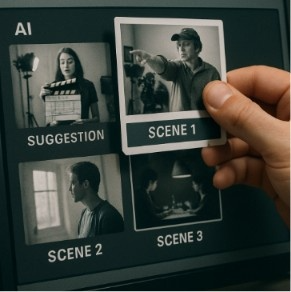
- Generate schedule drafts and creatively adjust the best version.
- Distribute finalized call sheets to cast and crew members.
As productions grow more comfortable with these tools, they can also integrate budgeting systems, automated call sheets, and advanced scheduling analytics into the workflow. Ultimately, Film Schedule Planning with AI handles the logistical complexity, while directors remain fully in control of the creative vision.
Why Filmmakers Choose Studiovity for AI Production Scheduling
Modern productions need more than spreadsheets and manual strip boards. Studiovity combines screenplay writing, AI script breakdown, shooting schedules, call sheets, budgeting, and production management into one connected workflow. Filmmakers can automatically organize scenes, manage actor availability, optimize shooting days, and reduce costly production delays from a single platform. Whether you are producing an indie short film, commercial, documentary, or feature project, Studiovity helps streamline Film Schedule Planning with AI so your crew spends more time creating and less time solving logistical problems.