
Everyone dreams of sitting in the director’s chair, but according to industry veterans, 70% of a film’s success happens before the camera even rolls. Organizing a movie is like planning a high-stakes, multi-day wedding where the venue changes constantly. While students naturally focus on their creative vision, the entertainment business actually hires based on relentless organization. Therefore, learning to navigate a modern Film Production Management Software is essential for surviving your first professional shoot.
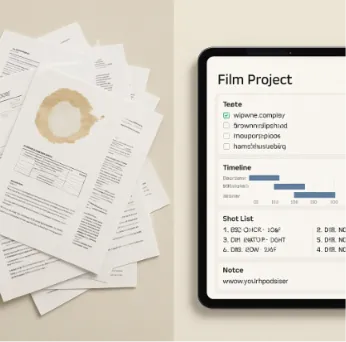
This disconnect creates the “Chaos Gap”—the painful leap from messy amateur habits to professional production management, which acts as the GPS keeping a shoot on track. However, implementing a unified digital workspace changes this dynamic entirely. Because this specialized Film Production Management Software replaces scattered notes with one accessible digital hub, it effectively trains young creators for the transition from film school to professional sets.
Beyond the Final Draft: How Collaborative Scriptwriting Simulates a Professional Writers' Room
A script is the blueprint for a movie, but that blueprint fails if the crew relies on outdated copies. When film students rely on emailing PDFs back and forth, they invite chaos—like a lead actor missing a crucial dialogue change. Modern collaborative scriptwriting tools for student projects solve this by turning the script into a shared digital hub. Consequently, these features form the core of any robust Film Production Management Software.
Evaluating options like Studiovity vs Celtx for beginners reveals exactly which screenwriting software features best simulate a professional writers’ room:
Real-time Co-authoring: Multiple writers can type on the same page simultaneously, just like working together in a shared cloud document.
Version History: This automated safety net cuts editing time by 40% by tracking every change, ensuring a brilliantly rewritten scene is never permanently lost.
Script Tagging: The costume or camera departments can highlight necessary props directly within the text without altering the dialogue.
Mastering these systems automatically teaches students the precise “industry language” of script formatting. Yet, once the final sentence is polished, the logistical mountain truly begins. The next crucial phase is mastering automated production breakdowns to avoid costly on-set mistakes.
The 'Invisible' Skill: Mastering Automated Production Breakdowns to Avoid Costly On-Set Mistakes
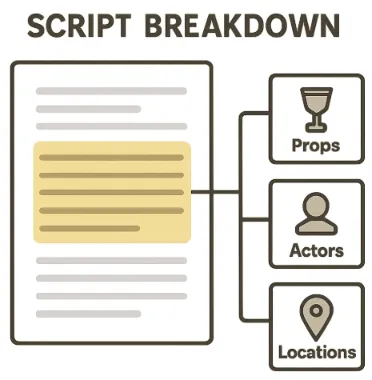
Most people think typing “The End” is the finish line, but for filmmakers, it is actually just the starting gun. Before cameras roll, students must translate their digital storytelling into a massive logistical checklist known as a “Script Breakdown.” Think of this process as making a master shopping list for the entire movie. By mastering automated production breakdowns, aspiring directors develop a technical eye that turns their creative passion into actionable, organized data. Clearly, this complex process becomes much easier when you leverage the power of a dedicated Film Production Management Software.
Consider the financial risk of forgetting one crucial detail during pre-production. For example, missing a specialized prop or realizing too late that a scene requires fifty extras leads to “Budget Bleed”—a slow, devastating drain of money caused by poor planning. Professional Film Production Management Software prevents this by automatically scanning a 90-page script to identify every required actor, location, and object in minutes instead of days.
Catching these expensive requirements early protects limited student funds and stops costly on-set mistakes before they happen. Furthermore, transforming a script into a highly organized database ensures that no one is scrambling to find a vital prop while the rental clock ticks. Once this logistical foundation is rock solid, the next hurdle is managing the people on set and communicating effectively.
Leading the Crew: Using Professional Call Sheet Templates to Communicate Like a Pro Director
Imagine trying to coordinate fifty people arriving at a remote location at four in the morning. Developing technical skills for aspiring directors means learning how to communicate perfectly across multiple departments without shouting. The solution is the “Call Sheet“—a definitive daily itinerary that acts as a master schedule. This critical document instantly commands respect and keeps the set safe by clearly outlining:
Call Times: Specific arrival schedules for every person.
Scene Order: The exact sequence of filming for the day.
Weather Forecast: Vital alerts for unpredictable outdoor shoots.
Nearest Hospital: Emergency routing information to ensure safety.
Manually typing these details every night leaves room for dangerous, exhausting errors. Optimizing film crew management through automation solves this by generating these daily schedules instantly using existing script data. Therefore, high-quality Film Production Management Software removes this administrative burden so a director can focus entirely on creative storytelling and working with actors.
Platforms like Studiovity provide standard industry call sheet templates that instill these professional habits from day one. Running a production with this level of clear, standardized instruction proves a student is ready to confidently lead a crew. As a result, mastering these daily logistics naturally builds the foundation for an industry-ready portfolio.
Building an 'Industry-Ready' Portfolio: How Documenting Your Workflow Wins Jobs
We often judge creators by their final videos, but producers hire based on the ability to manage chaos. Understanding how to build a professional filmmaking portfolio means moving beyond flashy reels to build a “Process Portfolio.” This collection of daily schedules and reports proves your “logistical maturity” to employers, offering concrete evidence that you can successfully handle people, time, and props without losing control of a shoot.
Transitioning into a reliable hire requires speaking the practical language of production management. By running your projects through professional Film Production Management Software, you automatically generate the exact performance data industry veterans expect to see. Specifically, leveraging platforms like Studiovity for film students lets you easily export reports proving you finish shoots on time and under budget. Documenting this operational workflow acts as your ultimate resume, providing a clear path to professional sets.

Closing the Gap: Your 3-Step Plan to Transitioning from Film School to Professional Sets
You now understand that making movies requires mastering the organized chaos behind the scenes. Integrating an advanced Film Production Management Software into film school curriculum helps you abandon messy paperwork and adopt professional habits. Start building your cloud-based pre-production workflow today:
Move projects to the cloud.
Practice automated breakdowns.
Standardize your call sheets.
True industry readiness requires a fundamental mindset shift: raw talent only flourishes when supported by reliable systems. Step onto your next set not just as an aspiring artist with a camera, but as a confident, organized professional ready to lead the crew.