
Staring at a blank spreadsheet for six exhausting hours, desperately trying to calculate day-out-of-days for your grip and electric crew, is a universally dreaded experience. For most independent creators, that wall of empty cells represents the most demoralizing part of early pre-production. This is why Film Budgeting with AI is rapidly transforming how modern filmmakers plan productions.
This overwhelming dread is known as spreadsheet fatigue—a specific mathematical exhaustion where calculating fringes, contingencies, and catering costs completely drains your creative energy. Fortunately, utilizing the Bridge Method—a strategic workflow transition from manual data entry to delegating those tedious line items to a digital assistant—radically shifts this dynamic. Instead of battling complex cell formulas, you simply give plain-English directions to a high-speed virtual intern.
According to recent independent producer surveys, adopting film budgeting AI tools regularly reclaims up to 20 hours of lost scheduling time per project. Those twenty hours represent valuable days you could spend rehearsing with actors or scouting locations, rather than hunting down a miscalculated decimal point in your camera rental column.
Consider this guide your seasoned producer’s shortcut to understanding practical AI in filmmaking. Optimizing pre-production with smart budget automation creates more time to spend on set. Film Budgeting with AI gives filmmakers faster control over production finances without sacrificing creative flexibility.
Why AI is Your New High-Speed Production Assistant, Not Your Replacement
The biggest fear regarding new technology requires clarification: no algorithm will steal your job. When creators ask about the best AI tools for film producers, they often expect a magic button that runs the entire show. Instead, view this as separating creative control from administrative automation. You keep the artistic vision, while the software handles the tedious data entry.
Treating this technology like a high-speed production intern is the secret to mastering it. Interns need clear directions to get the coffee order right, and so does your digital assistant. Adopting this mindset allows you to leverage generative AI for line producer workflows effortlessly. It rapidly calculates baseline costs for craft services and gear rentals, saving you from hours of spreadsheet fatigue.
Blindly trusting those initial numbers, however, is a mistake. Embracing the “Human-in-the-Loop” approach means you always perform a crucial final review because the software doesn’t know about favors you’ve pulled with local vendors.This collaborative dynamic naturally leads to script breakdown automation, granting your script “X-ray vision” to find hidden costs.
Film Budgeting with AI works best when producers combine automation with real-world production experience.

Script Breakdown Automation: Use 'X-Ray Vision' to Find Your Hidden Costs
The traditional breakdown process historically required colored highlighters, rulers, and hours of reading to spot every background prop. Learning how to use AI for movie budget breakdowns changes this tedious workflow entirely. Think of the technology as giving your script “X-Ray Vision.” Instead of manually dissecting unstructured text, the software instantly scans your PDF and “sees” the preliminary price tags attached to every location, stunt, and speaking role.
What used to consume days can now become a workable line-item draft in under ten minutes. By embracing script breakdown automation for budget accuracy, you drastically reduce human error in tedious character-day-out-of-days calculations and catch hidden expenses—like subtle visual effects cues—that a tired producer might easily overlook. During this rapid scan, the algorithm automatically extracts four essential script elements for budgeting:
- Location counts
- Character-Day totals
- VFX cue density
- Special equipment needs
Having these precise elements neatly categorized gives you a massive head start on automated film production cost estimation. With your baseline data established in minutes rather than weeks, you aren’t locked into just one rigid financial scenario. These initial numbers can be safely tweaked using iterative budget modeling.
Film Budgeting with AI also improves accuracy by identifying hidden production expenses before they impact the schedule.
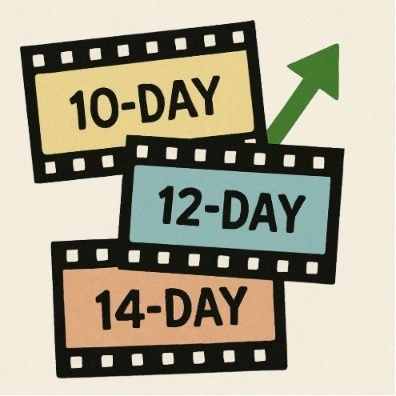
The 'Multiverse' Planning Method: Comparing 10-Day vs. 14-Day Shoots in Real-Time
Budgeting usually forces you into a single, rigid plan because duplicating spreadsheets and adjusting every individual day rate or fringe takes hours. Iterative budget modeling changes this frustrating dynamic by letting you play out “what if” scenarios instantly. Utilizing machine learning in film production management, you can now generate three complete budget tiers—Low, Medium, and High—in the exact amount of time it once took to painstakingly build just one baseline draft.
Think of this capability as “Multiverse Planning” for your indie feature. If your director begs for a 14-day shoot instead of a 10-day schedule, you no longer have to manually recalculate gear rentals, craft services, and crew day-out-of-days across fifty different rows. You simply adjust your parameters, and real-time production expense tracking tools instantly quantify the exact financial impact of those four extra days across your entire production sheet.
Having these side-by-side variations empowers you to walk into funding meetings with absolute confidence. By applying predictive analytics for independent film finance, you can confidently present the most logical, investor-ready production plan while proving you have backup strategies ready to execute.
Film Budgeting with AI helps producers test multiple production scenarios without rebuilding spreadsheets from scratch.
Mastering the Human Review Process: Where Producers Outperform Algorithms
Even advanced algorithms occasionally invent facts—a glitch known as an “AI hallucination.” When evaluating AI film budgeting software vs manual spreadsheets, algorithms don’t know what chaotic sets feel like. They simply predict data patterns. Subjective risk assessments protect your project from hallucinated labor rates that could unexpectedly inflate costs or breach your existing production insurance terms.
To navigate financial risk assessment in AI filmmaking safely, always manually review these three “Red Flag” zones:
- Local union fringe nuances: AI might calculate standard SAG-AFTRA rates but entirely miss specific local turnaround penalties.
- Subjective contingency padding: Algorithms cannot anticipate real-world set chaos; human producers must calculate realistic contingencies for difficult locations.
- Complex tax credit loopholes: Generated incentives rarely account for the exact geographical boundaries of regional grants.
Ultimately, reducing production overhead with artificial intelligence relies on combining machine speed with human street-smarts. You let the software build the baseline, while you apply the final polish. Executing this effectively relies on a specific workflow.
Film Budgeting with AI becomes most effective when paired with human oversight and production expertise.
From Prompt to Spreadsheet: A 5-Step Workflow for Your Next Indie Project
Estimating indie shoot costs used to take weeks of guesswork. By leveraging the AI-to-Spreadsheet Pipeline, a professional-grade breakdown takes a single afternoon. Modern AI budgeting tools act like a high-speed digital Line Producer, instantly transforming your script into a structured financial map.
Here is a step-by-step guide to AI movie accounting:
- Clean your script PDF: Remove watermarks so the algorithm reads the text smoothly.
- Run the AI breakdown: Let the software “X-ray” your pages for hidden props and locations.
- Assign local rate cards: Apply specific crew rates for your shooting region.
- Run the “Multiverse” scenarios: Test 10-day versus 12-day shoot schedules instantly.
- Export to a professional PDF for investors: Generate sleek, studio-quality documents.
Bridging the gap between basic text prompts and dedicated filmmaking apps is where the real magic happens. Instead of manually filling out tedious cells, you actively optimize below-the-line costs by generating alternate schedule realities in seconds. This creates true Investor Readiness, proving to financiers that every single dollar is mathematically justified and accounted for.
Film Budgeting with AI streamlines pre-production workflows while improving investor confidence in your project planning.
Your 30-Day Production Roadmap: Taking Control of the Future
Manual calculations of fringes and day-out-of-days are no longer a barrier. Producers now possess the power to reclaim up to 70% of pre-production time for pure creative work. Budgeting has officially transformed from a towering wall into an open door. By establishing this modern producer workflow, you preserve your sanity while generating the precise financial breakdowns that immediately attract savvy investors.
Modernizing your toolkit requires a simple three-step progression: choose a top-rated AI cinematography budgeting app, upload a past short script to generate your initial line items, and apply your producer instincts to review the math.
Reallocating an extra 20 hours of pre-production time toward refining your shot list or securing better locations yields a massive return on investment. Taking control of your workflow starts with running your next script through an automated system to establish your baseline.
Film Budgeting with AI is no longer a futuristic concept. It is becoming an essential workflow advantage for filmmakers who want faster planning, stronger budgeting accuracy, and more time focused on creativity instead of spreadsheets.
Simplify Film Budgeting with Studiovity
For filmmakers searching for an all-in-one production workflow, Studiovity combines screenplay writing, AI script breakdown, budgeting, scheduling, call sheets, shot lists, and AI storyboarding into one streamlined platform. Instead of juggling disconnected spreadsheets and production tools, filmmakers can manage the entire pre-production pipeline from a single workspace.
Whether you are planning an indie short film or a full-scale feature, Studiovity helps production teams reduce manual work, organize budgets faster, and transform scripts into investor-ready production plans with greater efficiency.