
Picture Indiana Jones for a moment. You likely imagined the battered fedora long before Harrison Ford’s face appeared in your mind. That instant recognition is a powerful visual shorthand engineered to communicate adventure instantly. Before characters ever speak, their clothing starts telling their story. Costume Design in Film creates these memorable visual identities and helps audiences understand characters from the very first frame.
We practice a milder version of this every morning by choosing our personal “armor.” Pulling out a sharp blazer for a daunting interview or retreating into an oversized hoodie on a rainy day are ways we use garments to project our identities. Cinema designers apply this exact psychology with absolute, calculated intent. Every scuffed boot or tailored seam functions as a non-verbal script, offering deliberate clues about who a person truly is.
Because of this deeply psychological approach, film costume design operates under entirely different rules than runway fashion. According to the foundational principles of character design, the goal is rarely to make actors look universally trendy. Instead, designers construct a believable reality where wardrobes reflect internal emotional states and histories. A perfectly pristine suit might signal a calculated villain, while a stained, ill-fitting t-shirt could reveal a hero’s broken spirit.
Mastering visual storytelling through movie costumes transforms how you consume media. By learning to translate these woven secrets, you elevate a simple movie night into a layered psychological puzzle. You will soon realize that on-screen clothes are never just fabric—they represent true character identity stitched directly into existence.
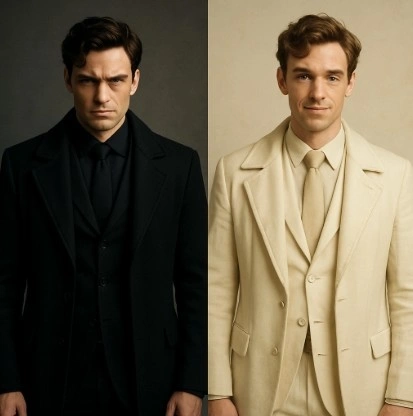
The Mood Ring Effect: Decoding Character Emotion Through Color Palettes
A character’s clothing often mirrors their exact emotional state. The psychological impact of a cinematic wardrobe relies heavily on specific hues to bypass logical thought and speak directly to our instincts. Costume designers apply color theory by treating clothing like a giant, wearable mood ring. In Costume Design in Film, color choices often reveal emotions before dialogue does.
This deliberate selection of colors, known as a color palette, acts as a secret map to character alliances. Think about classic high school movies or epic family dramas where entire groups are visually linked. Designers use “ensemble color-coding” so the audience immediately knows who belongs together before anyone even speaks. If the popular crowd dominates the screen in icy pastels while the rebels are drenched in dark earth tones, the conflict is established before the plot begins.
Decoding these choices completely changes how you experience films. While every movie sets its own visual rules, Hollywood consistently relies on a few universal shortcuts to trigger instincts:
- Red: Signals passion, power, or impending danger (think of the distraction of the woman in the red dress in The Matrix).
- Blue: Represents isolation, coldness, or deep calm, frequently used when a character is alienated from those around them.
- Yellow: Suggests anxiety, madness, or sudden transition, designed to make the viewer feel subconsciously unsettled.
Tracking a character’s emotional state becomes incredibly rewarding when watching their colors shift over the course of the story. A protagonist might begin an adventure wearing bright, optimistic pinks, but as they face betrayal or hardship, their clothing gradually fades into muted greys and blacks. This progression linking wardrobe color palettes and emotional cues is a calculated choice to visually demonstrate a spirit breaking or hardening without relying on dialogue.
Watch for the exact moment a hero swaps a light shirt for a dark jacket. Color effortlessly reveals internal emotions, but a character’s physical outline is equally important for broadcasting their broader intentions.
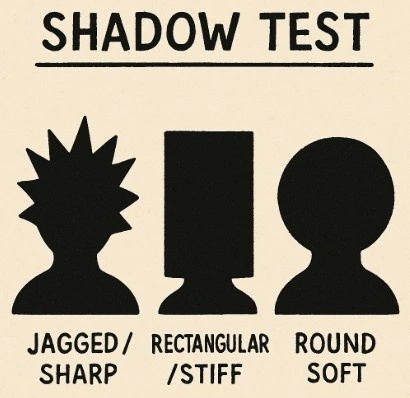
The Shadow Test: How Shape and Silhouette Predict a Character's Intentions
Imagine turning off the color on your television until every actor becomes a solid black cutout. If you saw only a character’s shadow, could you tell if they were going to save the world or destroy it? Designers rely heavily on this concept, known as “The Shadow Test,” to communicate personality instantly. By utilizing geometric character design, creators bypass logic and speak directly to primal instincts, assigning subconscious emotional weight to basic shapes.
Look at the visual extremes in blockbusters, and you will quickly spot these intentional geometry lessons. Sharp, jagged angles—think of Maleficent’s dramatic collar or Darth Vader’s rigid helmet—instantly signal danger, aggression, and strict control. Conversely, round and soft shapes telegraph warmth and approachability. When a lovable sidekick or a comic relief character appears, their wardrobe is usually padded out with slouchy sweaters or oversized coats to make them look physically unthreatening and easy to embrace.
Watching these outlines evolve over a movie’s runtime adds a thrilling layer to the viewing experience. This technique, called silhouette progression, visually tracks a character’s journey from innocent to corrupted, or weak to powerful. A meek protagonist might start the film in rounded, sloping shoulders, but as they gain authority, their jackets acquire crisp, commanding shoulder pads. Designers manipulate width and height through these deliberate changes, ensuring the audience instinctively feels the shift in power dynamics.
Ultimately, film character outfits are architectural structures built to hold specific psychological weight. Costume Design in Film often uses silhouette changes to reveal growth, authority, or corruption. While shape dictates perceived danger from a distance, moving closer reveals another vital storytelling tool: fabric texture.
Wealth You Can Feel: Using Fabric Texture to Signal Social Power and Vulnerability
During a close-up, costume designers rely on “Sensory Comparison”—a technique letting the audience practically feel a personality through the screen. Through tactile storytelling, filmmakers tap into real-world memories of how things feel to instantly communicate who holds authority in a room. You do not need to see a character’s bank statement; their coat has already revealed their net worth.
Notice how a cinematic billionaire never wears the same materials as an underdog. Designers establish a clear link between fabric texture and character social standing by utilizing materials that trigger immediate psychological assumptions:
- High-Power Fabrics: Thick velvets, crisp silks, and stiff wools. These materials restrict movement and require expensive upkeep, silently announcing the wearer never has to perform manual labor.
- Low-Power Fabrics: Pilled cotton, wrinkly linen, or thin synthetics. These flexible, easily damaged textures signal physical vulnerability, everyday approachability, or financial struggle.
Modern high-stakes dramas perfect this dynamic through “Quiet Luxury,” where the absence of flashy logos forces an examination of the actual garments. A ruthless executive in a razor-sharp, stiff cashmere suit isn’t just wealthy; the unbending fabric suggests they are emotionally repressed and armored against others. Paired with cold cinematic accessories like a heavy steel watch, this visual storytelling explains their internal state instantly. When that same character is eventually defeated, their rigid wardrobe is often replaced by soft, slouchy knits, visibly stripping away their defenses.
Flawless silk and pristine wool represent characters at the very top of the social ladder, untouched by physical hardship. However, a hero’s journey is rarely tidy, requiring designers to deliberately destroy perfection to reflect the real world. This attention to detail makes Costume Design in Film an essential storytelling tool.
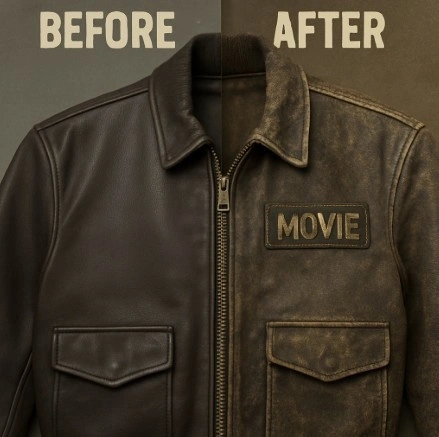
The Art of the 'Lived-In' Look: Why Your Favorite Characters Wear Stained, Frayed, and Faded Clothes
We all have a favorite pair of perfectly faded jeans that tell the story of countless weekends. In film, costume designers cannot wait years for fabrics to age naturally, so they rely on the “breakdown process.” This is the meticulous art of intentionally damaging garments using sandpaper, wire brushes, and specialized dyes. From post-apocalyptic survivors to suburban dads in simple flannels, distressing techniques for realistic character costumes ensure every outfit feels genuinely lived-in rather than completely fresh off a department store rack.
Perfect replication of the past isn’t always the ultimate goal during this aging process. Designers constantly navigate the tension between historical accuracy and creative license, frequently prioritizing the latter to connect emotionally with modern audiences. If an 18th-century peasant’s dress was factually rigid and dull, a designer might instead heavily soften the fabric and add severe fraying along the hem to immediately evoke sympathy. These artificial scuffs deliver an emotional truth that bypasses logic, helping the audience instantly feel the character’s daily exhaustion.
Look closely at seemingly ordinary clothing on screen. A frayed collar on an otherwise expensive shirt suggests a once-wealthy character has fallen on hard times but refuses to surrender their dignity. Meanwhile, permanent grease stains isolated on a single sleeve effortlessly reveal a mechanic’s handedness and grueling work schedule. Every scuff, stubborn stain, and visible stitch of repair acts as a deliberate clue about exactly where that person has been before the cameras even started rolling.
While establishing an initial backstory is essential, great characters rarely finish a narrative exactly as they began. Just as physical damage reveals an unseen past, the continuous evolution of their clothing exposes an unfolding future. These details demonstrate how Costume Design in Film communicates history without exposition.
Wardrobe as a Roadmap: Tracking Character Growth Through Three Key Costume Stages
Reaching for a baggy, oversized hoodie to hide in on a stressful day is a universal instinct. Costume designers harness this reflex, manipulating the “fit” of a garment to quietly broadcast a character’s mental state. Think about a wealthy cinematic CEO. When they are in total control, their tailoring is razor-sharp. As their empire begins to crumble, their collar loosens and the jacket suddenly hangs awkwardly. We visually register their sudden loss of power before they ever admit defeat.
This subtle visual shift is a core component of deliberate character look development. Just like a written screenplay, on-screen clothing follows a specific psychological trajectory across three distinct stages:
- The Introduction Look (Who are they?): The baseline outfit establishing the character’s comfort zone and starting worldview.
- The Conflict Look (What is changing?): The transitional stage where clothes become damaged, mismatched, or altered, reflecting internal struggle.
- The Resolution Look (Who did they become?): The final, evolved silhouette that proves ultimate transformation.
Beyond the main garments, designers embed smaller details to anchor this visual journey. The narrative function of cinematic accessories is to act as emotional touchstones for the audience. Consider an heirloom pocket watch or a simple silver ring. These “narrative anchors” absorb the story’s emotional weight over time. A hero might start the film clutching a pristine locket, but by the climax, that same jewelry is scratched and purposefully left behind on a table. The accessory visually confirms the character has finally let go of their past.
Following this wardrobe evolution throughout a character arc transforms the viewing experience. A discarded tie becomes a major plot point hiding in plain sight, turning subtle costume shifts into crucial narrative landmarks. This progression highlights the narrative power of Costume Design in Film.
Level Up Your Movie Night: Spotting Narrative Clues in Every Outfit
Understanding changing fit, the three-act closet, and emotional accessories grants you a cinematic superpower: the ability to read the hidden narrative language woven into every scene. This visual magic stems from the crucial relationship between film director and costume designer. When masters like Alfred Hitchcock collaborated with legendary designer Edith Head, they weren’t simply choosing flattering dresses; they were intentionally manipulating the audience’s subconscious before a single word was ever spoken.
Applying these visual checks reveals the hidden depths of cinematic storytelling. First, study the hero’s opening silhouette to understand their initial mindset. Next, track how their color palette shifts during emotional highs or devastating lows. Finally, observe how their clothing textures sharply contrast with the people around them to visually expose hidden conflicts.
Observing these details transforms passive viewing into active narrative analysis. You will never look at an ordinary grey hoodie or a tailored suit the same way again. The true triumph of Costume Design in Film isn’t about making actors look glamorous; it is about transforming fabric into a living, breathing character identity that speaks directly to your instincts. Through thoughtful visual choices, Costume Design in Film continues to shape unforgettable characters and deeper audience connections.
Bring Your Character Vision to Life with Studiovity
Great costume design begins with a deep understanding of character, story, and visual storytelling. Whether you’re developing a screenplay, planning character arcs, or preparing for production, Studiovity helps filmmakers organize every creative detail in one place. From screenwriting and AI-powered script breakdowns to shot lists, storyboards, scheduling, and production planning, Studiovity streamlines the entire filmmaking process. By connecting character development with pre-production workflows, filmmakers can ensure that every costume choice, visual element, and storytelling decision supports a cohesive cinematic vision from script to screen.