
You’ve felt it before: that sudden dread during a horror movie before the monster even appears. It wasn’t just the spooky music causing your heart to race—it was the way jagged shadows stretched across the floor. That subconscious manipulation is the “invisible hand” of cinematography at work. Most viewers assume the director single-handedly creates every image, completely missing this distinct craft. Cinematography Explained helps reveal how visual choices quietly shape emotion in every frame.
Behind every great director stands a crucial collaborator translating concepts into reality. If the director acts as the author of the story, the Director of Photography (DP) is the artist deciding what color ink to use and exactly where your eyes should look. In practice, the role involves bridging the gap between a literal plot and its emotional undercurrent.
To shape how you feel, these artists rely on specific visual storytelling techniques. By mastering three primary tools—lighting for mood, composition for focus, and camera movement for energy—a skilled DP crafts a unique visual language. Understanding cinematography isn’t about memorizing complex camera specs; it is about learning to read this hidden language to experience movies in an entirely new way.
The Director vs. The Director of Photography: Who Actually Calls the Shots?
We often picture a director looking through the camera lens, shouting “Action!” Yet in reality, the person physically operating that camera is usually the Director of Photography. If the director is the story’s author, the DP is the illustrator. Long before filming begins, they collaborate on the vital task of crafting a visual language. To ensure their imaginations align, they build a “look-book” or “Visual Bible”—a curated scrapbook of photographs, paintings, and classic movie clips that establish the exact mood, color palette, and energy they want to capture.
As soon as the cameras roll, this shared vision splits into two distinct but overlapping roles. The difference becomes clear when looking at their primary daily focus:
- The Director guides the actors’ performances, manages the pacing of dialogue, and oversees the overarching emotional narrative.
- The DP controls the physical elements. They manage the lighting, choose the lenses, and dictate the composition—the deliberate arrangement of characters and scenery inside the frame to subconsciously direct your attention.
Understanding this dynamic reveals that a movie set isn’t a dictatorship; it’s a partnership. Once they decide exactly how to compose a scene, they must fill that space with atmosphere, setting the perfect stage for painting with light. This section of Cinematography Explained shows why collaboration defines the visual identity of every film.
Painting with Light: How Shadows and Highlights Tell You What to Feel
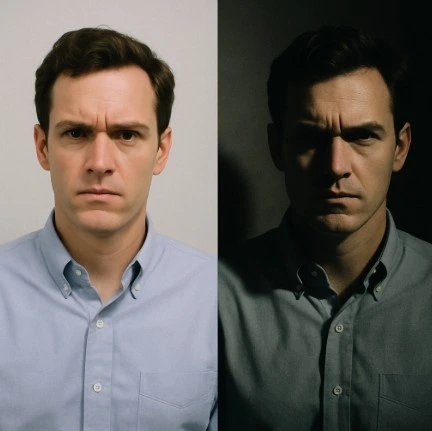
You have probably felt the sudden tension in a thriller right before the villain appears. That uneasy feeling isn’t just the music; it stems from creating mood through lighting. Cinematographers use shadows to manipulate your subconscious emotions. To make you feel safe and comfortable, they use “high-key” lighting, flooding a room with flat, even light. Conversely, to build mystery or fear, they use “low-key” lighting, embracing high-contrast shadows that purposefully hide details in the darkness.
Professionals rely on one foundational technique that acts as the building block for nearly every movie you watch, allowing the DP to sculpt a flat screen into a rich, three-dimensional world.
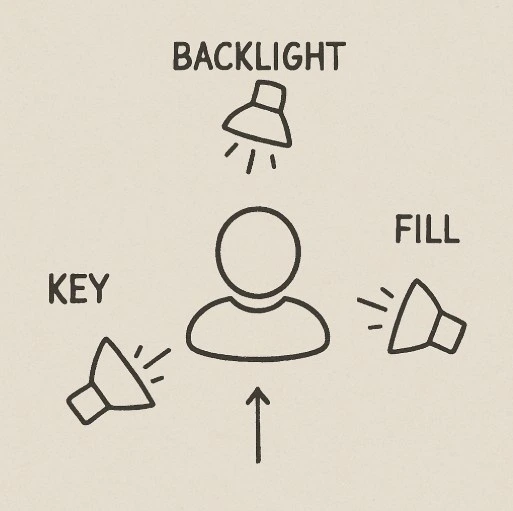
This core method relies on three-point lighting basics, consisting of three specific roles:
- Key Light: The primary, brightest source that illuminates the actor’s face.
- Fill Light: A softer, secondary source used to control or soften harsh shadows.
- Back Light: Placed behind the subject to create a glowing outline, separating them from the background.
Modern filmmakers frequently evolve this classic foundation through bold neon cinematography—using vibrant, saturated lights to bathe scenes in atmospheric pinks and blues. Yet, manipulating light is only half the battle. Once the atmosphere is set, the cinematographer must decide exactly how to frame it through focal length and composition. Cinematography Explained becomes easier to understand when lighting choices are connected directly to emotion.
The Lens as a Window: How Focal Length and Composition Control Your Focus
When a character suddenly feels trapped or completely isolated, that emotional shift comes down to lens choice. Cinematographers manipulate “focal length” to alter your psychological reaction. A wide lens stretches a room, instantly making the space feel lonely and increasing viewer anxiety. When paired with the Rule of Thirds—a classic technique for improving shot composition by placing actors slightly off-center—a simple bedroom transforms into a landscape of quiet tension.
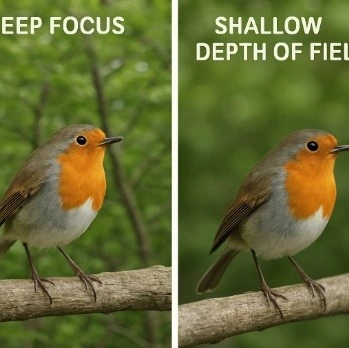
Once the frame is set, the camera dictates your attention by balancing depth of field and focal length. Think of the “portrait mode” on your smartphone. That feature mimics a shallow depth of field. By blurring a busy background into soft shapes, the cinematographer isolates a character from their environment, forcing you to connect solely with their grief or joy while the rest of the world melts away.
Filmmakers occasionally push these tools to create pure visual shock, most notably through the “Dolly Zoom.” Famous for visualizing sudden panic in Jaws, this camera trick violently warps the background while the subject stays perfectly still. Shaping this physical geometry traps you in a hero’s mindset seamlessly. Yet, sculpting space is only part of the cinematic illusion. After the lens is chosen, the atmosphere must be painted with color. Through these examples, Cinematography Explained reveals how framing techniques guide audience attention without dialogue.
Mood in Color: Why the Palette of a Film is Never Accidental
The sickly green tint inside The Matrix simulation isn’t a mistake; it is a vital storytelling technique. Before a word is spoken, the color palette tells your brain how to feel. Whether manipulating live-action footage or crafting 3D worlds digitally, artists rely on the impact of color palettes on emotion to silently guide your subconscious.
Filmmakers also assign specific hues to characters or themes, creating a recurring “Color Motif.” By tracking these visual anchors, you can easily decode a movie’s hidden emotional language:
- Red: Signals immediate danger, explosive anger, or intense passion.
- Blue: Evokes physical coldness, psychological isolation, or deep melancholy.
- Yellow: Suggests sickness, unnatural environments, or overwhelming energy.
Capturing these tones on set is just the foundation; the atmosphere is finalized in post-production through “color grading.” Here, technicians manipulate raw, flat footage to enhance the psychological environment, digitally turning a bright beach warmly nostalgic or terrifyingly desolate. Yet, while color establishes the emotional temperature, a static frame has its limits. To truly bring a world to life, the camera must navigate it through deliberate movement. This part of Cinematography Explained highlights how color choices influence emotional storytelling.
Story in Motion: Using Camera Movement to Dictate Scene Energy
Holding your breath as a camera creeps toward a dark room is a physical reaction to precise camera movement. Cinematographers mimic human curiosity, swiveling horizontally (a “Pan”) or vertically (a “Tilt”). True immersion occurs when the camera physically travels on a wheeled track, known as a “Dolly.” Pushing the lens closer to an actor forces you directly into their personal space, instantly amplifying the emotional stakes.
The texture of this motion dictates narrative energy. A frantic chase often uses a “Handheld” camera, violently shaking the frame to mimic chaotic adrenaline. Conversely, a stabilizing “Steadicam” lets the operator glide smoothly, creating an eerie, floating sensation. The most effective visual storytelling ensures movement is always “motivated”—meaning the camera only shifts because the character’s action or emotion demands it, never just to look flashy.
Sometimes, the most profound choice is absolute stillness. A completely static shot traps the viewer, perfectly isolating a quiet tragedy or an awkward comedic beat. Choosing when to run and when to freeze is critical for composition. Now that you know how these invisible decisions control your heartbeat, you are ready to watch your next movie like a cinematographer. Cinematography Explained also includes understanding why movement can completely transform scene intensity.
The Scavenger Hunt: How to Watch Your Next Movie Like a Cinematographer
Imagine The Batman filmed in the bright, flat lighting of a sitcom. The grit instantly vanishes. You now know how lighting, lenses, and composition dictate our emotions, transforming you from a passive viewer into an active participant. You can decode the language that acts as the bridge between the script and the soul.
To practice reading this visual language, try an “Active Viewer Scavenger Hunt” during the first 10 minutes of your next movie:
- Shadows: Do they hide a character’s true motives?
- Angles: Does looking up create power, or looking down show vulnerability?
- Backgrounds: Is the world blurred out to isolate a specific emotion?
- Colors: Is the scene bathed in cold blue or warm yellow?
- Movement: Does the camera glide smoothly, or shake chaotically?
Look for just one technique tonight and see how it shapes your emotional reaction. The next time the theater darkens, you aren’t just watching a story; you are experiencing intentional visual choices designed to make you feel every single frame. With Cinematography Explained, every movie becomes an opportunity to understand visual storytelling on a deeper level.
Master Visual Storytelling with Studiovity
Understanding visual storytelling is only the beginning. Turning those cinematic ideas into organized production plans requires the right creative workflow. Studiovity helps filmmakers, cinematographers, directors, and production teams manage every stage of filmmaking in one place. From screenplay writing and AI-powered script breakdowns to shot lists, storyboards, scheduling, and call sheets, the platform streamlines the entire pre-production process. Whether you are planning lighting setups, organizing camera movements, or building a visual style guide, Studiovity gives creative teams the tools needed to bring cinematic vision to life with clarity and efficiency.