
AI Script Breakdown Is Essential for Modern Film Production
Imagine running a massive restaurant where the movie script is simply the menu. To actually serve the meal, you need a precise grocery list and schedule. This invisible logistical work truly brings a blockbuster to life, and AI Script Breakdown helps producers organize every moving part faster and more accurately.
Translating that story into an actionable shopping list requires a script breakdown. The process involves identifying production elements—every prop, vehicle, and actor needed per scene. Rapid AI script analysis handles this grueling task with precision.
In practice, pre-production accuracy carries massive financial stakes. Forgetting to order a single vital prop can halt a multi-million-dollar set for hours. By reducing pre-production errors with automation, modern producers protect their budgets long before the cameras even roll.
The 100-Hour Highlighter: How Manual Script Breakdowns Drain Budgets and Time
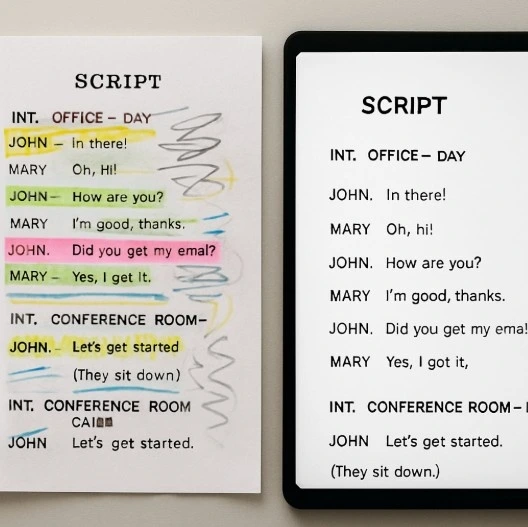
Handing a 120-page story to a Line Producer—the logistics chief responsible for a movie’s entire budget—starts their first crucial task: “stripping a script.” This industry term refers to breaking the story apart scene by scene to calculate every production need. This tedious process remains a massive bottleneck, costing independent films hundreds of hours in hidden labor before a camera even rolls.
Crews spend weeks manually “tagging,” acting as human highlighters to spot every physical element required on set. As fatigue grows, common manual breakdown errors appear:
- Missing a character
- Tallying a wrong location count
- Logging an overlooked prop
- Creating massive scheduling conflicts
Because a single missing element can halt a $10,000-a-day shoot, manual script breakdown efficiency drops as reading fatigue increases. The human brain cannot flawlessly cross-reference thousands of variables for long periods.
Thankfully, AI Script Breakdown solves this logistical nightmare. By utilizing AI script review, producers bypass weeks of manual reading and instantly extract vital set requirements.
Turning Ink into Data: How AI Instantly Identifies Props, Cast, and Chaos
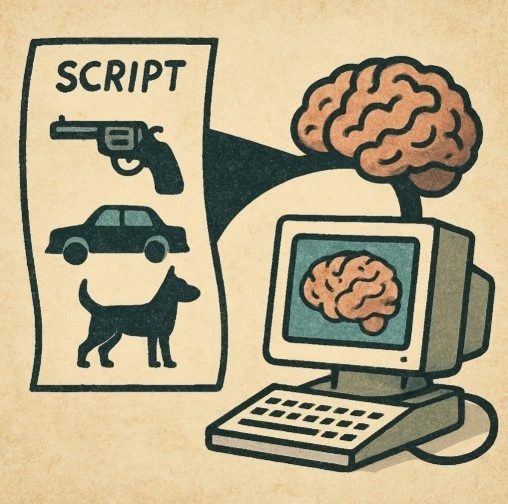
When humans read a screenplay, they experience an emotional story, but an AI sees a detailed production inventory. This transformation relies on natural language processing in screenplay analysis, a technology that teaches computers to understand human context instead of simply scanning letters.
Finding required items is not as simple as pressing “Control-F” on a keyboard. If a scene notes a hero is “sweating bullets,” basic software might incorrectly flag “bullets” as a required weapon on set. A smart system understands the creative idiom and ignores the metaphor while successfully identifying the actual vintage Mustang mentioned in the next sentence.
Learning how to use AI for script tagging allows producers to extract precise items in seconds. Through automated character and prop identification, AI Script Breakdown instantly distinguishes between background extras, stunt weapons, and essential vehicles hidden within dialogue.
Translating creative ink into organized data gives producers a reliable inventory of what to buy, rent, or build. Once this list generates without human error, the next step involves mapping out the daily schedule.
The Production GPS: Predicting Budget Traffic Jams Before Cameras Roll
Now that the AI has generated a complete inventory, the real magic begins: organizing it all. By integrating script breakdowns with production schedules, artificial intelligence acts like a cinematic GPS. It reviews thousands of requirements and maps out the most efficient shoot through predictive scheduling.
Every tagged item translates directly into real-world dollars. When a system knows exactly what scene 42 requires versus scene 80, producers gain the power of real-time budget forecasting from scripts. They spot financial traffic jams—like a massive explosion requiring double the crew—before spending a single dime.
To prevent budget blowouts, the software groups similar scenes together. Optimizing shooting schedules using AI insights saves money in several ways:
- Grouped locations: filming all coffee shop scenes on a single Tuesday
- Minimized cast hold days: paying actors only when filming instead of waiting between scattered scenes
- Efficient equipment rentals: leasing expensive gear, like rain machines, for shorter periods
Spotting logistical hurdles early eliminates unnecessary overtime and keeps productions financially stable. At the same time, computers cannot understand the emotional impact of filming a heavy breakup scene at 4:00 AM. This limitation highlights why AI Script Breakdown remains an assistant instead of the decision-maker.
Human Creativity, Machine Logic: Why AI Is the Assistant, Not the Boss
Despite sensational headlines, Hollywood is not handing the director’s chair to a computer. Modern productions rely on a human-in-the-loop approach, where algorithms handle repetitive logistics while people make the final creative decisions.
Rather than replacing artists, the best AI tools for line producers act as a safety net against expensive mistakes. By solving script continuity issues with machine learning—such as instantly flagging if a character’s prop disappears between out-of-order scenes—studios embrace data-driven decision-making to protect budgets.
Ultimately, leveraging data-driven insights for creative decision-making allows crews to spend less time battling spreadsheets and more time crafting compelling stories. This balance between machine logic and human imagination sets the stage for the future of filmmaking.
The Future of Fast Filmmaking: How Automation Empowers the Next Generation
Making movies depends heavily on mastering logistics. By shifting from slow analog methods to agile digital systems, creators save valuable time and money while prioritizing storytelling over repetitive production tasks.
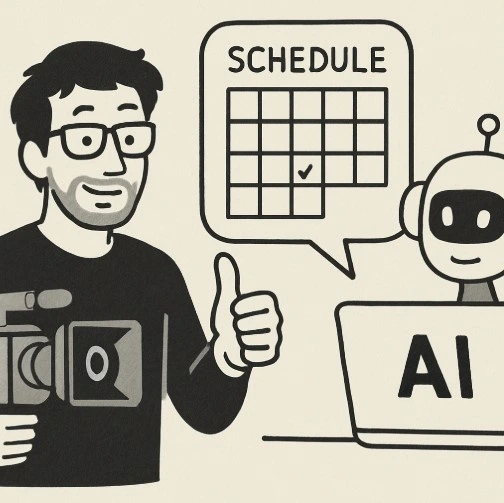
Streamlining independent film pre-production workflows becomes much easier with digital script breakdown software. Producers can choose a beginner-friendly AI tool, run a short test script, and verify extracted data for accuracy.
Ultimately, AI Script Breakdown democratizes the industry. With logistical planning handled faster, independent filmmakers can produce ambitious blockbuster visions on smaller budgets. This evolution proves that cinema’s future blends human creativity with intelligent technology.
How Studiovity Simplifies AI Script Breakdown
Studiovity helps filmmakers streamline every stage of pre-production with powerful AI-driven tools built for modern productions. From screenplay writing and AI Script Breakdown to scheduling, call sheets, budgeting, and storyboarding, the platform centralizes production planning in one collaborative workspace. Independent creators and professional studios can reduce manual work, organize production data faster, and move from script to shoot with greater efficiency.