
Ask a line producer how long a scene is and you will not hear minutes. You will hear eighths. "Two and three-eighths" is how scheduling, budgeting and day planning talk about screen time on paper, and every eighth on the breakdown sheet becomes a promise about how much the unit can shoot in a day. Get them wrong and your schedule is built on sand. Here is how to measure page eighths in a script breakdown, the rules ADs follow, and why the count matters so much.
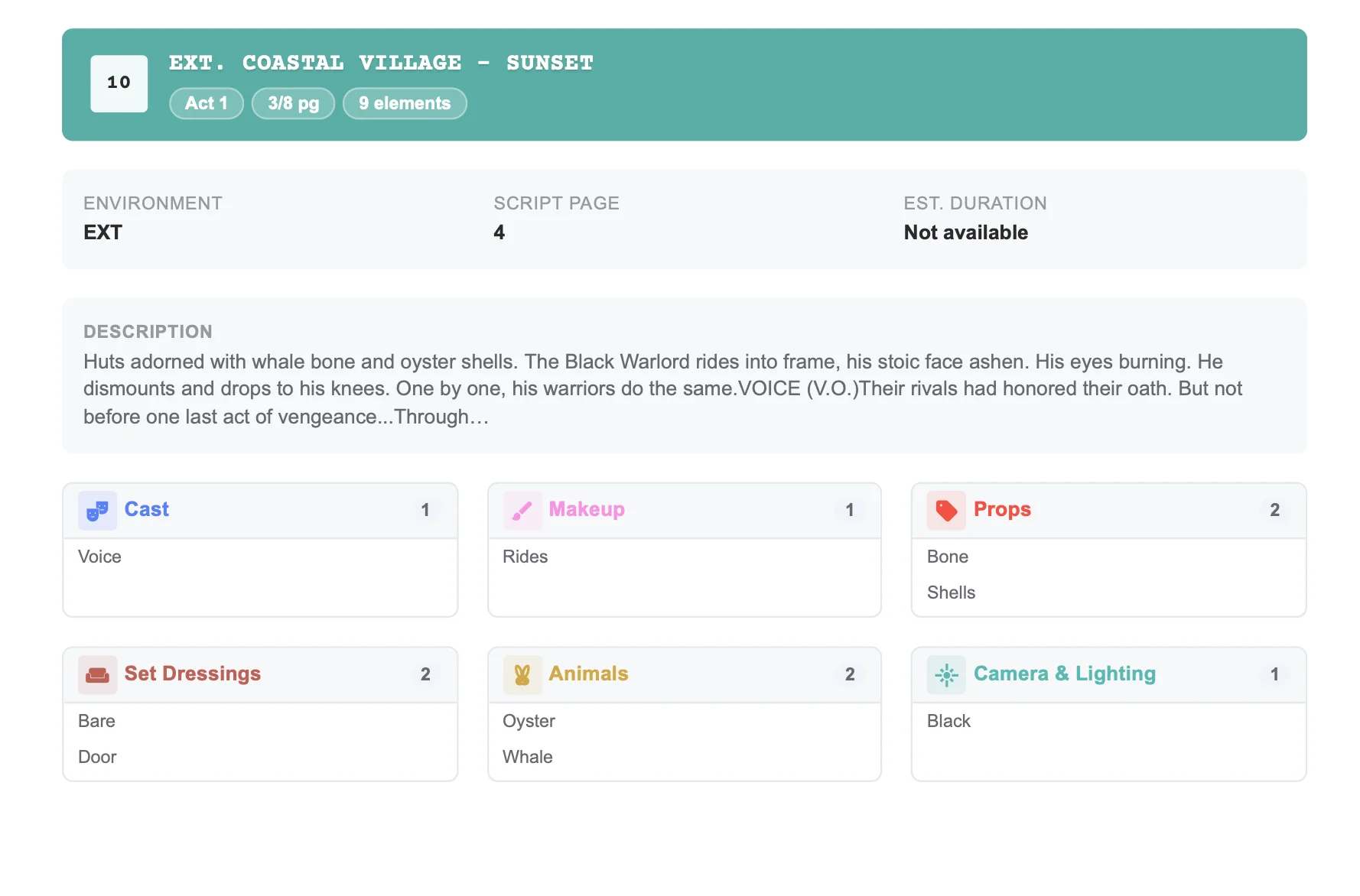
What an eighth actually measures
A standard screenplay page is divided into eight horizontal sections of roughly one inch each. A scene that fills half a page is four-eighths; a scene that runs a page and a quarter is one and two-eighths. Nobody writes "one and a half pages" on a stripboard; you write "1 4/8." The convention keeps everyone counting the same way, regardless of how dense the action lines are. For the scheduling side of the same idea, see script eighths explained.
The rules most ADs follow:
- Round tiny scenes up to a minimum of 1/8, even a single line of action.
- Count from the scene heading to the start of the next heading.
- Never reduce fractions: 4/8 stays 4/8, not 1/2.
- Recount after every revision, because a new line can push a scene into the next eighth.
Why eighths drive the whole prep
Eighths are the bridge between the creative document and the production calendar. A typical drama unit might plan for four to six pages a day, which means the day’s total eighths decide whether a schedule is realistic. Budget follows the schedule, so a miscount quietly inflates or hides cost. That is why the breakdown sheet always shows page length beside the scene number, environment and description.
Let AI count, then sanity-check the outliers
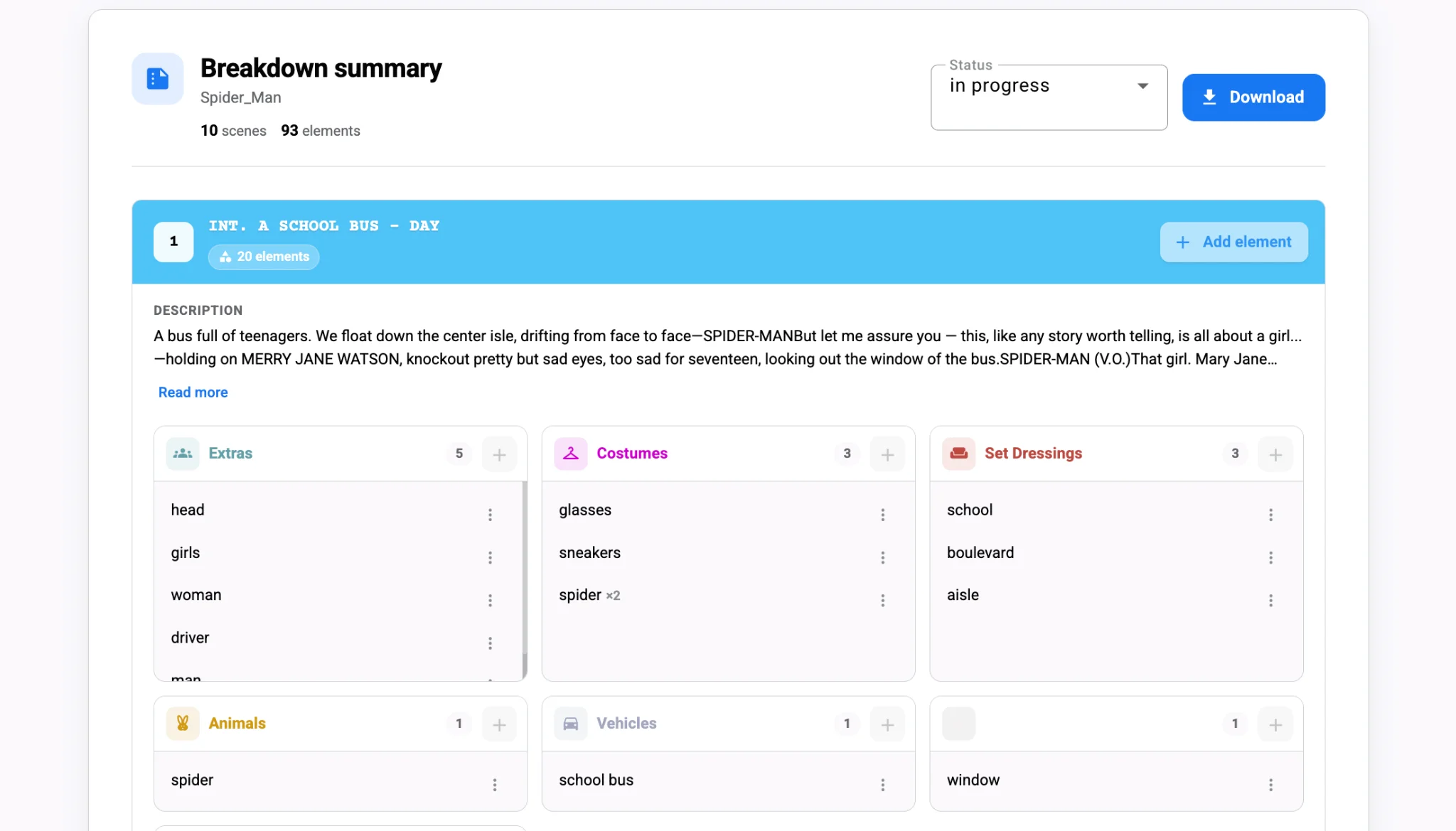
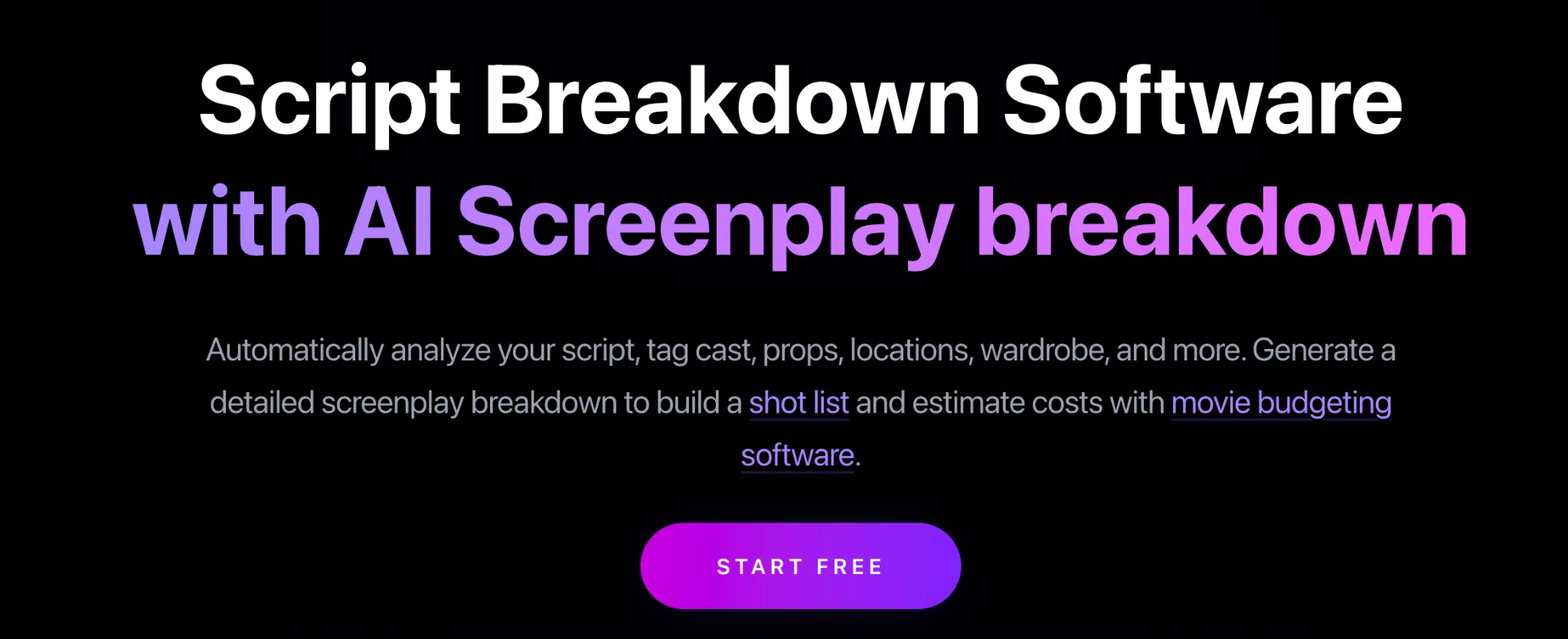
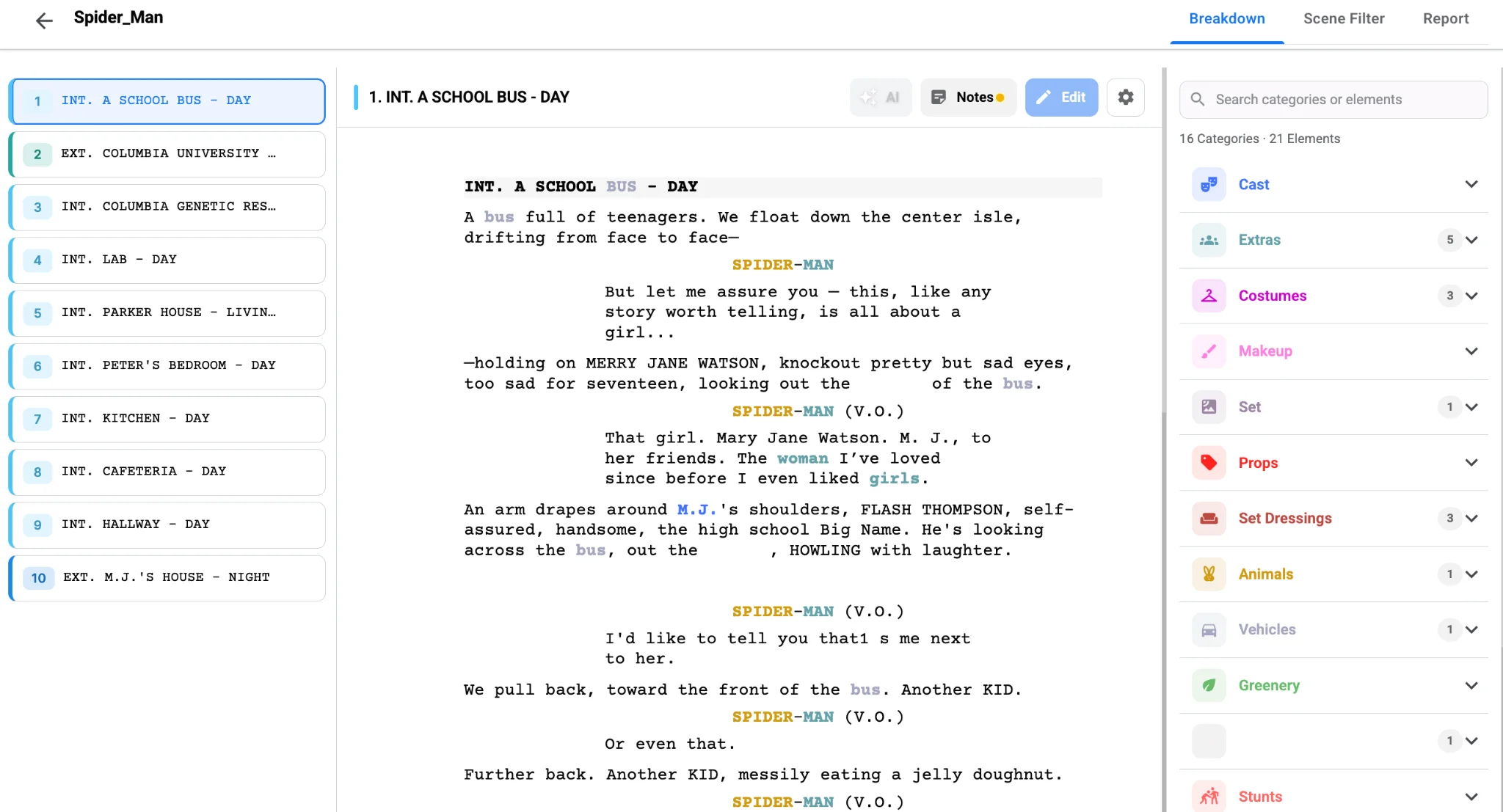
Counting by ruler is slow and error-prone across a 110-page feature. Studiovity’s AI script breakdown extracts key scene data automatically, including INT/EXT, day or night and page length, so each scene arrives on the breakdown with its eighths already filled in. The breakdown summary then lists every scene with its elements, giving you a single place to scan lengths before they hit the board. If you are still weighing hand counts against automation, our comparison of manual vs AI script breakdown covers the trade-offs.
Automation does not replace judgment. A scene described as "the battle rages on" might be 1/8 on paper and two days on set. Flag those scenes with a note so the schedule reflects real effort, not just page count. The same goes for montages and dialogue-free sequences; eighths measure paper, not complexity.
Handing eighths to the schedule
Once lengths are accurate, they travel with the scene into Studiovity’s film scheduling software, where daily totals appear on each strip and day break. If a writer delivers a revised page, re-run the breakdown on the changed scenes and the new length flows through instead of living in someone’s notebook. Keep the script breakdown software as your source of truth and the schedule never drifts from the script.
The payoff
Eighths look like bookkeeping, but they are the unit of every scheduling and budget decision you will make in prep. Count them consistently, round small scenes up, flag the deceptively short ones, and let the software handle the arithmetic. Start your next breakdown with AI-extracted page lengths in Studiovity and build your days on numbers you can defend.