
Film production depends on precision, communication, and the ability to adapt quickly when plans change. AI-powered call sheet generators are emerging as practical production tools that help teams create, update, and distribute production call sheets with greater speed and consistency. For producers, assistant directors, production coordinators, and department heads, these systems can reduce manual work while improving the clarity of daily production planning.
Related video: Streamline your production schedule with Studiovity’s call sheet feature
In a professional environment where every shooting day carries logistical pressure, the call sheet remains one of the most important documents on set. The shift from static templates to call sheet software, automated call sheets, and broader AI production tools is not about replacing experienced production staff. It is about giving those teams better ways to organize information, identify conflicts, and keep cast and crew aligned.
How are AI-powered call sheet generators changing film production?
AI-powered call sheet generators are changing film production by transforming the call sheet from a manually assembled document into a more dynamic, data-aware planning tool. Instead of relying solely on copied templates, separate spreadsheets, and repeated manual updates, production teams can use these systems to pull relevant details together, flag missing information, and support faster revisions when schedules shift.
This matters because call sheets sit at the intersection of nearly every production department. They translate the shooting schedule into a practical daily plan, showing who is needed, where they need to be, when they should arrive, and what the production must prepare before cameras roll. When the call sheet is late, unclear, or inaccurate, the impact spreads quickly across transportation, locations, talent, equipment, catering, safety, and department readiness.
AI does not eliminate the need for production judgment. A first assistant director still needs to evaluate the shooting order, a production coordinator still needs to confirm practical details, and department heads still need to communicate their requirements. The value of AI-powered call sheet generators is that they can support this process by organizing information more efficiently and helping teams focus their attention on decisions rather than repetitive formatting.
For productions operating with tight timelines, multiple locations, complex cast availability, or frequent changes, this support can be especially useful. The future of call sheet creation is likely to combine human oversight with intelligent automation, allowing experienced crew members to make better decisions with less administrative friction.
The call sheet remains the command document for the shooting day
A production call sheet is more than a schedule summary. It is the daily operational document that tells the crew how the production intends to work. It typically includes call times, scene numbers, locations, weather notes, parking information, contact details, safety notices, department requirements, cast reporting times, meal planning, and other information needed to prepare the day.
Because the call sheet touches so many areas, small errors can create significant confusion. A wrong location note can delay a department move. An outdated call time can leave talent waiting or crew members arriving unprepared. Missing safety details can create unnecessary risk. In professional production, accuracy and clarity are not administrative luxuries; they are part of responsible management.
Traditional production call sheets have often been built through a combination of scheduling software, spreadsheets, emails, text messages, and templates. This process can work well when managed by skilled production staff, but it can become time-consuming as information changes. Each revision requires careful checking across multiple sources, especially when last-minute updates affect more than one department.
AI-powered systems aim to reduce that burden by supporting the creation, review, and revision of daily call sheets. They can help production teams move from document assembly to document management, where information is easier to update, validate, and distribute.
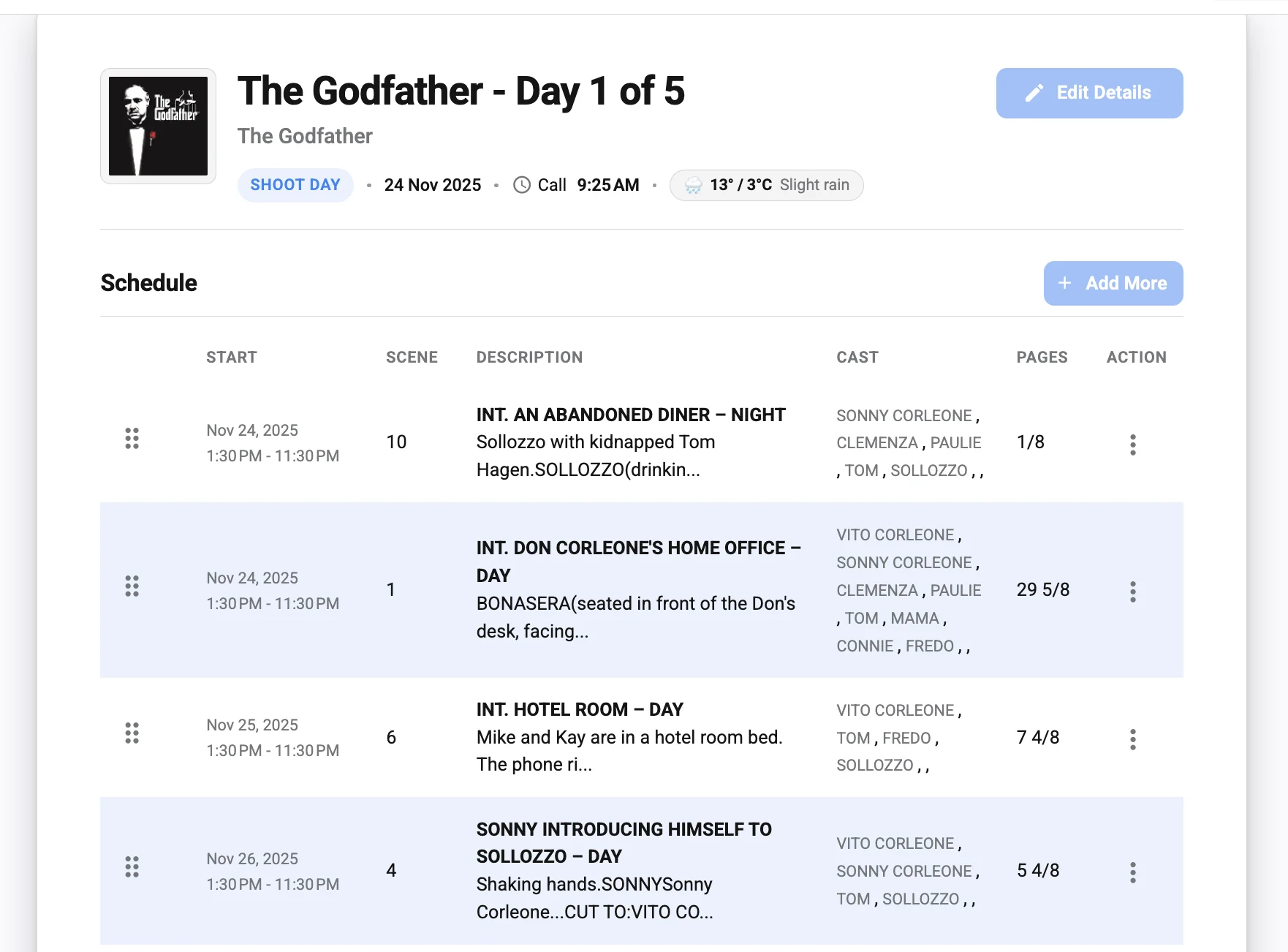
What makes a call sheet difficult to manage manually?
Manual call sheet management is difficult because each sheet depends on many moving parts, and those parts often change late in the day. A production team may need to account for revised scene order, cast availability, location access, weather concerns, transportation timing, department notes, and approval workflows before the call sheet can be sent.
The difficulty is not simply the amount of information. It is the dependency between details. If the first scene of the day changes, call times may change. If a location move shifts, transportation timing may change. If a cast member is no longer required for an early scene, hair, makeup, wardrobe, and holding schedules may also need adjustment. A single revision can trigger several related updates.
Manual processes also create version-control challenges. A department head may be working from one draft while production has already changed the location note. A coordinator may update a PDF but forget to update a separate crew email. A revised attachment may be sent, but some recipients may still reference the earlier version. These are familiar issues for production teams, and they can be difficult to avoid under pressure.
Common manual call sheet challenges include:
- Repeated data entry: Names, times, locations, and department notes may need to be copied across multiple documents.
- Version confusion: Teams may accidentally reference old PDFs, email threads, or exported files.
- Late revisions: Changes near the end of prep can create pressure and increase the risk of overlooked details.
- Information silos: Scheduling, casting, locations, transportation, and production notes may live in separate systems.
- Approval bottlenecks: The call sheet often requires review from the assistant director team, production office, producers, and sometimes other stakeholders.
- Distribution uncertainty: After a call sheet is sent, production may still need to confirm that the correct people received the correct version.
Experienced production teams manage these challenges every day. However, ai scheduling tools and call sheet software can help reduce the amount of manual reconciliation required, particularly when multiple departments are updating information in parallel.
The role of AI in modern production planning
AI in film production is most useful when it supports defined workflows rather than attempting to make creative or logistical decisions without context. In the case of call sheets, AI can help interpret structured information, identify missing fields, suggest logical connections, and streamline repetitive administrative tasks.
For example, an AI-enabled system may help detect that a cast member appears in a scheduled scene but does not have an assigned call time. It may recognize that a company move has been added but travel time has not been reflected in the daily plan. It may help categorize notes by department, standardize formatting, or highlight inconsistencies before the document is distributed.
The practical benefit is not that AI understands a production in the same way an assistant director does. The benefit is that it can process routine information quickly and prompt the human team to review items that might otherwise be missed. In a professional workflow, this kind of support can make review more focused and less repetitive.
AI production tools can also help connect call sheet creation with other planning activities. When schedule data, crew lists, location details, cast information, and department requirements are managed in a more integrated environment, the call sheet becomes easier to generate and update. This integration is especially valuable when the production team needs to maintain consistency across daily documents.
Key capabilities of AI-powered call sheet generators
Not all call sheet software offers the same level of intelligence or automation. Some platforms focus mainly on digital templates and distribution, while others incorporate automated call sheets, scheduling integrations, smart validation, and workflow support. The strongest tools are those that assist the production office without forcing the team into an inflexible process.
Data consolidation across departments
A strong call sheet generator should help gather essential information from the places where production teams already manage it. This may include the shooting schedule, cast list, crew database, location details, department notes, weather references, parking instructions, and safety requirements. The goal is to reduce duplicate entry and support a single working source for the daily plan.
When data is consolidated, the production team spends less time copying information and more time confirming that it is correct. This can also make revisions easier because updates do not need to be manually recreated in several places. For busy production offices, that difference can be meaningful.
Intelligent prompts and missing-information checks
AI-powered call sheet generators can support quality control by drawing attention to missing or inconsistent information. For example, a system may flag an incomplete location address, a scene without assigned cast, an early call without related transportation details, or a missing department note for a complex setup.
These prompts should not be treated as final authority. They are review aids. A professional production team still needs to confirm context, make exceptions when appropriate, and approve the final call sheet. However, prompts can make the review process more systematic and reduce the chance that routine omissions remain hidden until distribution.
Schedule-aware call time support
AI scheduling tools can help production teams evaluate how scene order, location changes, company moves, and department requirements affect the day. While final call times require human judgment, a schedule-aware system can provide useful context by showing relationships between scenes, cast needs, preparation time, and logistical dependencies.
This capability is particularly useful when a schedule changes late. Instead of rebuilding the call sheet from scratch, the team can assess which parts of the document are affected and update them with more confidence. The result is a more controlled revision process.
Faster revisions and controlled distribution
Automated call sheets are valuable when the production day changes after the first version has been drafted. A digital system can help update fields, mark revisions, distribute the latest version, and reduce confusion over which document is current. Some workflows may also help track approvals or maintain a history of changes.
For productions with large crews, multiple units, or remote stakeholders, distribution control is an important advantage. The production team needs to know that the right people have access to the right information at the right time. A well-managed digital workflow can support that goal.
Standardized formatting without sacrificing production needs
A professional call sheet must be easy to read. Clear formatting helps crew members quickly find call times, location details, safety notes, department instructions, and contact information. Call sheet software can support consistent presentation across shooting days, reducing the risk that important information is buried or formatted inconsistently.
At the same time, templates should remain flexible. Different productions have different requirements. A commercial shoot, episodic series, documentary, independent feature, and multi-unit production may all need different call sheet structures. The best systems allow standardization while still giving production teams control.
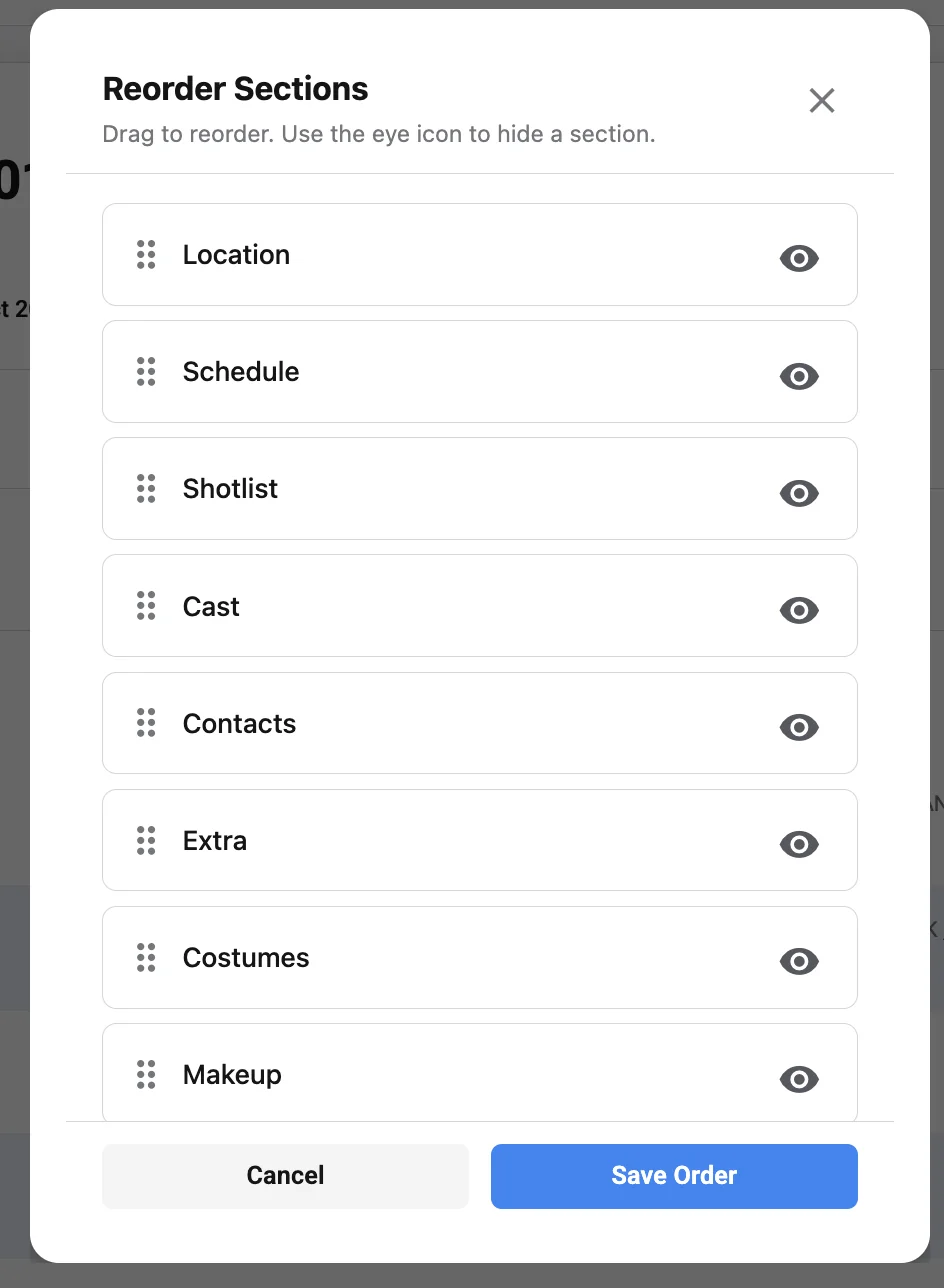
Human judgment remains central to the process
The growth of ai-powered call sheet generators should not be misunderstood as a replacement for experienced production staff. Film production is not a purely mechanical process. It requires negotiation, prioritization, discretion, and communication with people who may have competing needs.
A system can identify that a cast member is scheduled for a scene. It cannot fully understand the personal, contractual, creative, or logistical reasons why that call time may need special handling unless the team provides that context. It can help organize a company move, but it cannot replace the practical knowledge of a location manager, transportation captain, or assistant director who understands the actual conditions on the ground.
The strongest use of AI is therefore collaborative. Production professionals define the plan, verify the details, and approve the final document. AI supports the workflow by handling repetitive tasks, surfacing potential issues, and making information easier to manage.
This distinction is important for adoption. Teams are more likely to trust AI production tools when those tools respect the production hierarchy, preserve human approval, and provide transparency around suggested changes. A black-box system that alters critical details without clear review would create risk. A transparent assistant that improves speed and accuracy can become a practical part of daily production operations.
Benefits for producers, assistant directors, and production coordinators
Different production roles interact with call sheets in different ways. AI-powered systems can support each role by reducing administrative load and making key information more accessible.
For producers, call sheet software can provide greater visibility into the daily plan. Producers may need to review major logistics, confirm that the day aligns with budgetary expectations, and understand how changes affect resources. A more organized call sheet workflow can help them evaluate the day without chasing disconnected updates.
For assistant directors, AI scheduling tools can support the translation of the shooting plan into a practical day. The assistant director team still determines the working rhythm of the set, but intelligent tools can help identify conflicts, update call times, and communicate revisions more efficiently.
For production coordinators, automated call sheets can reduce the repetitive work of assembling, formatting, checking, revising, and distributing the document. Coordinators often manage the final mile of production communication, and a more integrated system can help them maintain accuracy under time pressure.
Department heads also benefit when call sheets are clearer and more consistent. Camera, lighting, grip, sound, art, wardrobe, hair, makeup, transportation, locations, catering, and safety teams all rely on accurate daily information. A well-structured call sheet helps each department prepare with fewer unnecessary follow-up questions.
Practical workflow for using AI call sheet software
A production team should implement AI call sheet software as part of a disciplined workflow rather than treating automation as a shortcut. The following process can help preserve professional control while gaining the benefits of AI-assisted planning.
- Define the source information. Decide where the official shooting schedule, crew list, cast details, location notes, and department requirements will live. AI works best when the underlying data is organized.
- Assign responsibility. Clarify who enters information, who reviews it, who approves the call sheet, and who distributes the final version. Automation should not make accountability unclear.
- Create a production-specific template. Build a format that reflects the needs of the project, including sections for safety, parking, meals, department notes, and special instructions.
- Use AI checks before approval. Review prompts for missing information, inconsistent times, incomplete contacts, or schedule conflicts. Treat these prompts as support, not final decisions.
- Conduct human review. The assistant director team, production office, and relevant stakeholders should verify the call sheet before distribution.
- Control revisions. Establish how revised call sheets will be marked, distributed, and confirmed so the crew understands which version is current.
- Collect feedback. After several shooting days, ask department heads whether the format and timing of information are working effectively.
This workflow keeps the production team in control while allowing ai-powered call sheet generators to reduce repetitive work. It also helps prevent a common technology problem: adopting a tool before defining the process it is meant to support.
Comparing manual call sheets and AI-assisted call sheets
The difference between manual and AI-assisted call sheets is not simply speed. It is the way information is managed, reviewed, revised, and distributed. Manual processes can be effective, especially in experienced hands, but they often depend on individual memory and careful cross-checking. AI-assisted workflows can provide additional structure.
| Production need | Manual call sheet process | AI-assisted call sheet process |
|---|---|---|
| Data entry | Information is often copied from schedules, emails, spreadsheets, and notes. | Information can be pulled from connected or organized production data sources. |
| Review | Errors are found through manual reading and department feedback. | The system may flag missing fields, inconsistencies, or schedule-related issues for review. |
| Revisions | Updates may require editing multiple documents and resending files. | Changes can be applied more efficiently and distributed as a controlled revision. |
| Formatting | Layout depends on templates and manual adjustments. | Standardized formatting can be maintained across shooting days. |
| Version control | Crews may reference older PDFs or email attachments. | Digital workflows can help identify the latest approved version. |
| Human oversight | Required throughout the process. | Still required, with AI supporting the administrative and quality-control steps. |
This comparison does not suggest that every production needs the most advanced system available. The right level of technology depends on production scale, crew size, schedule complexity, and internal workflow. However, as production teams become more comfortable with digital tools, automated call sheets are likely to become a standard expectation on many sets.
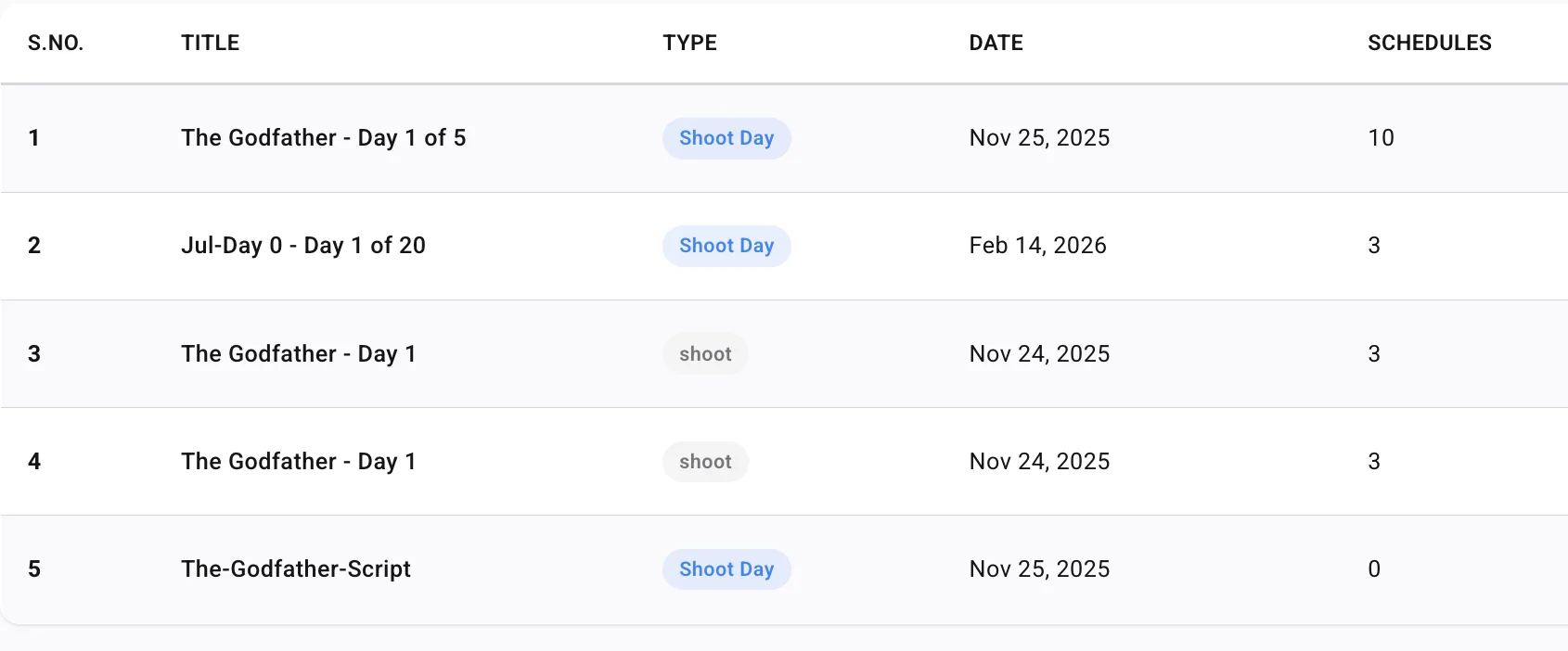
Choosing the right AI production tools for call sheets
Selecting call sheet software requires more than looking for automation features. A production team should evaluate whether the tool supports the realities of set operations, production office workflows, approval chains, and crew communication. The most useful platform is not necessarily the one with the longest feature list; it is the one that fits the production’s working method.
Security and access control should be part of the evaluation. Call sheets often contain personal contact information, locations, talent details, and sensitive production notes. Teams should consider who can view, edit, export, and distribute information. They should also understand how data is stored and how access is removed when someone leaves the production.
Usability is equally important. If a tool is difficult to learn, department adoption may suffer. Production offices operate under time pressure, so the interface should make common tasks faster rather than adding unnecessary steps. The system should also produce a call sheet that is clear to crew members who may only need to review the final document, not work inside the software.
Integration should be evaluated carefully. Some productions may need call sheet software that connects with scheduling, contacts, location management, or production management systems. Others may need a tool that works well with exported data and simple workflows. The goal is not maximum complexity; the goal is dependable information flow.
When assessing ai-powered call sheet generators, production teams should ask:
- Does the tool support the production’s preferred call sheet format?
- Can the team control approvals before distribution?
- Does it clearly show revisions and current versions?
- Can it manage cast, crew, location, department, and safety information in an organized way?
- Are AI suggestions transparent and easy to accept, reject, or edit?
- Does the software protect sensitive production information appropriately?
- Can crew members access the final call sheet easily on the devices they use?
- Is the system practical for the scale and pace of the production?
A tool that answers these questions well is more likely to support the production rather than disrupt it.
Why does automation need clear production standards?
Automation needs clear production standards because a faster workflow can spread errors just as quickly as it spreads accurate information. If the source data is incomplete, if approval roles are unclear, or if revisions are not controlled, automated call sheets can create confusion rather than efficiency.
This is why implementation should begin with standards. The production team should define required fields, naming conventions, approval steps, revision labels, distribution timing, and communication expectations. These standards give AI systems a reliable framework and give the crew confidence in the final document.
For example, a production might require that every call sheet include a confirmed basecamp location, nearest hospital information when relevant, department-specific notes, parking instructions, and clearly marked revision status. Another production may need special sections for minors, animals, stunts, intimacy coordination, visual effects, or special equipment. The software can help manage these requirements, but the production must define them.
Clear standards also support consistency across multiple shooting days. Crew members learn where to find information, department heads know when to submit notes, and production staff have a checklist for review. In this environment, AI becomes a structured assistant rather than an uncontrolled layer of automation.
The connection between AI scheduling tools and call sheet accuracy
Call sheet accuracy begins before the call sheet is created. It depends on the quality of the shooting schedule and the way schedule changes are communicated. This is where ai scheduling tools and call sheet software can work together.
When the shooting schedule changes, the call sheet often needs immediate revision. Scene order, cast requirements, location moves, company wrap expectations, meal timing, and department preparation can all be affected. If schedule data and call sheet creation are disconnected, production staff must manually interpret each change and update the document accordingly.
Integrated scheduling support can make this process more reliable. A system may help identify which cast members are attached to revised scenes, which locations are affected by a company move, or which departments need updated notes. This does not remove the need for human review, but it can reduce the likelihood that a downstream detail is overlooked.
For assistant directors, this connection can be valuable during prep and late-day revisions. For production coordinators, it can help ensure that the final call sheet reflects the current plan rather than a previous version. For producers, it can improve confidence that daily communication aligns with the approved schedule.
Data quality determines the value of AI output
AI-powered call sheet generators are only as useful as the information they receive. If contact lists are outdated, scene data is incomplete, location notes are vague, or department requirements are missing, the resulting call sheet will still require significant correction. Automation cannot compensate for poor production data.
A disciplined data process should therefore be part of any AI implementation. Crew information should be kept current. Cast requirements should be checked against the schedule. Locations should be confirmed with complete addresses and access notes. Department heads should have a clear deadline for submitting updates. Safety information should be reviewed by the appropriate personnel.
Production teams can improve data quality by maintaining a pre-distribution checklist. This checklist should be practical rather than overly complicated, and it should reflect the specific production.
Before sending a call sheet, confirm:
- The shooting date and day number are correct.
- All scene numbers and descriptions match the current schedule.
- Cast call times align with scene requirements and preparation needs.
- Crew call, pre-call, meal, and wrap expectations are clearly presented.
- Location addresses, parking, basecamp, and holding details are complete.
- Transportation notes are current and consistent with location timing.
- Department notes reflect the latest approved plan.
- Safety, weather, and special notices are reviewed and placed prominently.
- Contact information is accurate and limited to appropriate recipients.
- The version status is clear, especially if revisions were issued.
This kind of checklist remains valuable even when using sophisticated AI production tools. It reinforces accountability and gives the human team a final opportunity to catch context-specific issues.
Building trust with crew and department heads
Technology adoption on set depends heavily on trust. Crew members need to know that the call sheet they receive is accurate, timely, and easy to interpret. Department heads need confidence that their submitted notes are reflected correctly. Producers and assistant directors need assurance that the system supports the chain of command.
Trust begins with consistency. If the call sheet format changes dramatically from day to day, users may struggle to find information. If revisions are not clearly labeled, crew members may question which version to follow. If automated fields are inaccurate, departments may lose confidence in the entire system.
A professional rollout should include clear communication. The production office can explain how call sheets will be distributed, how revisions will be marked, who to contact with corrections, and when department notes are due. If crew members need to use a portal or mobile access point, instructions should be provided early and simply.
It is also important to maintain a feedback loop. If a department repeatedly reports that a section is unclear, the template should be adjusted. If recipients have trouble accessing the call sheet, distribution methods should be reviewed. AI-powered tools should support the production culture, not force the crew to adapt to unnecessary complexity.
Common misconceptions about automated call sheets
As AI production tools become more visible, it is useful to separate practical value from misconception. Automated call sheets can be highly useful, but they are not a complete production management solution on their own.
One misconception is that automation guarantees accuracy. In reality, automation improves consistency only when the underlying data and review process are strong. A wrong location entered into the system can still appear on a call sheet unless someone catches it.
Another misconception is that AI removes the need for experienced coordinators and assistant directors. The opposite is more realistic. Skilled production professionals are needed to interpret the information, manage exceptions, communicate priorities, and approve the final document. AI can reduce administrative repetition, but it cannot replace production leadership.
A third misconception is that every production should use the same call sheet workflow. Production needs vary significantly. A small documentary crew may need a streamlined system, while a scripted series may require more detailed approvals, department notes, and distribution controls. The best workflow is the one that supports the project’s actual demands.
Implementation risks and how to manage them
Any new production tool can create risk if it is introduced without planning. AI-powered call sheet generators are no exception. The purpose of implementation is to gain efficiency without weakening clarity, security, or accountability.
The first risk is overreliance. If the team assumes the system will catch every issue, human review may become less rigorous. This can be managed by keeping approval roles explicit and maintaining a final checklist.
The second risk is fragmented adoption. If some departments use the software while others continue sending updates through informal channels, the production office may still need to reconcile disconnected information. This can be managed by setting clear submission procedures and deadlines.
The third risk is poor access management. Call sheets can contain sensitive information, and digital distribution should be controlled. This can be managed through role-based permissions, careful recipient lists, and regular review of access.
The fourth risk is template overload. A call sheet that includes every possible field may become difficult to read. This can be managed by prioritizing information that crew members need for the specific shooting day and organizing secondary notes clearly.
The fifth risk is insufficient training. Even intuitive tools require a shared understanding of how the production will use them. Short onboarding, written procedures, and early testing can prevent confusion once production is moving quickly.
A practical adoption path for production teams
Production teams do not need to transform every workflow at once. A measured adoption path is often more effective, especially for teams moving from manual templates to automated call sheets.
Begin with a pilot. Use the software during prep, a test day, or a limited portion of the production workflow. Compare the AI-assisted output against the team’s existing call sheet process. Look for time saved, errors flagged, formatting improvements, and any points of confusion.
Next, refine the template. The first version should rarely be considered final. Adjust headings, field order, department sections, and revision labels based on how the crew actually reads the document. A strong template balances completeness with speed of use.
Then, define the communication protocol. Decide when department notes are due, who enters changes, who approves the final sheet, and how revisions are distributed. This protocol is as important as the software itself.
Finally, evaluate after several shooting days. Ask whether the tool is reducing administrative effort, improving clarity, and helping the team manage changes. If the answer is mixed, identify whether the issue is the software, the data, the template, or the workflow.
The future of call sheet software in film production
The future of call sheet software will likely be more integrated, more responsive, and more connected to the broader production management ecosystem. AI-powered call sheet generators may become part of larger systems that help manage schedules, contacts, locations, resources, approvals, and daily communication.
As these tools develop, the most valuable improvements will probably be practical rather than dramatic. Better conflict detection. Cleaner revision tracking. More reliable data connections. Stronger permissions. Smarter prompts. Easier mobile access. Clearer department communication. These are the kinds of capabilities that can improve production operations without disrupting professional decision-making.
There is also potential for more predictive support. Systems may help teams evaluate how a late schedule change could affect call times, meal planning, transportation, or department readiness. They may also help identify recurring workflow issues, such as departments that consistently submit notes late or sections of the call sheet that generate frequent clarification requests.
However, the future should remain human-led. Film production is collaborative, situational, and dependent on professional judgment. AI can help organize and accelerate the planning process, but it should serve the production team’s decisions and standards.
The strategic value of better daily communication
The call sheet may appear to be a routine document, but it has strategic value. It sets expectations for the day, communicates priorities, and gives the crew a shared reference point. When the call sheet is clear, timely, and accurate, the production begins the day with stronger alignment.
AI-powered tools can support that alignment by improving how information moves from planning to execution. They can reduce repetitive formatting, make revisions easier to manage, and help production teams identify issues before they reach the crew. These improvements may not be visible on screen, but they can support a more organized production environment.
For professional filmmakers, the question is not whether technology should replace established production discipline. It should not. The better question is how technology can reinforce that discipline. AI-powered call sheet generators are most valuable when they help skilled production teams communicate with greater accuracy, consistency, and speed.
Final takeaway
AI-powered call sheet generators represent a practical step forward in film production management. They can help production teams create clearer production call sheets, manage revisions more efficiently, and connect daily communication with scheduling and department data. When used with strong human oversight, call sheet software and ai scheduling tools can reduce administrative pressure while supporting better coordination on set.
The future of production planning will not be defined by automation alone. It will be defined by how well filmmakers combine intelligent systems with experienced judgment, clear standards, and disciplined communication. For teams ready to modernize their workflow, automated call sheets are a strong place to begin.