
A call sheet is the operating document that turns a creative plan into an executable shooting day. For production managers, it connects the filming schedule, crew logistics, cast movement, safety information, location details, and production notes in one document that every department can act on. This guide explains what to include, how to build it step by step, and how to review it before distribution so the entire unit arrives prepared.
Related video: Studiovity pre-production software with call sheet
What should a production manager include in a call sheet?
A production manager should include every detail needed for the cast, crew, vendors, and department heads to complete the next shooting day safely, efficiently, and on schedule. At minimum, a professional film call sheet should identify the production, shooting date, location, call times, scenes, cast, crew, weather, parking, meals, department notes, safety requirements, and key contacts. The best call sheets are concise enough to read quickly but complete enough to answer the practical questions that come up before anyone steps on set.
A call sheet is not just a calendar invite or a stripped-down movie schedule. It is the day’s production command document. It tells people where to go, when to arrive, what scenes are planned, what they need to bring, who to contact, and what risks or constraints they must understand. When it is accurate, the shooting day starts with alignment. When it is unclear, departments lose time resolving information that should have been confirmed the night before.
For production managers, the goal is not to make the call sheet long. The goal is to make it dependable. Every line should help someone make a decision, prepare a department, move equipment, manage talent, protect safety, or keep the filming schedule on track.
The role of the call sheet in a professional production workflow
A call sheet sits between the production schedule and the work of the shooting day. The broader schedule explains what the production plans to shoot over days or weeks. The call sheet translates that plan into tomorrow’s practical instructions.
On a small independent shoot, the call sheet may be created by the assistant director or production manager using a call sheet template. On larger productions, information may come from the assistant director team, production office, location department, transportation, hair and makeup, wardrobe, special effects, stunts, safety personnel, and department heads. The production manager’s responsibility is to ensure the final document is accurate, approved, and distributed to the right people at the right time.
A strong call sheet supports three core production needs:
- Coordination: It aligns cast, crew, vendors, and departments around a shared plan.
- Accountability: It documents call times, reporting locations, shooting order, and department expectations.
- Risk management: It communicates safety details, emergency contacts, weather concerns, location rules, and special requirements.
This is why a film call sheet should never be treated as an afterthought. It is one of the few documents that nearly every person on the production will read or reference. Even crew members who do not study the full movie schedule will rely on the call sheet to understand their next day of work.
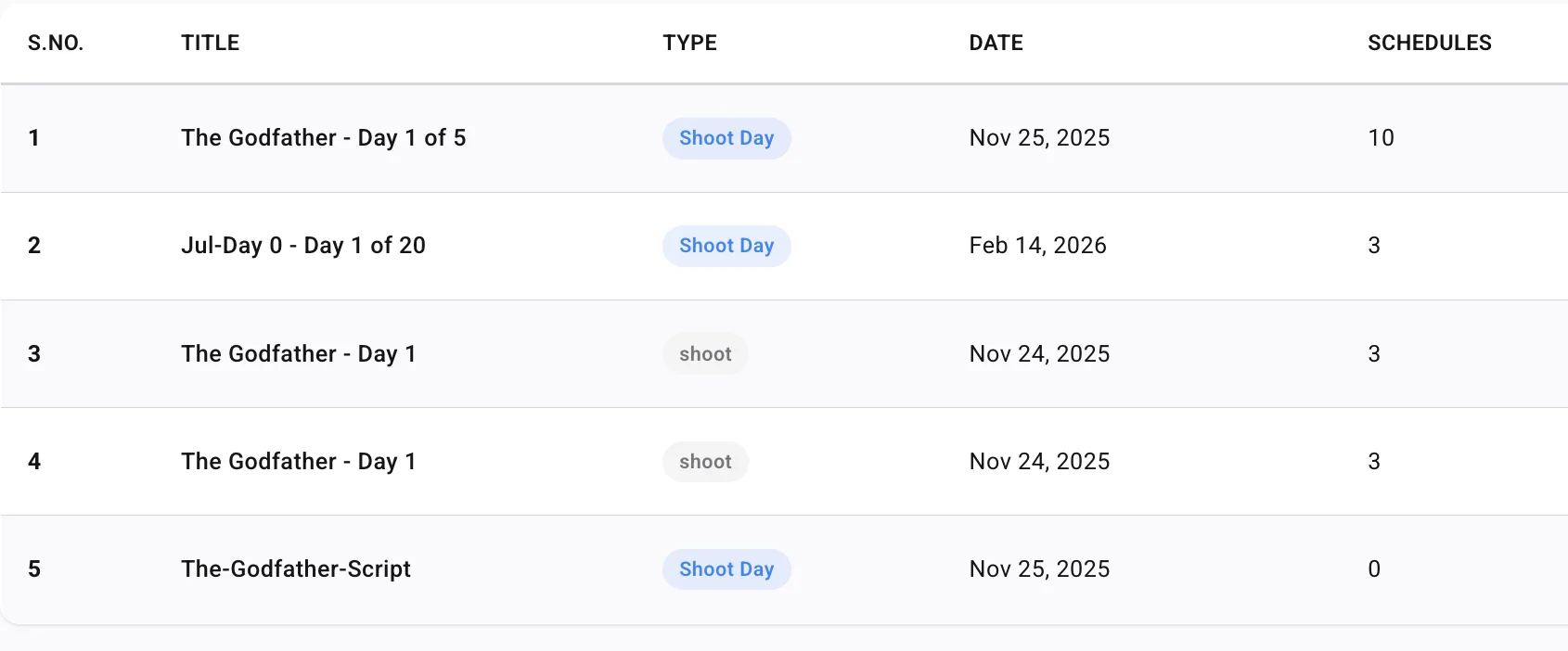
Core information every film call sheet must contain
A professional call sheet template can vary by production type, but the core categories remain consistent. The exact formatting may change between narrative features, commercials, documentaries, music videos, branded content, and television episodes. The function remains the same: provide the essential information for the day clearly and in the right order.
Production identification
The top of the call sheet should identify the production immediately. Include the project title, production company or producing entity if applicable, shoot day number, date, version number, and unit designation when relevant. If the production has multiple units, such as main unit, second unit, or splinter unit, make that visible near the top.
This section prevents confusion when multiple versions are circulating. It also helps crew members distinguish between documents for different shoot days, especially on productions where several call sheets are distributed in close succession. Version control matters. A small revision to a location, call time, or scene order can affect transportation, payroll, rentals, meals, and department prep.
A clean header may include:
- Production title
- Shoot date and day of week
- Shoot day number
- Call sheet version or revision time
- Unit name, if applicable
- Production office or key production contact
- Confidentiality note, if required by the production
General crew call and department call times
The general crew call is one of the most visible details on the document. It tells the majority of the crew when they are expected to report. However, many departments require earlier or later call times depending on prep needs.
For example, locations may arrive before general crew to open the site, place signage, and coordinate parking. Hair, makeup, and wardrobe may need staggered calls based on cast work times. Camera, grip, and electric may have pre-call requirements if complex setups are planned. Transportation may operate on an even earlier schedule to move cast, crew, and equipment.
A good call sheet distinguishes between:
- General crew call
- Department pre-calls
- Cast call times
- Hair, makeup, and wardrobe report times
- Rehearsal or blocking times
- First shot target, if used by the production
- Meal break target or planned meal window
- Estimated wrap or company move timing, if confirmed
Avoid burying call times in dense paragraphs. Use tables or clean sections so crew members can find their specific report time quickly.
Location details and reporting instructions
Location information must be precise enough for people to arrive without unnecessary calls to the production office. Include the location name, full address, parking instructions, basecamp location, holding areas, and any access rules.
If the set is difficult to find, include additional directions or a map link in the digital version. If there are separate addresses for parking, crew entrance, basecamp, and set, list them separately. One address is often not enough, especially when shooting at campuses, studios, industrial sites, rural locations, event venues, or controlled public spaces.
Location notes should also clarify practical issues such as:
- Where crew should park
- Whether street parking is restricted
- Where cast should be dropped off
- Which entrance is approved for production use
- Whether security check-in is required
- Whether crew need ID, badges, or permits
- Whether the location has noise restrictions
- Whether there are sensitive areas or off-limit zones
The call sheet should make arrival simple. If dozens of crew members are texting for directions at call time, the document did not do its job.
Scenes, pages, and shooting order
The call sheet should summarize what is scheduled to be filmed. For narrative work, include scene numbers, set names, brief scene descriptions, day or night designation, interior or exterior status, cast required, and page count or estimated script pages. For commercials or unscripted work, adapt this section to list setups, segments, interviews, product shots, action beats, or story priorities.
This section does not replace the full stripboard or production schedule. It provides the day’s shooting plan in an accessible format. Department heads use it to confirm props, wardrobe changes, lighting requirements, camera movement, continuity, set dressing, and practical effects.
A helpful scene table may include:
| Scene / Segment | Set or Location | Description | Cast / Talent | Pages / Notes |
|---|---|---|---|---|
| 12 | Apartment kitchen | Morning argument | A, B | Day interior |
| 18 | Parking lot | Character exits vehicle | B | Exterior, vehicle required |
| Product setup | Stage table | Hero product close-ups | Talent optional | Macro lens, clean surface |
Keep descriptions brief. The goal is not to reveal the entire script but to give departments enough context to prepare accurately.
Cast, talent, and background information
The cast section should show who is working, when they are called, and what preparation they need. Standard details often include cast ID number, character name, performer name, pickup time if relevant, report time, hair and makeup time, wardrobe time, set call, and status notes.
For background performers, include the number of people expected, category, report location, holding area, wardrobe guidance, and any special action. If background is being managed by a casting or background coordination team, list the appropriate contact.
Be careful with sensitive information. Do not include private details that are not necessary for production operations. Many productions limit distribution of personal contact information and use designated coordinators instead. A call sheet should support coordination without exposing unnecessary personal data.
Key crew and emergency contacts
The call sheet should include a contact block for essential production leadership and emergency support. This usually includes the producer, production manager, assistant director, production coordinator, location manager, medic or safety contact, transportation captain, and production office.
Emergency details should be easy to find. Include the nearest hospital or emergency care location when appropriate, along with emergency procedures required by the production. If the production has a designated safety officer, COVID compliance contact, stunt coordinator, intimacy coordinator, weapons handler, animal wrangler, marine coordinator, or special effects supervisor, include the relevant contact and reporting instruction where applicable.
The contact section should be curated. Too many phone numbers can create confusion. List the people who should actually receive calls about time-sensitive issues.
Weather, light, and environmental conditions
Weather affects scheduling, safety, wardrobe, equipment, lighting, transportation, and morale. Include the expected temperature range, precipitation risk, sunrise and sunset, and any relevant environmental notes. For exterior work, add practical guidance such as cold weather gear, sun protection, rain cover, or footwear needs.
Light information matters even when weather is stable. Sunrise, sunset, golden hour, night exterior timing, and available daylight can all affect the filming schedule. If the day depends on a narrow light window, make that clear in the production notes or assistant director notes.
Environmental notes may include heat, cold, wind, wet ground, insects, dust, altitude, water hazards, smoke, or terrain concerns. Keep this information practical and actionable.
Meals, breaks, and holding areas
Crew need to know where meals will be served and whether breakfast, lunch, dinner, or snacks are provided. Include meal location, planned meal timing, catering notes, and any staggered meal instructions if the schedule requires it. If the shoot involves remote locations or limited nearby options, make that clear.
Holding areas also matter. Cast, background, clients, agency, production office, video village, hair and makeup, wardrobe, and green rooms may all require designated spaces. Listing these areas reduces confusion and keeps departments from occupying rooms that have been assigned for other uses.
This section is also where production can communicate important practical notes, such as water availability, restrooms, quiet zones, and location-specific cleanliness rules.
Department notes and special requirements
Production notes should include anything that affects department readiness. These notes should be specific, not generic reminders. Instead of writing “bring everything needed,†explain the actual requirement: rain cover for camera, hard-soled shoes prohibited, practical lamp reset needed, background must arrive camera-ready, or location floor protection required.
Useful department notes may cover:
- Camera and media workflow
- Grip and electric pre-rig needs
- Art department dressing or strike timing
- Props required for specific scenes
- Wardrobe changes and continuity
- Hair and makeup special looks
- Sound concerns or controlled noise issues
- Vehicles, picture cars, or towing
- Stunts, effects, weapons, animals, or minors
- Client, agency, or director review logistics
The best notes are short, direct, and tied to the day’s plan. Avoid using the call sheet as a dumping ground for every reminder ever created by production. If everything is marked urgent, nothing stands out.
How do you build a call sheet step by step?
Build the call sheet by starting with the approved filming schedule, confirming the next day’s scenes and logistics with department heads, entering the information into a reliable call sheet template, and reviewing every time, address, name, and note before distribution. The process is part scheduling, part verification, and part communication. A polished document matters, but accuracy matters more.
The steps below reflect a professional workflow that production managers can adapt to different production sizes.
Step 1: Start with the approved shooting plan
Begin with the latest approved production schedule, stripboard, one-line schedule, or day-out-of-days report. Confirm which scenes, setups, interviews, or segments are actually planned for the next day. If the assistant director is managing the schedule, align with the AD before building the call sheet.
This step prevents one of the most common errors: building a call sheet from outdated information. Film schedules shift constantly because of weather, cast availability, location changes, equipment issues, company moves, and creative decisions. Never assume yesterday’s plan is still current.
Before entering details, verify:
- Shoot date and day number
- Scenes or segments planned
- Set names and locations
- Cast and background required
- Estimated page count or workload
- Company moves, if any
- Special equipment or safety needs
- Known schedule risks
If the plan is not locked, mark the call sheet as a draft internally. Avoid distributing a draft widely unless the production has a clear reason to do so.
Step 2: Confirm location logistics
Location details are where many call sheet problems begin. An address may look correct but still send crew to the wrong gate, wrong parking lot, or wrong building entrance. Confirm all location instructions with the location manager, production office, or site representative.
For each location, verify the full street address, parking address, basecamp address, set access route, load-in zone, restroom access, holding areas, and site restrictions. If permits or certificates are required, confirm they are in place before the call sheet implies approval. If there are noise, traffic, drone, fire lane, or neighborhood restrictions, note them clearly.
When a company move is planned, include the move timing and destination. Do not assume the crew will understand where to go next from the scene table alone. A company move affects transportation, catering, equipment movement, background holding, and production timing, so it deserves clear treatment.
Step 3: Set call times with department input
Call times should be built backward from the production’s first required shot, rehearsal, or setup target. Consider how long each department needs before the camera rolls. Hair, makeup, wardrobe, camera prep, lighting, art dressing, sound setup, basecamp operations, security access, and transportation all influence the timing.
Work with the assistant director, producer, department heads, and production coordinator to confirm staggered calls. Earlier is not always better. Calling departments too early can create unnecessary labor costs and fatigue. Calling them too late can delay the shoot and compress the day.
A practical call time review should ask:
- Who needs access before general crew?
- Which cast members need the longest prep?
- Does the first scene require background?
- Are there vehicles, animals, minors, stunts, effects, or specialty elements?
- Is breakfast before call or at call?
- Are transportation pickup times aligned with report times?
- Is there enough time between arrival and first shot?
Once times are approved, format them consistently. Use a clear time style across the document and avoid mixing ambiguous shorthand.
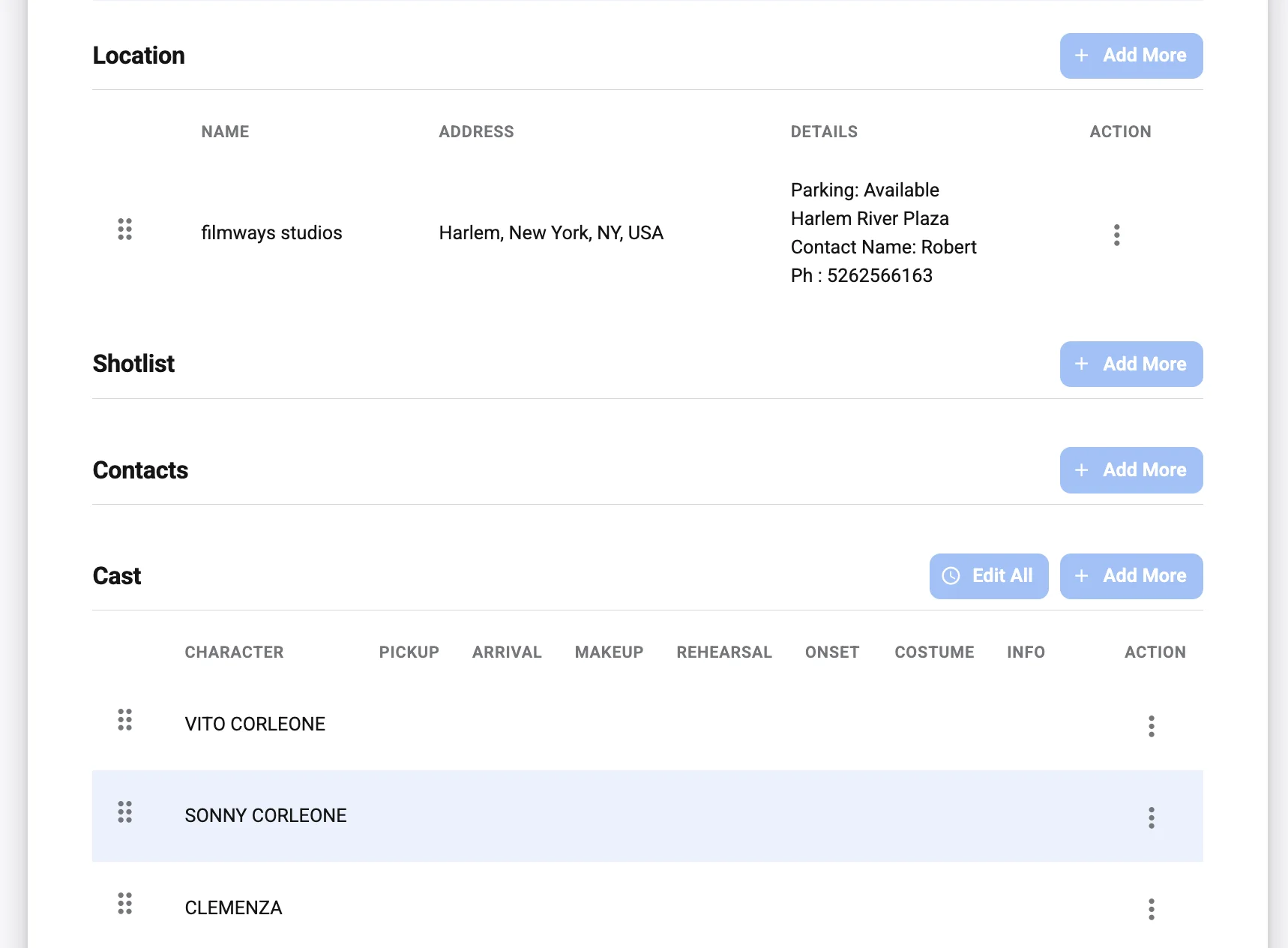
Step 4: Populate the scene and talent sections
Enter the scenes or production segments in the planned shooting order. Include only the details needed for the day’s execution. Make sure scene numbers match the latest script or schedule documents, and confirm that set names are consistent with what departments use.
For cast and talent, verify names, character names, cast numbers, status, call times, prep times, pickup times, and special requirements. If a performer is not needed until later, avoid giving them an unnecessarily early call unless production has a reason. If a performer is wrapped after a specific scene, the assistant director may want that noted internally or communicated through the day’s flow.
This is also the point where background counts should be confirmed. Background affects holding space, wardrobe, paperwork, meals, transportation, and assistant director coverage. A difference between 10 and 100 background performers is not a minor detail.
Step 5: Add safety, weather, and department notes
After the core schedule is set, add notes that prepare the crew for conditions and risks. Safety information should be visible and practical. If the shoot includes stunts, weapons, intimacy work, animals, water, heights, driving, smoke, pyrotechnics, minors, or extreme weather, ensure the responsible specialists and reporting protocols are clearly identified.
Department notes should come from department heads or the assistant director team, not guesswork. If the wardrobe department needs performers to arrive with specific base layers, say so. If sound is concerned about construction noise, note the controlled areas or expected limitations. If art department needs a protected load-in window, include it.
Weather and light data should be added close to distribution so it is as current as possible. If weather may change the plan, include a concise contingency note only if production has approved it.
Step 6: Review the document line by line
A call sheet review is not a quick glance. It is a line-by-line quality control pass. The production manager, assistant director, production coordinator, or designated reviewer should verify every time, name, location, scene number, contact, and note.
Use a checklist before distribution:
- The shoot date and day of week match.
- The version number or revision time is current.
- General crew call is clear.
- All department pre-calls are listed correctly.
- Cast call, pickup, HMU, wardrobe, and set times align.
- Location, parking, basecamp, and set addresses are correct.
- Scene numbers and descriptions match the latest schedule.
- Background counts and report details are accurate.
- Meal location and planned timing are included.
- Weather, sunrise, and sunset are included when relevant.
- Safety notes and emergency contacts are visible.
- Department notes are specific and approved.
- Distribution list is current.
This review is where preventable mistakes are caught. A wrong digit in an address, a missed cast call, or an outdated scene number can cost more time than the review itself.
Step 7: Distribute and track revisions
Send the call sheet through the production’s approved distribution channel. This may include email, production management software, messaging tools, printed copies, or a combination. The distribution method should match the production’s workflow and privacy standards.
When sending digitally, use a clear file name and subject line that includes the project, shoot date, and version. If the call sheet is revised, mark the revision visibly and communicate what changed. Do not rely on recipients to compare two documents manually when the change affects call time, location, or safety.
For printed call sheets, make sure the latest version is the one handed out at wrap or posted at basecamp. Collect or remove outdated versions when practical. Multiple versions on set can create confusion quickly.
A production manager’s call sheet checklist
A reliable production checklist helps you move from broad categories to final verification. Use this checklist before each distribution, adapting it to the scale and format of your production.
Header and production details
- Project title is correct and formatted consistently.
- Shoot day number is accurate.
- Date and day of week match the schedule.
- Call sheet version, revision time, or draft status is visible.
- Production office or primary contact is listed.
- Unit designation is included if the production has multiple units.
Schedule and scene information
- General crew call is prominent.
- Department calls are listed in the correct section.
- First shot, rehearsal, or blocking target is included if used.
- Scene numbers or segment labels match the current schedule.
- Set names and descriptions are consistent.
- Page count, workload, or setup notes are accurate.
- Company moves are clearly identified.
- Planned meal window is included.
Cast, talent, and background
- Cast IDs, character names, and performer names are accurate.
- Pickup, report, HMU, wardrobe, and set times align.
- Background count, category, and holding location are confirmed.
- Special wardrobe, makeup, or prop requirements are included.
- Minors, animals, stunts, intimacy, or specialty work are flagged if relevant.
- Sensitive information is limited to what the crew needs.
Locations and logistics
- Set address is correct.
- Parking address is separate if different.
- Basecamp address is separate if different.
- Load-in, security, and entrance instructions are clear.
- Restrooms, holding, catering, and production office spaces are identified.
- Location restrictions are listed.
- Permits, access windows, or site requirements have been confirmed.
Safety and emergency information
- Emergency contact details are easy to find.
- Medic or safety contact is listed if assigned.
- Nearest emergency care information is included when required by the production.
- Weather risks and environmental concerns are noted.
- Specialty safety personnel are listed where applicable.
- Safety meetings, briefings, or controlled areas are identified.
Department and production notes
- Notes are specific to the shooting day.
- Department requirements have been approved or confirmed.
- Equipment, props, wardrobe, and art needs are called out.
- Sound, lighting, location, or access constraints are included.
- Notes are concise and not overloaded with generic reminders.
Turning a call sheet template into a production-ready document
A call sheet template is useful because it gives the production a repeatable structure. It ensures that the same critical information appears each day and reduces the risk of starting from a blank page under deadline pressure. However, a template is only the framework. The production manager still has to make judgment calls about what belongs on the document and how clearly it is presented.
A strong template should be easy to scan. Crew members often read call sheets on phones, in vehicles, at wrap, or early in the morning before call. Use clear headings, consistent spacing, and tables where they improve readability. Keep the hierarchy logical: production identity first, call times and location details near the top, schedule and cast information in the body, and notes and contacts where they can be found quickly.
Avoid overly decorative layouts. A call sheet is a working document, not a pitch deck. If design choices make the document harder to read, they work against production efficiency.
Template fields worth standardizing
Standardized fields reduce errors and speed up review. Build your call sheet template around repeatable fields such as:
- Production title
- Shoot date
- Shoot day number
- Weather and daylight
- General crew call
- Department calls
- Location and parking
- Scene or segment table
- Cast and talent table
- Background details
- Key contacts
- Safety notes
- Meal information
- Department notes
- Distribution and revision information
For recurring productions, maintain consistent formatting from day to day. If crew members know where to find information, they can act faster.
Template fields that should remain flexible
Not every shoot needs the same detail. A studio interview day, a night exterior with stunts, a documentary travel day, and a multi-location commercial all require different emphasis. Leave room in your template for flexible production notes and specialty sections.
Flexible sections may include:
- Company move instructions
- Client or agency attendance
- Technical rehearsals
- Drone operations
- Water work
- Vehicle work
- Child performer requirements
- Live animals
- Special effects
- Intimacy coordination
- Security or confidentiality protocols
The key is to expand the document only where the day’s work demands it. A short shoot should not be buried under irrelevant sections, while a complex day should not be forced into a minimal form that leaves out operational details.
Common call sheet mistakes and how to prevent them
Most call sheet problems are avoidable. They usually happen when information is copied forward without review, changed in one section but not another, or distributed before the right people have confirmed it.
Inconsistent times
A cast member may have a pickup time in one section, a makeup time in another, and a set call that does not allow enough prep. These inconsistencies create confusion and can delay the first shot. Prevent them by reviewing the timeline for each performer from transportation through camera readiness.
Vague location instructions
A single address may not guide people to the right place. Crew might arrive at the public entrance while production is staged at a service gate. Prevent this by separating set, parking, basecamp, and load-in instructions. If a location is complex, use clear written directions in addition to the address.
Outdated schedule information
Scenes change, but old scene tables sometimes remain in the call sheet. This can cause departments to prep the wrong props, wardrobe, or set dressing. Prevent this by building from the latest approved filming schedule and checking scene numbers against the current script or stripboard.
Too many production notes
Long blocks of general reminders can hide the details that actually matter. Crew may skim past an important safety note because it is surrounded by generic language. Prevent this by writing concise, day-specific notes and placing critical safety information where it stands out.
Unclear revision control
If a revised call sheet is distributed without a visible version marker, crew members may follow the wrong document. Prevent this by adding revision numbers or timestamps and clearly stating what changed in the distribution message.
How should call sheets adapt for different types of productions?
Call sheets should adapt to the production’s format, scale, and risk profile while preserving the same core purpose: telling the right people where to be, when to be there, and what they need to know. A feature film call sheet may focus heavily on scenes, cast, background, and page count. A commercial call sheet may emphasize client attendance, product handling, approvals, and precise setup timing.
Narrative film and television
Narrative productions usually need detailed scene tables, cast numbers, character names, script page counts, set descriptions, background counts, and continuity-sensitive notes. The call sheet must align closely with the assistant director’s plan and the broader movie schedule. Because narrative days often involve many interdependent departments, even a small omission can create a ripple effect.
For these productions, pay close attention to cast prep, wardrobe changes, props, art department notes, and scene order. If the day includes stunts, weapons, minors, intimacy work, picture vehicles, or special effects, those details should be clearly identified and coordinated with the responsible specialists.
Commercial and branded content
Commercial shoots often involve clients, agency teams, products, brand guidelines, and approval workflows. The call sheet should identify client or agency attendance when appropriate, video village or review areas, product handling rules, and any confidentiality expectations. Setup descriptions may be more useful than scene numbers if the shoot is organized around shots, products, or campaign deliverables.
Timing is especially important when executives, talent, locations, or product windows are limited. The call sheet should help everyone understand when key approvals, hero shots, or talent-dependent setups are expected.
Documentary and unscripted work
Documentary call sheets may be less scene-based but still require strong logistics. The day may revolve around interviews, verite coverage, travel, releases, location access, and subject availability. Production notes should clarify interview times, arrival windows, sensitive access rules, and backup plans when subjects or locations are unpredictable.
Because documentary crews may be smaller, the call sheet can be concise. However, it should not omit safety, travel, contact, or location details. A lean crew still needs a dependable plan.
Music videos and short-form projects
Music videos may involve performance setups, playback, choreography, wardrobe changes, art-heavy environments, and rapid company moves. The call sheet should make talent timing, performance blocks, background dancers, playback needs, and location flow clear. If the schedule is aggressive, department pre-calls and staging areas become especially important.
Short-form projects often move quickly, but speed should not lead to vague documentation. A compact call sheet can still be complete.
Best practices for clearer production notes
Production notes are most useful when they are specific, operational, and easy to act on. They should tell a department or individual what to prepare, where to go, what constraint to observe, or what risk to manage. If a note does not change behavior, it may not belong on the call sheet.
Write notes in plain production language. Avoid vague phrasing such as “everyone be ready†or “please plan accordingly†unless the instruction is supported by a clear detail. A stronger note would be “Exterior scenes scheduled before lunch; crew should bring rain-appropriate footwear†or “Sound-sensitive location; no personal calls inside the interview room.â€
Group notes by relevance. General notes can apply to the full crew, while department-specific notes should be labeled. Safety notes should not be hidden at the bottom of a dense block. If something affects safety, access, or timing, make it prominent.
A practical note-writing checklist:
- Does the note apply to this specific shoot day?
- Is the responsible department or audience clear?
- Does it tell people what to do or expect?
- Is it short enough to be read quickly?
- Is it confirmed rather than assumed?
- Is critical safety information visible?
- Can a less important reminder be removed?
Good notes reduce questions. Great notes prevent problems before they reach set.
Distribution, confidentiality, and version control
A call sheet often contains sensitive production information. It may reveal locations, cast movements, contact details, schedule plans, or confidential creative material. Production managers should distribute it carefully and only to the appropriate recipients.
Use the production’s approved communication channels. Email may be suitable for many crews, while some productions use dedicated production platforms. Messaging apps can be helpful for reminders, but they are not always ideal as the only source of record. Whatever method you choose, make sure recipients know where the official version lives.
Version control should be consistent. If the call sheet changes after distribution, create a revised version and label it clearly. In the distribution message, summarize the change in practical terms: “Revised parking address,†“Updated cast call for Performer 3,†or “Weather note added for exterior work.†This helps crew members recognize whether the update affects them.
Confidentiality should be handled with equal care. Avoid sharing personal contact details unless necessary for production operations. If the production is sensitive, add a confidentiality note and restrict forwarding. If printed copies are used, avoid leaving them in public areas after wrap.
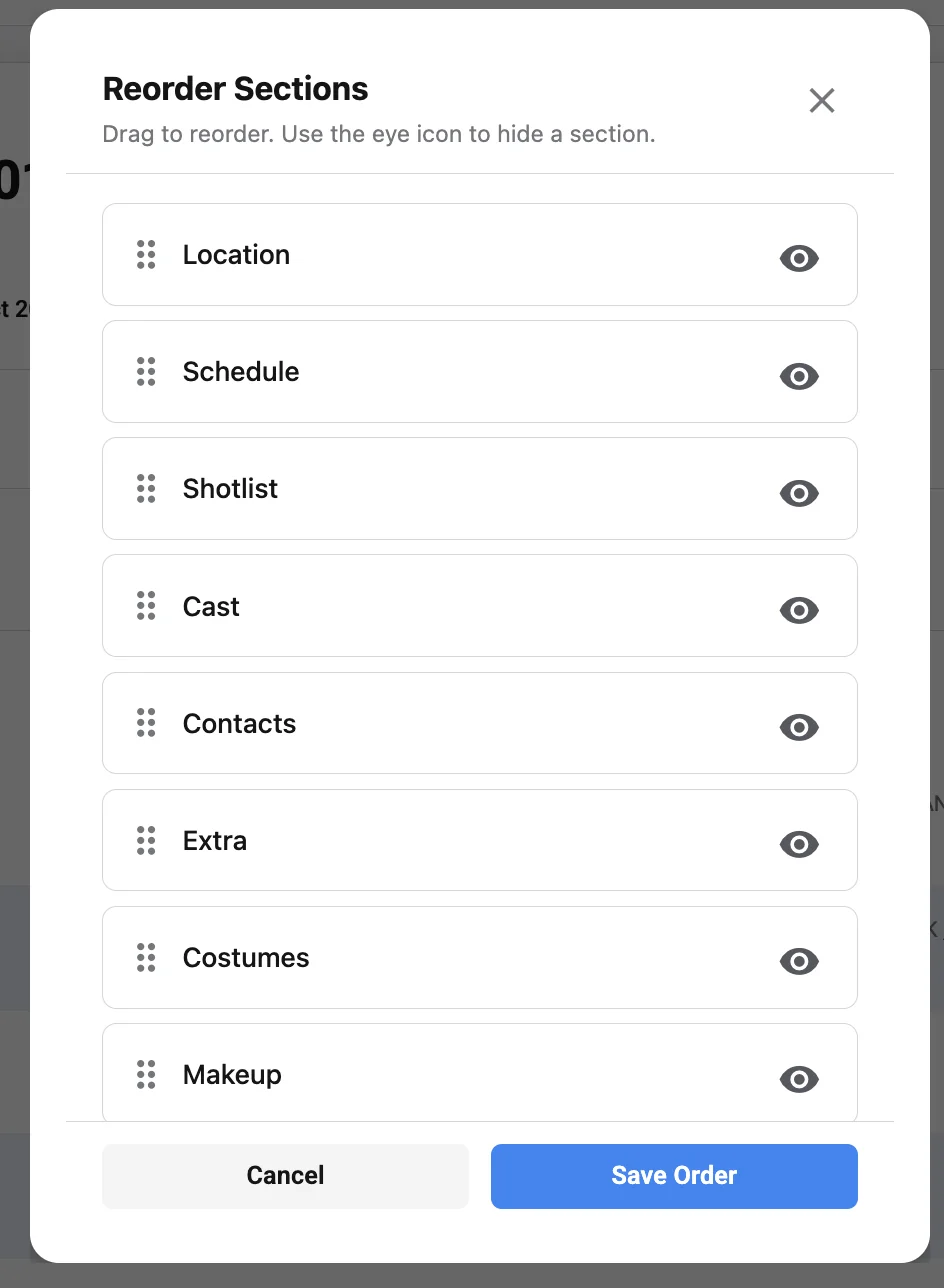
A practical pre-distribution review workflow
A clear review workflow saves time and reduces last-minute corrections. Production managers should establish who contributes information, who approves it, and who sends the final call sheet. Without that structure, the document can become a patchwork of unverified updates.
A dependable workflow may look like this:
- Assistant director confirms the shooting plan. Scenes, order, timing assumptions, and cast needs are reviewed.
- Production verifies logistics. Locations, parking, transportation, meals, basecamp, and access details are confirmed.
- Department heads submit notes. Only relevant and approved notes are added.
- Safety information is checked. Specialty work, weather issues, and emergency details are verified.
- Production manager reviews the full document. Times, names, locations, and version details are checked line by line.
- Final approval is obtained. The producer, AD, or designated authority signs off according to the production workflow.
- The call sheet is distributed. The final version is sent through the approved channel with any revision notes.
This process can be scaled. A large production may have multiple formal approvals. A small production may have two people reviewing the document. The principle is the same: no call sheet should go out until the essential information has been checked by the people responsible for it.
Call sheet quality standards for production managers
A strong call sheet is accurate, readable, complete, and calm. It should not feel chaotic, even when the shooting day is complex. The document should give the crew confidence that production has thought through the practical details.
Accuracy is the first standard. A beautifully formatted call sheet with the wrong address or call time is not useful. Readability is the second standard. If information is technically present but hard to find, it may fail under real production conditions. Completeness is the third standard. The document should contain the details required to execute the day without forcing crew members to chase basic answers.
The final standard is judgment. Production managers must decide what belongs on the call sheet, what belongs in a separate memo, and what should be communicated directly to a department head. Not every operational detail needs to appear in the main document. The art is in giving the crew enough information to work efficiently without overwhelming them.
Before sending, ask yourself:
- Could a crew member arrive at the correct place using only this document?
- Could each department identify its call time and relevant notes quickly?
- Could cast or talent understand their report and prep path?
- Could production respond to an emergency using the listed contacts?
- Could someone tell which version is current?
- Would the document still make sense on a phone screen?
If the answer to any of these is no, revise before distribution.
Final thoughts for a smoother shooting day
A call sheet is one of the simplest documents in production, but it carries significant responsibility. It connects the creative plan to real-world execution and gives every department a shared reference point for the day. When production managers treat it as a strategic communication tool, not just an administrative form, the set runs with fewer avoidable questions and delays.
Use a reliable call sheet template, build from the latest filming schedule, verify logistics with the right people, and review the final document with discipline. Keep the production checklist consistent, make production notes specific, and control revisions carefully. The result is a film call sheet that supports the crew, protects the schedule, and helps the production move into each shooting day prepared.