
A well-built call sheet keeps a production day organized before anyone steps on set. It tells actors, crew, department heads, drivers, vendors, and producers where to be, when to arrive, what scenes are being filmed, what resources are required, and who to contact if something changes. Whether you are preparing a short film, commercial, branded video, documentary, or independent feature, the goal is the same: create one reliable document that turns the production plan into a clear day-of action guide.
Related video: How to use Call Sheet: a step-by-step walkthrough
For filmmakers and production teams, a call sheet is more than an administrative form. It is a communication tool, a safety reference, a schedule summary, and a professional standard that helps everyone work from the same information.
What should a call sheet accomplish?
A call sheet should answer the most important production-day questions without requiring people to search through emails, scripts, shot lists, or group chats. It should clearly state the call times, location details, scenes or setups being filmed, cast and crew requirements, parking instructions, meal information, weather considerations, emergency contacts, and production notes for that specific day.
The best call sheets are practical, concise, and easy to scan. They do not replace a full shooting schedule, stripboard, production bible, or risk assessment, but they summarize the details each person needs to arrive prepared and work efficiently. A strong filming call sheet also reduces confusion because every department receives the same confirmed version rather than relying on separate verbal instructions.
In professional production environments, call sheets also establish accountability. When call times, contacts, and special instructions are documented, department heads can coordinate equipment, talent, transportation, and safety procedures with fewer last-minute surprises. For smaller productions, the same structure creates discipline and helps the team operate with a more polished workflow.
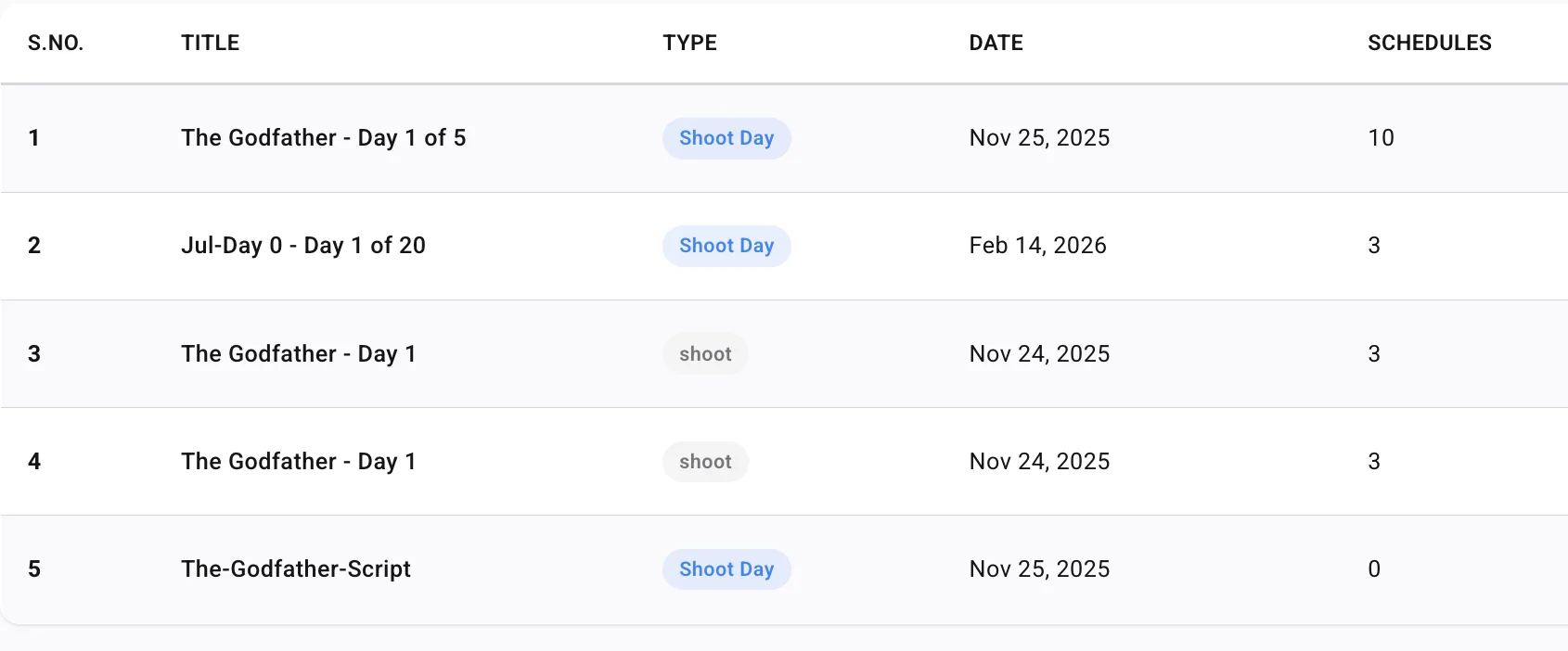
The core call sheet format every production should include
A reliable call sheet format follows a recognizable structure, even when the scale of the production changes. A student film and a studio feature may not need the same level of detail, but the underlying categories are similar. The document should move from broad production information to day-specific logistics, then into cast, crew, scenes, and notes.
A typical call sheet includes:
- Production title and production company: Identify the project immediately so there is no confusion if crew members are working on multiple jobs.
- Shoot day and date: Include the production day number, calendar date, and day of the week.
- General crew call: State the primary arrival time for crew, then list department-specific call times where necessary.
- Location name and address: Provide the full address, parking details, access points, and any location-specific instructions.
- Nearest hospital or emergency reference: Add essential emergency details so the information is easy to find.
- Key contacts: Include the producer, production manager, assistant director, location contact, transportation contact, or other relevant points of contact.
- Weather and sunrise/sunset notes: Include practical weather expectations and daylight considerations when they affect wardrobe, lighting, exterior scenes, or company moves.
- Daily schedule: Summarize the scenes, setups, estimated times, meal breaks, and company moves.
- Cast call times: List each actor, character name, pickup or report time, hair and makeup time, wardrobe time, and set call.
- Crew list and department calls: Identify key crew and department-specific requirements.
- Scene information: Include scene numbers, script pages, set description, day or night status, cast involved, and brief notes.
- Special requirements: Note props, picture vehicles, stunts, animals, minors, special effects, intimacy coordination, security, sound limitations, or location restrictions.
- Distribution and confirmation notes: Clarify whether recipients need to acknowledge receipt or contact production with conflicts.
This structure makes the call sheet useful to multiple groups at once. Actors can focus on call times, wardrobe, and makeup. Crew can check parking, equipment needs, department notes, and the shooting order. Producers can verify that contacts, safety references, and location logistics are visible to everyone.
Call sheet planning starts before the template
The mistake many new production teams make is opening a blank template before confirming the production details. A call sheet is only as strong as the information behind it. If the schedule is not locked, location access is uncertain, or actor availability has not been verified, the document can create confusion instead of clarity.
Before building the call sheet, gather confirmed information from the assistant director, producer, production manager, location manager, transportation coordinator, and department heads. On smaller productions, one person may cover several of those roles, but the workflow still matters. The call sheet should reflect coordinated decisions, not assumptions.
Start with the day’s shooting plan. Confirm which scenes are scheduled, which cast members are required, how many pages or setups are expected, and whether the production will move locations. Then confirm the operational details: parking, permits, access windows, load-in needs, meal timing, holding areas, restrooms, power access, and any sensitive location rules.
Once those facts are known, the template becomes easier to complete. You are not inventing a plan inside the call sheet; you are translating an approved plan into a clear production document.
Information to confirm before drafting
Use this pre-build checklist before you begin formatting the call sheet:
- Script and scene details Confirm scene numbers, page counts, script day, day/night status, cast required, and any continuity notes relevant to the shooting order.
- Final location information Verify the exact address, parking location, entrance instructions, load-in path, holding area, basecamp location, and restrictions from the location agreement.
- Department-specific requirements Ask each department if they need special prep time, extra access, loading instructions, equipment staging, or early arrival.
- Cast logistics Confirm talent call times, travel plans, pickup information, hair and makeup requirements, wardrobe instructions, and any private holding needs.
- Safety and emergency details Include the nearest emergency facility, production safety contact, first aid reference, and any hazard notes that the crew must know before arrival.
- Meal and break planning Confirm catering, lunch timing, dietary considerations if already collected by production, and whether the meal location differs from set.
- Distribution list Make sure the call sheet goes to all required cast, crew, producers, vendors, drivers, location contacts, and department heads.
This process prevents the call sheet from becoming a last-minute guessing exercise. It also gives department heads a chance to catch conflicts before the document is distributed.
How do you create a call sheet step by step?
To create a call sheet, begin with the confirmed shooting schedule, enter the day’s production information into a clean template, organize cast and crew call times by department and need, add location and safety details, then review the document with key production leads before distributing it. The process should be methodical because even a small error in a call time, address, or contact number can affect the entire day.
Here is a practical workflow production teams can use.
1. Start with the production header
The header should identify the project and the specific shoot day at a glance. Include the production title, production company or production entity if applicable, director, producer, assistant director, production manager, shoot date, and day number. If the production has multiple units, specify whether the sheet applies to main unit, second unit, splinter unit, stills, or another team.
Keep the header clean and visible. Crew members often open the call sheet on a phone while commuting or arriving at location. If the date, location, and general crew call are buried too far down the page, the document becomes less useful.
2. Add the general crew call and key times
The general crew call is the primary arrival time for most crew members. However, not everyone needs to arrive at the same time. Grip and electric may need pre-call for lighting setup, art department may need early dressing time, hair and makeup may need actors before set call, and production assistants may be scheduled earlier for signage, parking, and basecamp prep.
List the general call time clearly, then add department-specific call times in the crew section. If a department has a pre-call, label it plainly so there is no ambiguity. Avoid relying on vague notes such as “early call†or “as discussed.†A call sheet should document the confirmed time.
3. Enter location, parking, and access instructions
Location information must be precise. Include the location name, full street address, parking address if different, entrance instructions, security requirements, and any access restrictions. If crew members must not park in certain areas, state that clearly. If they need to check in with a location representative, security desk, or production assistant, include those details.
For larger or more complex locations, consider adding a small map or visual reference. A written address alone may not be enough if the crew must enter through a loading dock, side gate, basecamp area, or production entrance.
4. Build the daily shooting schedule
The daily schedule summarizes what the company intends to shoot and in what order. It should include scene numbers, set descriptions, script pages, day or night status, cast members required, and brief notes about action or requirements. This is not the full director’s shot list, but it should give every department enough context to prepare.
If the production expects a company move, add the estimated move time and the next location. If there is a major equipment reset, stunt setup, special effect, animal work, drone operation, or crowd scene, mention it in the relevant schedule notes. The call sheet should help the team anticipate the rhythm of the day.
5. List cast call times with precision
Actors usually need several times, not just one. A professional cast section may include pickup time, report time, hair and makeup time, wardrobe time, rehearsal time, and set call. The right level of detail depends on the production, but each actor should know exactly when and where they are expected.
Include the actor’s name, character name, status, and relevant timing. Use a consistent format so talent, agents, managers, and production staff can read it quickly. If minors are involved, follow the production’s required procedures and document appropriate guardian, teacher, welfare, or compliance details as applicable.
6. Organize crew by department
Crew information is most useful when organized by department. Common sections include production, direction, camera, grip, electric, sound, art, props, wardrobe, hair and makeup, locations, transportation, catering, post or digital workflow, and safety. Not every production needs every category, but grouping people this way makes the sheet easier to scan.
For each crew member, include their name, role, call time, and contact information if appropriate for your production’s privacy practices. On some productions, only key contacts are listed broadly while the full crew list is managed separately. Choose a format that supports communication without oversharing personal information unnecessarily.
7. Add department notes and special instructions
Department notes should be specific and relevant. A useful note might mention that the art department needs access to dress a bedroom set before cast arrives, or that sound should prepare for exterior street noise. A weak note simply says “be ready†or “standard gear,†which does not add much value.
Ask department heads for concise notes before finalizing the call sheet. If every department sends a long list, edit for clarity and importance. The call sheet should not become a full production manual, but it should capture the day’s most operationally important instructions.
8. Include safety, weather, and contingency notes
Weather can affect wardrobe, lighting, camera protection, transportation, catering, and schedule decisions. Add weather notes where relevant, especially for exterior work. Avoid overloading the document with excessive forecast detail; instead, include the information that affects the production day.
Safety notes should be easy to find. If the day involves traffic control, stunts, water, heights, animals, pyrotechnics, weapons, intimacy work, minors, crowds, extreme temperatures, or other sensitive conditions, flag the relevant procedures and contacts. Do not rely on the call sheet alone for full safety briefings, but use it to direct people to the right protocols and responsible personnel.
9. Review the call sheet before distribution
Before sending, review the call sheet with the assistant director, producer, production manager, and any department heads responsible for critical logistics. Check all times, addresses, phone numbers, scene numbers, cast requirements, and meal information. Look for inconsistencies such as an actor listed in a scene but missing from the cast call section.
A final proofread is essential. A typo in a name is inconvenient; an incorrect address or call time can disrupt the production. Treat the call sheet as a production document that deserves the same attention as a schedule, budget, or contract attachment.
10. Distribute the final version clearly
Once approved, send the call sheet to the full distribution list. Use a clear subject line that includes the project name, shoot date, and call sheet version. Attach the document as a PDF when possible so formatting does not shift across devices.
If you are also sharing a call sheet template Google Docs file or live document, be careful with permissions. A view-only link prevents accidental edits, while a PDF provides a stable final version. If changes are made after distribution, label the revision clearly and notify recipients that an updated version replaces the previous one.
A practical call sheet example for a production day
A call sheet example is most useful when it shows how information fits together. The sample below is simplified, but it reflects the kind of structure production teams can adapt for narrative, commercial, documentary, or corporate shoots.
- Production: Harbor Lights
- Shoot Day: Day 3 of 12
- Date: Monday, [Insert Date]
- Director: [Name]
- Producer: [Name]
- 1st Assistant Director: [Name]
- General Crew Call: 7:00 AM
- Location: [Location Name], [Full Address]
- Parking: Crew parking at [Parking Address]. Do not park directly in front of the filming location.
- Basecamp: Rear lot entrance through Gate B.
- Lunch: Estimated 1:00 PM, location catering tent.
- Weather: Exterior scenes scheduled; bring weather-appropriate layers and protect equipment as needed.
Emergency Reference
- Nearest emergency facility: [Facility Name and Address]
- Production safety contact: [Name and Phone]
- Set medic or first aid contact: [Name and Phone, if applicable]
Key Contacts
| Role | Name | Contact |
|---|---|---|
| Producer | [Name] | [Phone] |
| 1st AD | [Name] | [Phone] |
| Production Manager | [Name] | [Phone] |
| Location Contact | [Name] | [Phone] |
| Transportation | [Name] | [Phone] |
Daily Shooting Schedule
| Est. Time | Scene | Set | D/N | Pages | Cast | Notes |
|---|---|---|---|---|---|---|
| 8:00 AM | 12 | Apartment Kitchen | Day | 2/8 | 1, 2 | Dialogue coverage |
| 10:30 AM | 14 | Hallway | Day | 1/8 | 1, 3 | Handheld movement |
| 12:00 PM | Inserts | Kitchen Counter | Day | — | 1 | Prop close-ups |
| 1:00 PM | Lunch | Catering Tent | — | — | All | Estimated time |
| 2:00 PM | 18 | Exterior Street | Day | 3/8 | 1, 2, 4 | Sound awareness needed |
| 4:30 PM | 21 | Car Interior | Day | 2/8 | 2, 4 | Picture vehicle |
Cast Calls
| ID | Actor | Character | Report | H/MU | Wardrobe | Set Call |
|---|---|---|---|---|---|---|
| 1 | [Actor Name] | Mara | 7:15 AM | 7:30 AM | 8:00 AM | 8:30 AM |
| 2 | [Actor Name] | Ellis | 8:30 AM | 8:45 AM | 9:15 AM | 10:00 AM |
| 3 | [Actor Name] | Neighbor | 9:00 AM | 9:15 AM | 9:30 AM | 10:30 AM |
| 4 | [Actor Name] | Driver | 1:00 PM | 1:15 PM | 1:45 PM | 2:30 PM |
Crew Calls by Department
| Department | Role | Name | Call |
|---|---|---|---|
| Production | Production Manager | [Name] | 6:30 AM |
| Direction | 1st AD | [Name] | 6:30 AM |
| Camera | DP | [Name] | 7:00 AM |
| Camera | 1st AC | [Name] | 7:00 AM |
| G&E | Gaffer | [Name] | 6:45 AM |
| G&E | Key Grip | [Name] | 6:45 AM |
| Sound | Production Mixer | [Name] | 7:15 AM |
| Art | Production Designer | [Name] | 6:30 AM |
| Wardrobe | Costume Designer | [Name] | 7:00 AM |
| H/MU | Key Makeup Artist | [Name] | 7:15 AM |
Department Notes
- Art department has early access for final dressing before camera blocking.
- Sound should prepare for exterior street ambience during afternoon scenes.
- Wardrobe should have continuity options ready for scenes 18 and 21.
- Production assistants should place directional signage before general crew arrival.
- Picture vehicle required for scene 21 and must remain clear of crew parking.
This sample movie call sheet is intentionally simple, but it shows the hierarchy of information. The most urgent details appear first, followed by schedule, cast, crew, and notes. A larger production may add more pages, but the document should still remain easy to navigate.
Building a call sheet template in Google Docs
A call sheet template Google Docs workflow can be effective for small and mid-sized productions because it is accessible, easy to duplicate, and simple to share with collaborators. The key is to design the document so it remains clean when exported as a PDF. Google Docs can become messy if too many people edit at once, so permissions and version control are important.
Start by creating a master template with locked-in sections: header, key contacts, location, emergency details, schedule, cast, crew, department notes, and distribution reminders. Use tables for information that needs alignment, such as cast times and scene details. Use bold labels for high-priority items like general crew call, parking, and emergency contacts.
A practical Google Docs workflow might look like this:
- Create a master document Build a reusable template with placeholder fields instead of copying an old call sheet that may contain outdated information.
- Duplicate for each shoot day Name each file clearly, such as “Project Name – Call Sheet – Day 04 – Draft.†This reduces the risk of editing the wrong document.
- Limit editing access Give edit access only to the people responsible for preparing the call sheet. Department heads can provide notes by email, production software, or comments if appropriate.
- Use comments during review Comments help track unresolved questions without changing the visible text prematurely.
- Export the approved version as a PDF The PDF becomes the final distributed call sheet. This helps preserve formatting and prevents accidental changes after approval.
- Archive revisions If changes are necessary, create a revised PDF and label it clearly. Avoid having multiple unlabeled versions circulating among cast and crew.
Google Docs is not the only option. Many productions use dedicated production management software, spreadsheets, or studio-approved templates. The best tool is the one that allows your team to work accurately, protect sensitive information, and distribute a clean final document.
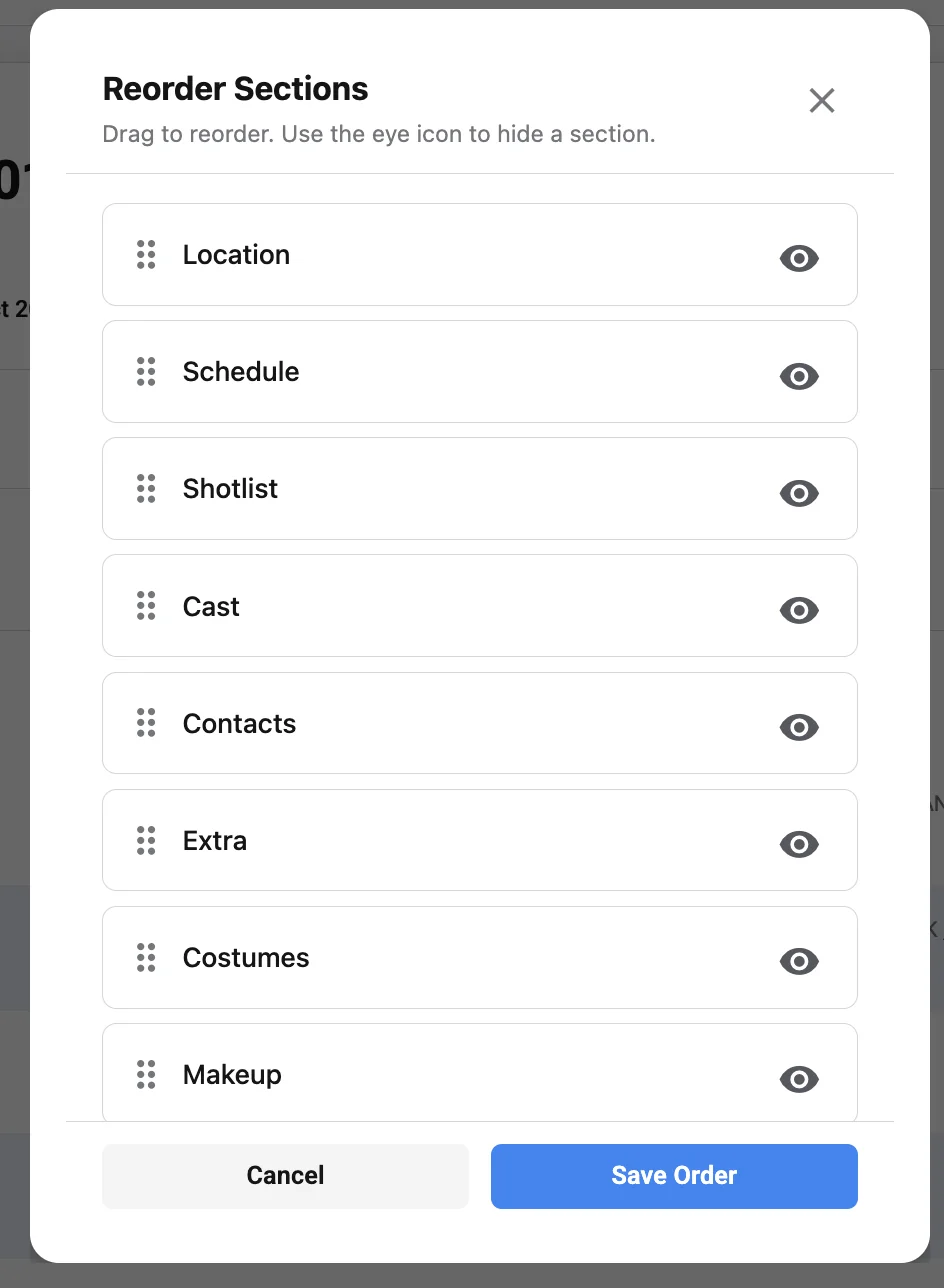
Movie call sheet details that matter on set
A movie call sheet often requires more nuance than a simple one-day video shoot because continuity, cast scheduling, department coordination, and location movement can be more complex. The document must help the production maintain momentum while giving each department the information it needs to prepare for the next setup.
Scene information is especially important. Include scene numbers, script pages, cast IDs, set names, and day/night status so departments can connect the day’s work to the script and shooting schedule. If scenes are shot out of story order, departments such as wardrobe, hair and makeup, props, and script supervision rely on accurate scene details to maintain continuity.
Cast status can also matter. Some productions indicate whether an actor is working, holding, traveling, or wrapped for the day. The exact language depends on the production’s internal system, but the principle is the same: the call sheet should support efficient use of time.
Transportation and company moves need careful attention. If crew parking, basecamp, set, catering, and holding are in different places, the call sheet should explain the relationship between them. If a company move is planned, include the destination, estimated timing, and any transportation instructions.
For exterior work, include practical notes about weather exposure, nearby noise, public interaction, and access. For interior work, include restrictions related to floors, elevators, loading areas, power, sound control, and location protection. These details can prevent delays and protect the relationship with the location owner or manager.
Department-specific considerations
Each department reads the call sheet through a different lens. A producer may look first at logistics and risk. A cinematographer may focus on schedule, daylight, and location order. Hair and makeup may study cast arrival timing. Production assistants may need parking, signage, and movement instructions.
A professional call sheet anticipates those needs without becoming bloated. The goal is not to write a separate manual for every department, but to include the information that affects the day’s execution.
Direction and production
The direction and production departments are usually responsible for turning the call sheet into a working plan. They need accurate call times, key contacts, scene order, location logistics, meal timing, and notes from department heads. They also need the document early enough to resolve conflicts before distribution.
Production should pay special attention to contact information and version control. If cast or crew have questions, they must know who to contact. If the call sheet changes, everyone must know which version is current.
Camera, grip, and electric
Camera, grip, and electric teams need details that affect equipment, prep, and setup order. They may need to know whether the day includes handheld work, vehicle interiors, night scenes, exterior sunlight, tight spaces, power limitations, or company moves. Even brief notes can help these teams plan carts, stands, lenses, lighting units, rigging, batteries, and weather protection.
If the schedule depends on natural light, the call sheet should make that clear. Daylight-sensitive work requires coordination among direction, camera, lighting, locations, and transportation. A missed timing window can affect the entire shooting plan.
Sound
Sound departments need to anticipate practical recording conditions. The call sheet can flag exterior street scenes, generators, crowds, moving vehicles, water, music playback, or locations with heavy echo. These notes allow sound to plan microphones, plant mics, wireless coordination, and discussions with the assistant director before filming begins.
Sound considerations are often underestimated on smaller productions. A simple note such as “exterior dialogue near traffic†gives the mixer a chance to prepare and advise production before the first take.
Art, props, wardrobe, hair, and makeup
These departments rely heavily on scene order and cast timing. Art and props need access for dressing and resets. Wardrobe, hair, and makeup need continuity context, actor arrival times, and enough preparation time before set call. If an actor appears in multiple scenes with different looks, the call sheet should support that workflow.
Be clear when a scene involves special wardrobe, hero props, food styling, practical effects, blood, dirt, rain, aging, or continuity resets. The call sheet does not need to describe every creative choice, but it should make operational requirements visible.
Locations, transportation, and production assistants
Locations and transportation teams depend on precise instructions. Parking, basecamp, crew entrance, truck staging, shuttle timing, and neighborhood restrictions should be stated plainly. Production assistants often execute these instructions on the ground, so vague directions can create immediate problems.
If signs need to be placed, gates unlocked, elevators reserved, or neighbors protected from disruption, include those notes. A strong call sheet helps the locations team maintain control before the full company arrives.
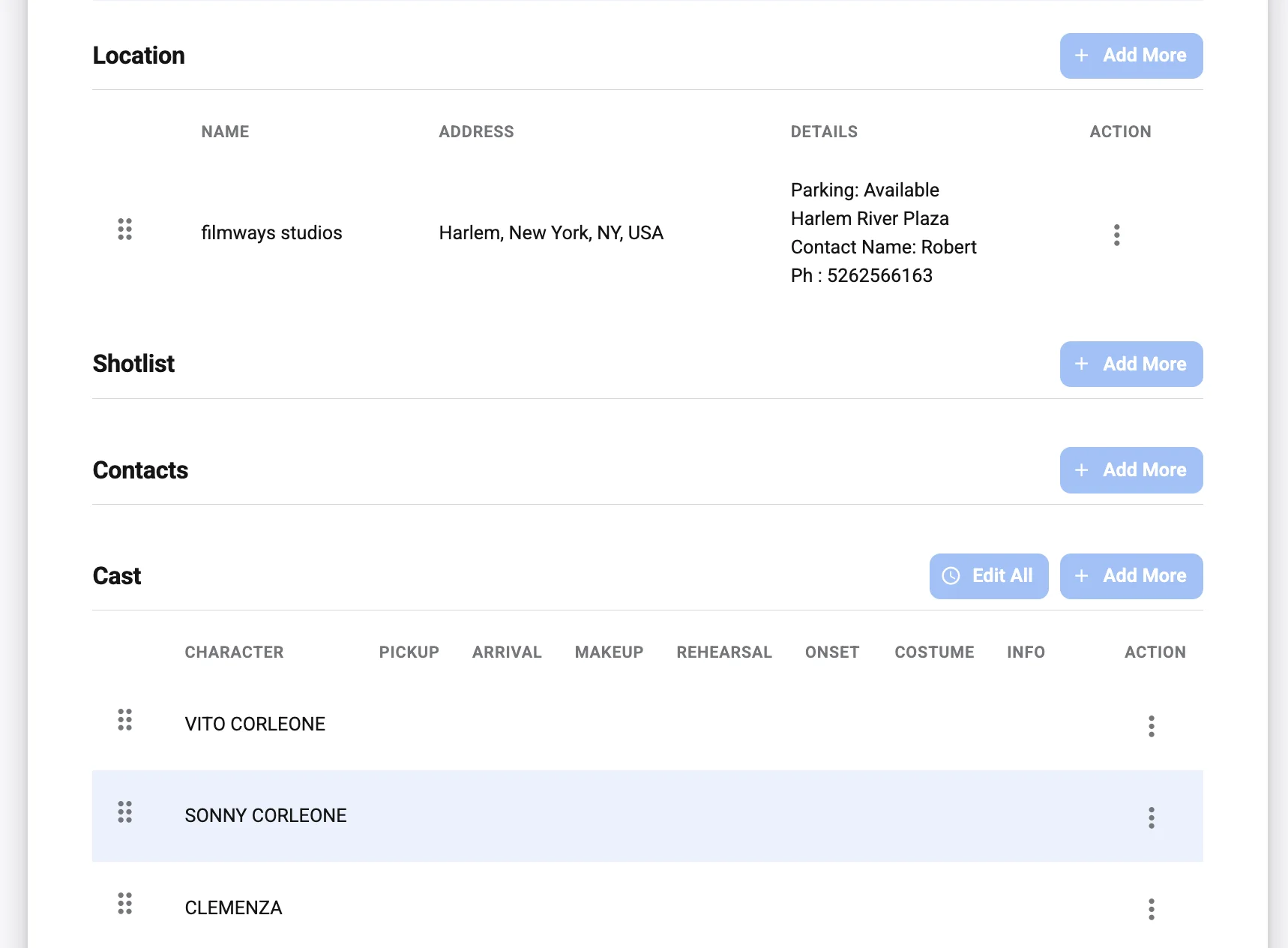
Common call sheet mistakes to avoid
Even experienced teams can make call sheet errors when schedules change quickly. The most common mistakes are not usually about design; they are about accuracy, clarity, and distribution. A beautiful call sheet with the wrong parking address is still a problem.
Use this checklist before final approval:
- Unconfirmed call times: Do not publish times that have not been checked against the shooting schedule and department needs.
- Missing location details: Include the full address, parking, entrance, and basecamp instructions where relevant.
- Inconsistent cast information: Make sure every actor scheduled for a scene appears in the cast section with the correct timing.
- Outdated contacts: Verify names and phone numbers for key production contacts.
- Overcrowded notes: Remove generic reminders that make important instructions harder to find.
- No version control: Label drafts and revisions clearly so recipients know which document is final.
- Poor mobile readability: Use clean tables, short notes, and clear hierarchy because many recipients will read the call sheet on a phone.
- Sensitive information shared too broadly: Be thoughtful about personal contact details, addresses, and confidential production information.
- Failure to account for travel or parking time: A call time is only useful if people can realistically arrive, park, check in, and reach set.
- No final review: Always have at least one responsible production lead review the full document before distribution.
The strongest prevention is a consistent workflow. Build the call sheet from confirmed details, route it for review, export a final version, and distribute it with a clear message.
Adapting the call sheet for different production types
Not every production needs the same level of detail. A documentary crew may prioritize interview timing, releases, parking, and equipment load-in. A commercial may focus on client attendance, product handling, agency approvals, and talent windows. A feature film may require complex cast movements, department notes, company moves, and continuity references.
The format should serve the production, not the other way around. Keep the essential structure, then adjust the depth of information to the day’s needs.
For a small branded shoot, a one- or two-page call sheet may be enough. Include the location, contact list, arrival times, interview schedule, gear notes, meal plan, and parking. For a larger narrative production, expect a more detailed document with cast IDs, scene breakdowns, department calls, special equipment, safety notes, and transportation details.
For a multi-location day, prioritize clarity around movement. State when the company moves, where vehicles should go, what equipment travels, and who coordinates the transition. For a controlled studio day, prioritize stage access, load-in, set numbers, safety procedures, and department prep times.
The phrase football call sheet template sometimes appears in searches from people looking for organized play-calling documents rather than film production paperwork. While a football call sheet template is different from a filming call sheet, the underlying lesson is useful: high-pressure teams need fast, well-organized reference documents. In film production, that means the call sheet must put the most important operational information where people can find it quickly.
Formatting choices that improve readability
Design matters because the call sheet is used under time pressure. People may read it in a van, outside a location, in low light, or between setups. Good formatting reduces friction.
Use a clear hierarchy with bold section labels, consistent table columns, and enough spacing to prevent visual clutter. Keep the most urgent information near the top: call time, location, parking, key contacts, and emergency references. Use tables for schedules and call times because they allow quick scanning.
Avoid decorative design that weakens readability. Production documents should be functional first. A logo, brand color, or clean header is fine, but ornate fonts, dense blocks of text, or overly narrow columns can make the document harder to use.
For mobile readability, test the PDF on a phone before sending. If recipients must zoom constantly or scroll sideways through complex tables, simplify the layout. A call sheet is not a poster; it is a working document.
Simple formatting standards to follow
- Use a clean, readable font and consistent sizing.
- Put the project name, date, and general crew call near the top.
- Keep location and parking details together.
- Use bold text for critical warnings or special instructions.
- Group cast and crew into separate sections.
- Organize crew by department rather than alphabetically when possible.
- Keep notes concise and specific.
- Export the final version as a PDF for distribution.
- Mark revised versions clearly if anything changes.
These standards may seem basic, but they create a more professional experience for the entire team. When information is easy to find, the production can spend less time answering repeated questions and more time executing the day’s work.
Distribution and confirmation best practices
A call sheet only works if the right people receive it and understand that it is the current version. Distribution should be planned, not improvised. The production team should maintain an updated recipient list that includes cast, crew, department heads, producers, transportation, vendors, location contacts, and any other approved recipients.
Send the call sheet at a time that gives people a reasonable opportunity to prepare for the next day. If your production has a standard distribution schedule, follow it consistently. If the schedule is delayed because important details are still being confirmed, communicate carefully rather than sending incomplete information as final.
The distribution message should be brief and clear. Identify the project, shoot date, call sheet day number, and whether the attached document is final or revised. If acknowledgment is required, say so directly. If there are major changes from a previous version, summarize them in the email or message so recipients do not miss the update.
Version control is especially important when using shared documents. A live link may be convenient during drafting, but it can create uncertainty if recipients do not know whether they are viewing a draft or final version. A final PDF with a timestamp or revision label is often the safest distribution method.
Privacy and professionalism in call sheets
Call sheets often contain sensitive information, including personal phone numbers, location addresses, talent movements, and production logistics. Treat the document as confidential unless the production has decided otherwise. Do not post call sheets publicly, and avoid sharing them with people outside the approved production group.
Be mindful of how much contact information is necessary. Some productions list only key contacts, while others include full crew phone numbers. The right approach depends on the production’s policies, scale, and communication needs. When in doubt, share only what is necessary for the workday.
Professionalism also means using accurate names, roles, and respectful language. Check spelling for cast, crew, characters, and locations. Avoid jokes, shorthand, or informal notes that could be misunderstood. The call sheet represents the production, and its tone should reflect the standards expected on set.
A final pre-send checklist
Before sending the final call sheet, review it from the perspective of someone arriving with no additional context. Could they find the location? Would they know where to park? Do they understand when they are expected, who to contact, and what scenes are being filmed? If the answer is not clear, revise before distribution.
Use this final checklist:
- Project title, shoot date, and day number are correct.
- General crew call is visible near the top.
- Department pre-calls are accurate and clearly labeled.
- Location address, parking, entrance, and basecamp details are complete.
- Key contacts are current.
- Emergency and safety information is included.
- Daily schedule matches the approved shooting plan.
- Cast list matches the scenes being filmed.
- Hair, makeup, wardrobe, and set call times are aligned.
- Crew roles and call times are organized by department.
- Meal timing and location are included.
- Special equipment, props, vehicles, stunts, or sensitive work are noted.
- Weather or exterior considerations are included where relevant.
- Confidential information is handled appropriately.
- Draft labels have been removed from the final version.
- The final PDF has been reviewed on desktop and mobile.
- Distribution list is complete.
- Revision number or final status is clear.
This checklist is useful whether you are preparing your first short film call sheet or refining a workflow for a larger production. The details may change, but the need for clarity does not.
Conclusion: a strong call sheet protects the production day
Learning How to Create a Call Sheet for Actors, Crew, and Production Teams is ultimately about learning how to communicate production logistics with precision. A strong call sheet gives every department the information it needs to arrive prepared, coordinate efficiently, and respond professionally when the day changes.
Start with confirmed details, use a clean structure, review the document carefully, and distribute one clearly labeled final version. Whether you build from a custom document, production software, or a call sheet template Google Docs workflow, the standard remains the same: the call sheet should make the production day easier to execute, not harder to interpret.