
Film Institutes for Industry-Ready Skills matter because the gap between classroom learning and a working film set feels wide, but the right academic structure helps students cross it. Strong film institutes training teaches theory, but it also helps students master deadlines, collaboration, creative feedback, production planning, and practical habits for real projects. To bridge this gap effectively, modern programs often integrate specialized platforms like Studiovity Education into their curriculum. By offering tailored access, institutional benefits, and special educational pricing for students and faculty, these initiatives make professional pre-production tools much more accessible. You can explore more information about these institutional plans at Studiovity Education.
Below, creative academies, universities, and film schools prepare learners for the professional world while building confidence, portfolios, and production discipline.
1. Build every course around real production workflows
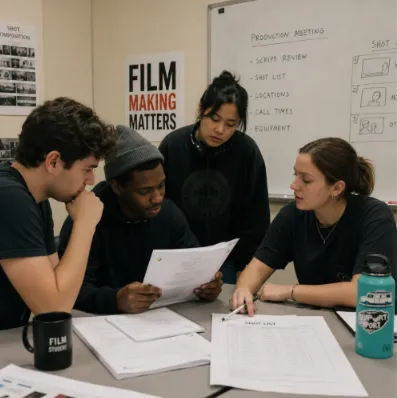
Students avoid learning filmmaking as separate, disconnected subjects because writing, directing, cinematography, editing, budgeting, scheduling, and production management all influence one another.
A strong institute structures assignments like a real project pipeline:
Concept development
Scriptwriting
Scheduling and budgeting
Production
Post-production
Screening and feedback
This approach helps students understand how one creative decision affects the entire production. For example, a scene written with multiple locations, night shoots, extras, and complex props looks exciting on the page, but it also affects budget, permissions, crew requirements, and time.
When students experience that connection early, they think like filmmakers instead of thinking like students completing assignments. By adopting Film Institutes for Industry-Ready Skills, educators ensure that production logic teaches students from day one.
2. Strengthen the foundation with practical screenwriting courses
Great films begin with clear storytelling. Therefore, screenwriting courses offer more than lessons in format and dialogue because they train students to develop ideas, structure scenes, rewrite with purpose, and understand how scripts move into production.
Effective screenwriting courses include:
Logline and premise development
Character motivation and conflict
Scene objectives
Visual storytelling
Dialogue rewriting
Script formatting
Table reads
Peer feedback sessions
Script-to-screen analysis
Production-focused revisions
Students also learn how departments read a script differently because a director looks for performance and visual rhythm. A cinematographer looks for mood, coverage, and lighting challenges, whereas a producer looks for budget and logistics, and a production designer looks for locations, props, and visual details.
When writing classes include these perspectives, students create scripts that express ideas while remaining producible. The integration of Film Institutes for Industry-Ready Skills encourages this multidisciplinary mindset early on.
3. Use industry-style tools in the classroom
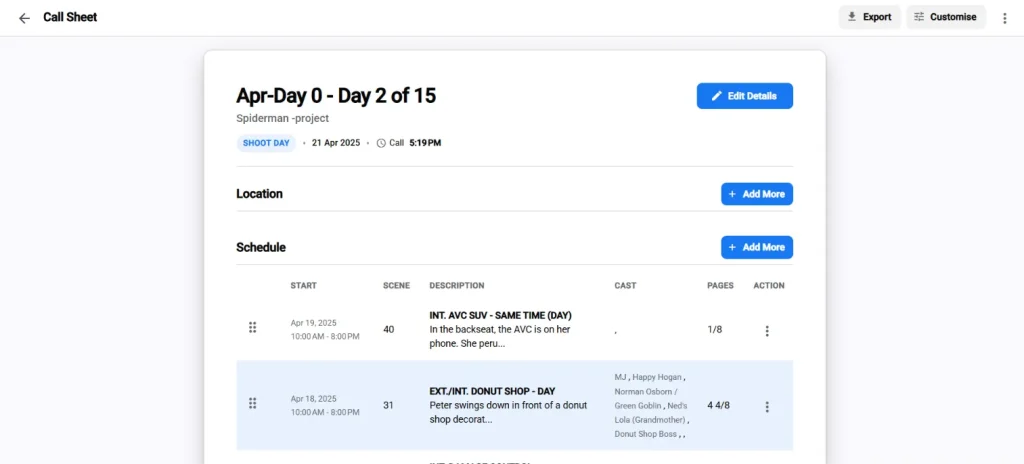
Students often graduate with creative ability alongside limited experience using professional workflows. Film institutes reduce that gap by introducing tools for scriptwriting, breakdowns, scheduling, call sheets, budgeting, production calendars, and collaboration.
For example, Studiovity for Education focuses on bringing screenwriting and film production management software into classrooms, including workflows for reviewing student scripts, approving shot lists, and teaching scheduling through a centralized workspace.
This matters because students embrace the organization expected on real productions. Even small student films benefit from professional habits, including:
Keeping scripts updated in one place
Tracking revisions clearly
Creating organized shot lists
Sharing production schedules
Assigning responsibilities
Preparing call sheets
Managing cast and crew information
Monitoring production tasks
The goal avoids making students dependent on one platform, focusing instead on teaching professional production management logic so graduates adapt to different studios, teams, and tools. Utilizing Film Institutes for Industry-Ready Skills fosters this adaptability.
4. Make filmmaking workshops project-based
Filmmaking workshops deliver maximum value when students complete work instead of taking notes, so workshops focus on making, testing, reviewing, and improving.
Instead of running lecture-based sessions, institutes design short, intensive workshops around specific outcomes:
Write and shoot a one-minute silent film
Create a scene using only natural light
Direct actors through a dialogue scene
Build a shot list from a short script
Edit the same footage in three different styles
Produce a micro-budget commercial
Record clean production sound in a challenging space
Create a complete pre-production folder for a short film
These focused exercises teach students how to solve real problems while encouraging experimentation without large final project pressures.
The best filmmaking workshops include reflection because students discuss what worked, what failed, what changed during production, and what they would change next time. Emphasizing Film Institutes for Industry-Ready Skills within workshops transforms theoretical concepts into practical muscle memory.
5. Teach collaboration as a core skill
Filmmaking rarely operates as a solo process, meaning students must learn how to communicate clearly, give feedback respectfully, manage conflict, and protect the creative goal of the project.
Film institutes build collaboration into training by rotating roles because a student directing one week might work as an assistant director, editor, production designer, or script supervisor the next, which helps learners respect department responsibilities.
Collaboration training includes:
Crew role simulations
Group pre-production meetings
Director-cinematographer exercises
Producer-director planning sessions
Feedback circles
Conflict resolution discussions
Department-based assignments
Shared production documents
Students who understand teamwork prepare themselves for internships, assistant roles, and independent productions because they contribute without creating confusion. Modern Film Institutes for Industry-Ready Skills prioritize these team dynamics to mirror professional studio environments.
6. Connect creativity with budgeting and scheduling
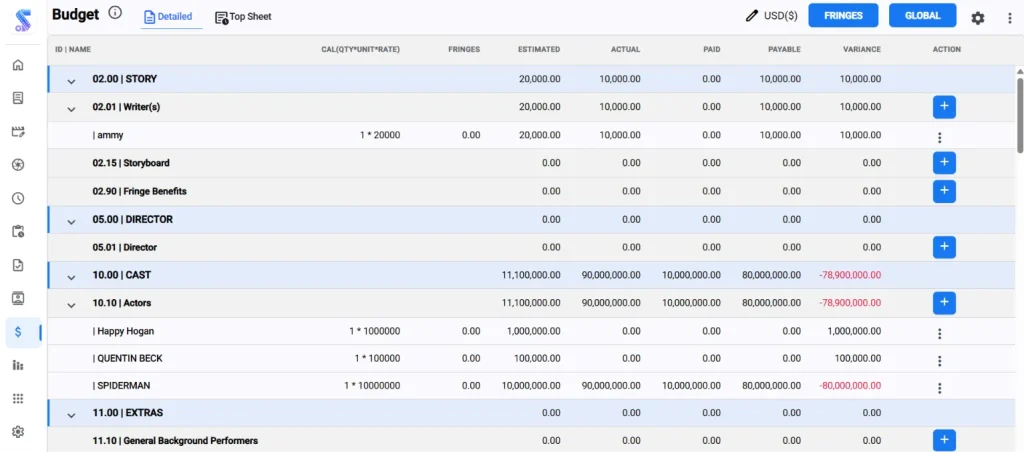
Many students enter film school thinking about ideas, visuals, and performances, but professional filmmakers also understand time, money, resources, and risk.
Institutes introduce budgeting and scheduling early rather than waiting for advanced producing classes, ensuring even simple short films teach important production reality lessons.
Students practice answering questions, such as:
How many locations does the script require?
Can the scene shoot during the day instead of at night?
How many actors and extras need placement?
What props, costumes, or vehicles remain essential?
How many pages can a crew realistically shoot in one day?
What happens if weather, availability, or equipment changes?
By balancing ambition with practicality, students become better creative decision-makers. Developing Film Institutes for Industry-Ready Skills guarantees that financial literacy functions as a core creative tool.
7. Create portfolio-focused assignments
A student’s portfolio often surpasses transcripts when applying for internships, freelance work, or entry-level roles, so film institutes help students build bodies of work reflecting creativity and professionalism.
Portfolio-focused training includes:
Short films
Scene studies
Commercial spec ads
Documentary exercises
Music video concepts
Screenplay samples
Storyboards
Shot lists
Production schedules
Editing reels
Behind-the-scenes process documents
The portfolio shows finished videos alongside student thinking, planning, collaboration, and problem-solving methods.
This benefits students pursuing different career paths because a screenwriter needs writing samples while a cinematographer needs visual work, a producer needs organized documents, an editor needs scene cuts, and a director needs performance control. The integration of Film Institutes for Industry-Ready Skills directly enhances portfolio quality and breadth.
8. Bring professionals into the learning process
Guest lectures help, but professional involvement goes further when institutes invite working filmmakers to review scripts, evaluate cuts, lead workshops, mentor teams, or simulate production meetings.
Students benefit from hearing how professionals think under pressure because industry feedback remains direct, practical, and tied to deadlines.
Useful professional engagement formats include:
Script review panels
Cinematography masterclasses
Editing feedback sessions
Producer-led budgeting labs
Assistant director scheduling exercises
Sound design demonstrations
Festival strategy discussions
Career Q&A sessions
Mock pitch meetings
These experiences help students understand expectations before they enter the industry. Academic frameworks focused on Film Institutes for Industry-Ready Skills make these industry connections seamless.
9. Encourage inclusive and accessible storytelling
Modern film education supports diverse voices, backgrounds, abilities, and perspectives, encouraging students to tell stories from their experiences while collaborating across differences.
Institutes support inclusive storytelling through:
Creating accessible classroom workflows
Encouraging diverse writing teams
Discussing representation thoughtfully
Screening films from multiple regions and traditions
Supporting disabled creators
Offering flexible production roles
Making tools and resources easier to access
The referenced Studiovity education program positions its education offering for students, teachers, institutes, registered workshops, and disable creators, emphasizing accessible production tools.
Inclusive training improves classroom environments and prepares students for an industry where collaboration spans cultures, languages, formats, and platforms. Promoting Film Institutes for Industry-Ready Skills ensures that all creators are equipped for success.
10. Simulate real deadlines and production pressure
Students need safe learning environments, but they also need practice working under realistic constraints, so film institutes set structured deadlines that mirror professional expectations.
For example:
Script draft due by a specific date
Shot list approved before production
Final schedule locked before shoot day
Call sheet shared before filming
Rough cut delivered for review
Final cut submitted after revisions
This teaches students that creativity partners with responsibility because missing deadlines affects entire teams rather than single individuals.
The key makes pressure educational instead of punitive, teaching students to plan ahead, communicate delays, adjust scope, and protect quality while meeting commitments. Curricula emphasizing Film Institutes for Industry-Ready Skills naturally incorporate these professional time management standards.
11. Teach students how to pitch and present their work
Industry readiness includes communication, meaning students must explain ideas clearly when pitching films, applying for grants, interviewing for crew roles, or presenting portfolios.
Institutes train this through:
Logline presentations
Short verbal pitches
Pitch deck assignments
Director’s statements
Lookbook creation
Project proposal writing
Mock investor or producer meetings
Festival submission summaries
A good pitch teaches students to identify project cores by answering who the story concerns, why it matters, what makes it compelling, and who forms the audience.
These skills help students transition from classroom projects to real-world opportunities. Mastering Film Institutes for Industry-Ready Skills gives graduates a distinct communicative edge.
12. Support career planning before graduation
Industry preparation avoids starting in final semesters, so film institutes introduce career planning throughout the entire student journey.
This guidance includes:
Internships
Assistant roles
Freelance basics
Set etiquette
Networking
Film festival submissions
Resume and portfolio building
Copyright basics
Collaboration agreements
Professional communication
Personal branding
Students understand that the film industry features multiple entry points because some join production houses while others freelance, create independent films, work in advertising, enter digital content, or specialize in writing, editing, cinematography, sound, or production management.
Clearer understanding of options empowers students to take confident next steps.
Final takeaway
The best film institutes avoid merely teaching filmmaking mechanics, helping students instead think, plan, communicate, and collaborate like working filmmakers.
By combining screenwriting courses, hands-on filmmaking workshops, production planning, professional tools, portfolio development, and career guidance, institutes graduate individuals who command both creativity and industry-ready pacing.
For educators and institutions looking to modernize classroom production workflows, exploring education-focused platforms like Studiovity remains a practical next step for connecting student learning with real-world pre-production habits.