
A banner day—high page count, many cast, stacked sets—looks efficient on paper and brutal on the floor if nobody had time to prep. Pacing those days on the stripboard is an AD skill: you still hit the pages, but you give costume, set dressing, and camera a runway the day before. Heavy days without breathing room become meal penalties, rushed setups, and unfinished coverage that forces a pickup later.
Spot the banner day before you lock the week
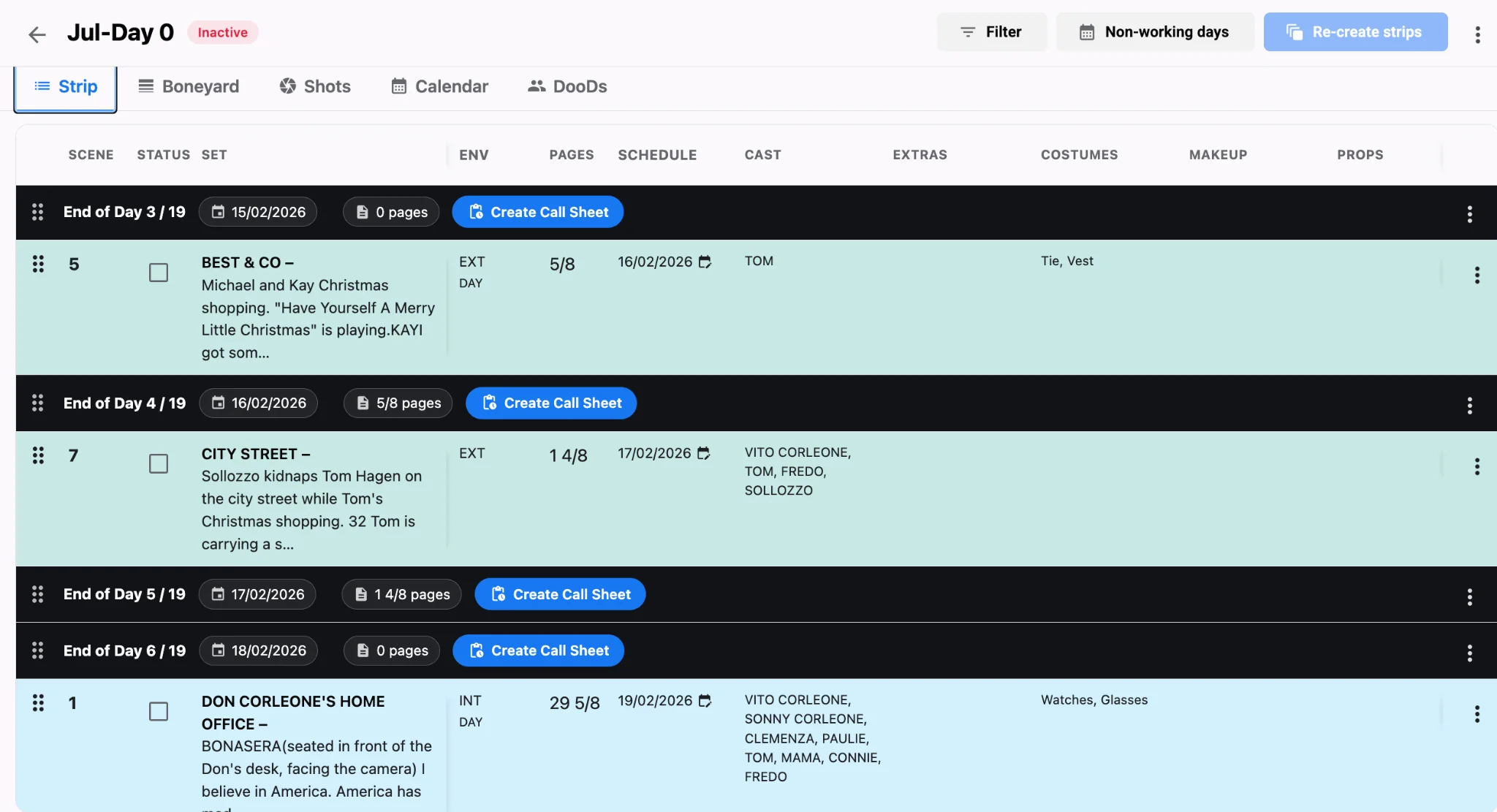
Sum pages in eighths across each daybreak and flag anything that jumps well above your show average. In Studiovity’s film scheduling software, a stripboard that shows five-plus pages with a full cast grid is a banner candidate—treat it as a production event, not a normal Tuesday. If you need a refresher on eighths and strip density, read how to read a stripboard.
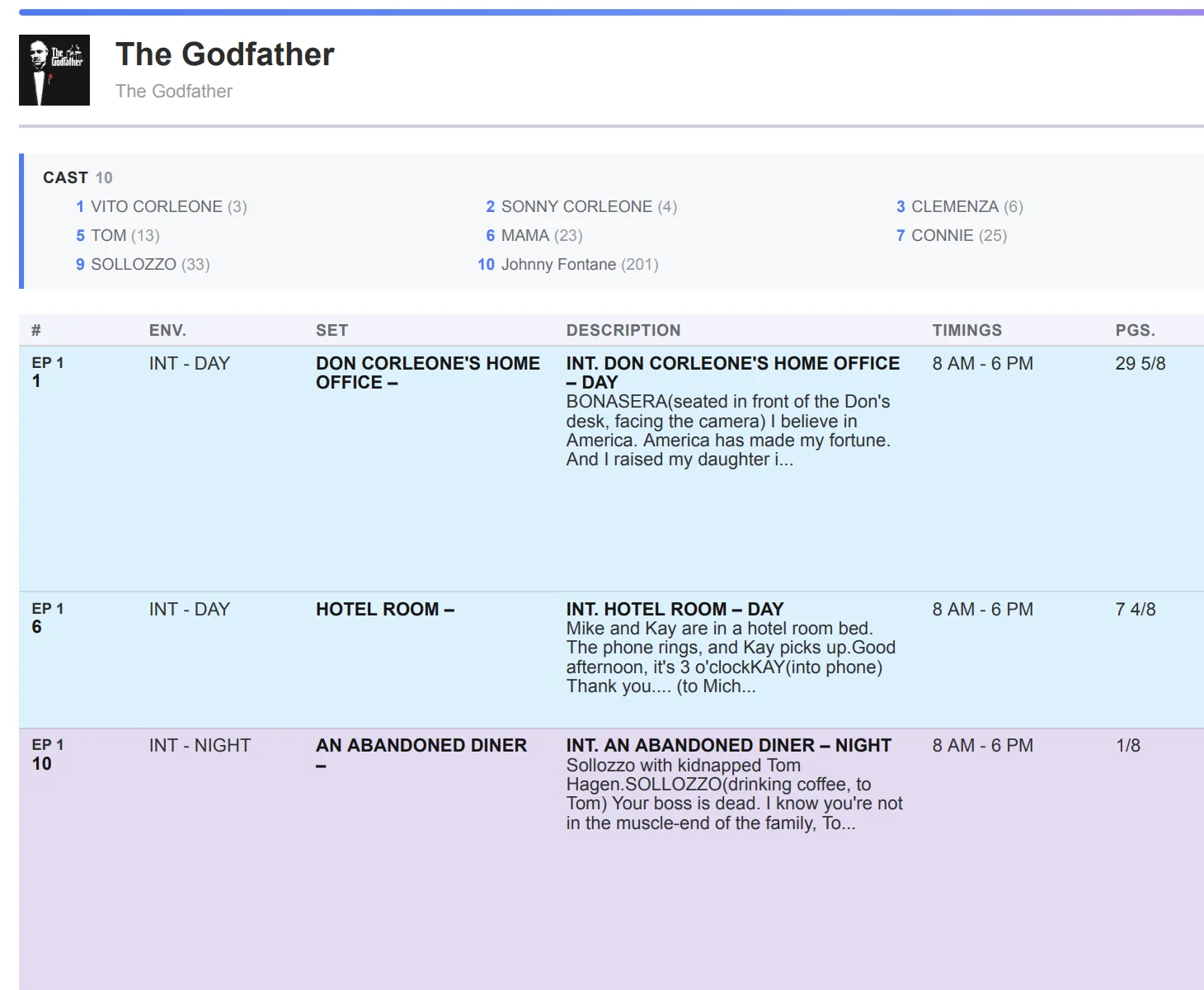
Give departments a prep neighbor, not a surprise
Place a lighter day or a company-move buffer before the banner daybreak whenever the story allows. Costume fittings, set turns, and specialty gear pulls need real calendar space—not a Slack ping at 10 p.m. the night before camera. Use non-working days and travel marks so the banner day does not collide with cast arrivals that steal morning prep. Modern boards beat paper shuffling when the week flexes this hard—see traditional stripboards vs Studiovity.
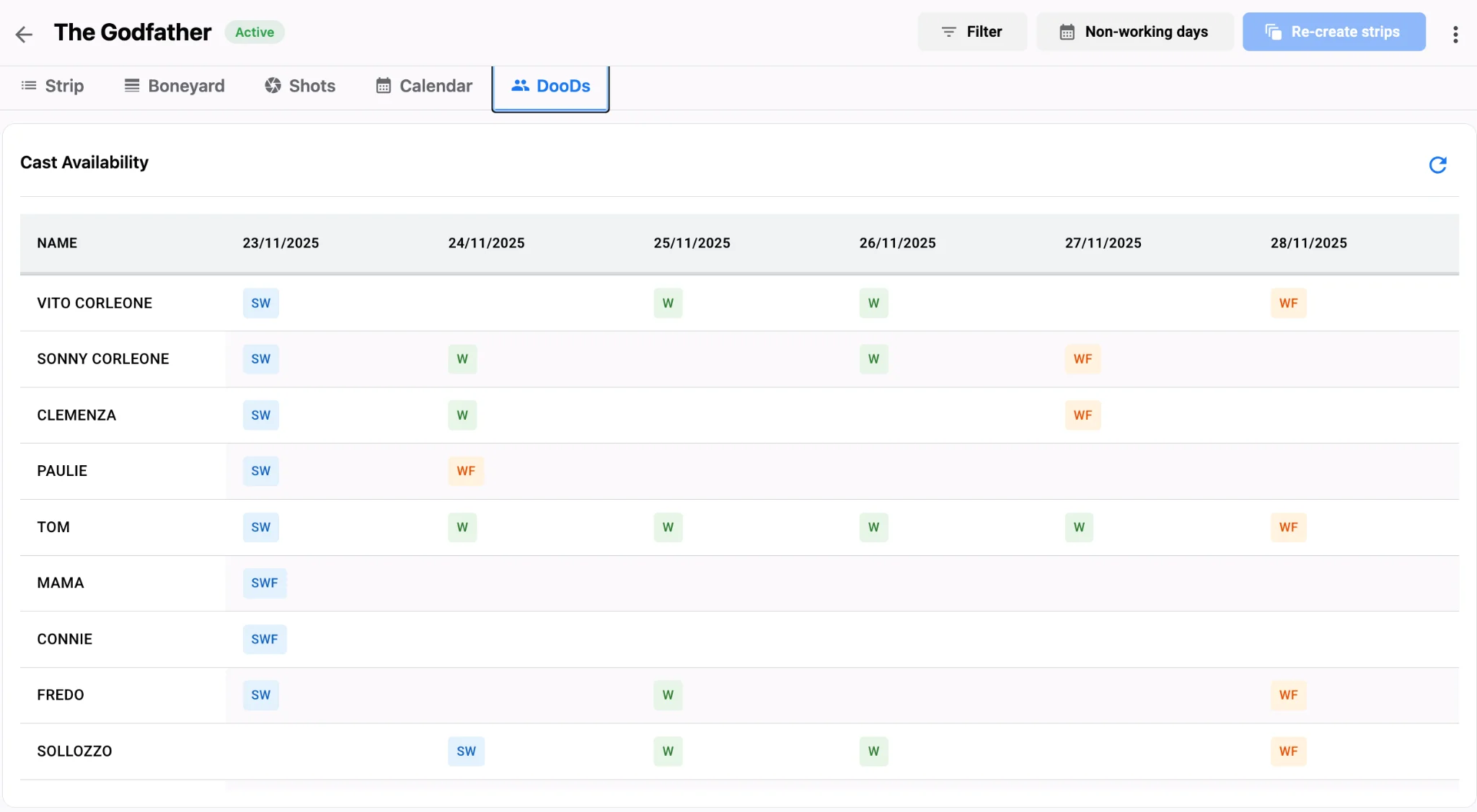
Protect cast energy on high-page blocks
Banner days often load every principal into one address. Check the DOOD before you celebrate the page count: if three leads work SW across a six-page day after a night exterior, you have stacked risk. Balance with cast availability and travel logic so the heavy day is hard on pages, not reckless on people.
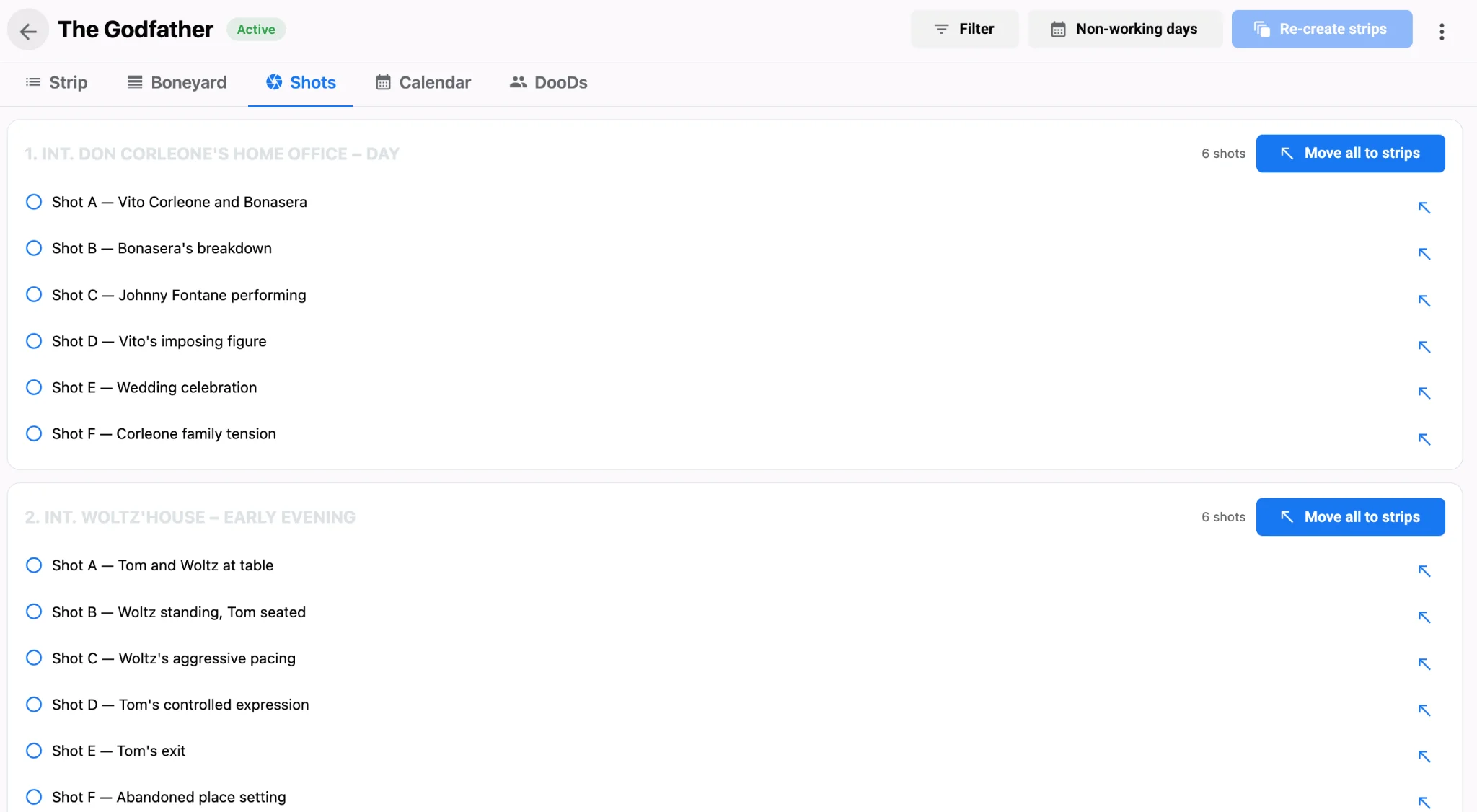
Call sheets that warn, not just list scenes
On banner days the call sheet is a pacing tool. Generate it from the locked daybreak with call sheet software so staggered call times, scene order, and department notes reflect the load. A generic sheet that looks like a three-page day will get people called too late for a six-page stack.
Banner-day checklist
- Flag daybreaks well above your average pages-in-eighths before the production meeting.
- Put a prep-friendly neighbor day before the banner strip whenever story allows.
- Re-check DOOD and shot counts—pages alone understate camera load.
- Export department PDFs from the shooting schedule the day before, not at wrap.
- Issue call sheets with staggered times that match the heavy stack.
Banner days win schedules when they are paced, not when they are packed in secret. Build them openly in AI film scheduling, give departments a runway, and let the call sheet announce the climb before anyone hits the set.