
You’ve likely seen their names scroll by a thousand times in the end credits, assuming they were just lucky interns fetching coffee. In reality, the Assistant Director title is a massive misnomer. While the Director dreams up the cinematic vision, the ADs do the complex logistical math required to actually make it happen. Understanding First AD vs Second AD responsibilities helps explain how large film productions stay organized under pressure.
Think of a movie set like a massive naval ship where a clear breakdown of film crew hierarchy is essential for survival. The Director acts as the Captain who steers the story, but the 1st AD serves as the Executive Officer running the entire daily operation. Grasping this fundamental divide between pure creative direction and strict logistical management reveals how a film actually gets made.
In practice, veteran filmmakers know these departments are the true engines of any major movie. So, what does a first assistant director do on set exactly? They transform a chaotic gathering of hundreds of crew members into a synchronized, highly efficient machine.
The First AD: How the 'General' Controls the Chaos of 200 People and a 20-Minute Sunset
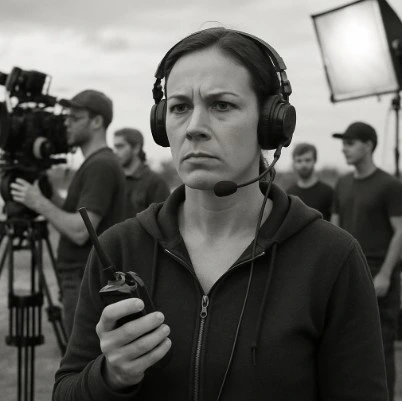
Imagine trying to coordinate 200 people, three explosions, and a sunset that only lasts 20 minutes—all while your lead actor is still in their trailer. This high-stakes chaos is exactly where the First Assistant Director thrives. While the Director focuses on the creative vision, the 1st AD commands “The Set” (the physical filming area), acting as the ultimate field general. They willingly play the “Bad Cop” so the Director doesn’t have to, enforcing discipline and keeping the massive crew moving toward a single goal.
Mastering the essential skills for film assistant directors means juggling several massive plates at once. When calling a set to order, their voice cuts through the noise to execute four core responsibilities:
- Safety management: Acting as the ultimate authority to prevent accidents during stunts.
- Set discipline: Ensuring complete quiet and focus when cameras are rolling.
- Schedule enforcement: Watching the clock to ensure the day’s filming goals are actually met.
- Crew coordination: Directing hundreds of extras, technicians, and actors like a master traffic cop.
When things inevitably go wrong, this leader is the one responsible for managing film set schedule delays. If a thunderstorm pauses a massive superhero battle, the 1st AD instantly calculates how to reorganize the day to avoid wasting hundreds of thousands of dollars. Crucially, they are the primary enforcer of set safety protocols, and assistant director duties require them to shut down any shot if it puts a single crew member at risk.
Keeping the physical set running smoothly requires a loud voice and total authority, but the 1st AD doesn’t work alone. They rely on an entire department operating quietly in the background to feed them the right actors at the exact right time. This coordination highlights the importance of First AD vs Second AD collaboration on professional productions.
The Second AD: Why the 'Chief of Staff' is the Real Brain Behind the Daily Call Sheet
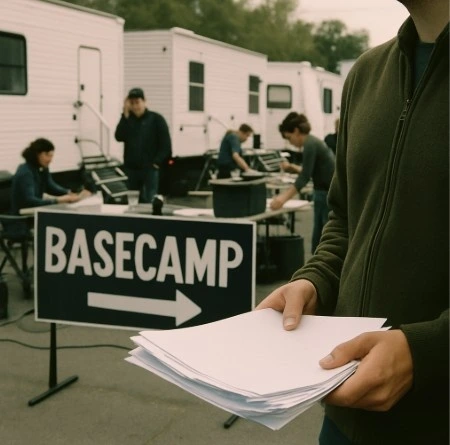
While the 1st AD commands the physical set, a film’s operational heart beats a short distance away. This staging area is known as “Basecamp,” a temporary village of trailers where actors prepare. Here, the Second Assistant Director acts as the Chief of Staff, meticulously coordinating talent and basecamp logistics. If a star is scheduled to shoot at noon, the 2nd AD ensures they are in costume and walking to the cameras at 11:55 AM sharp.
Keeping hundreds of crew members synchronized requires a highly detailed master document. If you have ever wondered who creates the daily call sheet, look no further than the 2nd AD. Think of this critical paperwork as a combined GPS and daily planner. Handed out each evening, a standard call sheet includes:
- Weather forecasts to anticipate shooting delays.
- Crew call times dictating when each department arrives.
- Scene breakdowns showing which script pages are being filmed.
- The nearest hospital in case of an emergency.
Success in this role demands extreme organization. Anyone researching how to become a second assistant director quickly learns the job is about mastering logistics, not Hollywood glamour. By shielding the 1st AD from backstage distractions, the 2nd AD ensures the set never stops moving. The ongoing balance of First AD vs Second AD duties keeps productions running smoothly from morning call times to wrap.
1st AD vs. Production Manager: Who Actually Owns the Set Schedule?
Think of the film set as a major corporation: the First Assistant Director is the Chief Operating Officer, and the Production Manager (PM) is the Chief Financial Officer. The core 1st AD vs production manager differences come down to time versus money. The 1st AD dictates the minute-by-minute execution on set, pushing the daily schedule forward so the Director can focus on acting and camera angles. Conversely, the PM sits in an office overseeing the entire budget, ensuring those fast-paced daily choices do not bankrupt the movie.
Sudden rainstorms that halt a massive superhero battle instantly trigger a high-stakes negotiation between these two departments. Managing film set schedule delays requires both leaders to compromise under extreme pressure. The 1st AD knows the production needs three extra hours to finish the scene, which means paying hundreds of crew members overtime. The PM calculates that financial blow and negotiates with the 1st AD to figure out what other upcoming shots can be sacrificed or delayed to offset the cost.
Resolving these inevitable clashes quickly showcases the real benefits of efficient movie set management. The PM holds the purse strings, but the 1st AD controls the battlefield tactics, uniting to shield the Director from logistical stress. Understanding First AD vs Second AD workflows also helps filmmakers understand how production departments stay connected during complex shoots.
Beyond the Megaphone: Mastering the Stripboard and Logistics Tracking
Organizing a multi-million-dollar movie requires a visual puzzle board. Before software took over, scheduling meant sliding colored strips of cardboard around a massive chart to strategically group similar scenes together. Today, knowing how to create a film production stripboard remains the ultimate secret to efficient shooting. Every strip represents a single scene and tracks five essential elements:
- Scene number
- Characters involved
- Day or night status
- Location
- Page count
When a schedule dictates a bustling coffee shop scene requiring fifty extras, the logistics become intensely complicated. This is where the hierarchy expands, highlighting the critical 2nd AD vs 2nd 2nd AD roles. While the main 2nd AD stays in the production office generating tomorrow’s paperwork, the “Second Second” AD acts as the air traffic controller for the crowds. They provide the definitive guide to managing background actors, ensuring every extra is fully dressed, through makeup, and standing precisely where needed before the Director ever calls for action.
Flawless coordination behind the scenes translates directly to cinematic magic. Because the 2nd 2nd AD handles overwhelming crowd logistics, the 1st AD can focus entirely on executing the stripboard’s timeline, keeping the Director safely insulated from the chaos. Discussions around First AD vs Second AD responsibilities often overlook how much teamwork exists across the entire AD department.
From Background Actors to the DGA: How to Navigate the Assistant Director Career Path
Nobody simply walks onto a movie set and starts commanding actors. The journey almost always begins as a Set Production Assistant (PA)—the entry-level crew members who block traffic, distribute schedules, and fetch coffee. Surviving this gritty, boots-on-the-ground phase is the critical first step in learning how to become a second assistant director.
Transitioning from scrappy independent shoots to massive Hollywood blockbusters requires joining an exclusive club. Ambitious PAs often target the intensely competitive Directors Guild of America training program. This formal apprenticeship acts as a golden ticket, bridging the gap between unregulated, non-union gigs and prestigious union work by legally certifying candidates in complex safety protocols and labor regulations.
Moving up this cinematic ladder demands more than knowing where the camera goes. The essential skills for film assistant directors focus entirely on logistics and human psychology:
- Extreme punctuality
- Mastery of ‘walkie-talkie’ lingo
- High emotional intelligence
- Spreadsheet proficiency
Mastering this unique blend of talents fundamentally changes how you experience movies. Learning the realities of First AD vs Second AD career paths also gives aspiring filmmakers a clearer view of production leadership roles.
Watching the Credits Differently: Your New Roadmap to Film Production Success
You now realize that while a director provides the creative heartbeat of a movie, its actual survival rests with the Assistant Directors. The First AD acts as the tactical general commanding the set, keeping everyone safe and the clock ticking. Meanwhile, the Second AD operates as the chief of staff behind the scenes, flawlessly aligning daily logistics. This symbiotic partnership unlocks the vital benefits of efficient movie set management, shielding the director from chaos so they can focus entirely on capturing great performances.
The next time you visit a theater, stay until the screen fades to black. Understanding First AD vs Second AD transforms those scrolling names from mere assistants into Hollywood’s unsung heroes. Scan the credits of your next favorite blockbuster to spot these logistical masterminds. You now know the true secret behind movie magic: a masterpiece is never just about pure creative vision, but the ultimate triumph of relentless, brilliant organization.
Streamline Film Production Management with Studiovity
Understanding the workflow behind First AD vs Second AD responsibilities reveals how important organization, scheduling, and communication are on a professional film set. From managing call sheets to coordinating shooting schedules and tracking production logistics, every department depends on precise planning to keep productions moving efficiently. Studiovity helps filmmakers simplify these complex tasks with powerful tools for screenwriting, AI script breakdowns, shot lists, scheduling, call sheets, budgeting, and team collaboration. Whether you are an independent creator or part of a large production crew, Studiovity gives your team a centralized platform to manage every stage of film production with greater speed and clarity.