Imagine a co-writer who memorized every movie ever made and works for free. Sounds ideal, right? There is just one catch: this partner has never felt a broken heart. According to Hollywood guilds, this is “generative AI”—a technology acting like an overachieving intern who understands the predictive math of words but entirely lacks lived human experience. In the debate around AI Scriptwriting vs Traditional Writing, filmmakers continue to question whether technology can truly replace emotional storytelling.
A screenplay is far more than spoken dialogue. In practice, a script serves as a technical blueprint for the crew, dictating camera focus, character action, and pacing. Throughout the discussion of AI Scriptwriting vs Traditional Writing, the central question remains whether a completely emotionless machine can successfully design this sturdy architectural foundation.
Demystifying these tools helps aspiring filmmakers and curious fans look past intimidating headlines. Moreover, examining where human soul and machine efficiency intersect reveals that while algorithms cannot replicate our personal memories, they are undeniably reshaping the blank page.
The Human Touch: Why Screenwriting is More Than Just Words on a Page
Before a camera ever rolls, traditional writing for the screen begins with a highly specific blueprint. Every scene opens with a location marker called a “slugline”—such as “INT. COFFEE SHOP – DAY”—which tells the film crew exactly where and when the action happens.
Storytellers then rely on specific writing techniques to pull viewers into the narrative. For example, a movie truly kicks off with an “inciting incident,” a sudden event like a young hero finding a hidden distress message that forces them out of their comfort zone. However, the real magic lives beneath the spoken dialogue through “subtext.” This happens when characters argue fiercely about washing the dishes, but the audience clearly understands they are actually fighting about a failing marriage.
Software can easily format these pages, but capturing unspoken pain highlights the massive gap in AI vs human screenwriters emotional depth. Algorithms understand the underlying math of language, yet they have never experienced a broken heart or the weight of a kept secret. As a result, AI Scriptwriting vs Traditional Writing becomes a debate about emotional truth rather than formatting efficiency.
So, what happens when a machine tries to replicate human vulnerability anyway? It is time to meet your new co-writer: how generative AI “guesses” your next plot twist.
Meet Your New Co-Writer: How Generative AI 'Guesses' Your Next Plot Twist
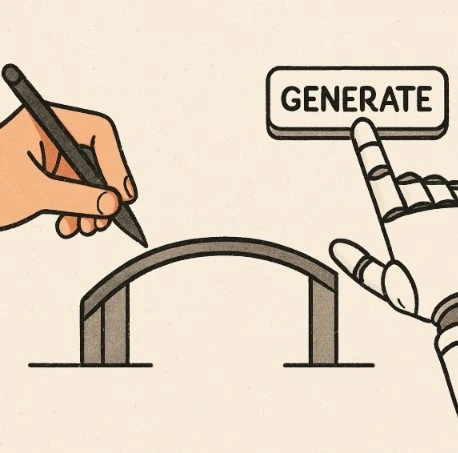
Think about your smartphone’s predictive text, but instead of guessing the next word, it guesses the next scene. This is the core of AI storytelling. By scanning millions of existing scripts, the system relies on mathematical probability rather than imagination to predict which plot twist statistically belongs next.
Recognizing these deep narrative patterns makes generative AI for plot outlining highly effective for familiar blockbusters. Because the software has analyzed thousands of heroic adventures like Star Wars, the machine knows exactly when a wise mentor should appear. It doesn’t understand why the mentor is important, but it effortlessly assembles these recognizable movie tropes into a properly structured sequence.
This approach means natural language processing in cinematic storytelling is ultimately advanced guesswork, not true creative expression. Even so, having a tool that instantly maps out the structural bones of a traditional tale completely shifts the writer’s starting line. Consequently, AI Scriptwriting vs Traditional Writing is no longer about speed alone, but about how creators use technology to support originality.
Instead of struggling to begin, creators are suddenly escaping the blank page: using AI to build stronger story foundations.
Escaping the Blank Page: Using AI to Build Stronger Story Foundations
Staring at a blinking cursor is often the most terrifying part of filmmaking, making overcoming writer’s block with AI a valuable tactic for today’s creators. Because movies rely on the familiar Three-Act Structure of setup, conflict, and resolution, writers first organize their ideas into a “beat sheet.” Think of this as a story blueprint detailing major plot events—like the moment a hero accepts their quest—before a single line of dialogue is actually written.
To build this framework, you use creative prompting, which is much like giving instructions to a fast, literal-minded intern. When using generative AI for plot outlining, you guide the software with specific constraints rather than vague requests. For example, you might type:
- “Suggest five names for a sarcastic space smuggler.”
- “List three unique locations for a romantic meet-cute.”
- “Provide a surprising plot twist for a detective who fears the dark.”
- “Create a 15-point beat sheet for a family road trip comedy.”
This rapid brainstorming ensures structural consistency in AI-generated scripts. In addition, by letting the computer handle the tedious mathematical work of plotting a timeline, the human creator gets a sturdy, blank-page-free foundation to build upon.
Yet, a flawless structural outline doesn’t automatically equal a compelling movie. While the system easily calculates where a hero should stand, it cannot actually feel their emotions—leading us to the heart of the machine, and why artificial intelligence still deeply struggles with authentic character voices.
The Heart and the Machine: Why AI Struggles with Authentic Character Voices
Many wonder: can AI write a complete screenplay from start to finish? While software easily generates ninety formatted pages, the characters usually sound like customer service representatives. This awkwardness creates the “Uncanny Valley of Dialogue”—speech that looks structurally correct but feels eerily artificial. When comparing AI vs human screenwriters emotional depth, the machine’s fatal flaw is relying on predictable math over genuine struggle.
Capturing how real people speak requires mastering subtext, the unspoken tension hidden beneath the actual words. A human draws upon messy lived experiences, like a childhood heartbreak or a bitter argument, to forge an authentic voice. Meanwhile, because a computer merely guesses the most probable next word based on thousands of older movies, it completely misses these psychological layers. It delivers generic clichés rather than memorable, specific wit.
Fixing this sterile text means treating the machine’s output as a disposable first draft. Therefore, by actively refining AI dialogue for authentic character voice, creators inject their own emotional truth into the scene. In many ways, the limitations highlighted in AI Scriptwriting vs Traditional Writing prove that emotional nuance still belongs to human storytellers.
Yet, as writers increasingly blend their personal soul with algorithmic assistance, a complicated legal reality emerges. If a computer generates the words and a human provides the heart, who legally owns the final product?
Who Owns the Script? Navigating AI Copyright and the New WGA Rules
The answer to who owns a hybrid script rests on a strict federal guideline known as the Human Authorship Requirement. According to current AI-generated scripts copyright law, a machine cannot legally hold a copyright because it fundamentally lacks human creativity. If a computer writes the scene entirely on its own, nobody truly owns it, making that generated text public property immediately.
Hollywood’s recent labor strikes tackled this exact ownership crisis head-on. Under the newly established WGA rules on artificial intelligence, studios cannot force writers to use generative software, and machines cannot ever receive official writing credit. This historic agreement protects the future of professional screenwriting in the AI era by firmly classifying these programs as basic tools—like a highly advanced typewriter—rather than actual co-writers.
Relying too heavily on a chatbot therefore carries a massive financial risk: anyone could legally steal a predominantly machine-authored movie. Because of this, AI Scriptwriting vs Traditional Writing also becomes a legal and ownership discussion, not just a creative one.
To protect your ownership, you must use the technology to assist your vision rather than replace it. Discovering how to safely balance this control requires moving from brainstorm to blueprint: building a hybrid scriptwriting workflow.
From Brainstorm to Blueprint: Building a Hybrid Scriptwriting Workflow
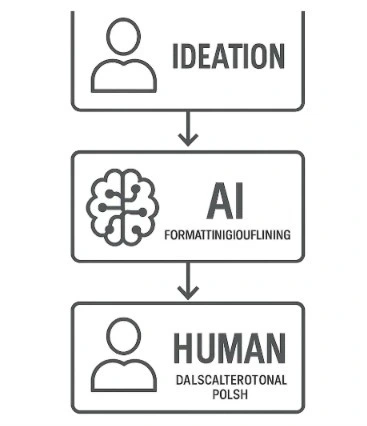
Staring at a blank page is a writer’s biggest nightmare. To beat this block, creators are integrating AI into traditional scriptwriting workflow models. Think of this as a digital assembly line where you act as the visionary. Instead of letting the machine invent the story, you use automated screenplay formatting tools to fix tedious margins and spacing, freeing your mind to focus entirely on human emotion.
Getting objective feedback—known in Hollywood as “coverage”—is your next crucial hurdle. Learning how to use AI for script coverage lets you instantly spot glaring plot holes before sharing your work. The software acts like a highly literal-minded intern, quickly warning you if your main character’s choices suddenly stop making logical sense.
To safely maintain creative ownership, build your project using this five-step hybrid workflow:
- Idea: You brainstorm the core movie concept.
- Outline: AI organizes your scattered thoughts into a structured blueprint.
- Drafting: You manually write the actual scenes.
- Review: AI acts as a beta reader to scan for structural gaps.
- Polish: You refine the final dialogue to add genuine soul.
This balanced approach demonstrates why AI Scriptwriting vs Traditional Writing should not be viewed as a battle, but as a collaborative creative process.
The Indie Advantage: How AI Tools Level the Playing Field Without Breaking the Bank
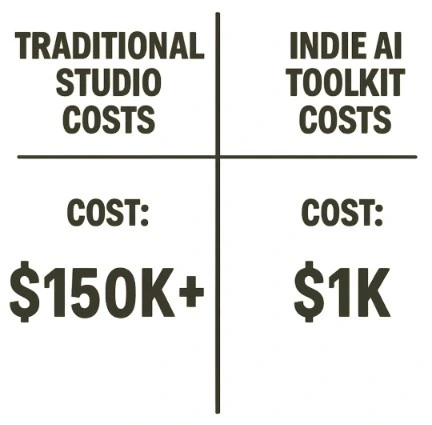
Breaking into Hollywood used to require an expensive toolkit. Writers spent hundreds on specialized software just to get their “sluglines”—the bolded scene headings—perfectly aligned. When comparing AI Scriptwriting vs Traditional Writing, the biggest initial difference is simply the price tag.
A new wave of technology has drastically lowered the cost of AI scriptwriting software for indie filmmakers.
Instead of buying premium programs, beginners can use affordable AI assistants to handle industry-standard formatting automatically. The software instantly organizes your text to look exactly like a professional studio blueprint.
Furthermore, democratizing these tools means anyone with a great idea can write a movie without going broke. Now that financial gates are open, your focus can shift entirely to perfecting your plot.
The Final Edit: Your Path to Mastering the Future of Storytelling
You no longer have to view artificial intelligence as a mysterious threat to human creativity. Instead, treat it like a bicycle for the mind—a tool that accelerates your imagination to get you past the blank page faster. You remain the pilot, bringing the emotional soul that algorithms simply cannot replicate.
To test this partnership, spend fifteen minutes today using a chatbot to brainstorm alternate endings to a beloved movie. With a solid grasp of how these generative tools function, you can confidently guide the software. Each time you prompt the AI, you build confidence directing it.
The future of professional screenwriting in the AI era isn’t about computers replacing writers; it is about storytellers empowered by technology. Ultimately, AI Scriptwriting vs Traditional Writing reveals that the strongest stories emerge when human creativity and intelligent tools work together.
Why Studiovity Is Built for the Future of Screenwriting
As filmmakers continue exploring the balance between AI Scriptwriting vs Traditional Writing, having the right creative workflow matters more than ever. Studiovity helps writers combine human storytelling with AI-powered efficiency through screenplay writing, AI script breakdowns, shot listing, scheduling, call sheets, and production planning tools—all in one platform. Instead of replacing creativity, Studiovity streamlines the technical side of filmmaking so writers and directors can focus on authentic characters, emotional depth, and cinematic storytelling. Whether you are an indie filmmaker or a growing production team, Studiovity gives you the structure, speed, and collaboration tools needed to turn ideas into production-ready scripts.