
The Importance of Storyboarding in Film Production
Cinematic history is full of moments that feel spontaneous and chaotic, yet the most iconic scenes are usually masterpieces of calculation, not chance. Achieving that level of precision is only possible through storyboarding—using a visual roadmap to map out a “comic book version” of the movie before a single frame is ever shot.
Think of filmmaking like architecture. While a script provides the dream of the house, the storyboarding phase provides the blueprint, showing the crew exactly where the pipes go. By locking in these technical details during pre-production, studios avoid burning millions of dollars on a disorganized set. This approach allows directors to solve potential disasters with a pencil sketch in the office instead of an expensive reshoot on the soundstage.
Master the Frame Before the Camera Rolls: How Storyboards Guide Camera Angles and Shot Composition
Continuing the architectural metaphor, the storyboard serves as the blueprint that tells the crew exactly where to look. It’s not just about drawing characters; it is about composition—deciding what stays in the frame and what gets cut out to manipulate how the audience feels. When a director sketches a scene, they are locking in the camera angle before the set is even built, ensuring the crew knows whether to prepare a wide lens for an epic battle or a tight zoom for an emotional confession.
Beyond the camera itself, these drawings dictate blocking, a term filmmakers use to describe how actors move within a physical space. Without this plan, actors might wander out of focus or obstruct critical lighting setups. A professional storyboard panel acts as a single source of truth for the production team by comprising four essential components:
- The Subject: The main focal point, such as the hero or a hidden clue.
- Movement Arrows: Visual cues indicating where an actor walks or a vehicle travels.
- Camera Notes: Specific instructions like “Low Angle” to make a villain appear more imposing.
- Dialogue Snippets: Key lines from the script to anchor the image to the story beat.
Seeing these elements combined allows the creative team to “edit” the movie on paper, spotting visual inconsistencies before cameras ever roll. This preparation transforms abstract ideas into a concrete plan, ensuring the visual flow makes sense to the viewer’s brain. Once the creative vision is secured in black and white, the focus shifts to the practical reality of the budget, because fixing a mistake with an eraser is infinitely cheaper than fixing it with a full film crew waiting on the clock.
Why Every Sketch Saves $10,000: How Visual Planning Reduces Production Costs and On-Set Errors
Imagine standing on a film set with 200 crew members and highly paid actors all waiting for instructions. Every minute spent debating where to place the camera burns thousands of dollars in wages and equipment rentals. Just as a contractor would never build a house without a blueprint, producers rely on storyboards to ensure the production is structurally sound before the first brick is laid. This visual roadmap aligns the entire team, preventing the expensive chaos of “winging it” while the financial meter is running.
Natural elements like sunlight and pyrotechnics offer even less forgiveness than the budget. If a script calls for a car chase at “magic hour”—that fleeting window of soft light before sunset—the crew has only minutes to capture the moment. By using pre-visualization (Pre-viz), a digital evolution of storyboarding that animates rough 3D versions of scenes, directors can simulate the timing of the sun or the trajectory of an explosion weeks in advance. This preparation turns a high-pressure guess into a choreographed execution, ensuring the perfect shot is captured before the light fades.
Efficiency ultimately dictates whether a film looks like a blockbuster or a home movie. When logistics are solved on paper or computer screens first, the director is free to focus on actor performance rather than panic. This shift from scrambling to refining is the hallmark of professional cinema. Once the budget is secured through planning, the storyboard takes on its next critical role: translating the director’s abstract thoughts into a concrete language that the rest of the crew can understand.
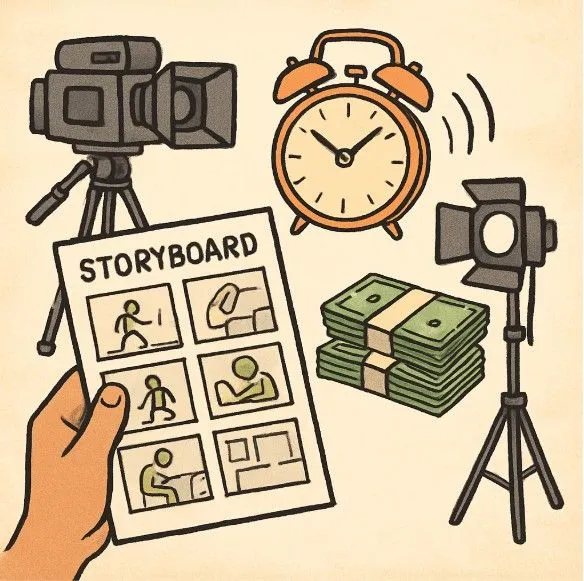
The Secret Language of Film Sets: How Directors and Cinematographers Use Visual Scripts to Sync a Crew of Hundreds
Filmmaking is essentially a high-stakes game of telephone, where a single misunderstood instruction can ruin a scene. To keep hundreds of crew members aligned, the Director collaborates with the Cinematographer—often called the Director of Photography (DP)—to turn the storyboard’s artistic sketches into a rigorous visual contract. This alignment is critical for maintaining “continuity,” the internal logic that ensures a character holding a coffee cup in their left hand during a wide shot doesn’t magically switch it to their right in the close-up. By locking these details down on paper, the team prevents the jarring visual errors that pull audiences out of the movie.
Once the creative vision is solidified, the team converts the storyboard into a technical “Shot List,” a daily checklist that guides the camera crew through the shoot:
- Analyze the Frame: The DP reviews the sketch to determine the necessary lens width and specific lighting requirements.
- Select the Gear: Deciding whether the camera movement requires a stable crane, a shaky handheld rig, or a drone.
- Reorder for Logistics: Grouping shots by camera angle rather than story order to avoid moving heavy equipment unnecessarily.
This process turns abstract drawings into a concrete schedule, though the tools for creating these plans are rapidly evolving beyond simple pencil and paper.
From Napkins to Digital Worlds: Comparing Traditional Hand-Drawing with Modern Animatics and Pre-Visualization
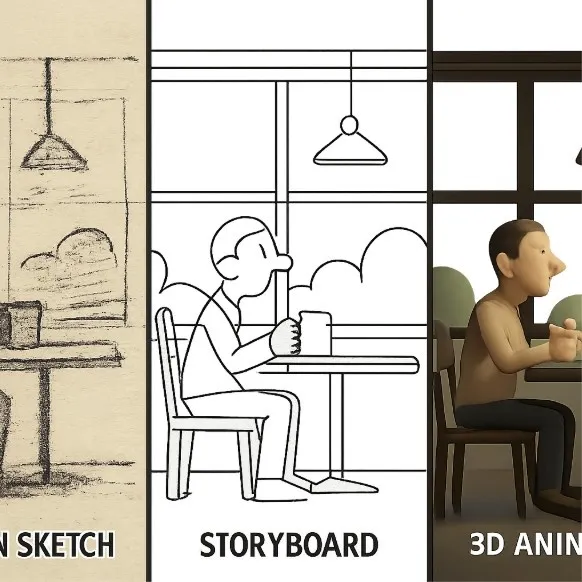
While technology has evolved, legendary directors like Ridley Scott still begin with simple “Ridleygrams”—rough sketches drawn on whatever paper is handy. This traditional method remains the fastest way to brainstorm ideas without getting bogged down in software menus, acting as a quick shorthand for the creative team. However, static drawings often fail to communicate the specific rhythm of a high-speed car chase or a complex fight scene, creating a need for digital tools that simulate the actual flow of time.
To solve this pacing puzzle, teams create “animatics,” which arrange storyboard panels into a video timeline complete with sound effects and temporary dialogue. For massive blockbusters, this evolves into “Pre-visualization” (Pre-viz)—essentially a rough 3D video game version of the movie created weeks in advance. This digital rehearsal allows the crew to spot expensive mistakes in a virtual world where crashing a digital helicopter costs nothing, ensuring that every second of real footage is purposeful—a precision you can actually spot if you know where to look.
Watch Movies Like an Insider: A 3-Step Plan to Spot Storyboarding’s Invisible Hand
You no longer see movies as happy accidents; you now recognize the rigorous blueprint behind the magic. Whether saving millions in production costs or maximizing the impact of visual storytelling on audience engagement, the importance of storyboarding in film production is undeniable. This tool transforms a script’s words into a universal language, ensuring the director’s vision survives the chaos of the set.
Tonight, apply this new lens to your favorite blockbuster. Look for complex action sequences and imagine the sketched panels that preceded them. You aren’t just watching movement; you are witnessing a logistical miracle where the storyboard provided the soul of the shot.
From Blueprint to Blockbuster: Bring Your Vision to Life with Studiovity
The difference between a chaotic set and a cinematic masterpiece isn’t just a big budget—it’s a better plan. As we’ve seen, the storyboarding is the heartbeat of pre-production, acting as the bridge between your imagination and the final cut. Whether you are sketching “Ridleygrams” on a napkin or building complex 3D animatics, the goal remains the same: total creative control.
Studiovity is built to be that “single source of truth” for modern filmmakers. Our platform streamlines the transition from script to screen, allowing you to generate professional shot lists, manage storyboards, and sync your entire crew with a single digital blueprint. Don’t just dream about your next project—structure it for success.
Ready to master your next frame? Explore Studiovity’s Storyboarding Tools and start building your cinematic legacy today.