
We see a massive explosion on screen, but that five-second cinematic thrill is actually the result of six months of permits, safety meetings, and meticulous logistical planning. This is exactly what The Ultimate Film Pre-Production Workflow Guide helps you understand from the very beginning. Audiences naturally marvel at the final cut, yet the true magic happens long before cameras ever roll. Making a movie requires operational literacy that goes far beyond simply writing dialogue or directing actors.
A professional set operates like an expensive machine with hundreds of moving parts, and without a clear production roadmap, that engine quickly crashes. What happens if a crew tries to film a stunt sequence on a public bridge without securing the proper city paperwork? According to seasoned industry veterans, police will shut down the production within an hour, burning tens of thousands of dollars in wasted crew time. Avoiding those nightmare scenarios is the primary purpose of a comprehensive film pre-production workflow, as outlined in The Ultimate Film Pre-Production Workflow Guide.
Think of the pre-production phase as the architectural blueprint for a towering skyscraper. Builders never pour a concrete foundation without exact measurements, and similarly, directors cannot construct their vision without a structured operational plan. This strategic groundwork ensures every single department knows exactly what they are building before anyone spends a dime.
Translating a brilliant concept from script to screen requires turning abstract art into a highly organized execution plan. This bird’s-eye view reveals exactly how professionals navigate logistical chaos to consistently deliver cinematic masterpieces using The Ultimate Film Pre-Production Workflow Guide principles.
The Script Breakdown: Turning a Story into a Giant Shopping List
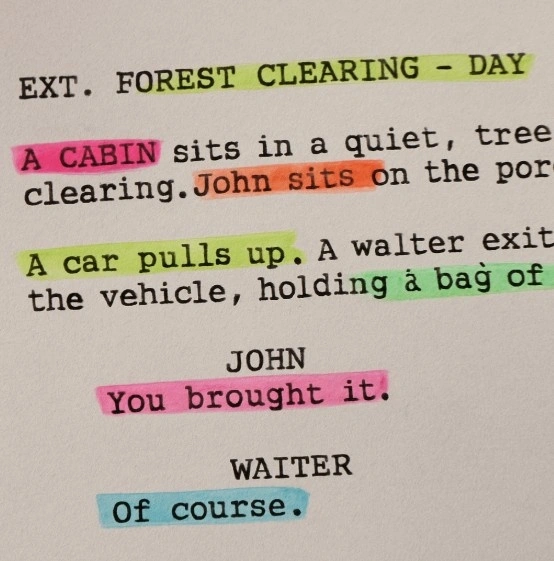
We know a screenplay holds the story, but reading it as a producer changes everything. Imagine looking at a recipe and realizing you need to buy every single ingredient, pot, and pan mentioned—that is the start of any film pre-production workflow. Professionals must translate creative prose into a massive, actionable shopping list before cameras roll.
Learning how to conduct a comprehensive script breakdown traditionally starts with colored markers. Producers read the text line-by-line, assigning specific colors to different categories so nothing gets missed, then transfer these highlights onto Breakdown Sheets—individual summaries for every scene detailing exactly what must be physically present. During this process, you are hunting for six core elements:
- Characters (Speaking roles)
- Props (Items actors touch)
- Costumes (Specific wardrobe)
- Special Effects (Rain, explosions)
- Vehicles (Cars on camera)
- Sound (Specific audio cues)
The biggest challenge of moving a project from script to screen is spotting hidden requirements not explicitly written in dialogue. If a scene takes place in a bustling diner, the breakdown must account for background talent—the silent extras drinking coffee who make the world feel real. Even a simple, one-word action line like “the dog barks” means you must hire a professional animal wrangler.
Every physical item and person identified here prevents a costly, chaotic disaster on filming day. Once this master blueprint is complete, you can safely begin grouping scenes to slash production costs.
Scheduling Your Success: How to Group Scenes and Slash Production Costs
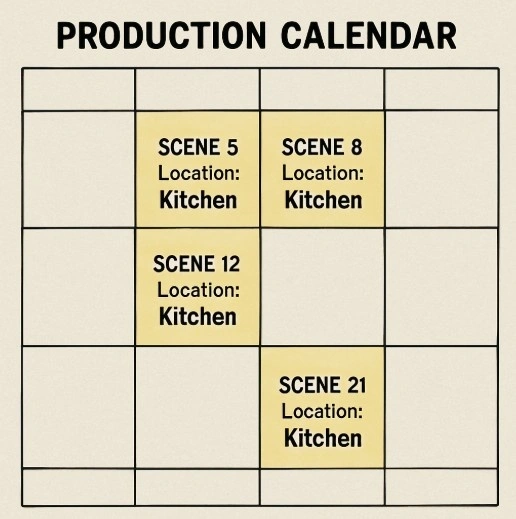
Audiences assume films are shot exactly as the story unfolds. The reality relies on a money-saving technique called “Block Shooting.” Instead of following the script chronologically, producers group every scene happening in one setting and film them together. If your hero eats breakfast in scene one and argues in that same kitchen in scene ninety, both are filmed on the exact same day.
Relocating cameras, heavy lighting equipment, and fifty crew members is not a quick process. Moving this circus to a new neighborhood is called a “Company Move,” and it burns through daily budgets rapidly. By grouping scenes intelligently, you are actively avoiding common film scheduling delays that occur when productions spend hours stuck in transit instead of actually recording footage.
To manage this puzzle, professionals rely on a specialized chart known as a “Day Out of Days” (DOOD). This document tracks actor availability across the shoot, ensuring you never pay a star for weeks of waiting in a hotel between their scenes. Whether a producer is reading a Movie Magic Scheduling vs StudioBinder review to pick their software, their ultimate goal remains plotting an airtight production timeline.
The golden rule of scheduling is simple: never move the crew unless absolutely necessary. Once your script is strategically grouped into manageable chunks, you must find the actual physical spaces to bring those scenes to life and secure locations without getting shut down.
The Hunt for the Perfect Set: Securing Locations Without Getting Shut Down
Finding a picturesque diner for your romantic scene feels victorious, but a pretty backdrop is only a fraction of the job. A director’s artistic vision must survive a logistical reality check called a “Tech Scout.” This involves bringing department heads to the space to assess if it can physically support the demands of a high-functioning film set.
To avoid disaster, professionals execute rigorous technical scout procedures for camera and lighting. This evaluation looks past aesthetics to create a practical survival plan for the crew. Your baseline ‘Technical Scout’ Checklist must include:
- Adequate power outlets to prevent blowing the building’s circuits.
- Low ambient noise levels to avoid “sound killers” like active flight paths.
- Secure parking for 50 people and their massive gear trucks.
Working bathroom access for the entire team.
Once a space passes the physical test, you must lock down the legal rights. Following proper steps for securing film location permits prevents local authorities from shutting down your set mid-scene. Cities require a Certificate of Insurance (COI)—a document proving you can cover accidental damages—before granting permission. Securing these environments is a vital milestone in the film pre-production workflow, providing a solid canvas for your story. With the real estate locked, you must map out exactly where to point the lens and storyboard every frame.
Drawing the Movie: Using Cinematic Storyboards to Direct Every Frame
A script dictates what characters say, but it cannot show you what the camera sees. To successfully navigate the journey from script to screen, professionals sketch a comic-book version of the movie before a single frame is actually filmed. Utilizing cinematic storyboarding techniques for directors allows you to predict visual problems on paper before a crew of fifty is standing around costing you thousands of dollars an hour.
Transforming these sketches into a “Shot List“—a strict daily checklist of required camera setups—guarantees you capture “coverage.” In filmmaking, coverage simply means filming enough different angles to give your editor options in the cutting room. To ensure you translate abstract ideas into concrete visual instructions that also capture the impact of production design on visual storytelling, your plan must include these four essentials:
- Wide shot: Establishes the geography and scale of the room.
- Close-up: Captures the raw emotion in a character’s eyes.
- Over-the-shoulder: Anchors two people together during a conversation.
- Two-shot: Displays the physical dynamic between subjects in the same frame.
Having this roadmap ensures your cinematographer is never guessing where to point the lens. Your golden rule: never step onto a set without a visual plan. Yet, even the most brilliant blueprints remain lifeless without the right talent to inhabit them and experts to build them.
The Human Element: Casting the Right Faces and Hiring a Professional Crew
Brilliant visual blueprints mean nothing without the human engine required to execute them. Industry professionals divide this workforce into two tiers: “Above-the-Line” (ATL) and “Below-the-Line” (BTL). Think of ATL as the architects—directors and lead actors guiding the creative vision—while BTL represents the construction team of technical specialists physically building it.
Coordinating this army happens far from the glamour of a physical set. The roles and responsibilities in a film production office are crucial because this logistical hub acts as the movie’s brain. Here, coordinators manage daily schedules, gear rentals, and transportation so the creative team can focus solely on art.
Money dictates every single hiring decision you make. When building a professional film production budget, you are essentially defining the scale of your workforce, determining whether you can afford fifty specialized union technicians or a handful of versatile freelancers.
The ultimate challenge remains finding the right faces to inhabit your characters. Learning how to cast actors for low budget films often means holding local auditions and prioritizing raw talent over celebrity status. Your golden rule is that a great crew builds the world while great actors make us believe it—a fragile reality protected only by rigorous production paperwork, insurance, and call sheets.
The Paperwork of Production: Why Insurance and Call Sheets are Your Best Friends
Before a single camera rolls, you must protect the human engine you just built. Navigating the legal requirements for film production insurance is the invisible shield that keeps a single accident—like a dropped lens or a tripped technician—from bankrupting your movie. It is not just bureaucratic red tape; it is the ultimate safety net allowing creators to take bold risks without losing their shirts.
With the crew legally protected, you must ensure they have the exact tools required to build your cinematic world. Organizing a film equipment rental list prevents the nightmare of arriving at a breathtaking location only to realize someone forgot the batteries. This highly detailed inventory tracks everything from massive cinema cameras to humble extension cords, ensuring every piece of gear is picked up, utilized, and safely returned.
Turning that pile of rented gear and hired crew into a synchronized dance requires absolute clarity. Managing crew communication with daily call sheets is how professionals tell dozens of different people exactly where to park, what time to eat, and which scenes are filming on a given Tuesday. Think of the call sheet as a daily flight plan; without it, the production machine instantly crashes into costly chaos.
Keeping these lifelines accessible is paramount, leading to the modern choice of digital vs physical production binders. While paper is reliable, a cloud-based hub gives your entire team instant access to the must-have items in a digital production binder:
- The Script
- Daily Call Sheets
- Insurance Docs
- Equipment Rental Lists
- Emergency Contacts
With this crucial paperwork centralized and mastered, you are finally ready for the final checklist to launch a successful first day.
Your Pre-Production Launchpad: The Final Checklist for a Successful First Day
You no longer just see a finished movie; you see the invisible architecture that keeps the story standing. The heavy lifting of your film pre-production workflow is complete. Your blueprint is fully drawn, the budget foundation is poured, and it is time to transition your mindset from planning the structure to actually building it.
By turning a 90-page script into a strict production timeline, finding the right faces for your characters, and scouting locations that support your logistics, you have built a bulletproof safety net. You now have the tools to tackle your own projects, knowing that following a structured pre-production checklist for independent filmmakers—and especially applying The Ultimate Film Pre-Production Workflow Guide—separates chaotic disasters from smooth operations.
Before someone yells “Action” on set, the final 24 hours—often called “Day 0″—require one last push of practical preparation. Run through this ‘Night Before Day 1’ checklist to ensure your morning starts with momentum rather than panic:
- Charge Every Battery: Assume you will not have time to find a wall outlet on set.
- Distribute the Call Sheet: Verify every cast and crew member knows exactly when and where to arrive.
- Check the Weather: Have your rain gear or sunscreen staged and ready by the door.
- Prep the Safety Meeting: Outline the specific hazards of tomorrow’s location to brief your crew immediately.
Pro-Tip for the Director’s Chair: Embrace the fact that unexpected challenges will still happen on set, but your preparation ensures those hiccups won’t derail the entire movie. Remember the Golden Rule: Pre-production is the art of solving problems before they cost a dollar. Step onto your set with confidence, trust the blueprint you have built through The Ultimate Film Pre-Production Workflow Guide, and start making movie magic.
Why Studiovity is Your Ultimate Pre-Production Companion
Turning a complex workflow into a seamless execution is exactly where Studiovity stands out. While this guide breaks down every step from script to screen, Studiovity brings all those moving parts into one unified platform—helping you actually implement The Ultimate Film Pre-Production Workflow Guide without friction. From AI-powered script breakdowns and shot listing to scheduling, budgeting, and call sheet generation, it eliminates the need to juggle multiple tools or spreadsheets.
Instead of manually tracking every prop, location, and crew detail, you can automate your entire pre-production pipeline in minutes. Whether you’re an indie filmmaker or managing a large-scale production, Studiovity ensures your planning stays organized, your team stays aligned, and your shoot stays on schedule. If your goal is to move from chaos to clarity, Studiovity is the smartest way to bring your film to life.