
If you showed a film producer from 2016 the dashboard of Studiovity AI today, they’d think it was science fiction. We all see the red carpet and the explosions, but the real battle of filmmaking is won in a windowless room months before a camera even turns on. This critical planning phase, known as pre-production, has historically been a logistical nightmare of endless spreadsheets and messy highlighters, clearly showing how AI is transforming film pre-production in 2026.
What once demanded a team of assistants three weeks of manual labor now happens in the time it takes to brew a pot of coffee. According to contemporary studio metrics, the traditional process of reading a screenplay and manually finding every prop or actor takes hundreds of tedious hours. Now, automated script processing acts as instant digital highlighting, transforming the foundational DNA of a movie into actionable data without breaking a single sweat.
At the center of this revolution sits an essential platform that has become the modern industry standard. Whenever industry experts discuss how AI is transforming film pre-production in 2026, Studiovity AI consistently emerges as the tool veteran producers nod to in recognition. It operates like a GPS for filmmakers, finding the absolute fastest route to a finished schedule so directors avoid administrative traffic jams.
Artificial intelligence isn’t replacing the creative visionary sitting in the director’s chair. Instead, AI in film pre-production is eliminating the unsexy administrative burdens that traditionally cause burnout. By adopting these AI-integrated workflows, tomorrow’s storytellers are finally trading paperwork for pure creativity.
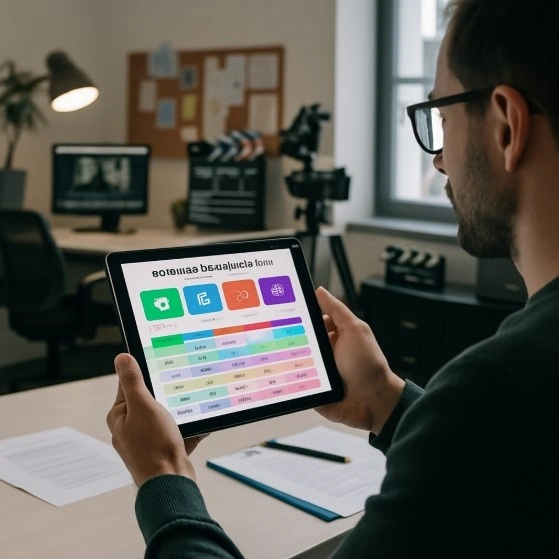
Beyond Highlighters and Post-its: How Studiovity AI Automates the Critical Script Breakdown
We all picture screenplay development as a purely creative process, with writers dreaming up brilliant dialogue and emotional character arcs. But once that text is locked, it transforms into a massive logistical blueprint. Previously, assistants spent weeks reading through pages with five different colored highlighters, manually circling every coffee cup, background extra, or specific costume piece.
Today, AI-driven script breakdown automation replaces that mountain of paper with instant precision. Utilizing core Studiovity AI features, producers simply upload a document and watch the software perform “digital highlighting.” The system scans the narrative and generates script metadata—the invisible logistical data attached to each scene—so humans do not have to scour the pages line by line.
This automated tagging process instantly recognizes and categorizes the physical requirements needed to actually film the movie. With perfect recall, Studiovity AI automatically tags:
- Characters/Cast
- Props
- Vehicles
- Wardrobe
- Special Effects
If a scene requires a specific antique pocket watch, the system flags it instantly. This eliminates the human error in prop tracking that traditionally caused expensive, hour-long delays on set while a crew searched for a missing item.
Escaping this administrative grind provides a massive advantage for the quality of the final film. By eliminating over 40 hours of manual labor per project, directors and producers can redirect their energy toward creative rehearsals and artistic choices. With every physical item perfectly accounted for, the production team is finally ready to tackle the complexities of production scheduling with machine learning.
Solving the 'Smart Jigsaw Puzzle' of Production Scheduling with Machine Learning
Because movies are almost never filmed in the order the story unfolds, organizing a shoot is like trying to build a house starting with the roof. A director might film the emotional finale on day one simply because that is the only time the rented mansion is available. In the past, matching actor availability, location permits, and equipment rentals required giant whiteboards covered in movable cardboard strips that took weeks to arrange.
Enter predictive scheduling, a breakthrough feature that turns this logistical headache into a seamless digital process. Instead of humans moving physical strips, Studiovity AI treats the entire shoot as a “Smart Jigsaw Puzzle.” It evaluates thousands of variables simultaneously, automatically finding the absolute best order to film each scene so that no time or money is wasted on set.
Handling rigid actor contracts, known in the industry as “stop dates,” suddenly becomes an effortless background process. If a lead star must leave the production by a specific Friday, the system instantly calculates the most efficient route through their remaining scenes using algorithmic pathing. This technology essentially acts like a GPS for the production team, finding the fastest way to completion and making automated scene scheduling for independent films as robust as massive studio operations.
What happens when unexpected disaster strikes, like a sudden thunderstorm ruining an outdoor set? Mastering the “three-click pivot” ensures efficient scheduling when these changes occur. Rather than canceling the day’s shoot and losing tens of thousands of dollars, the software instantly rearranges the schedule, generating a backup plan for indoor scenes that perfectly matches the currently available crew and equipment.
Shifting this administrative burden to machines fundamentally changes the speed of getting a movie made. By reducing pre-production timelines by up to twenty percent, creators spend less time staring at calendars and more time crafting memorable performances. This shift further proves how AI is transforming film pre-production in 2026.

Predict, Don't React: How Budgeting Software Prevents Cost Overruns Before the First Shot
Have you ever wondered why movies cost $200 million and still manage to run out of money? Historically, film accounting was purely reactive—producers knew they were over budget only after filming the expensive explosion. Today, leading predictive film budgeting software shows a massive shift toward financial foresight. Acting as a digital crystal ball, Studiovity AI evaluates scripts to catch potential cost overruns before a single camera even rolls.
This transformation relies on a breakthrough called Tag-to-Dollar automation. In the manual era, a team of assistants highlighted the word “Ferrari” in a script, copied it into a spreadsheet, called rental companies, and manually updated the master budget. Now, when the AI digitally highlights that same car during its initial breakdown, the system instantly links the text directly to real-world financial data, adjusting the entire projected cost of the film in milliseconds.
Catching these expenses early is crucial, especially during complex action sequences where unforeseen requirements cause hidden costs to multiply rapidly. To prevent this, Studiovity AI automatically connects the written screenplay to the bank account through three distinct mechanisms:
Real-time prop pricing that estimates current rental market rates.
Automated crew rate calculation based on required union hours.
Location fee forecasting for anticipated shooting days.
Beyond simple financial security, producers frequently ask whether AI can predict film box office success in pre-production. While algorithms cannot guarantee a blockbuster, redirecting tedious administrative hours into pure creative execution heavily tilts the odds in a filmmaker’s favor.
From Text to Frame: Using Generative AI for Cinematic Storyboarding in Minutes
Pitching a visual medium using only a stack of paper has always been a director’s biggest hurdle when seeking a studio greenlight. In the past, filmmakers spent thousands of dollars and waited weeks for sketch artists to draw early drafts of their vision. Today, that administrative and creative bottleneck has completely vanished.
This shift is powered by text-to-frame generation, a process where software reads the script and instantly creates a corresponding image. If the screenplay calls for a detective standing in a rain-soaked alley, Studiovity AI acts as a rapid digital concept artist. It translates those exact words into high-quality panels, allowing teams to visualize complex scenes instantly without hiring illustrators for preliminary drafts.
The real magic happens when directors start adjusting these images on the fly. Through iterative visualization—the process of tweaking text prompts to see immediate visual changes—a filmmaker can swap a sunny daytime shot for a moody, neon-lit night scene in seconds. Using Generative AI for cinematic storyboarding means creators can continuously refine camera angles and lighting styles effortlessly.

The Future of Global Sets: Streamlining Logistics and Remote Collaboration
Making a movie requires a small army, but this army is rarely in the same room. A director might be in London, the visual effects team in Tokyo, and the set builders in Atlanta. Historically, keeping everyone on the same page meant endless email chains and easily lost paperwork. Today, that chaos is replaced by a centralized hub: a single digital workspace where every global department connects instantly.
Virtual location scouting—the ability to explore and approve digital replicas of real-world shooting sites— means producers no longer need to fly teams across the globe just to look at a field. This shift clearly highlights how AI is transforming film pre-production in 2026 across global collaboration.
Balancing the Bot and the Brush: Navigating Ethical Considerations in Creative Planning
Whenever audiences hear about artificial intelligence in Hollywood, the immediate fear is a machine sitting in the director’s chair. However, navigating the ethical considerations of AI in creative film planning reveals a vital distinction: the industry’s goal is administrative augmentation, not creative replacement.
Algorithms make terrible artists but fantastic assistants. By letting software handle the spreadsheets, filmmakers protect the human magic that makes cinema great.
Your 2026 Production Roadmap: Building an AI-Integrated Workflow Without Losing the Art
The era of drowning in administrative spreadsheets is over. Today, AI in film pre-production transforms logistical nightmares into streamlined artistry. Think of it like a GPS for your movie: the best AI tools for film production management won’t drive the car—you are still the visionary behind the wheel—but they will instantly find the fastest route to your destination. This is exactly how AI is transforming film pre-production in 2026.
Implementing Studiovity AI into your process is intuitive and requires no technical background. You can establish your AI-integrated production in three straightforward steps:
- Upload your current script to Studiovity AI.
- Run an automated breakdown to generate meta-tags.
- Generate a predictive schedule to map out efficient shoot days.
Whether you are an independent creator or a studio executive, leveraging automation for administrative heavy lifting allows your team to redirect their full energy toward compelling storytelling and cinematic execution.
Why Studiovity AI Is the Future of Film Pre-Production
As filmmaking continues to evolve, the difference between projects that stay on track and those that spiral into chaos often comes down to the tools behind the scenes. Studiovity AI brings every critical part of pre-production—script breakdown, scheduling, budgeting, and storyboarding—into one intelligent, connected workflow. Instead of juggling multiple apps and spreadsheets, creators get a single platform that thinks ahead, adapts instantly, and removes hours of manual effort. The result is simple: faster planning, fewer mistakes, and more time to focus on storytelling. For filmmakers ready to embrace how AI is transforming film pre-production in 2026, Studiovity AI isn’t just an upgrade—it’s the new standard.