
The Clayface box office story is the surprise of the October weekend. Warner Bros./DC’s R-rated horror film, directed by James Watkins, earned $9.5 million on Friday (including previews) and is tracking an estimated $23M-$25M opening at 3,458 theaters, according to Deadline’s box office report. For a movie Deadline puts at a $44M net production cost, that is a strong start, and it gives filmmakers a useful lesson in planning.
Clayface Box Office: The Numbers So Far
Deadline’s figures are Friday estimates, so the final weekend number may change. Here is what has been reported:
- $3.5M in Thursday previews, which began at 2 p.m.
- $9.5M Friday (including previews) and an estimated $23M-$25M three-day opening.
- A 93% Rotten Tomatoes audience score and solid critic reviews.
- A net production cost of $44M before prints and advertising, with the film shot in the UK.
Deadline compares the opening to other mid-October genre films such as Smile ($22.6M opening) and Black Phone 2 ($27.2M). Laika’s stop-motion Wildwood was tracking third with $11M+. Meanwhile, A24’s documentary You Can See Everything, co-directed by Nathan Fielder and Lance Oppenheim, was heading for a $19M+ second weekend after expanding to 2,655 locations.
Why a Lean DC Horror Movie Matters
Clayface is Peter Safran and James Gunn’s DC entry into lower-budget genre filmmaking. Mike Flanagan wrote the screenplay. It is a stand-alone story about Matt Hagen (Tom Rhys Harries), a baby-faced Hollywood actor whose ambitions go badly wrong when he loses his face.
For independent and mid-budget producers, the takeaway is simple. A focused concept, a clear tone and a controlled budget can compete on a crowded weekend. RelishMix told Deadline that online fans praised the trailer’s zero-dialogue approach, so restraint can be a selling point.
Scheduling a Shapeshifter: The Production Angle
Body-horror stories like this usually depend on makeup effects, creature work and VFX. Each of those adds hours a standard drama never has to plan for. That makes the shooting schedule as important as the script. Our guide to shooting schedule mistakes that ruin film productions covers the traps, but three matter most in horror:
1. Plan makeup chair time first
Heavy makeup applications can take hours before an actor is camera-ready. Build that time into the call and group the transformation scenes together so the look is applied once, not every day.
2. Track every actor’s working days
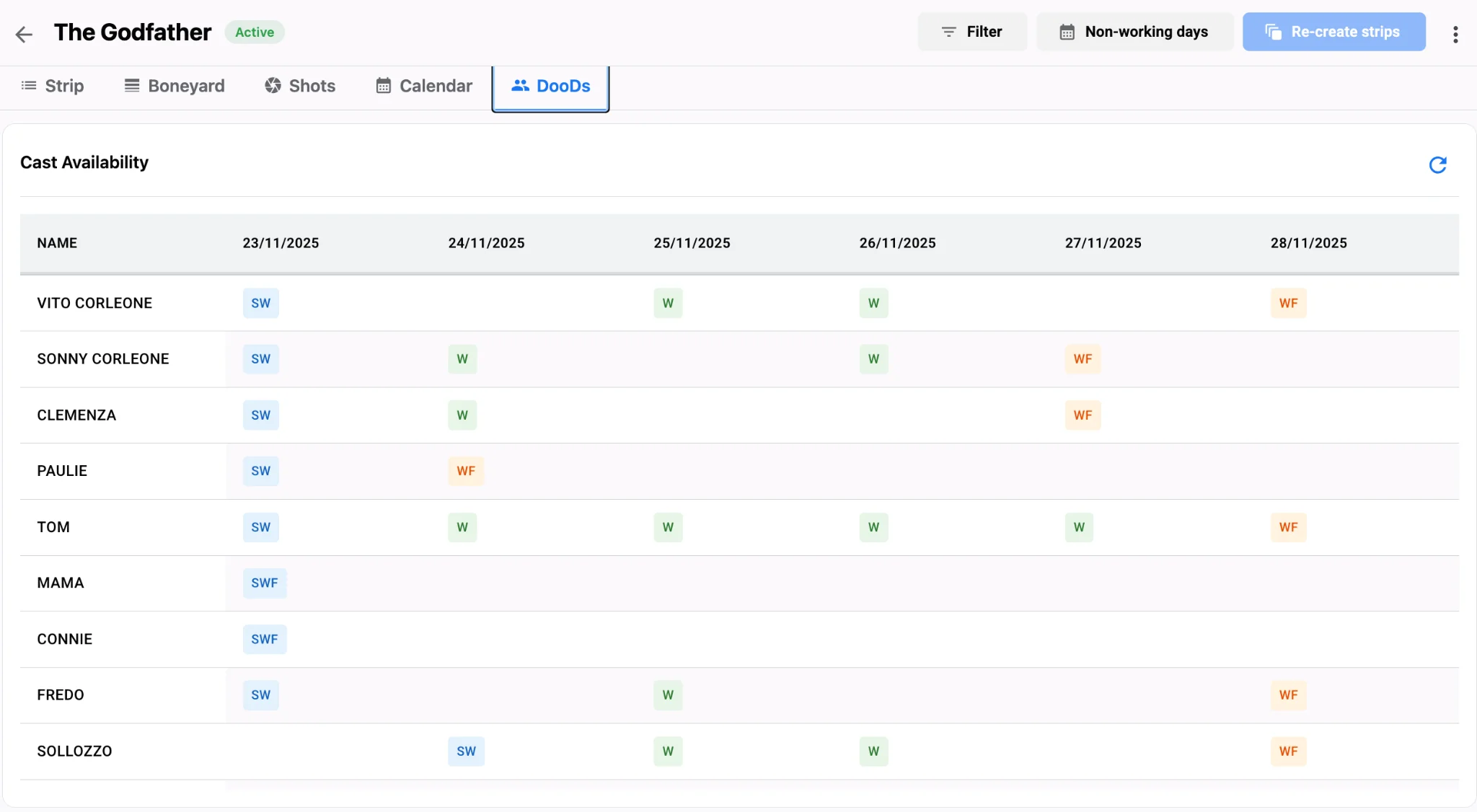
A Day Out of Days (DOOD) report shows when each cast member starts, works, holds and finishes. Tools like Studiovity’s film scheduling software build the DOOD from your stripboard, which helps you cut paid hold days on a tight budget.
3. Separate practical and digital effects days
If a scene needs on-set effects plus VFX plates, schedule the effects crew, the plates and the cleanup passes together. Our explainer on what VFX is and how it’s planned is a good primer for first-time producers.
Key Takeaways
- Clayface is tracking a $23M-$25M opening against a reported $44M net budget (Deadline estimates).
- Strong audience scores suggest restrained, genre-first storytelling is resonating.
- Effects-heavy horror needs makeup time, cast days and VFX plates planned from day one.
- A stripboard plus a DOOD report is the fastest way to protect a lean horror production schedule.
Plan Your Own Genre Shoot
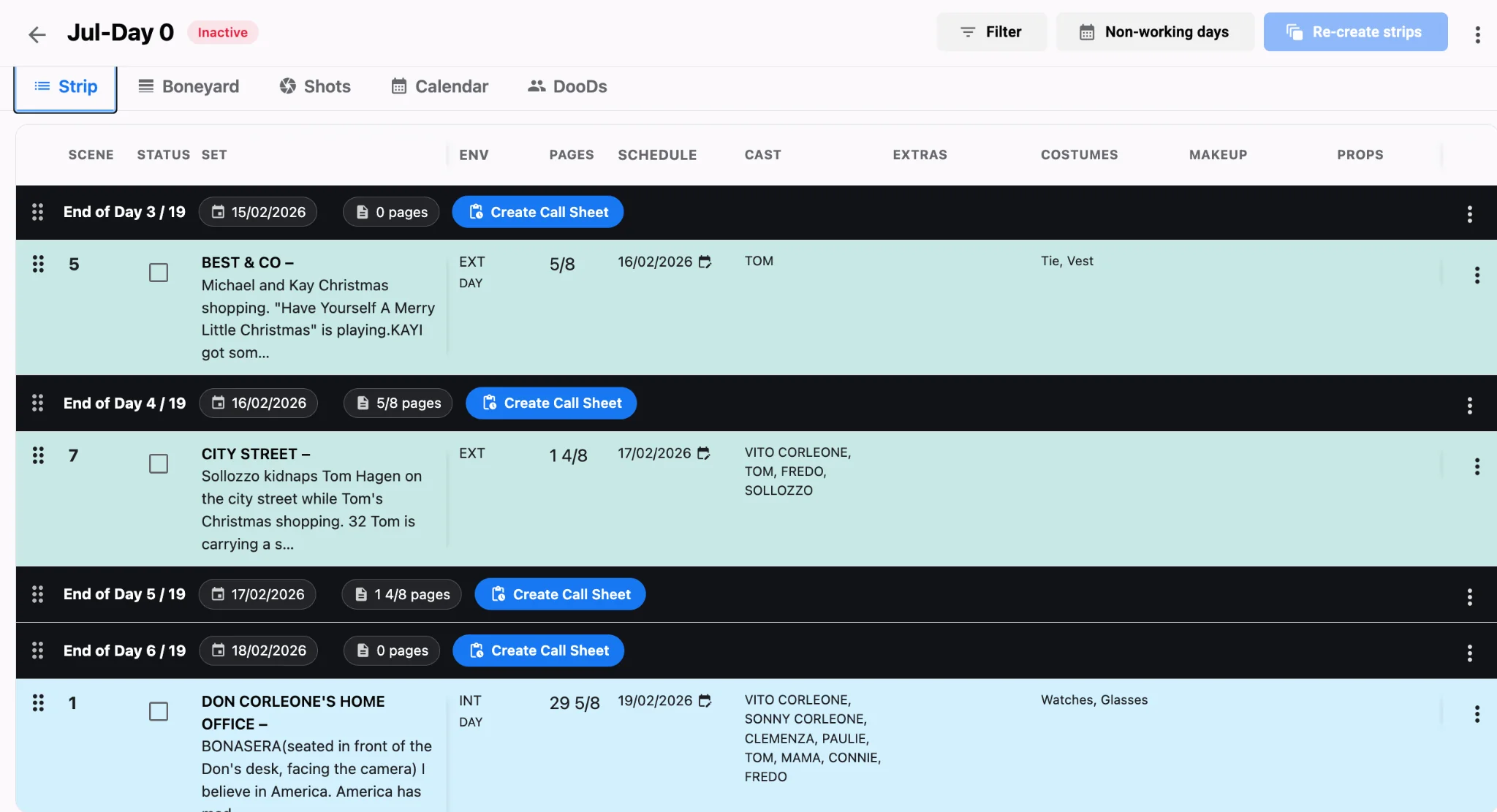
You don’t need a studio budget to schedule like a studio. With Studiovity’s production scheduling tools you can turn a script into colour-coded strips, set end-of-day markers and generate cast reports in minutes, all inside one all-in-one film production platform.
FAQ
How much did Clayface make on opening weekend?
Deadline’s Friday update estimated a $23M-$25M domestic opening at 3,458 theaters, including a $9.5M Friday. Final figures are reported after the weekend.
Who directed Clayface and who wrote it?
James Watkins directed Clayface from a screenplay by Mike Flanagan, with Tom Rhys Harries as Matt Hagen.
How much did Clayface cost to make?
Deadline reports a net production cost of $44M before prints and advertising. The film was shot in the UK.
Planning your next horror short or feature? Try Studiovity free and build your stripboard, DOOD and call sheets in one place.