
The filmmaking process has always demanded creativity, organization, and precision. Every successful production begins long before the camera starts rolling. Producers, directors, assistant directors, and production managers spend countless hours preparing schedules, allocating budgets, coordinating crew members, and ensuring every department works together seamlessly. Even the smallest planning mistake can delay production and increase costs. Therefore, modern efficiency is greatly enhanced when AI film production planning is adopted by studios to automate repetitive tasks, improve decision-making, and streamline collaboration. As a result, production teams can dedicate more time to storytelling instead of administrative work. Consequently, this innovative approach is no longer a futuristic concept. It has become an essential part of modern filmmaking, helping independent creators, production houses, and studios complete projects faster and more efficiently.
Why Traditional Film Production Planning Is Challenging
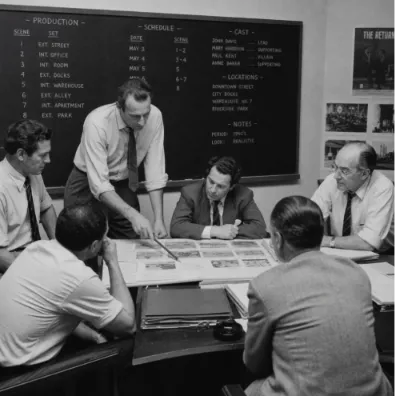
Film production planning involves hundreds of interconnected tasks. Every department depends on another, making coordination both critical and difficult. Producers must balance creative goals with practical limitations while staying within budget.
A single production plan usually includes script breakdowns, shooting schedules, location management, budgeting, equipment allocation, crew availability, call sheets, permits, transportation, accommodation, and contingency planning. Managing these elements manually often results in duplicated work, communication gaps, and scheduling conflicts.
Unexpected events make planning even more complicated. Weather changes, actor availability, equipment failures, or location restrictions can disrupt an entire production timeline. Updating every document manually consumes valuable production time and increases the possibility of costly mistakes. However, implementing AI film production planning significantly reduces these challenges by automating repetitive workflows while providing real-time updates across the entire production.
How AI Simplifies Film Production Planning
Artificial intelligence processes thousands of production variables within seconds. Instead of relying entirely on spreadsheets and manual calculations, AI analyzes project data and recommends optimized production plans.
During pre-production, AI automatically scans scripts to identify cast members, props, costumes, locations, vehicles, special effects, and production requirements. This eliminates hours of manual script breakdown work while improving accuracy. Furthermore, by utilizing AI film production planning, teams can create optimized shooting schedules by considering multiple factors simultaneously, including actor availability, location accessibility, equipment usage, daylight hours, and production priorities. Rather than arranging scenes manually, production teams receive intelligent scheduling suggestions that reduce unnecessary travel and downtime.
As production evolves, AI continuously updates schedules whenever changes occur. If weather delays an outdoor scene or a location becomes unavailable, the system quickly recommends alternative shooting plans with minimal disruption.
AI Improves Budget Planning and Cost Control
Budget management is one of the most important aspects of filmmaking. Every scheduling decision directly affects production costs. Traditional budgeting often depends on estimates prepared manually. While experienced producers create accurate budgets, unexpected scheduling changes frequently increase expenses.
In contrast, AI film production planning improves financial planning by analyzing historical production data, script complexity, shooting duration, crew requirements, equipment rentals, travel expenses, and post-production costs. These insights help producers create more realistic budgets before production begins.
During filming, AI monitors budget performance in real time. If spending exceeds planned allocations, production managers receive immediate alerts and recommendations. Early visibility allows teams to adjust schedules, reduce unnecessary expenses, and avoid budget overruns before they become major problems. This proactive financial management helps both independent filmmakers and larger studios maximize production value while maintaining financial discipline.
Better Collaboration Across Every Department
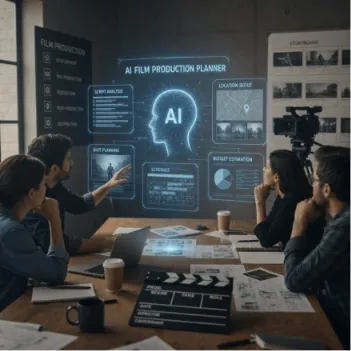
Communication remains one of the biggest challenges on any film set. Every department relies on updated information to perform efficiently. AI-powered production platforms centralize project information, allowing producers, assistant directors, cinematographers, costume designers, art departments, and production coordinators to work from the same source of truth.
Whenever schedules change, AI automatically updates production calendars, call sheets, shooting orders, and departmental assignments. Everyone receives the latest information instantly, reducing confusion and eliminating outdated documents. Cloud-based collaboration also supports remote production teams. Whether crew members work from different cities or countries, AI platforms ensure everyone stays synchronized throughout the production process. Consequently, improved collaboration leads to faster decision-making, fewer communication errors, and smoother daily operations.
AI Helps Create Smarter Shooting Schedules
Creating an efficient shooting schedule requires balancing dozens of production variables simultaneously. AI scheduling tools analyze scene locations, actor availability, equipment requirements, travel time, weather forecasts, and production priorities before recommending the most efficient sequence of shooting days.
Instead of organizing scenes chronologically, AI groups scenes based on location, cast availability, and production efficiency. This approach reduces company moves, minimizes overtime, and optimizes equipment usage. Furthermore, when unexpected delays occur, AI film production planning instantly generates revised schedules without requiring production managers to rebuild the entire production calendar manually. These intelligent scheduling capabilities significantly improve production efficiency while reducing overall shooting days.
AI-Powered Script Breakdown Speeds Up Pre-Production
Script breakdown is traditionally one of the most labor-intensive tasks in filmmaking. Every page of the screenplay must be reviewed carefully to identify production elements required for each scene. This process includes actors, props, wardrobe, makeup, vehicles, visual effects, locations, stunts, animals, and special equipment.
AI dramatically accelerates this process by automatically identifying production elements directly from the screenplay. Instead of spending several days marking script pages manually, production teams receive organized breakdown reports within minutes. These reports become the foundation for scheduling, budgeting, purchasing, and resource allocation. Therefore, faster script breakdown means productions can move into scheduling and budgeting much earlier, shortening the overall pre-production timeline.
Practical Applications of AI Throughout Production
AI supports nearly every phase of filmmaking. During development, AI analyzes scripts for pacing, scene complexity, and production requirements. In pre-production, AI assists with script breakdowns, scheduling, budgeting, casting coordination, and location planning.
During principal photography, AI updates schedules, generates call sheets, tracks production progress, and monitors budget performance. In post-production, AI helps organize footage, manage editing workflows, generate transcripts, and improve asset management. Marketing teams also benefit from AI by analyzing audience preferences, creating promotional content, and identifying effective distribution strategies. Thus, instead of replacing filmmakers, AI becomes an intelligent production assistant that helps every department work more efficiently.

Best Practices for Adopting AI Film Production Planning
Successfully implementing AI begins with understanding current production workflows. Production teams should first identify repetitive tasks that consume significant time. Scheduling, script breakdown, budgeting, document creation, and production reporting often deliver the fastest return on investment.
Next, choose software designed for AI film production planning that integrates multiple workflows into one platform rather than using disconnected tools. Team training is equally important. Every department should understand how AI supports their daily responsibilities without replacing creative decision-making.
Start by introducing AI on smaller productions before expanding its use across larger projects. Measuring time savings, scheduling improvements, and budget accuracy helps demonstrate its long-term value. Continuous evaluation ensures AI becomes a productive part of the filmmaking process instead of simply another piece of software.
The Future of AI Film Production Planning
Artificial intelligence continues to evolve rapidly, and filmmaking will benefit from even greater automation in the coming years. Future AI systems will generate production schedules using live weather forecasts, traffic data, actor calendars, and equipment availability simultaneously. Virtual production environments will become more intelligent, allowing filmmakers to visualize complex scenes before arriving on set.
Predictive analytics will help producers identify production risks weeks before filming begins, making contingency planning more accurate than ever before. AI-powered assistants will also simplify communication between departments by automatically updating documents, assigning tasks, and tracking production progress throughout every stage of filmmaking. As these technologies mature, AI film production planning will become an indispensable production partner for filmmakers of every budget level.
Conclusion
Film production planning has always required careful coordination, detailed organization, and constant communication. While traditional planning methods remain valuable, artificial intelligence has transformed how production teams manage these complex workflows.
From automated script breakdowns and intelligent scheduling to real-time budgeting and seamless collaboration, AI enables filmmakers to work faster, smarter, and more efficiently. It reduces repetitive administrative work while allowing creative professionals to focus on what matters most—telling compelling stories.
Whether producing an independent short film, a feature-length production, or a large-scale television series, AI film production planning delivers measurable improvements in efficiency, cost control, and production quality. As filmmaking continues to evolve, embracing AI is becoming less of an option and more of a competitive advantage for modern creators.