
A parenthetical is the smallest element on a screenplay page, a few words in brackets tucked under a character name. It is also one of the easiest to get wrong. Used well, a parenthetical clears up a line that could be misread. Used badly, it turns the writer into a backseat director and makes the page feel cluttered.
This guide covers how to write parentheticals in a screenplay: what they are for, the exact format, the types you will actually need, and the habits that make readers and actors roll their eyes.
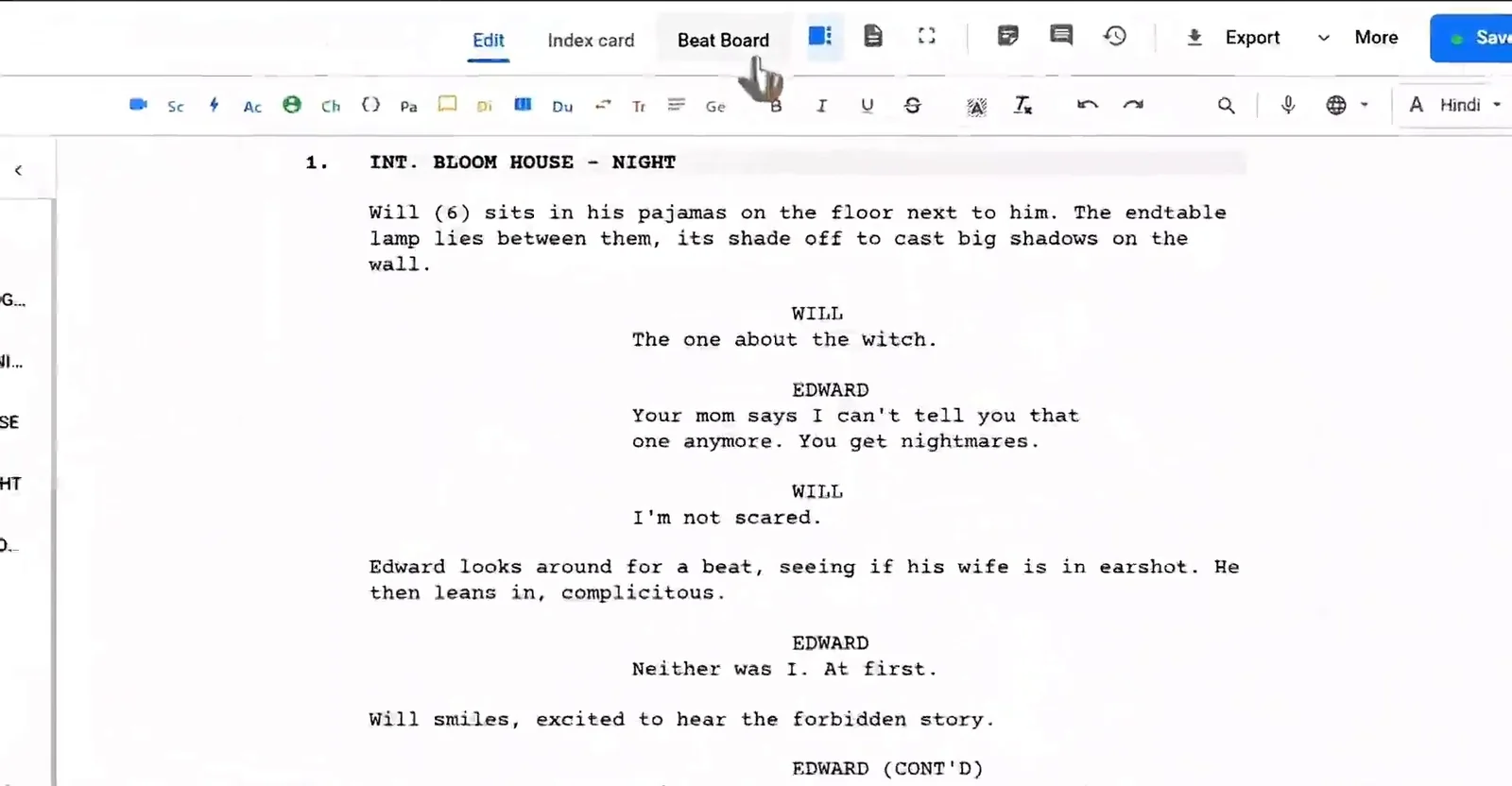
Here is a short Studiovity video on the screenplay editor where you write character cues, parentheticals and dialogue:
What Parentheticals in a Screenplay Are For
A parenthetical, sometimes called a wryly, is a short direction placed between the character cue and the dialogue. It tells the reader something about how a line is delivered or who it is aimed at, when the words alone would leave doubt.
The key word is doubt. A parenthetical is a clarity tool, not a performance note. If the dialogue and the scene already make the intention clear, the parenthetical is noise.
How to Format a Parenthetical
The standard layout looks like this:
                    RAVI
              (to the driver)
          Take the next left. Not this one.
Follow these rules:
- Place it on its own line, directly below the character cue and above the dialogue.
- Write it in lower case, inside round brackets, with no full stop at the end.
- Keep it short. One to four words is normal. If it wraps onto a second line, it is probably too long.
- Indent it between the cue and the dialogue margin. Screenwriting software handles this for you.
- Never put a parenthetical at the very end of a dialogue block. If something happens after the line, write it as an action line.
Parentheticals in the middle of a speech
You can break a speech with a parenthetical when the delivery changes or the character turns to someone else:
                    MEERA
          You said you would be here at six.
              (checks her phone)
          It is almost eight.
If the interruption is a real physical action that matters to the scene, consider moving it into an action line instead. A mid-speech parenthetical should stay small.
The Types of Parentheticals You Will Actually Use
Addressee
When several characters share a scene, a parenthetical such as (to Priya) or (to the group) tells the reader who is being spoken to. This is the most useful and least controversial type.
Tone that goes against the words
Use tone notes only when the line could easily be read the opposite way. “Great job” can be praise or an insult. (sarcastic) or (flat) earns its place here. “I hate you” after a betrayal does not need (angrily).
Small actions tied to the line
(lighting a cigarette) or (beat) can mark a pause or a small business that changes the rhythm of the line. Use them sparingly so they do not compete with your action lines.
Language and delivery
(in Hindi), (whispering) or (into the radio) explain how the audience will hear the line. Extensions like V.O. and O.S. are different: they belong beside the character name, not in a parenthetical. Our guide on how to write a character cue in a screenplay covers extensions in detail.
When Not to Use a Parenthetical
Most writers use too many, not too few. Leave it out when:
- The emotion is obvious from the dialogue or the scene.
- You are trying to give the actor a line reading. Actors and directors find their own delivery.
- It describes a long action. Write that as an action line.
- Every second speech has one. At that point readers stop seeing them.
A simple test: read the line aloud without the parenthetical. If a reasonable reader would still understand who it is for and how it lands, delete it.
Try It in Your Own Draft
Formatting parentheticals by hand with tabs and spaces is a common source of messy pages. The Studiovity screenwriting software places cues, parentheticals and dialogue in standard industry margins as you type, so you can focus on whether each one is needed.
Parentheticals in Busy Scenes
Group scenes are where parentheticals pull their weight. When four people argue around a table, addressee notes keep the reader oriented. For scenes where characters talk over each other, see our guide on how to write overlapping dialogue in a screenplay, which covers dual dialogue and interruptions.
Even in busy scenes, keep them short and functional. (to Arjun) is helpful. (to Arjun, who is still not listening because he is staring at the door) is an action line in disguise.
Common Parenthetical Mistakes
- Ending a speech with one. A parenthetical after the last line of dialogue is incorrect format. Use an action line.
- Writing full sentences. Keep it to a short phrase in lower case.
- Stacking emotions. (angry, then sad, then resigned) tells the actor how to perform the whole speech. Let the words do that work.
- Using it for camera directions. Shots and angles do not belong in a parenthetical.
- Repeating the obvious. (crying) after a line about a funeral adds nothing.
Parenthetical Checklist
- On its own line between the cue and the dialogue
- Lower case, round brackets, no full stop
- One to four words where possible
- Never at the end of a dialogue block
- Used for addressee, contrary tone, small business or language
- No extensions, camera directions or long actions inside it
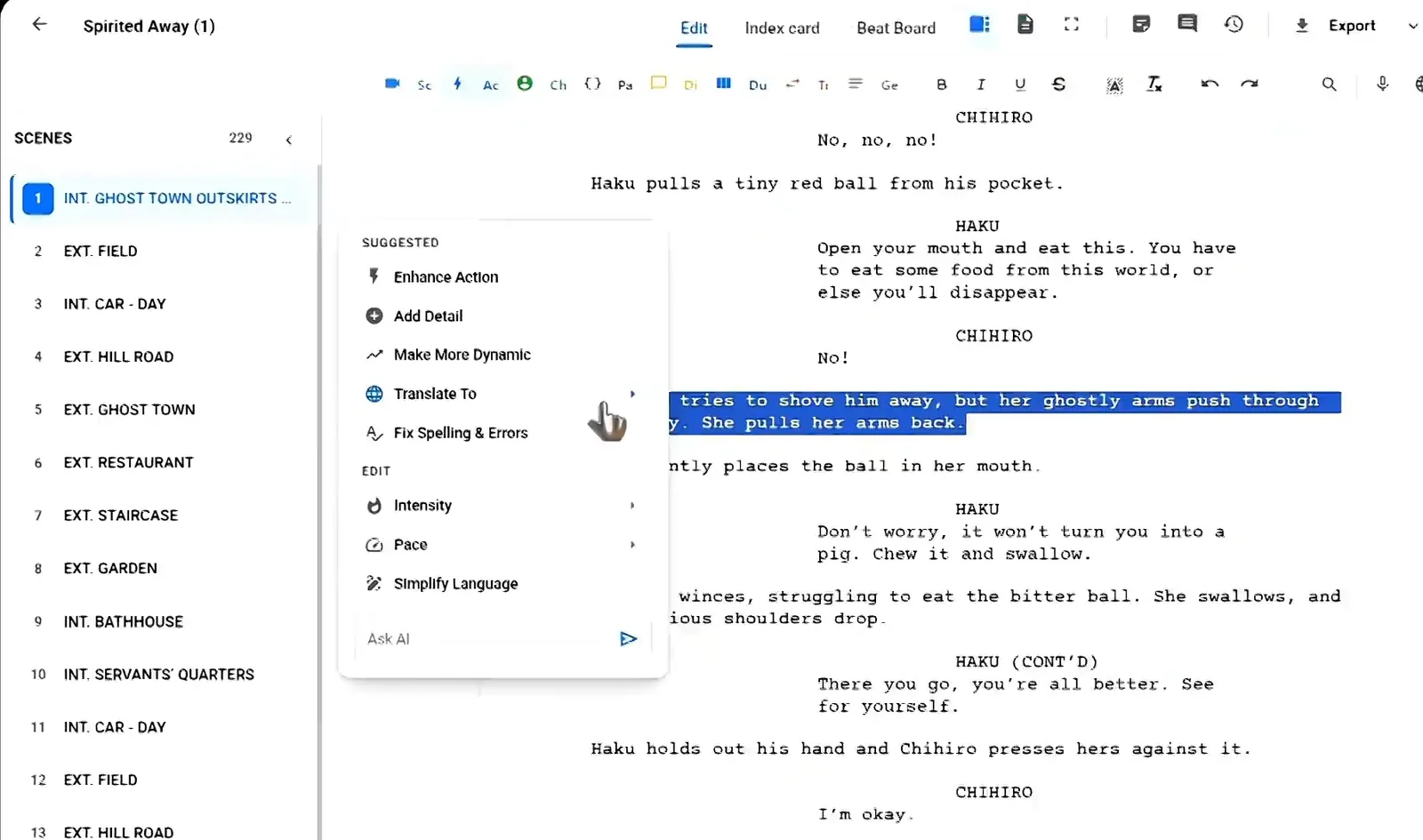
When you revise, select a line and try the AI rewrite options in the Studiovity screenwriting editor to make the dialogue itself carry the tone, so the parenthetical can go.
FAQ
How many parentheticals are too many?
There is no fixed number, but if most pages have several, cut them back. Many professional scripts use only a handful across the whole draft.
Is (beat) still acceptable?
Yes, in moderation. It marks a pause inside a speech. If you use it often, readers will start to skip it, so save it for pauses that change the meaning.
Can a parenthetical describe an action?
Only a small one tied to the line, such as (sipping tea). Anything larger, or anything other characters react to, should be an action line.
Do parentheticals count as dialogue for timing?
No. They are not spoken, but they do take up a line on the page, which slightly affects your page count.
Write Cleaner Dialogue Blocks in Studiovity
Good parentheticals are rare, short and there for clarity. Studiovity keeps cues, parentheticals and dialogue in the right margins and exports a clean PDF, Fountain or FDX file. Write your next scene in Studiovity and let every parenthetical earn its line.