
Every screenplay has to tell the audience things: who these people are, what happened before page one, what the rules of this world are, and what is at stake. That information is exposition. The problem is not having it. The problem is delivering it in a way that sounds like a briefing instead of a story.
This guide explains how to write exposition in a screenplay so it feels natural, with practical techniques, short script examples and a revision checklist you can use on your next draft.
Here is a quick Studiovity video with screenwriting hacks that help when you are reworking clunky scenes:
What Exposition Means in a Screenplay
Exposition is any information the audience needs to follow the story that is not obvious from the action alone. It includes backstory, relationships, jobs, rules of a fictional world, deadlines and stakes.
Exposition is also the first part of classic dramatic structure. In a five-act model it is the opening stage, where the world and characters are set up before the rising action begins. But exposition does not live only in act one. Mysteries, thrillers and science fiction keep feeding the audience new information until the final pages.
Why “As You Know” Dialogue Fails
The most common exposition mistake is characters telling each other things they both already know:
RAVI
As you know, Priya, we have been business partners for ten years, ever since Dad left us the factory.
No real person talks like this. The line exists only for the audience, and readers feel it immediately. Good exposition hides its purpose behind a character’s need.
Techniques for Natural Exposition
1. Put information inside conflict
People reveal facts when they argue, bargain or accuse. Compare the line above with this:
PRIYA
Ten years I carried this factory. You came in on Mondays.

RAVI
Dad left it to both of us.

PRIYA
Dad left it to whoever showed up.
The audience learns the same facts, plus who resents whom. The conflict does the explaining.
2. Show it instead of saying it
A wall of unpaid bills, a hospital wristband, a packed suitcase by the door: one image can replace half a page of dialogue. Action lines are the cheapest exposition you have, so use them before you reach for a speech.
3. Use an outsider who genuinely does not know
A new employee, a detective, a child or a visitor can ask questions the audience is also asking. This works because the question is motivated. Just make sure the outsider has their own goal in the scene, or they become a question machine.
4. Delay it
Audiences are more patient than writers think. Holding back an explanation creates curiosity. Give the audience just enough to follow the scene, then pay out the rest when they are hungry for it.
5. Split it into pieces
Instead of one big info dump in act one, spread small pieces of information across several scenes. Each scene adds one fact, and the audience assembles the picture themselves.
6. Make it funny or emotional
Exposition delivered through a joke, an insult or a breakdown lands because the audience is reacting to the emotion, not the data.
Where Exposition Belongs in Your Structure
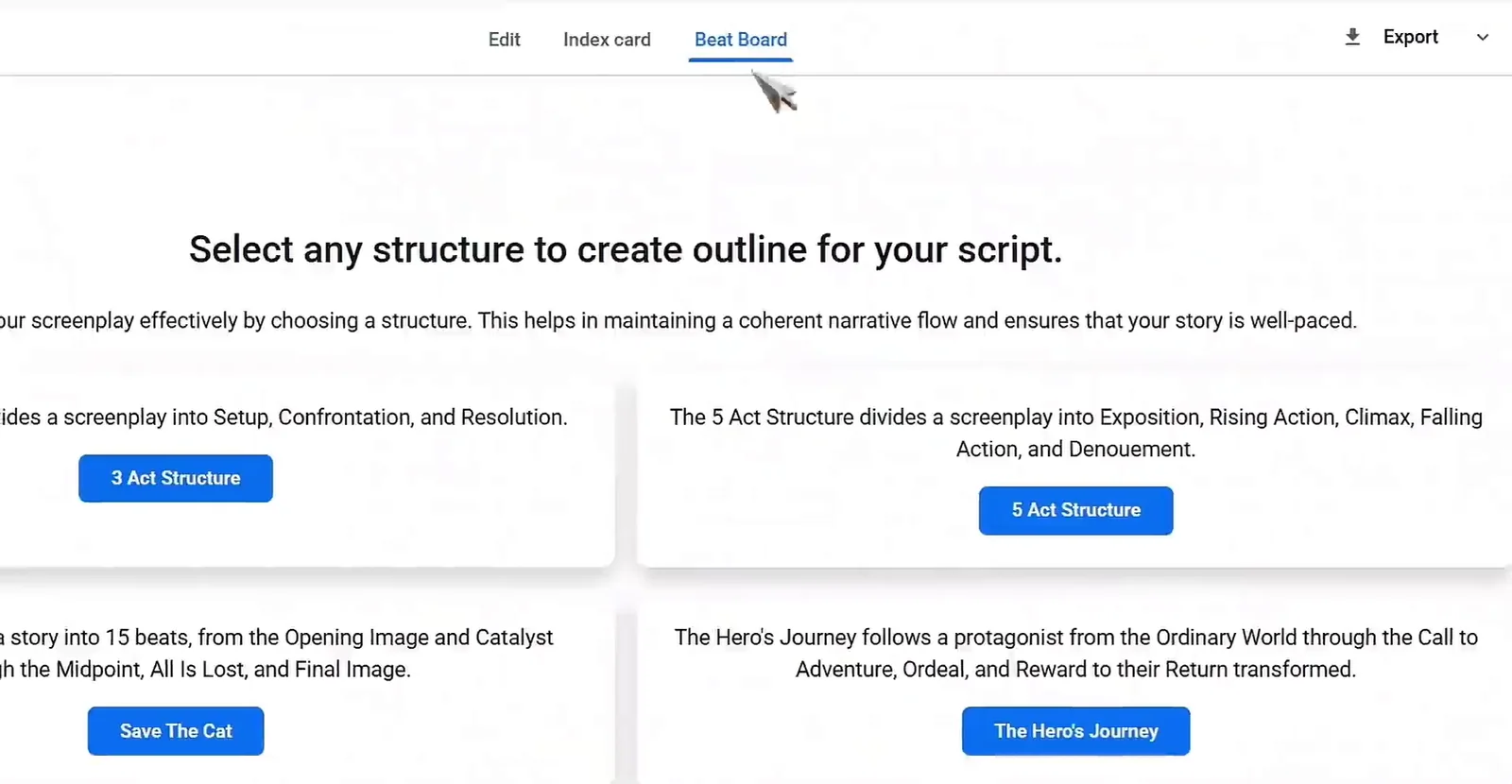
Planning exposition at the outline stage stops it from piling up in the first ten pages. In Studiovity’s screenwriting software you can choose a story structure, such as 3 Act, 5 Act, Save the Cat or the Hero’s Journey, to build an outline on the beat board. List the facts the audience must know, then assign each one to the latest beat where it can still work. You will often find that half of your setup can move into act two, where it creates tension instead of slowing the opening.
Rewriting Exposition-Heavy Scenes
When a scene still feels like a lecture, try this pass:
- Highlight every line that exists mainly to inform the audience.
- For each one, ask whether the audience needs it now, later or never.
- Cut the “never” lines without mercy.
- Move the “later” lines into a scene where they create tension.
- Rewrite the “now” lines so a character wants something while saying them.
- Read the scene aloud. If an actor would struggle to say a line naturally, it is still exposition.
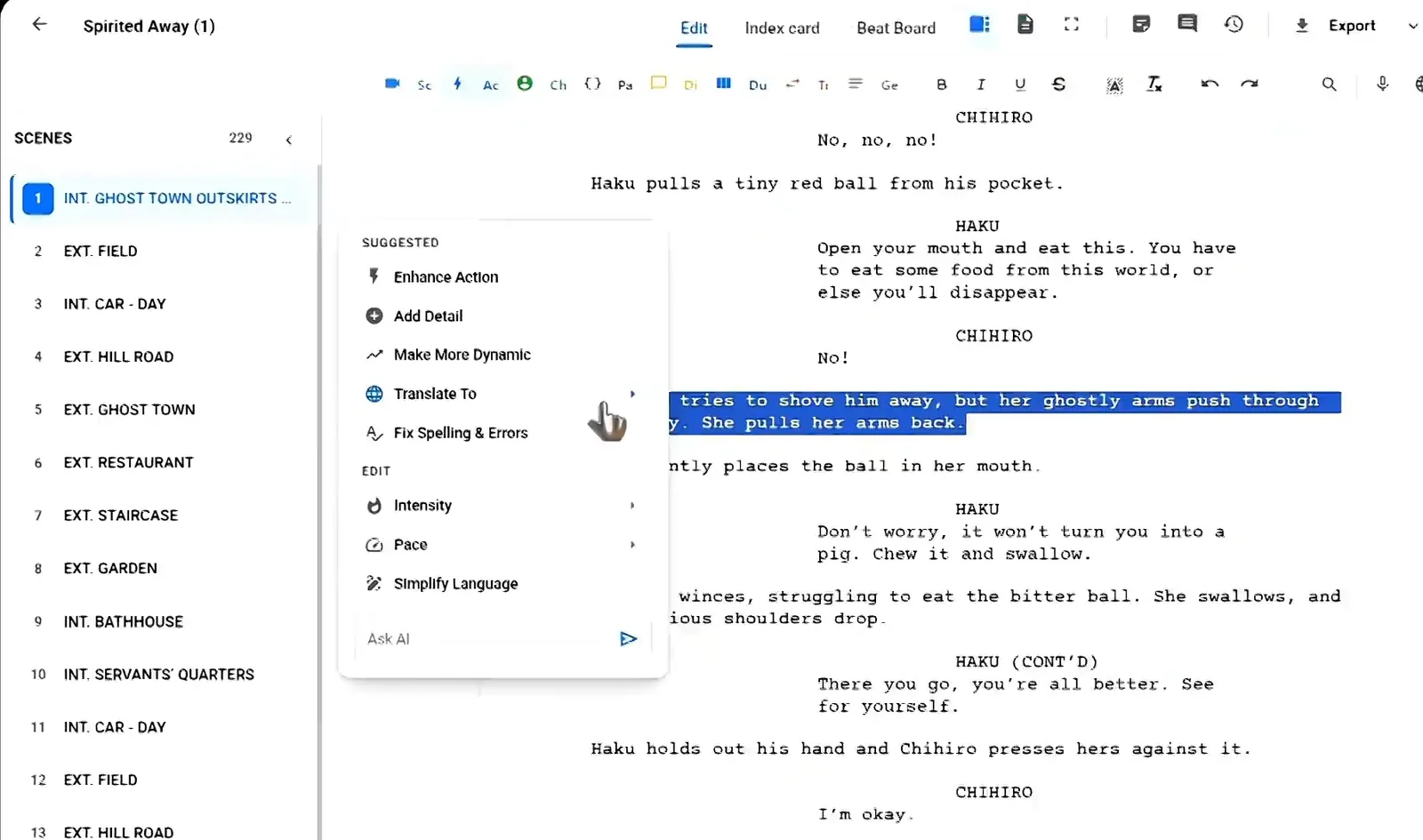
AI tools can help with the mechanical side of this pass. In the Studiovity editor you can select a line and ask the AI to simplify the language, change the pace or make an action line more dynamic, then keep or reject the suggestion. Treat it as a second opinion, not a replacement for your own ear.
Ready to try the rewrite pass on a real scene? Open your draft in Studiovity and highlight your exposition lines one by one.
Exposition Checklist
- Does every fact in the first ten pages need to be there right now?
- Is any character telling someone what they both already know?
- Could an image or an action replace this line of dialogue?
- Is the information attached to a conflict, a goal or an emotion?
- Have you spread backstory across scenes instead of dumping it at once?
- Does the audience learn things at the same time as, or slightly before, the hero?
For more on making characters sound like real people while they deliver information, see our guide on how to write great dialogue, and for turning explanation into images, read how to trigger visuals in your scripts.
FAQ
Is voice-over narration a bad way to deliver exposition?
Not always. Narration works when the narrator has a personality and a point of view. It fails when it simply describes what we can already see.
How much exposition is too much in the opening pages?
If a reader cannot tell what the main character wants by page ten because they are busy absorbing backstory, there is too much.
Can a title card handle exposition?
Yes, for time, place or a short historical context. Keep it to one or two lines.
Write Smarter Exposition in Studiovity
Natural exposition comes from planning what the audience needs to know and when. Studiovity puts an auto-formatting editor, a structure-based beat board, index cards and AI-assisted rewriting in one workspace. Write your next screenplay in Studiovity and let your story reveal itself scene by scene.