
Coordinating cast and crew call times looks simple until one change ripples through the whole day. Arrivals, department prep, location access, company moves, meals and the first shot all have to line up inside one plan. This guide shows how to build call times that work, communicate them clearly and handle changes without a flood of texts.
Why call time coordination is hard
A film set is a chain of dependencies. Cast cannot be called only for when they appear on camera, and crew cannot be called only for department preference; both have to fit the shooting schedule, location limits, setup time and the realistic pace of the day.
A call time is a commitment that touches transport, hair and makeup, wardrobe, meals, overtime risk and morale. Call a department too late and others wait; call everyone too early and you burn budget and energy before the first setup is ready. The hassle usually comes from uncertainty: a scene moves, a performer has a conflict, a location changes its access hours.
Where call times sit in production management
The production schedule sets the broad structure, and the daily call sheet turns it into tomorrow’s plan. Call times are where that plan becomes personal: each person knows when to arrive, where to report and what they are supporting. If you need a refresher on the document itself, start with what is a call sheet.
Before assigning a single time, answer these questions:
- Who needs to be on set first?
- Which departments need a pre-call before general crew call?
- When must cast arrive for hair, makeup, wardrobe, rehearsal or blocking?
- Which scenes shoot first, and who is actually needed for them?
- Are there company moves, split locations or special equipment setups?
- Does the plan respect crew availability and cast restrictions?
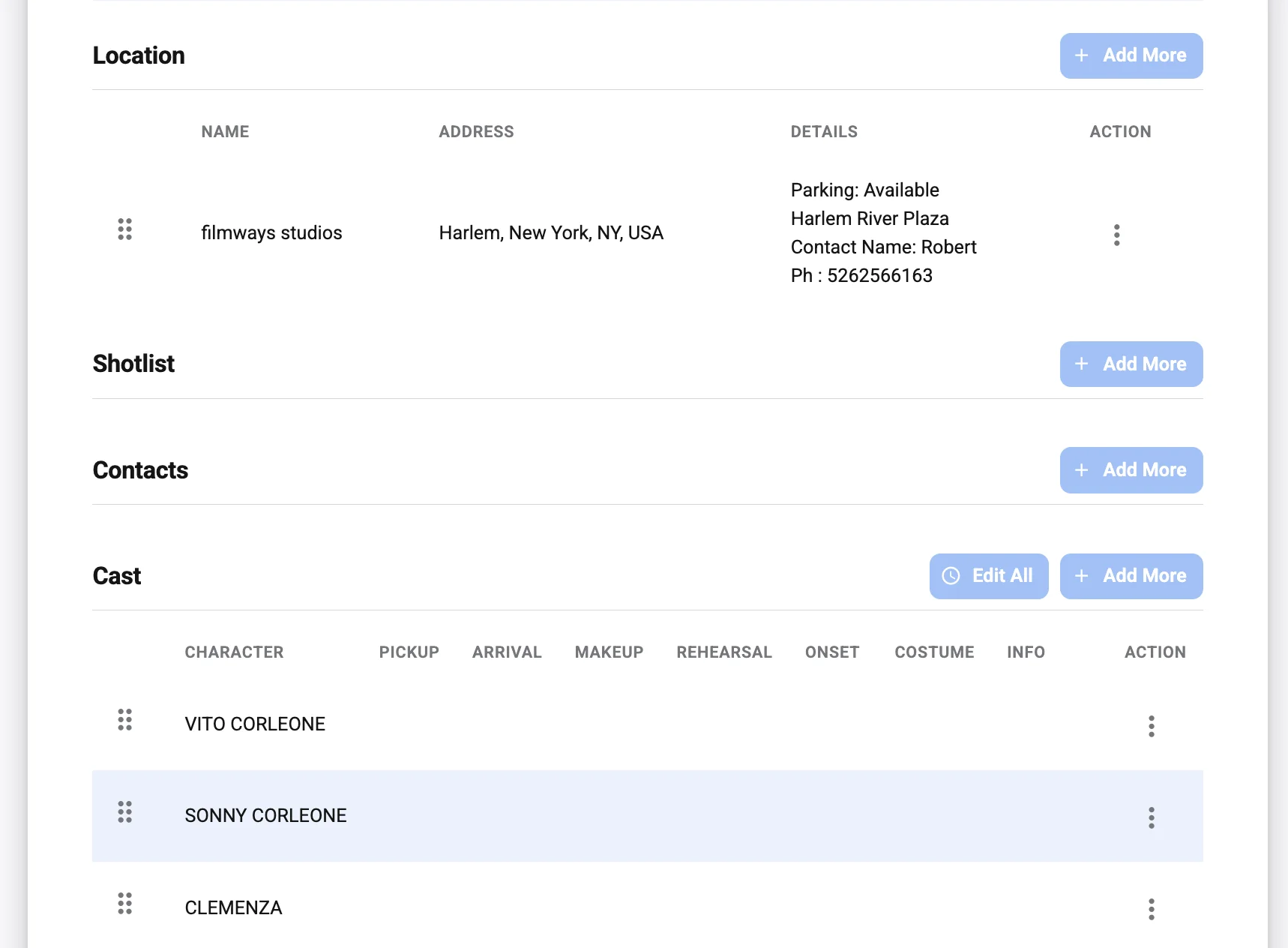
Cast call times are readiness plans
A performer’s call has to cover everything before the camera rolls: travel, check-in, hair, makeup, wardrobe, rehearsal, blocking and sometimes stunt, dialect or intimacy prep. The actor in the first scene does not always need the earliest call if a long lighting setup comes first, while another performer may need to arrive hours early for prosthetics or a complex costume.
Plan cast calls by group rather than one default:
- Lead cast: individual calls built backward from camera-ready time.
- Day players: called close to their scenes to avoid long holding.
- Background: often called early for wardrobe checks and holding, even if featured later.
- Minors and restricted-hours talent: tight windows so usable time is not wasted.
- Stunt performers: rehearsal and safety briefing time included.
A practical cast call plan includes makeup and wardrobe timing, rehearsal windows, pickup times if production handles transport, clear holding expectations and early release where possible.
Crew call times set the pace of the day
Crew calls are about operational readiness. Treating crew call as one universal time ignores departments that must start earlier: locations opening the site, production setting up check-in and radios, grip and electric unloading and pre-lighting, makeup and wardrobe preparing before cast sit down.
- Pre-call for departments that must prepare first.
- General crew call for the main working body.
- Department-specific calls for teams not needed immediately.
- Staggered calls when later scenes bring in specialty roles.
- Wrap and release expectations so departments can plan returns.
Staggering saves energy and money, but only when communication is precise: a later department must know where to report, who to check in with and whether the call might move earlier.
Work backward from the first shot
Build every call from the shooting schedule. If the first shot is planned for 8:30 a.m., ask what must be true by 8:30: lighting finished, camera built, sound checked, set dressed, background placed, cast through makeup and wardrobe. Then step back through each dependency.
- Review the next day’s scenes and location order.
- Identify the first planned setup.
- Work backward to when cast must be camera-ready.
- Add time for hair, makeup, wardrobe, rehearsal and travel.
- Identify which departments must be ready before cast.
- Confirm location access, parking, transport, catering and safety.
- Check crew availability and cast restrictions.
- Build and distribute the call sheet with a clear version label.
| Role | Example call | Why |
|---|---|---|
| Locations / production | 5:45 AM | Open site, parking, check-in |
| Grip and electric | 6:00 AM | Unload and pre-light |
| Hair, makeup, wardrobe | 6:15 AM | Prep stations before cast |
| Lead actor (heavy makeup) | 6:30 AM | 90 minutes in the chair |
| General crew | 7:00 AM | Main working body |
| Day player | 8:00 AM | Rehearsal at 8:15 |
| First shot | 8:30 AM | Camera-ready target |
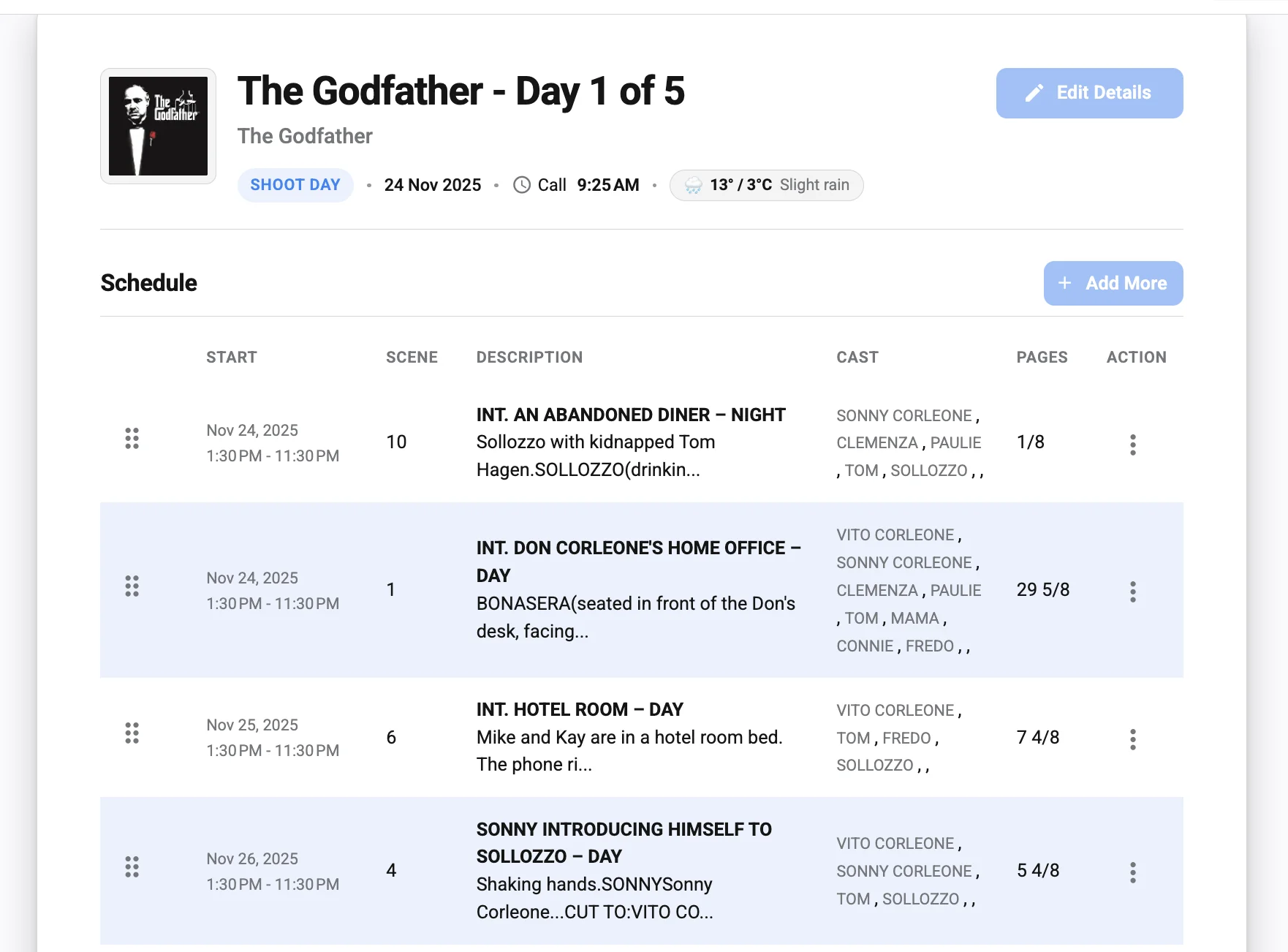
Keeping these layered times in a structured system rather than a spreadsheet makes the backward math easier to update; you can set individual cast and crew call times in Studiovity and reissue the sheet when something moves.
Watch: setting cast times on a call sheet
How to prevent last-minute call time chaos
Chaos starts when information lives in too many places: a spreadsheet here, a text thread there, an outdated draft with a department head. Centralize first, then build.
- Lock scene order before assigning final calls.
- Ask department heads for prep needs early.
- Check cast restrictions: hard outs, late arrivals, minors, travel.
- Review location rules: access, noise, parking windows.
- Avoid just-in-case early calls that waste budget and goodwill.
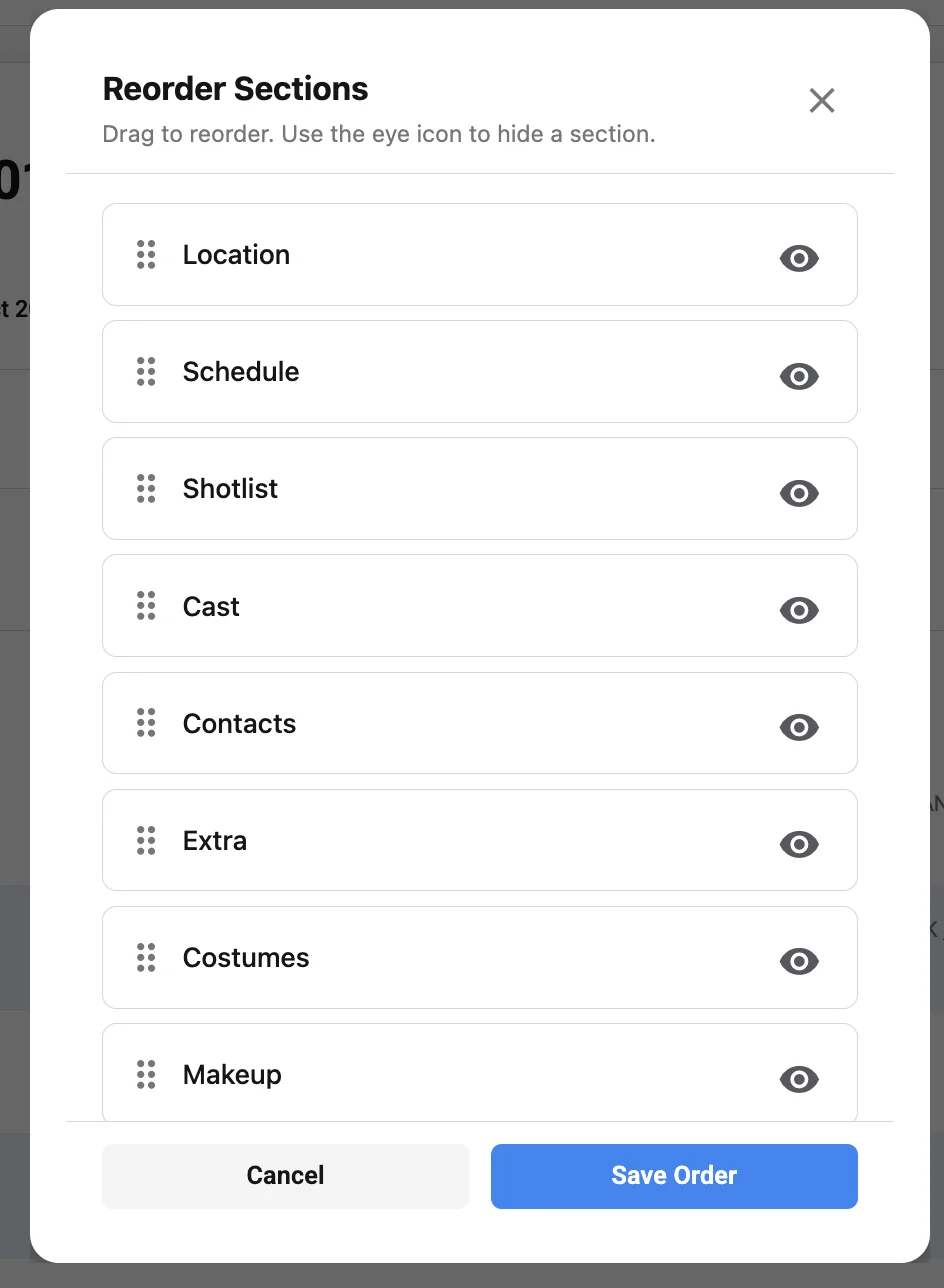
- Version every revision and make changes obvious.
- Use one official channel so side messages never replace the call sheet.
Communicating call time changes
“Come a little later” is not an instruction. “Your call has moved from 6:30 a.m. to 7:15 a.m.; report directly to wardrobe at base camp” is. Every update should answer four things:
- What changed? The time, location, scene order or note.
- Who is affected? All crew, one department or specific cast.
- What should they do now? New time, report location, contact.
- Which version is official? So nobody follows an old draft.
After sending, track acknowledgments and follow up with anyone key who has not confirmed. A call sheet only works once the right people have read it.
Common call time mistakes
- Building the call sheet before scene order is confirmed.
- Not asking department heads for timing input.
- Calling cast without enough makeup or wardrobe time.
- Assuming crew availability instead of confirming it.
- Sending revisions without saying what changed.
- Handling transport, parking or access after call times are set.
Call times are also a diagnostic. If every department needs an extreme pre-call, the day is overloaded. If cast wait hours before working, the scene order needs another look.
Final takeaway
Good call times connect the shooting schedule, department prep, cast readiness and clear communication into one system. Build from the first shot backward, stagger thoughtfully, keep one source of truth and make every change explicit. For a full walkthrough of the document, read how to make a call sheet, or try a digital call sheet tool free on your next shoot day.