
A call sheet is the daily operating document that tells every cast and crew member where to be, when to arrive, what will be filmed, who to contact, and what conditions to expect. For a short film, it turns creative ambition into a practical day plan by connecting the script, film production schedule, locations, personnel, equipment, and safety notes in one place. This guide explains how to build a clear production call sheet from scratch, what to include, and how to avoid the common mistakes that slow down small productions.
Related video: How to use Call Sheet: a step-by-step walkthrough
What does a short film call sheet need to accomplish?
A short film call sheet needs to give the production team one shared source of truth for a specific shoot day. It should help cast and crew arrive prepared, protect the schedule, reduce repetitive questions, and make it easy to contact the right person when something changes. A strong movie call sheet is not just a list of call times; it is a concise field manual for the day’s work.
In short film planning, the call sheet also helps compensate for limited time, smaller departments, and leaner logistics. When one person may be handling multiple responsibilities, the document must be especially clear. The goal is for someone to open the call sheet and immediately understand the day’s priority, location, timing, scenes, weather considerations, parking instructions, and reporting structure.
Gather the source materials before you build the document
Before opening a call sheet template, collect the information that will feed the page. A call sheet is only as reliable as the planning behind it, so do not start by guessing call times or copying yesterday’s format without checking the current schedule. Even on a one-day short film, the document should reflect the latest production decisions.
Useful source materials include:
- Final or current shooting script: Confirm scene numbers, page counts, cast IDs, props, wardrobe, and special requirements.
- Film production schedule: Use the latest stripboard, one-liner, or shooting plan to identify the order of work.
- Crew list and cast list: Check spelling, roles, phone numbers, email addresses, and emergency contacts if your production tracks them.
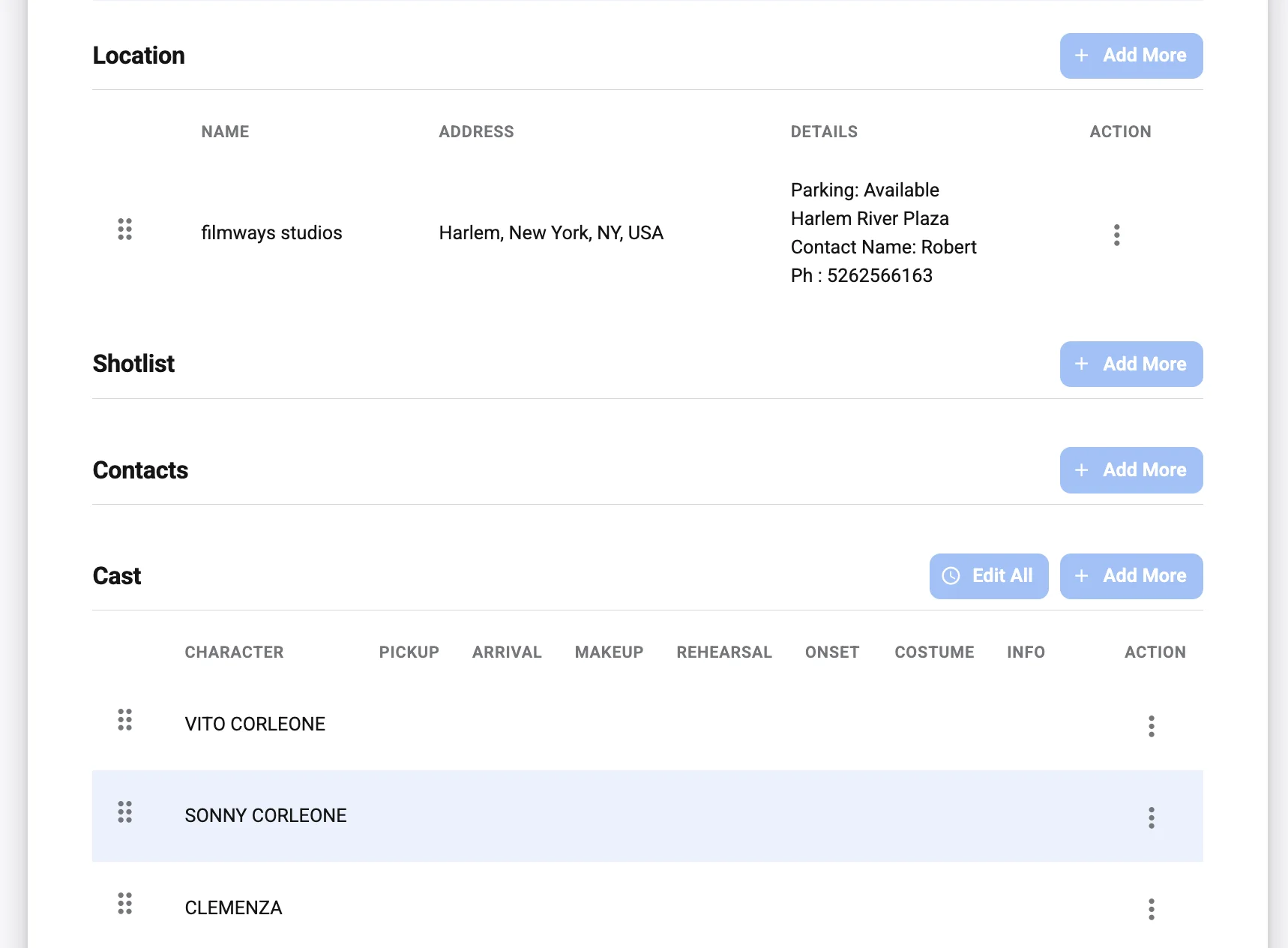
- Location details: Include the exact address, parking notes, access instructions, holding areas, and any restrictions.
- Department notes: Ask camera, sound, art, wardrobe, makeup, stunts, special effects, and production for day-specific needs.
- Transportation plan: Confirm pickups, shuttle timing, load-in, load-out, and where production vehicles may park.
- Safety information: Add any hazards, weather concerns, intimacy or stunt notes, health protocols, and emergency procedures relevant to the day.
If the information is incomplete, mark it for confirmation rather than filling the gap with assumptions. A temporary placeholder may be useful while drafting, but it should not remain in the final call sheet sent to cast and crew.
Step 1: Define the shoot day and production header
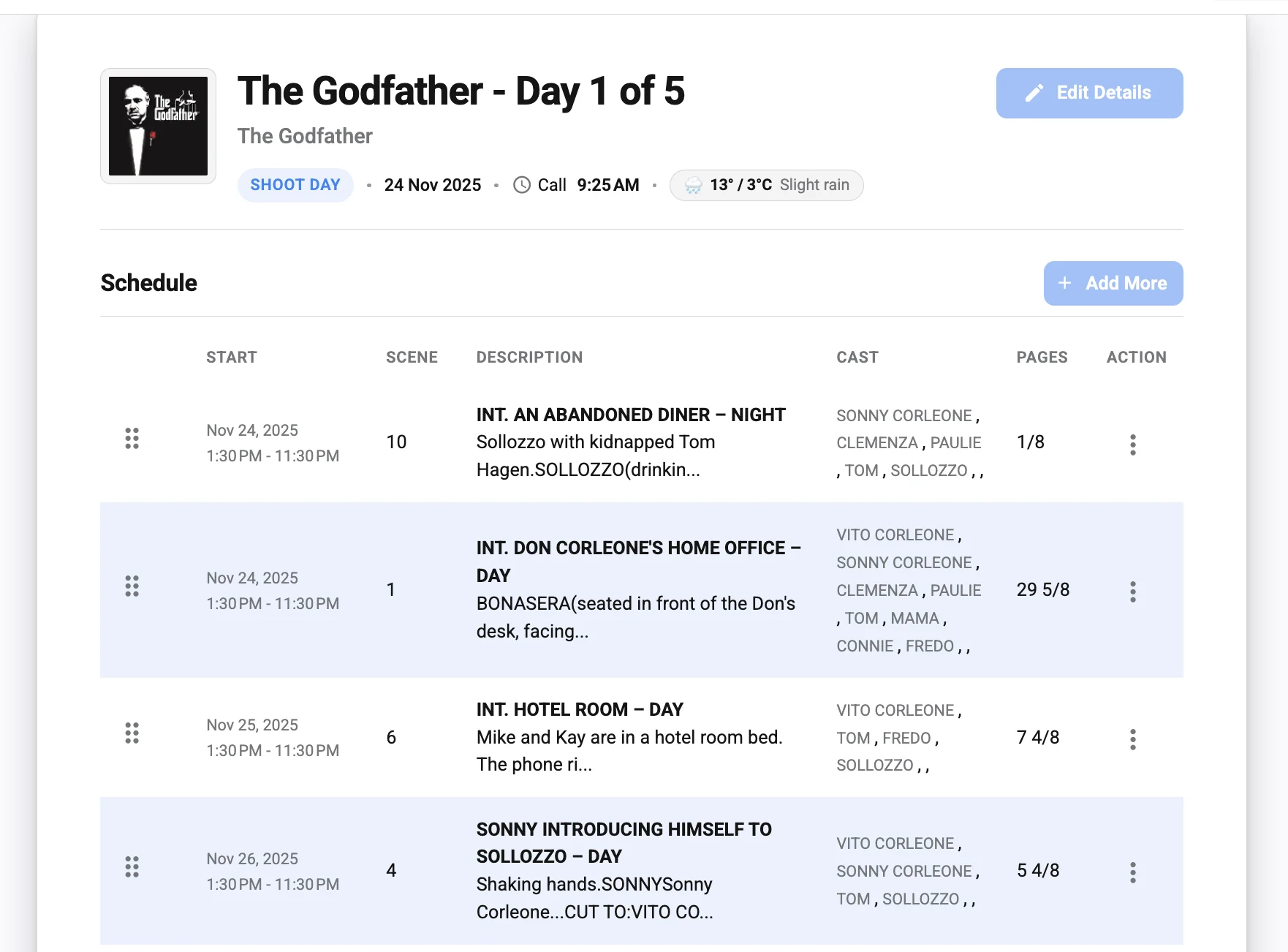
Start the call sheet with a clean header that identifies the production and the shoot day. This section should be easy to read at a glance because it anchors the rest of the document. Most call sheets place this information at the top so nobody confuses one day’s instructions with another.
Include the production title, shoot date, day number if applicable, and the general call time. If your short film shoots across multiple days, label the day clearly, such as “Day 2 of 4.†Add the production company or producing team name if relevant, along with the director, producer, first assistant director, and production office contact.
For a small short film, the header does not need to be elaborate. It does need to be accurate. A professional production call sheet should make the basic facts unmistakable before anyone scrolls, prints, or forwards the document.
A simple header may include:
- Production title
- Shoot date and day count
- Crew call time
- Nearest hospital or emergency facility, if used in your production format
- Main location name and address
- Key production contacts
- Weather summary and sunrise/sunset, if relevant to the shooting plan
This is also where many teams add confidentiality language or distribution notes. Keep those notes brief. The header’s job is orientation, not legal instruction.
Step 2: List key contacts and reporting structure
Next, give the team a clear path for communication. Cast and crew should know whom to contact if they are delayed, lost, sick, or missing information. On professional sets, communication generally flows through department heads and production rather than directly to the director for every logistical question.
For a short film, you may not have a full assistant director department, production coordinator, or transportation captain. Still, the call sheet should show who is responsible for the day. If the producer is handling logistics, name that person. If the first AD is managing set operations, make that clear. If actors should text a specific production contact upon arrival, include that instruction.
A practical key contacts block might include:
| Role | Name | Phone | Notes |
|---|---|---|---|
| Producer | Name | Phone | Logistics and production questions |
| Director | Name | Phone | Creative lead; avoid routing routine arrival questions here |
| 1st AD | Name | Phone | Set schedule and daily flow |
| Production Manager | Name | Phone | Location, parking, paperwork |
| Medic or Safety Contact | Name | Phone | If assigned |
Only share personal contact information with people who need it, and follow your production’s privacy practices. If the call sheet is distributed widely, consider whether some details belong in a separate internal version.
Step 3: Confirm location, parking, and arrival instructions
The location section should remove uncertainty before the crew leaves home. A street address alone is often not enough, especially if the shoot is in an apartment complex, school, office building, rural property, studio, park, or downtown area with limited parking. Give precise instructions that help people arrive on time without calling production from the curb.
Include the main location address, parking address if different, loading zone, entrance point, and any access codes or check-in procedures that are safe to distribute. If cast should report to holding, makeup, wardrobe, or base camp before coming to set, state that clearly. If equipment vehicles have different instructions from passenger vehicles, separate those notes.
Good location notes answer practical questions:
- Where should crew park?
- Where should cast park or be dropped off?
- Where is the check-in point?
- Is there a gate, security desk, elevator, stairs, or load-in restriction?
- Can trucks idle, unload, or remain on site?
- Are there noise restrictions, neighbors, animals, fragile areas, or off-limits rooms?
- Where are restrooms, holding, catering, and staging areas?
This section is especially important for short film planning because late arrivals can quickly compress the day. Clear arrival instructions protect the schedule before cameras even roll.
Step 4: Set the main schedule for the day
Build the day’s timeline from the film production schedule, then adjust it for real-world movement, preparation, meals, and company moves. The schedule should show the shape of the day without trying to replace the assistant director’s working plan. It needs enough detail for departments to prepare, but not so much detail that the page becomes unreadable.
A short film call sheet schedule commonly includes crew call, breakfast or pre-call if applicable, hair and makeup calls, rehearsal, first shot target, meal break, company move, wrap target, and any special timing. If child actors, animals, stunts, practical effects, or night work are involved, build in realistic time and highlight the related notes.
Here is a simple schedule structure:
- Crew call: When most crew are expected to be on site and ready to work.
- Department pre-calls: Earlier times for production, camera, grip, electric, art, makeup, wardrobe, or sound if needed.
- Cast calls: Individual arrival times based on makeup, wardrobe, rehearsal, and scene order.
- First shot target: The time production aims to begin filming.
- Meal timing: Planned break, catering instructions, or walkaway meal note.
- Scene blocks: The planned order of scenes or setups.
- Company move: Time and destination if the unit relocates.
- Estimated wrap: The target end of shooting, not a guarantee.
Avoid overpromising precision. A call sheet can state the plan, but productions change as the day unfolds. Use the schedule to align expectations, then manage adjustments through the AD team or designated production contact.
Step 5: Break down the scenes being filmed
The scene section connects the call sheet to the script. It tells the team what work is planned and helps departments prepare the correct props, costumes, makeup, lighting approach, sound needs, and continuity details. This is where the movie call sheet becomes more than a logistics memo.
For each scene, list the scene number, short description, script day or story day, location, page count, cast IDs, and any special notes. Keep descriptions short and production-focused. You do not need to summarize the entire story; you need to identify the work.
A clear scene table may look like this:
| Scene | Description | Pages | Cast | Location | Notes |
|---|---|---|---|---|---|
| 3 | Character arrives at apartment | 1 2/8 | 1, 2 | Exterior apartment | Night look, rain cover plan |
| 4 | Argument in kitchen | 3 1/8 | 1, 2, 3 | Kitchen | Prop phone, practical lamp |
| 7 | Silent hallway beat | 1/8 | 1 | Hallway | Minimal dialogue, sound hold needed |
Use whatever format your team already understands. The most important point is consistency. If cast members are identified by cast number in one section, use the same numbers throughout the call sheet.
How detailed should a call sheet template be?
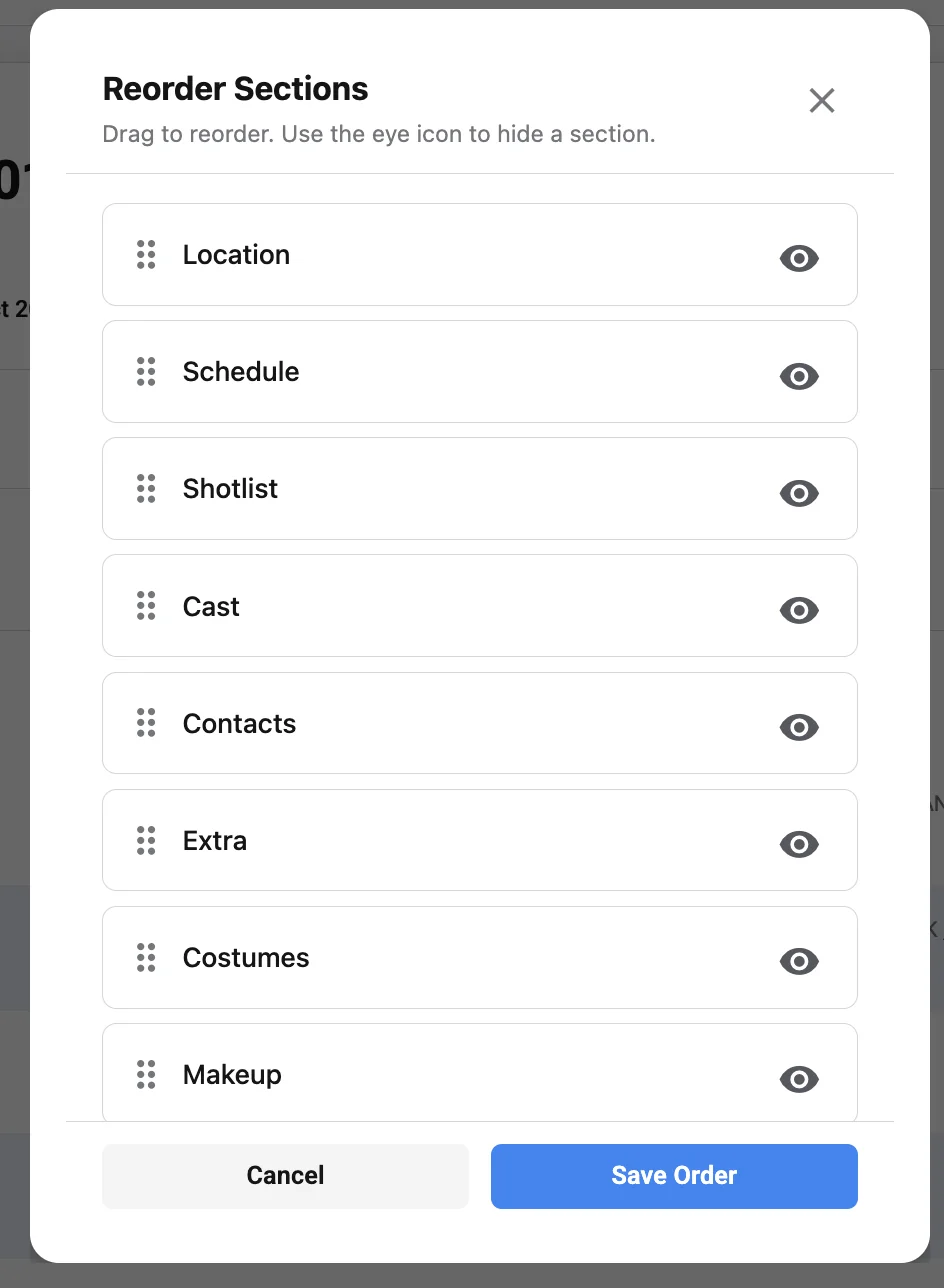
A call sheet template should be detailed enough to guide the day, but lean enough that people actually read it. For a short film, the best template usually fits the most important information onto one or two pages, with optional attachments for maps, safety plans, shot lists, or department-specific documents. If every section competes for attention, the key details will be missed.
Think of the template as a repeatable structure, not a form to fill mechanically. Keep sections that serve the production, remove fields that create clutter, and make sure the layout works on both phones and printed copies. A well-designed call sheet example should help readers find call time, location, contact, scene, and safety information within seconds.
Step 6: Assign cast call times with preparation needs in mind
Cast call times should be based on when each performer needs to be ready for rehearsal or camera, not simply when the crew arrives. Consider makeup, hair, wardrobe, blocking, intimacy coordination, stunt rehearsal, transportation, paperwork, and time to settle before working. Calling everyone at the same time may look simple, but it can create crowding, fatigue, and unnecessary waiting.
Create a cast table with each performer’s name, character name, cast ID, status, pickup time if applicable, arrival time, makeup or wardrobe call, and set call. If your production uses abbreviations, define them or keep them standard. Do not assume newer actors understand every production shorthand.
A useful cast section may include:
| Cast ID | Actor | Character | Status | Report To | Call Time | Notes |
|---|---|---|---|---|---|---|
| 1 | Name | Lead | Working | HMU | 7:00 AM | Wardrobe change after Scene 4 |
| 2 | Name | Roommate | Working | Holding | 8:30 AM | Bring approved shoes |
| 3 | Name | Neighbor | Working | Set | 10:00 AM | One scene only |
If a performer is not needed until later, give them a later call when possible. Respectful scheduling improves morale and helps the production run more professionally.
Step 7: Build the crew call section by department
The crew section should show who is working, their role, and when they are expected. For small productions, some crew members may hold multiple titles. List responsibilities clearly so the team knows whom to approach for each need.
Organize crew by department rather than placing everyone in one long unsorted list. Common departments include production, direction, camera, grip and electric, sound, art, wardrobe, hair and makeup, locations, transportation, catering, and post-related roles if they are present on set. Use department headers to make the document easier to scan.
For each crew member, include:
- Name
- Position
- Call time
- Phone number if appropriate
- Special note, such as “pre-call,†“equipment pickup,†or “wrap vehicleâ€
A short film may only have a few people in each department, but clarity still matters. If the same person is the gaffer and grip, list the role in the way the production will use it during the day. If a department is not present, do not force it into the template.
Step 8: Add department notes that prevent delays
Department notes are where you flag information that affects the day’s work. These notes should be specific, actionable, and tied to the schedule. Avoid using this section for broad reminders that no one can act on.
Examples of useful department notes include:
- Camera: Lens package, media handoff plan, camera prep status, special rigging, handheld or tripod-heavy work.
- Sound: Noise restrictions, wireless needs, room tone priorities, generator concerns, nearby traffic or HVAC issues.
- Art: Hero props, reset requirements, food props, breakaway items, continuity photos.
- Wardrobe: Costume changes, doubles, aging, stain continuity, weather-appropriate layers.
- Hair and makeup: Character looks, special makeup, touch-up station, continuity concerns.
- Grip and electric: Power access, cable path, exterior lighting, rigging restrictions, generator placement.
- Production: Releases, petty cash, lunch plan, trash removal, location wrap requirements.
Keep the notes tight. A production call sheet should not become a full department bible, but it should direct people to the details that matter today.
Step 9: Include safety, weather, and emergency information
Safety information belongs on every call sheet, even for a simple dialogue scene. At minimum, include emergency contact procedures, the nearest appropriate emergency facility if your production uses that practice, known hazards, weather considerations, and any special safety protocols. If the day includes stunts, weapons, intimacy, vehicles, water, animals, minors, fire, smoke, heights, or extreme weather, the call sheet should flag that clearly.
Weather notes should be practical. Instead of simply listing a forecast, explain the production impact where relevant: bring rain gear, protect sound equipment, expect cold overnight exteriors, prepare shade, or confirm a rain cover set. If weather may change the plan, identify who will communicate updates.
A safety block can include:
- Emergency number or set medic contact
- Nearest hospital or urgent care address, if used
- Safety officer, medic, or designated production contact
- Known location hazards
- Weather concerns and protective gear reminders
- Closed set, stunt, intimacy, or restricted-area notes
- COVID, health, or sanitation instructions if required by the production
Do not bury safety notes at the very bottom in tiny type. If the issue can affect how people work, place it where they will see it.
Step 10: Add maps, directions, and visual references when useful
A map or visual reference can reduce arrival confusion, especially when the location is difficult to find. Use visuals for practical orientation, not decoration. If the production is shooting in a complex venue, include a parking map, base camp map, load-in route, or annotated location photo.
Keep visual references readable on a phone. A tiny map screenshot with no labels will not help anyone. If the location has separate entrances for cast, crew, equipment, and background, label each route clearly and match those labels to the written instructions.
If maps contain sensitive information, distribute them carefully. Some teams attach maps separately so the main call sheet remains clean while location-specific details are controlled.
Step 11: Review the call sheet with department heads
Before sending the call sheet, review it with the people responsible for executing the day. The producer, first AD, director, production manager, and key department heads should verify the details that affect their teams. This review prevents the most common problems: wrong addresses, unrealistic call times, missing cast, outdated scene order, and overlooked equipment needs.
Use a focused review process. Ask each department to check only the details they own, then have one person maintain the master document. Too many editors can create conflicting versions.
Pre-distribution review checklist:
- Confirm shoot date and day number.
- Verify location address, parking, and access instructions.
- Check cast names, character names, cast IDs, and call times.
- Confirm crew list, positions, and department pre-calls.
- Match scene numbers and page counts to the current script.
- Check schedule timing against the latest film production schedule.
- Confirm meal plan and estimated wrap target.
- Add safety notes, hazards, and emergency information.
- Remove outdated notes from previous versions.
- Proofread phone numbers and email addresses.
- Confirm attachments, maps, and special documents.
If a department has not confirmed a critical item, state the uncertainty internally and resolve it before distribution. Sending a call sheet too early with unverified details can create more confusion than waiting briefly for accurate information.
Step 12: Distribute the call sheet and track confirmations
Send the final call sheet far enough in advance for cast and crew to plan their arrival, prepare wardrobe, charge batteries, pack gear, and ask necessary questions. For many short films, the call sheet goes out the day before the shoot once the next day’s plan is locked. If the production schedule changes late, send an updated version and clearly label it.
Use a consistent distribution method: email, production management software, messaging platform, or a combination agreed upon by the team. The message should include the shoot date, version number, and any high-priority notes. Ask recipients to confirm receipt if your production needs that level of accountability.
A professional distribution note can be simple:
- “Attached is the call sheet for tomorrow’s shoot day.â€
- “Please review your individual call time, parking instructions, and department notes.â€
- “Reply to confirm receipt.â€
- “Contact production immediately if you see a conflict or error.â€
When revisions happen, avoid vague messages like “new call sheet.†Use a version label such as “Rev. 2†or “Updated 9:15 PM†and summarize what changed. That helps prevent someone from following an outdated production call sheet.
Step 13: Print, save, and prepare for set use
Even if your production is mostly digital, prepare the call sheet for set conditions. Phones die, service drops, email gets buried, and locations may have poor connectivity. A few printed copies can save time when the team is moving quickly.
Keep printed copies with production, the AD team, base camp, and any check-in point. Save a PDF version so formatting does not shift across devices. If the document contains private phone numbers, do not leave copies in public areas after wrap.
It is also useful to keep yesterday’s call sheet, today’s call sheet, and tomorrow’s draft separated in your files. Clear file naming prevents mistakes, especially during multi-day short film planning.
Use this call sheet example as a working structure
The following call sheet example shows a practical layout for a short film shoot day. Adapt it to your production’s scale, union or non-union requirements, location needs, and internal workflow. The format matters less than accuracy, readability, and timely distribution.
| Section | Information to Include | Production Purpose |
|---|---|---|
| Header | Title, date, day count, general call, location | Establishes the correct shoot day |
| Key Contacts | Producer, 1st AD, production contact, safety contact | Directs questions and urgent communication |
| Location | Address, parking, entrance, holding, restrictions | Helps everyone arrive correctly |
| Daily Schedule | Crew call, pre-calls, first shot, meal, moves, wrap | Sets expectations for the day’s rhythm |
| Scenes | Scene numbers, descriptions, pages, cast, notes | Aligns departments around planned work |
| Cast | Actor, character, cast ID, call time, report location | Prevents unnecessary waiting and confusion |
| Crew | Department, name, role, call time, contact | Shows who is working and when |
| Department Notes | Camera, sound, art, wardrobe, HMU, production notes | Flags details that affect execution |
| Safety | Emergency info, hazards, weather, protocols | Keeps risk visible and actionable |
| Attachments | Maps, parking guide, sides, shot list if needed | Supports the main document without overcrowding it |
This structure can serve as a call sheet template for a one-day short film or as the base for a longer project. If your shoot is very small, combine sections without removing essential information. If the production is complex, keep the main call sheet readable and move supporting detail into attachments.
What should you do when the schedule changes?
When the schedule changes, update the call sheet quickly, label the revision clearly, and communicate exactly what changed. Do not rely on informal messages alone if the change affects call times, location, transportation, safety, or scene order. The revised document should become the new source of truth.
Changes are normal in production. Weather shifts, locations adjust, actors become unavailable, equipment needs change, and scenes move. The risk is not the change itself; the risk is inconsistent information spreading through the team.
Use this revision process:
- Confirm the change with decision-makers. Make sure the producer, AD, and affected department heads agree before updating the document.
- Revise the master call sheet. Change the actual document, not just the email body or group chat.
- Update the version label. Add a revision number or time stamp where it is easy to see.
- Summarize the change. State what changed, such as “Crew call moved to 8:00 AM†or “Parking now at north lot.â€
- Redistribute through the same main channel. Avoid scattering updates across multiple platforms without a clear final version.
- Request confirmation when needed. Confirm receipt from people directly affected by the change.
If the change happens on the day, the AD or production lead should announce it verbally and update any printed copies if practical. Digital accuracy still matters, but set communication must be immediate.
Avoid common call sheet mistakes
Most call sheet problems come from rushing, copying old information, or failing to think from the reader’s perspective. A document can look professional and still be unhelpful if it hides key details or sends people to the wrong place. Review the call sheet as if you are a crew member who has never been to the location and only has a few minutes to check the plan.
Common mistakes to avoid:
- Using an old address: Always confirm the active location and parking details.
- Calling everyone too early: Stagger call times when the scene order allows it.
- Leaving out report-to information: Tell cast whether to go to HMU, wardrobe, holding, base camp, or set.
- Mixing outdated schedule versions: Match the call sheet to the latest film production schedule.
- Burying safety notes: Put hazards and special protocols where they are visible.
- Overloading the page: Keep the main document readable and attach extras separately.
- Sending unclear revisions: Label updates and explain what changed.
- Skipping proofreading: Phone numbers, scene numbers, and times are easy to mistype.
- Ignoring mobile readability: Many people will read the call sheet on a phone.
- Forgetting wrap requirements: Add location clean-up, returns, or load-out notes when relevant.
A clean, accurate call sheet builds trust. It shows the team that the production values preparation, time, and communication.
Final pre-send checklist
Before you send the call sheet, run one final pass from top to bottom. This should be a practical check, not a redesign session. If the document answers the essential questions clearly, send it and keep the team moving.
Final checklist:
- The production title, shoot date, and day number are correct.
- General crew call and individual call times are clear.
- The location address, parking, and entrance instructions are accurate.
- Key contacts are current and reachable.
- Scene numbers, page counts, and cast IDs match the current script.
- Department notes reflect the actual needs of the day.
- Safety, weather, and emergency information are visible.
- Meal, company move, and wrap expectations are included if known.
- Attachments are included and labeled.
- The file name and version label are clear.
- The distribution list includes everyone who needs the document.
Once the call sheet is sent, keep the master version accessible. If questions come in, answer them consistently and update the document if the answer changes the plan for more than one person.
Turn the call sheet into a stronger production habit
A call sheet is more than paperwork. Used well, it becomes a discipline that improves communication across the entire production. Each shoot day gives the team a chance to refine the template, identify missing information, and make the next day smoother.
After wrap, note what worked and what caused confusion. Maybe the parking instructions needed a map. Maybe cast call times were too early. Maybe the scene table helped departments prepare, but the safety notes were too low on the page. Those observations help you build a better call sheet template for the next short film.
The best short film planning documents are practical, current, and easy to use under pressure. Build your call sheet with that standard in mind, and it will help your team spend less time searching for answers and more time making the film.