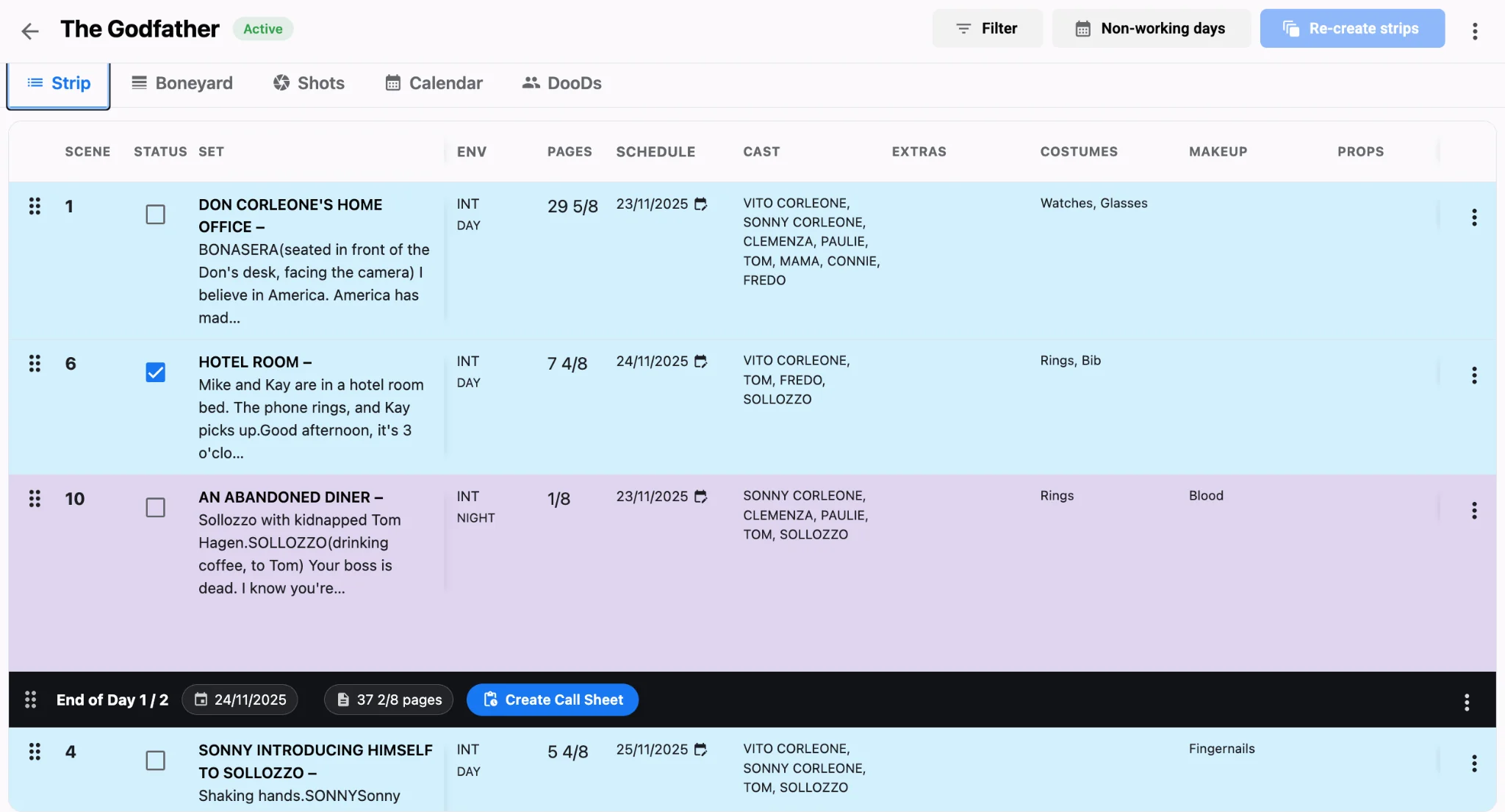
Union call times are not suggestions. Miss a meal window and you write a penalty. Shorten turnaround and you risk a forced call or a cast member who cannot legally work the next day. Day-length rules sit underneath every strip you place, yet many boards still treat them as notes on a whiteboard instead of constraints in the schedule. The fix is to design the daybreak so meal breaks, rest, and wrap targets are visible before anyone prints a call sheet.
Related video: Master Movie Scene Scheduling with Studiovity
Build the day around legal hours, not wishful pages
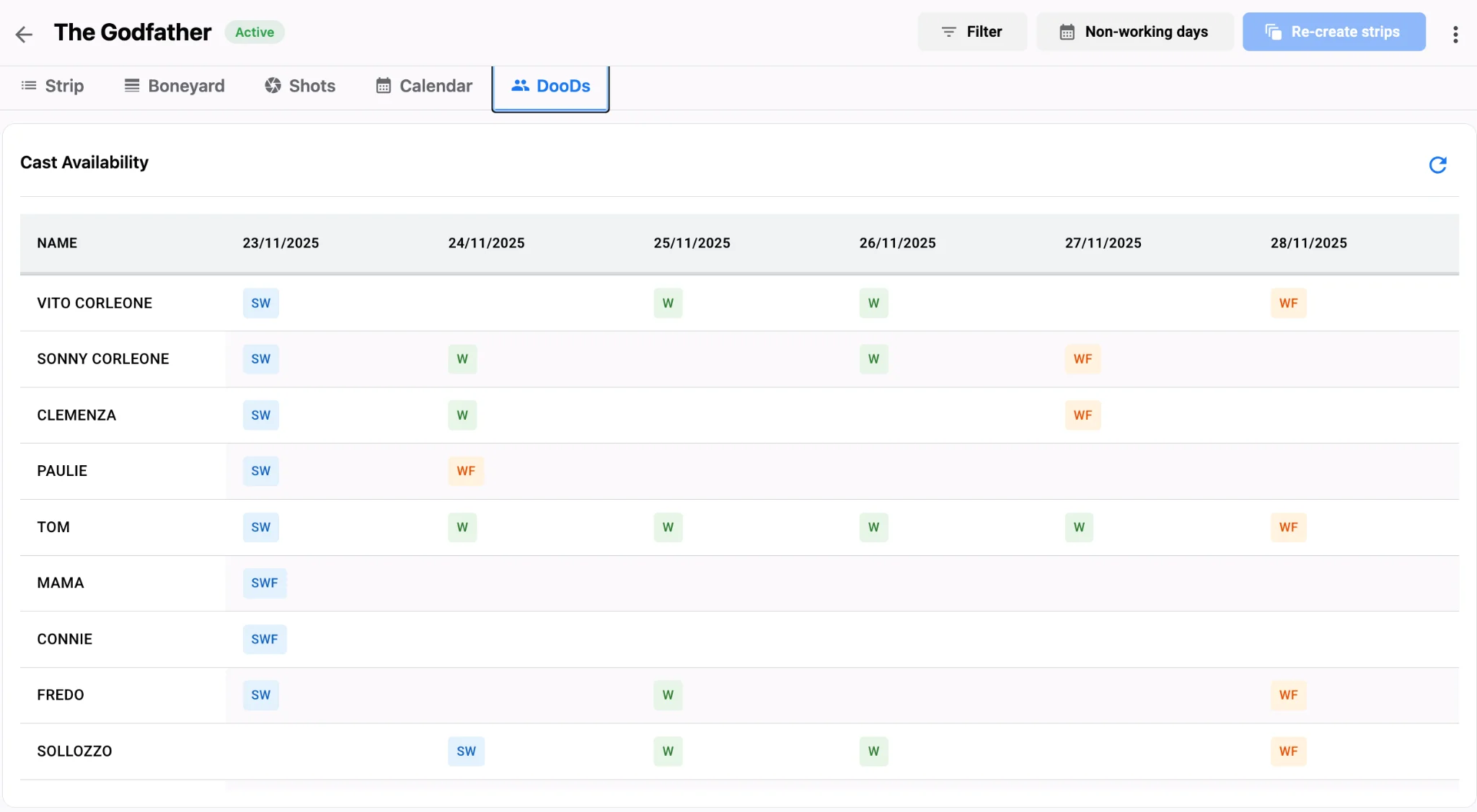
Count pages after you protect rest. A twelve-hour company day with a six-hour meal gap and an eight-hour turnaround is a different animal than “we can squeeze one more scene.” Studiovity’s film scheduling software helps ADs and UPMs see how cast availability, travel, and scene load stack into a real daybreak. Pair that with cast availability and travel logic so holding fees and late wraps do not surprise the line producer. If a star only clears until 6 PM, the board should show that ceiling before you stack night exteriors after their last scene.
Put buffers on the board where penalties hide
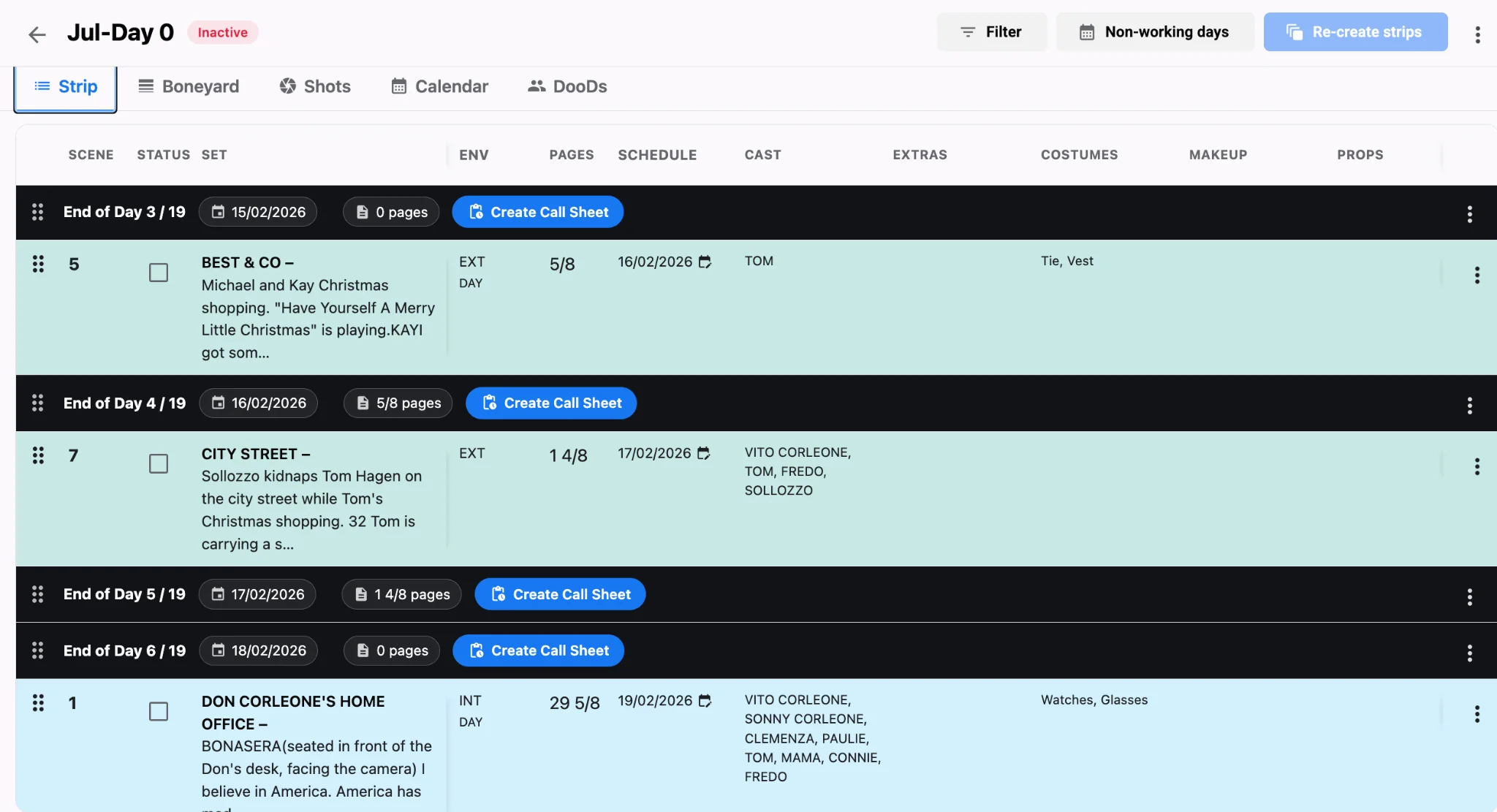
Meal penalties usually appear when the day slips after a late company move or an over-long setup. Give yourself a visible buffer: a lighter scene after lunch, or a pickup that can drop to the boneyard if the morning overruns. Turnaround buffers belong between night and day blocks—do not schedule a 5 AM call after a midnight wrap just because the pages look neat. When you regenerate the call sheet from the daybreak, individual call, makeup, and on-set times should reflect those buffers, not a generic 7 AM for everyone. That is how the published sheet protects the agreement you made on the board.
Keep a short checklist before you lock any day:
- Confirm meal break timing against the planned wrap, not the hoped-for wrap.
- Protect turnaround between consecutive cast workdays.
- Cap day length so overtime is a choice, not an accident.
- Add travel time into the meal and wrap math whenever the day includes a company move.
Reports that prove the day is legal
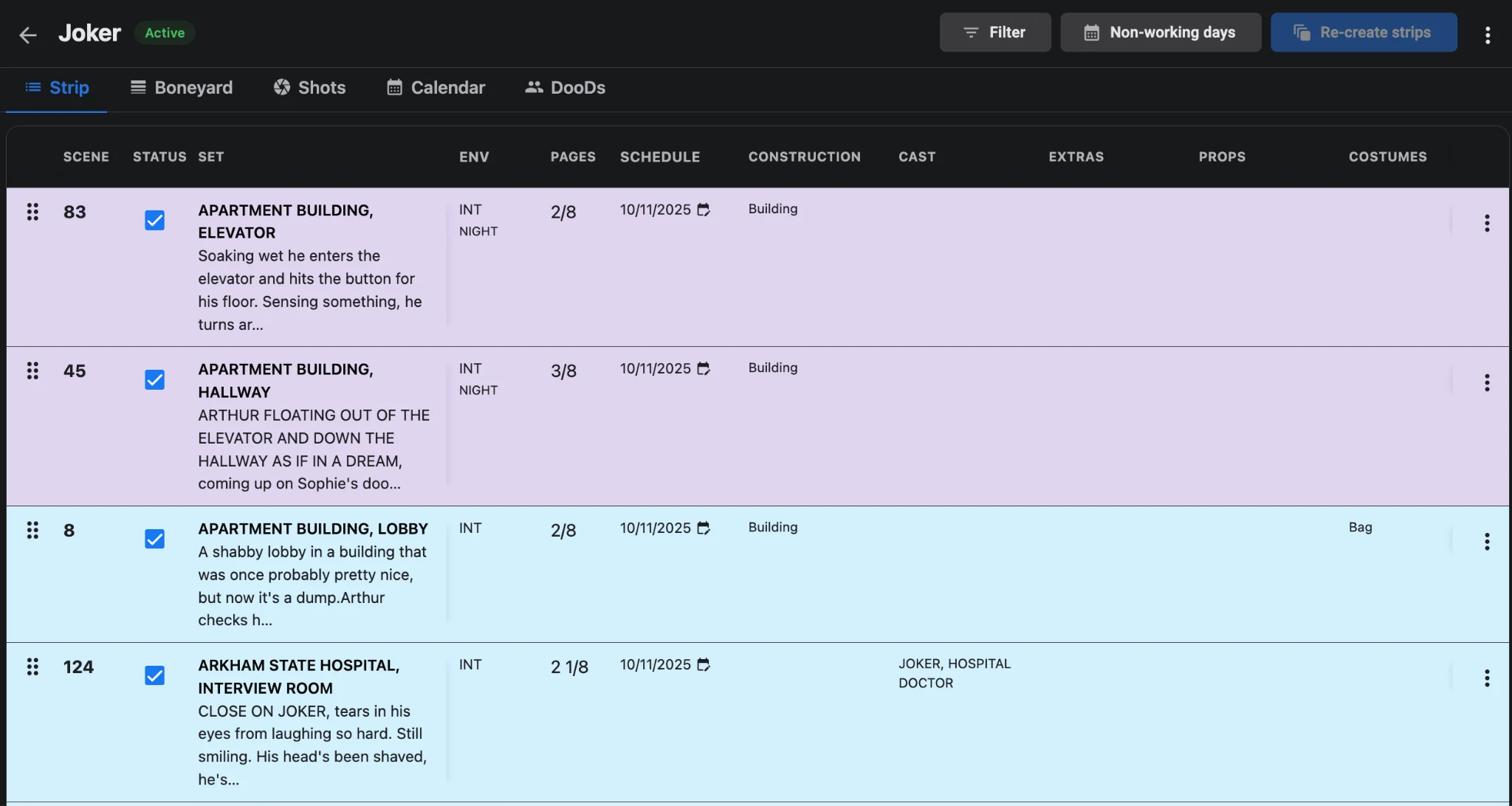
Department heads trust DOODs and one-liners more than a verbal promise. Export shooting schedule reports so producers can see consecutive workdays and rest gaps before contracts get tense—our walkthrough of DOOD reports, one-liners, and the boneyard covers what each document answers. When a revision lands mid-prep, update the shooting schedule first; then push fresh call sheets through digital call sheet distribution so nobody works off yesterday’s times.
Write meal and wrap targets into the daybreak notes so every later revision inherits them. Call sheets should not be the first place the crew learns that lunch is planned after a company move. To see what those penalties cost, read budget-aware scheduling: how smarter stripboards reduce overtime and hold days.
The payoff
Penalties and forced calls are schedule design problems, not bad luck. When a day includes a company move, put the meal window after the reset—not before a heavy setup that always runs long. If turnaround into a night block is tight, shorten the prior day on the board instead of hoping wrap will magically land. Model meal windows, turnaround, and day length inside Studiovity’s film scheduling tools, lock the daybreak with your UPM, and let the call sheet carry the same rules to set.