
Every successful film begins long before the cameras start rolling. While audiences often focus on actors, directors, and visual effects, experienced filmmakers know that a well-planned budget shapes every stage of production. In fact, Film Budgeting in Pre-Production lays the financial foundation for the entire project. Therefore, it helps producers allocate resources wisely, avoid costly mistakes, and keep every department aligned with production goals.
Whether you’re creating a short film, commercial, documentary, or feature film, an effective pre-production budget allows your team to make informed decisions. Moreover, it reduces uncertainty and gives investors confidence that the project can reach completion. As a result, budgeting has become one of the most important responsibilities in film production.

What Is Pre-Production Budgeting?
Film Budgeting in Pre-Production is the process of estimating and organizing all production expenses before filming begins. Instead of reacting to costs during production, filmmakers forecast expenses in advance and assign funds to every department.
A complete film budget includes above-the-line costs, below-the-line costs, equipment rentals, and locations. Furthermore, it covers transportation, catering, insurance, post-production, contingency funds, and marketing expenses. Consequently, producers gain a clear picture of how much funding the project requires before committing to production.
In addition, budgeting works alongside script breakdowns, shooting schedules, call sheets, and production calendars. Together, these planning tools help transform a screenplay into a manageable production plan.
Budgeting Helps Turn Creative Ideas Into Reality
Every screenplay contains creative ambitions. However, every production also faces financial limitations. Therefore, budgeting bridges the gap between imagination and reality.
For example, a script may include multiple international locations, elaborate action scenes, and hundreds of extras. Although these ideas sound exciting, they may exceed the available budget. Consequently, producers and directors can adjust scenes early instead of making rushed compromises during filming.
Likewise, budgeting allows filmmakers to prioritize spending where it matters most. For instance, some productions invest more in cinematography, while others focus on visual effects or production design. Because every project has different goals, Film Budgeting in Pre-Production supports smarter creative decisions.
Prevents Costly Production Delays
Unexpected expenses remain one of the biggest reasons productions fall behind schedule. Specifically, equipment failures, weather changes, location issues, or last-minute casting changes can quickly increase costs.
Fortunately, detailed Film Budgeting in Pre-Production reduces these risks. Producers identify potential expenses before production starts. Additionally, they include contingency funds for emergencies.
As a result, the production team responds faster to unexpected situations without disrupting the entire schedule. Instead of searching for additional financing midway through filming, the team already has a financial safety net.
Supports Better Resource Allocation
A film production depends on hundreds of moving parts working together. Therefore, every department requires people, equipment, locations, transportation, and supplies.
Film Budgeting in Pre-Production ensures every resource receives appropriate funding. For instance, the camera department knows its equipment limits, while the costume department understands its purchasing budget. Meanwhile, production managers coordinate schedules that fit available resources.
Because everyone works from the same financial plan, departments avoid unnecessary spending. Consequently, communication improves, and production becomes more efficient.
Makes Scheduling More Accurate
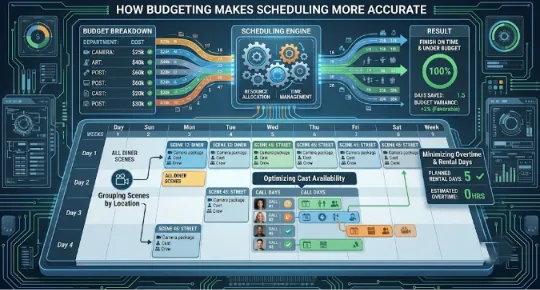
Scheduling and budgeting go hand in hand. After all, every shooting day carries significant costs, including crew wages, equipment rentals, catering, transportation, and location fees.
Therefore, producers use the budget to build realistic production schedules. Instead of planning unnecessary shoot days, they group scenes by location, cast availability, and production requirements.
Additionally, efficient scheduling lowers overtime expenses and reduces equipment rental periods. For example, saving even one production day can significantly reduce the overall budget. This close relationship explains why successful teams complete Film Budgeting in Pre-Production early.
Builds Investor and Producer Confidence
Film financing depends heavily on trust. Investors want assurance that their money will support a realistic production plan.
A professional budget demonstrates preparation, research, and financial responsibility. Moreover, it shows producers understand every stage of production and have accounted for expected expenses.
When investors review a detailed budget, they can evaluate risks more accurately. Consequently, fundraising discussions become more productive because financial expectations remain transparent. Independent filmmakers especially benefit from detailed budgets since funding often comes from multiple investors or production partners.
Improves Department Collaboration
Pre-production brings together producers, directors, cinematographers, production designers, costume designers, and assistant directors.
Budgeting encourages collaboration among these departments from the beginning. Therefore, every team discusses priorities, identifies challenges, and agrees on realistic financial expectations.
For example, if the art department requests additional set construction, producers can immediately evaluate its impact on other departments. Similarly, the camera department may recommend alternative equipment that achieves similar results at a lower cost. This collaborative approach prevents misunderstandings later in production.
Helps Control Spending Throughout Production
Creating the budget represents only the beginning. Successful productions continuously compare actual expenses against planned costs.
During filming, producers monitor daily spending and identify budget variances early. Consequently, they make adjustments before small problems become major financial issues.
For example, if transportation costs exceed estimates, producers may reduce expenses in another category without affecting the film’s quality. This ongoing financial tracking helps productions finish within budget while maintaining creative standards.
Modern Software Makes Budgeting Easier
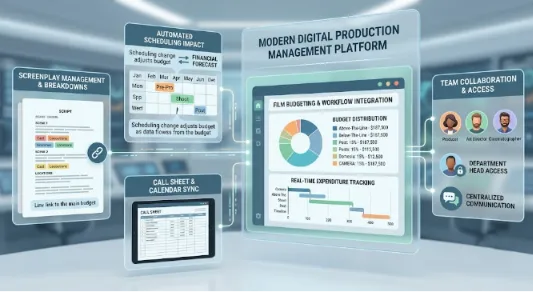
Traditional budgeting relied heavily on spreadsheets and manual calculations. Although spreadsheets remain useful, modern production management software offers a faster and more organized solution.
Today’s platforms combine budgeting with screenplay management, script breakdowns, scheduling, call sheets, and production calendars. Because all production data stays connected, changes automatically reflect across multiple workflows.
For example, when filmmakers modify the shooting schedule, they can immediately evaluate its financial impact. Likewise, script revisions help producers estimate additional production costs before filming begins. Integrated Film Budgeting in Pre-Production software also improves communication because department heads can access updated information from one centralized platform.
Common Budgeting Mistakes to Avoid
Many productions encounter financial problems because they overlook simple planning mistakes. Fortunately, most issues can be avoided with careful preparation.
Some common budgeting mistakes include:
Underestimating contingency funds.
Ignoring post-production expenses.
Forgetting insurance and permits.
Creating unrealistic shooting schedules.
Failing to update the budget after script revisions.
Overlooking transportation and accommodation costs.
Avoiding these mistakes helps productions stay financially stable from pre-production through post-production.
Conclusion
Ultimately, Film Budgeting in Pre-Production remains one of the most valuable steps because it influences every decision that follows. It transforms creative ideas into achievable production plans, supports smarter scheduling, improves collaboration, and reduces financial risk.
More importantly, an organized budget gives filmmakers greater confidence throughout production. Instead of worrying about unexpected costs, they can focus on telling compelling stories and delivering high-quality films.
As filmmaking continues to embrace digital production management, budgeting has become more connected with script breakdowns and scheduling than ever before. Filmmakers who invest time in accurate planning place their projects in the strongest possible position for success. Whether producing an independent short film or a large-scale feature, careful budgeting remains the foundation of efficient, professional, and profitable filmmaking.