
Every successful film starts with a clear vision. However, turning ideas into visual sequences often takes time and careful planning. Therefore, finding the Best Storyboard Software for Filmmaking has become an essential part of modern pre-production. Instead of sketching scenes on paper or juggling multiple documents, filmmakers can now organize every shot digitally. Consequently, they can collaborate effortlessly with their crew and move directly into production planning.
Today, storyboard software does much more than create drawings. For instance, many platforms now connect storyboards directly with scripts, shot lists, production schedules, and even AI-powered planning tools. As a result, directors, cinematographers, producers, and content creators can work much faster. Thus, they reduce costly production mistakes before hitting the set.
If you’re looking for the Best Storyboard Software for Filmmaking in 2026, this guide compares the leading options. Furthermore, it explains exactly what makes each one unique.
Why Storyboard Software Matters
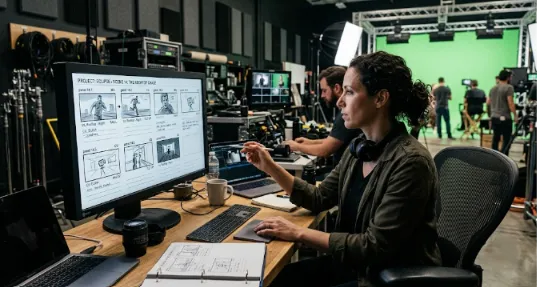
A storyboard acts as the visual blueprint for a film. It helps everyone understand camera angles, scene composition, actor movement, and shot transitions before production begins.
Digital storyboard software improves this process even further. For example, it lets teams make instant revisions and share updates in real time. Additionally, users can attach notes, organize scenes, and prepare detailed shot lists dynamically. Consequently, production becomes much more efficient from pre-production all the way through post-production.
Furthermore, many filmmakers now prefer cloud-based platforms. This is because they can review storyboards from any device, whether they are on set or working remotely.
1. Studiovity – The Complete AI Storyboard Software
Studiovity stands out as the Best Storyboard Software for Filmmaking because it combines AI-powered storyboarding with a complete film production management platform. Instead of switching between multiple applications, filmmakers can handle every stage of pre-production from one unified workspace.
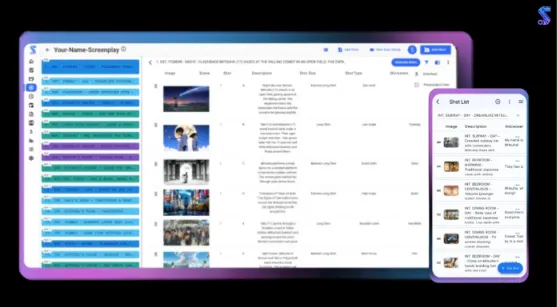
The platform begins with screenplay creation or script import. Next, users can generate AI storyboards using consistent characters and cinematic shot suggestions. Afterward, every storyboard automatically connects with shot lists, script breakdowns, production schedules, call sheets, budgeting, and production calendars.
This integrated workflow saves hours of manual work. Therefore, directors can visualize scenes while producers immediately understand scheduling requirements. Likewise, cinematographers receive detailed shot references before filming begins.
Unlike many standalone storyboard applications, Studiovity works across web browsers, Android devices, iPhones, iPads, and desktop computers. Therefore, production teams stay connected regardless of their location.
Key advantages include:
AI storyboard generation
Consistent AI characters
Automatic shot lists
Script breakdown integration
Production scheduling
Call sheet generation
Budget management
Cloud collaboration
Mobile and desktop support
For filmmakers who want an all-in-one production platform instead of a standalone storyboard tool, Studiovity offers the most complete solution available.
2. Storyboarder by Wonder Unit
Storyboarder remains one of the most popular free storyboard applications for independent filmmakers and students. It offers a simple drawing interface that allows users to sketch scenes quickly.
Moreover, the software supports layers, camera notes, timing, and basic animatics. Users can also export projects easily into editing software for further development.
Although Storyboarder excels at drawing, it focuses primarily on visual planning. It does not include scheduling, budgeting, script breakdowns, or production management features. Therefore, many filmmakers pair it with additional software during production.
3. Boords
Boords provides an easy-to-use online storyboard platform designed specifically for creative teams, advertising agencies, and video production companies.
Its drag-and-drop interface simplifies storyboard creation. Additionally, users can upload images, add dialogue, create shot notes, and gather client feedback through cloud collaboration.
Boords also generates simple shot lists automatically. However, it lacks deeper production tools such as budgeting, AI script breakdown, and complete production scheduling.
For agencies producing commercials or branded content, Boords offers an efficient collaborative workflow.
4. StudioBinder
StudioBinder has established itself as a production management platform with storyboard capabilities. Users can upload storyboard images, connect them with shot lists, and organize production documents.
The software also includes scheduling, call sheets, production calendars, and script breakdown tools. Consequently, many production companies use StudioBinder for medium-sized film projects.
While StudioBinder supports visual planning, its storyboard creation relies mainly on uploaded artwork rather than AI-generated cinematic visuals.
5. Canva
Canva has become a surprisingly useful option for beginner filmmakers who need quick storyboard templates.
Users can choose from hundreds of layouts, customize scenes with drag-and-drop elements, and export presentations within minutes. Moreover, Canva requires very little design experience.
Nevertheless, Canva serves primarily as a graphic design platform rather than professional filmmaking software. It lacks production workflows, screenplay integration, scheduling, and advanced storyboard management.
Features to Look for in Storyboard Software
Choosing the Best Storyboard Software for Filmmaking involves more than selecting the best drawing tools. Instead, filmmakers should evaluate how the software supports the entire production process.
Look for features such as:
AI-assisted storyboard generation
Script integration
Automatic shot lists
Cloud collaboration
Version history
Camera and lens information
Production scheduling
Mobile accessibility
Team collaboration
Budget and call sheet integration
These features reduce repetitive work while helping every department stay aligned throughout production.
AI Is Transforming Storyboarding
Artificial intelligence has changed the way filmmakers prepare projects. Instead of spending days sketching scenes manually, directors can now generate cinematic storyboards within minutes.
AI also helps maintain visual consistency between scenes. Furthermore, many platforms recommend camera angles, framing, compositions, and shot variations automatically.
As AI continues to improve, storyboard software will become an even more important creative partner during pre-production. Rather than replacing filmmakers, these tools accelerate visualization while leaving creative decisions in human hands.
Which Storyboard Software Should You Choose?
The right software depends entirely on your production needs.
Independent filmmakers may appreciate Storyboarder because it offers powerful drawing tools without cost. Creative agencies often choose Boords for collaborative reviews. Beginners may find Canva simple enough for basic visual planning.
However, filmmakers producing feature films, television series, documentaries, commercials, or streaming content usually benefit from an integrated workflow. Therefore, discovering the Best Storyboard Software for Filmmaking becomes critical for their success. Instead of managing multiple applications, they can create scripts, generate AI storyboards, build shot lists, schedule production, prepare budgets, and send call sheets from one platform.
That makes Studiovity the strongest choice for professional filmmaking in 2026.
Final Thoughts
Storyboard software has evolved far beyond digital sketching. Today’s filmmakers need platforms that connect creative planning with real production workflows. The ability to move directly from screenplay to storyboard, shot list, schedule, budget, and call sheet saves valuable time. Meanwhile, it reduces communication errors.
As productions become more complex, integrated AI-powered platforms continue to lead the industry. Therefore, investing in the Best Storyboard Software for Filmmaking will improve team collaboration instantly. Whether you’re directing your first short film or managing a large production, the right tool will speed up planning. Thus, it helps bring your creative vision to life with greater confidence.
If you want a complete filmmaking solution rather than just a drawing tool, Studiovity offers the Best Storyboard Software for Filmmaking available in 2026.