
Imagine Star Wars without the grime and rust of the Millennium Falcon. Without that lived-in texture, the universe isn’t a galaxy far, far away—it’s just empty soundstages. You have likely spent thousands of hours watching movies, yet you might have missed the most important character on screen: the environment. Every cracked window and coffee cup is a deliberate act of cinematic world building, designed to trigger an emotion before a single word of dialogue is spoken.
At the top of the early creative hierarchy sits the architect of these environments: the production designer in film. To understand their relationship with the director, think of the classic dynamic between an architect and a client. According to industry veterans, while the director envisions the emotional “house” of the story, the designer drafts the blueprints and selects the materials to make that vision stand up. Their primary tool is visual storytelling, ensuring that physical spaces directly reflect a character’s mental state.
Masterful world building operates on a subconscious level, remaining virtually invisible until you know exactly what to look for. This guide pulls back the curtain on this hidden craftsmanship, transforming how you watch your favorite films by revealing the intentional magic behind the background.
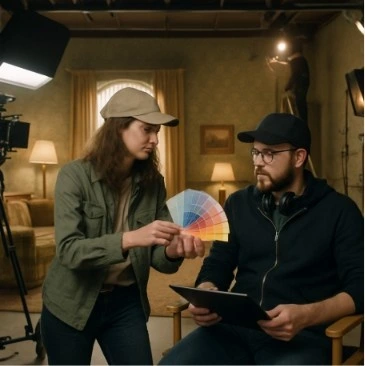
Mastermind vs. Manager: Decoding the Differences Between Production Designers, Art Directors, and Set Decorators
You’ve likely sat through the rolling credits of a movie and been confused by the differences between a production designer and an art director. Think of the Production Designer as the visionary architect—the person dreaming up the overarching look, feel, and physical boundaries of the film’s universe. They design the master blueprint. The Art Director acts as the lead project manager who takes those blueprints and makes them real, managing construction crews, tracking art department budgets, and ensuring the walls actually get built on time.
To master this hierarchy and understand the specific roles, it helps to break down their daily duties:
- Production Designer (The Vision): Establishes the visual style, creates the concept, and collaborates directly with the director.
- Art Director (The Logistics): Oversees the carpenters and draftsmen, transforming those concepts into sturdy physical structures.
- Set Decorator (The Texture): Selects the furniture, drapery, and small everyday details that fill the empty rooms.
While the large structures create the boundaries of a scene, it is that final layer of decoration that truly sells the illusion. A decorator decides if a character’s desk features sleek glass organizers or dusty, overflowing paperbacks, adding crucial “lived-in” history to the environment.
Building Emotional Worlds: How Color Palettes and Textures Drive Narrative Immersion
Have you ever noticed how romantic comedies feel bathed in golden sunlight, while dystopian thrillers look soaked in ice water? This is the strategic use of a film color palette and visual motifs. Designers use color as visual shorthand, allowing you to instantly feel the scene’s mood before a single line is spoken. Warm tones signal safety and nostalgia, whereas harsh blues evoke isolation.
Image: A side-by-side comparison of a warm, yellow-toned room from a Wes Anderson film versus a cold, blue-toned room from a sci-fi thriller.
Beyond color, the physical surface of a room acts as a silent biography for its inhabitants. Peeling wallpaper, frayed rugs, and rusted pipes immediately communicate a history of struggle or neglect. Conversely, a villain’s lair often utilizes sleek, unblemished marble and spotless glass to project cold perfection. You instinctively read these textured clues without even realizing it.
Film scholars call this total visual arrangement “Mise-en-scène,” which simply translates to “placing on stage.” It encompasses every physical set piece, prop, and color choice within the camera’s frame. Mastering this composition is what guarantees the impact of production design on narrative immersion. When paired perfectly with the visual storytelling in cinematography, designers ensure the audience forgets they are watching a movie set and completely buys into the illusion.
Reaching this emotional depth requires monumental planning long before the cameras ever roll. Choosing the exact shades of paint or distressed fabrics to convey a script’s themes begins with abstract psychological ideas that must be carefully translated into physical realities.
From Script to Sketch: Mastering the Pre-Production Design Process and Mood Boarding
Before a hammer swings, the cinematic world must first be built entirely on paper. Learning how to create a film mood board for production design is the crucial first step in this journey. Designers act as visual translators, gathering photographs, historical references, and color palettes that capture the script’s emotional tone. If a character is a messy genius, their board might feature overflowing bookshelves and stark lighting. These collages ensure the director and designer share the exact same mental picture.
To transform these abstract feelings into physical sets, professionals follow a strict production design process in film pre-production. This structured workflow anchors imagination to reality:
- Script Analysis: Highlighting structural narrative requirements, like a specific broken window needed for a character’s escape.
- Concept Illustration: Utilizing essential software for modern production designers to draft 3D digital mockups of proposed environments.
- Technical Drafting: Creating exact architectural blueprints so construction crews know precisely how to build the walls safely.
All these materials are ultimately compiled into a “Look Book”—a comprehensive visual bible for the movie. This document is essential for crew communication, guaranteeing that costume designers and prop makers work toward one unified aesthetic. Yet, dreaming up a stunning world is only half the creative battle; bringing that Look Book to life requires facing real-world constraints and a delicate balancing act of collaboration and budgeting.
The Balancing Act: Collaborating with Cinematographers while Managing Art Department Budgets
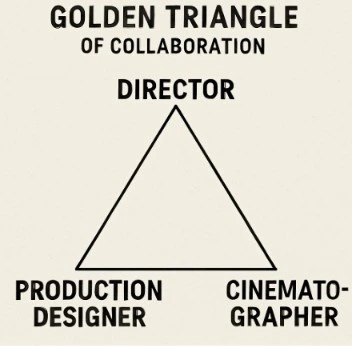
Have you ever wondered why a thriller feels so chilling? It comes down to departmental synergy. Understanding how production designers collaborate with directors and cinematographers reveals the true engine of movie-making. They form a visual storytelling trio. If a designer paints a room dark blue to represent a character’s sadness, the cinematographer must light it perfectly so the camera actually captures that specific emotional mood.
Once cameras roll, the focus shifts to reality, answering what a production designer actually does on a film set. They actively oversee “Practical Sets”—environments physically built with wood, paint, and fabric rather than added digitally later. Think of the famous rotating hallway in Inception; that massive, physical centrifuge was completely real. Building tangible rooms gives actors a genuine playground, allowing their performances to react naturally to the space.
Constructing these massive worlds isn’t always financially possible, however. When managing art department budgets in independent film, designers often rely on “Found Locations.” Instead of building a diner from scratch, they rent a real one, simply swapping the curtains, artwork, and furniture to fit the script. This clever adaptation saves money while maintaining cinematic quality.
Breaking into the Art Department: How to Build a Production Design Portfolio with Zero Experience
Figuring out how to become a production designer with no experience feels daunting, but you don’t need Hollywood budgets to prove your talent. The goal is simply showing how your brain translates scripts into physical spaces. When building a production design portfolio for beginners, highlight your creative problem-solving over expensive materials.
Showcase your unique vision today by gathering these three foundational pieces:
- Conceptual Mood Boards: Pick a classic script and collect speculative images capturing the exact colors, textures, and architecture of your imagined world.
- Prop Recreations: Design and photograph a detailed item—like a weathered fantasy map—to demonstrate your hands-on craftsmanship.
- On-Set Photography from student films: Volunteer on local campus projects to capture your physical sets under real camera lighting.
Exceptional designers are also obsessive researchers. Mastering historical accuracy in period piece production design—like identifying the correct 1920s cocktail glasses for a speakeasy—will instantly elevate your amateur projects into a professional showcase.
Transform Your Viewing Experience: 3 Ways to Spot Masterful Production Design in Your Next Film
You no longer just watch movies; you step into carefully crafted realities. You might have previously viewed sets as mere backgrounds, but now, you recognize the silent storyteller shaping your subconscious. Even in an era of heavy digital effects, the human craft of cinematic world building remains the physical foundation anchoring every scene.
Try an active watching challenge tonight. Pick a favorite movie and scrutinize the main character’s personal space. Notice the wallpaper, the clutter, or the worn edges of their furniture. When you ask yourself what a production designer is communicating through these specific choices, you will suddenly see the hidden emotional narrative playing out behind the actors.
Each time you spot the difference between a random room and a deliberately designed environment, your appreciation for this invisible artistry will grow. When the final credits roll, keep watching. Look for the Production Designer’s name—the visionary architect who secretly built the world you just experienced.
Build Better Worlds with Studiovity
The role of a production designer in film is a balancing act between imagination and logistics. Studiovity simplifies this process with an AI-powered platform for pre-production. Our tools streamline script breakdowns and team collaboration, helping you translate vision into reality without the manual clutter. Whether managing budgets or designing “Look Books,” Studiovity ensures your visual storytelling is seamless. Start building today.
https://blog.studiovity.com/storyboarding-in-film-how-to-visualize-scenes-before-shooting/