
Picture this: you have just wrapped an exhausting day of shooting, sent your tired friends home, and finally sat down to edit your project. Suddenly, your stomach drops because you realize you completely forgot to film the crucial close-up of the main character’s text message. Experienced editors often cite missing coverage like this as the primary reason amateur projects fall apart in post-production. Shot listing in filmmaking is mastered by professionals to avoid these exact disasters.
Mastering shot listing in filmmaking starts with one foundational concept. Think of this document as the architectural blueprint for your movie. Before a single brick gets laid on a house, builders know exactly where every window goes; similarly, a shot list breaks down your script’s grand ideas into a practical, step-by-step map for your camera.
Showing up with this guide does more than just guarantee you capture every angle for your visual storytelling. According to veteran directors, carrying a detailed plan provides an invisible psychological armor. Your cast and crew immediately recognize you are prepared, which replaces the usual chaotic set-day anxiety with a calm, focused environment.
Trading that panic for professional confidence begins right here. By integrating this essential tool into your pre-production workflow, you will never have to “wing it” or cross your fingers on set again.
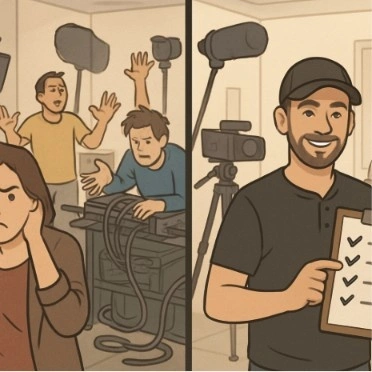
Blueprints vs. Sketches: The Crucial Difference Between Shot Lists and Storyboards
You might wonder if you must draw every scene to make a real movie. Understanding shot list vs storyboard differences simply means separating art from organization. A storyboard acts as a comic book sketch of your artistic vision. Conversely, a shot list is your logistical blueprint—a text document detailing exactly what gear you need and what order to film in.
When time is tight, smart creators use specific filmmaking techniques to prioritize their prep work. Here is how these tools compare and when to use them:
Storyboards (Visual): Best for communicating specific moods or planning out complex action sequences.
Shot Lists (Logistical): Crucial for scheduling the day and ensuring you never forget a vital camera setup.
The Hybrid Approach: On small indie sets, draw quick stick-figures only for the trickiest scenes, but rely on a detailed shot list for the day’s heavy lifting.
Before organizing these logistical blueprints, you need the right vocabulary. Knowing how to precisely label your camera angles unlocks a powerful way to direct your story.
Mastering the Visual Dictionary: How Shot Sizes Change Your Audience’s Emotions
By choosing shot sizes for emotional impact, you manipulate viewer empathy rather than relying on random variety. Think of camera angles as your visual storytelling vocabulary. Before capturing dramatic details, always film a “Master Shot”—a wide, continuous recording of the entire scene. This filmmaking technique guarantees you never run out of footage in editing.
Once that foundation is secured, you can move closer. Here is your core visual dictionary and the emotional “job” each setup performs:
Master Shot: Records the full scene as an editing safety net.
Wide Shot (WS): Shows the environment, creating a sense of scale or isolation.
Medium Shot (MS): Mimics natural conversational distance to build casual connection.
Close-Up (CU): Focuses tightly on the face to force audience empathy.
Extreme Close-Up (ECU): Highlights tiny details to crank up tension.
Translating these choices into a working document requires understanding the anatomy of a standard tracking sheet. Effective shot listing in filmmaking relies on this technical precision.

Anatomy of a Professional Shot List: The Essential Columns Every Director Needs
Staring at a blank spreadsheet can feel overwhelming, but creating shot list templates for short films simply means organizing your visual vocabulary. To save space, directors rely on shorthand. You already know WS and CU, but add OTS (Over the Shoulder—looking past one character’s shoulder to another) and POV (Point of View—showing exactly what the character sees) to your toolkit. Getting these cinematography shot list abbreviations explained keeps your crew moving fast instead of reading paragraphs of text.
Wondering exactly what details to include in a shot list? Think of it as a technical grocery list where every row tells your crew what to prepare. A standard industry document requires these six essential columns:
Scene #: The specific script scene you are filming.
Shot #: A numbering system (e.g., 1A, 1B) to track your progress.
Shot Type: Your visual abbreviations (like CU, OTS, or POV).
Equipment: Technical gear needed for the setup, like a tripod or gimbal.
Description: A quick note of the action happening on camera.
Estimated Time: How long you expect filming this angle to take.
Armed with this organized grid, you can confidently turn artistic ideas into concrete tasks. Shot listing in filmmaking bridges the gap between imagination and reality. The next challenge is actually filling it out systematically without getting overwhelmed.
From Page to Production: A Step-by-Step Workflow for Breaking Down Your Script
Translating written dialogue into compelling visual storytelling requires a practical process called script breakdown. This means deciding which camera angles are necessary to capture the scene effectively, building a safety net professionals call “coverage.” Proper coverage typically involves planning a master wide shot of the whole action, plus enough close-ups to give yourself options during editing.
Before assigning these specific shots, map out the physical space carefully. Placing the camera randomly around two talking actors often disorients the audience, making it look like the characters are magically swapping seats or looking in the wrong direction.
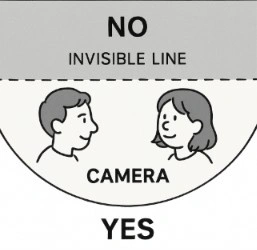
Understanding how to plan 180-degree rule coverage eliminates this spatial headache. Just draw an invisible line connecting your characters’ noses and keep all camera setups on one side of it. By keeping the camera inside that half-circle, the actor on the left always looks right, and their eye lines will match correctly on screen.
Such solid preparation guarantees seamless collaboration because shot listing in filmmaking ensures your camera team instantly grasps the logical blueprint. Yet, shooting these planned angles in chronological story order still wastes hours moving lighting gear back and forth. Reorganizing your schedule can solve this logistical nightmare.
The 'Work Smarter' Strategy: How Grouping Shots by Setup Slashes Your Filming Time
Imagine filming a simple dinner argument. If you shoot chronologically, you will record the husband speaking, turn the camera and lights around for the wife’s reply, and then turn everything back for the husband’s reaction. This ping-pong approach doubles your workload. Instead, optimizing your production schedule with camera setups means filming out of story order, capturing every shot facing one direction first.
To pull off this time-saving trick, you must reorganize your plan logically. Professionals rely on specific filmmaking techniques to group their shots:
Group by location: Film everything in the kitchen before moving to the living room.
Group by lighting setup: Shoot all bright window scenes before blocking the sun for darker scenes.
Group by lens: Capture all wide angles first, then swap to closer lenses.
Consolidating your work this way fundamentally transforms how your set operates. By organizing daily call sheets from shot lists—creating a master schedule that tells your cast and crew exactly when to arrive based on these new groupings—you can reduce set transition times by up to 50%. Successful shot listing in filmmaking is the key to this efficiency.
Once you grasp the practical logic behind non-linear scheduling, you need a reliable method to physically or digitally build these documents.
Digital vs. Analog: Choosing the Right Tool for Your Creative Process
Grabbing a clipboard and printed spreadsheet is a budget-friendly way to manage smaller sets. Yet, comparing digital shot listing software vs traditional methods reveals a clear winner for flexibility. Digital apps let you instantly reorganize setups when bad weather hits, leveraging digital templates for faster revisions instead of relying on messy, crossed-out handwriting.
Beyond mere organization, these systems prevent continuity errors—those embarrassing mistakes where a prop mysteriously moves between cuts. Maintaining continuity through detailed shot descriptions directly in your chosen tool creates a flawless visual record, ensuring the wide angle you started filming on Tuesday perfectly matches the close-ups you finish on Thursday. Comprehensive shot listing in filmmaking protects your project’s visual integrity.
Once you select the ideal tracking format for your production scale, you are finally ready to step onto the set. Shot listing in filmmaking provides the structure you need for success.
Your Three-Step Action Plan for a Perfect Shoot Day
You no longer have to guess your camera angles. By treating your shot list as a practical blueprint, you’ve removed the guesswork from production. This preparation doesn’t restrict you; it creates the creative freedom to focus on your actors and improving narrative flow with shot sequencing. Shot listing in filmmaking empowers your creative voice.
Before your next shoot, run through this final checklist to transition confidently into active directing:
Print redundancies: Keep 3 copies on hand (for you, your camera operator, and your assistant).
Do a walkthrough: Walk the location to physically visualize the setups before the crew arrives.
Align with your team: Review the document with your Director of Photography to confirm the technical plan.
By following these steps, shot listing in filmmaking becomes your most valuable skill. Start your shot listing in filmmaking journey today and see the difference on screen. Consistent shot listing in filmmaking separates the amateurs from the pros.
Streamline Your Vision with Studiovity
Transforming your script into a professional production shouldn’t feel like a logistical puzzle. Studiovity simplifies shot listing in filmmaking by providing an all-in-one digital workspace where your script breakdowns, shot lists, and storyboards live in perfect sync. Whether you are grouping setups to save time or sharing real-time updates with your DP, our intuitive tools help you move from the page to the set with absolute precision. Start planning your next masterpiece with Studiovity today.